• KGS/USD = 0.01144 0%
  • KZT/USD = 0.00193 0%
  • TJS/USD = 0.10886 -0.09%
  • UZS/USD = 0.00008 0%
  • TMT/USD = 0.28490 0%
  • KGS/USD = 0.01144 0%
  • KZT/USD = 0.00193 0%
  • TJS/USD = 0.10886 -0.09%
  • UZS/USD = 0.00008 0%
  • TMT/USD = 0.28490 0%
  • KGS/USD = 0.01144 0%
  • KZT/USD = 0.00193 0%
  • TJS/USD = 0.10886 -0.09%
  • UZS/USD = 0.00008 0%
  • TMT/USD = 0.28490 0%
  • KGS/USD = 0.01144 0%
  • KZT/USD = 0.00193 0%
  • TJS/USD = 0.10886 -0.09%
  • UZS/USD = 0.00008 0%
  • TMT/USD = 0.28490 0%
  • KGS/USD = 0.01144 0%
  • KZT/USD = 0.00193 0%
  • TJS/USD = 0.10886 -0.09%
  • UZS/USD = 0.00008 0%
  • TMT/USD = 0.28490 0%
  • KGS/USD = 0.01144 0%
  • KZT/USD = 0.00193 0%
  • TJS/USD = 0.10886 -0.09%
  • UZS/USD = 0.00008 0%
  • TMT/USD = 0.28490 0%
  • KGS/USD = 0.01144 0%
  • KZT/USD = 0.00193 0%
  • TJS/USD = 0.10886 -0.09%
  • UZS/USD = 0.00008 0%
  • TMT/USD = 0.28490 0%
  • KGS/USD = 0.01144 0%
  • KZT/USD = 0.00193 0%
  • TJS/USD = 0.10886 -0.09%
  • UZS/USD = 0.00008 0%
  • TMT/USD = 0.28490 0%
15 December 2025

Kazakhstan Abandons Universal Income Declaration Plan

Kazakhstan Scraps Universal Tax Declarations Amid Public Concerns

In a surprising move, the Kazakh government has proposed canceling the universal tax declaration system set to take effect in 2025. The decision, aimed at alleviating public anxiety amid worsening economic conditions, will exempt over 90% of the population from filing declarations. Experts argue that this adjustment is necessary and practical, as the reform would otherwise add unnecessary strain on taxpayers without significantly benefiting state revenues.

Public Backlash and Policy Reassessment

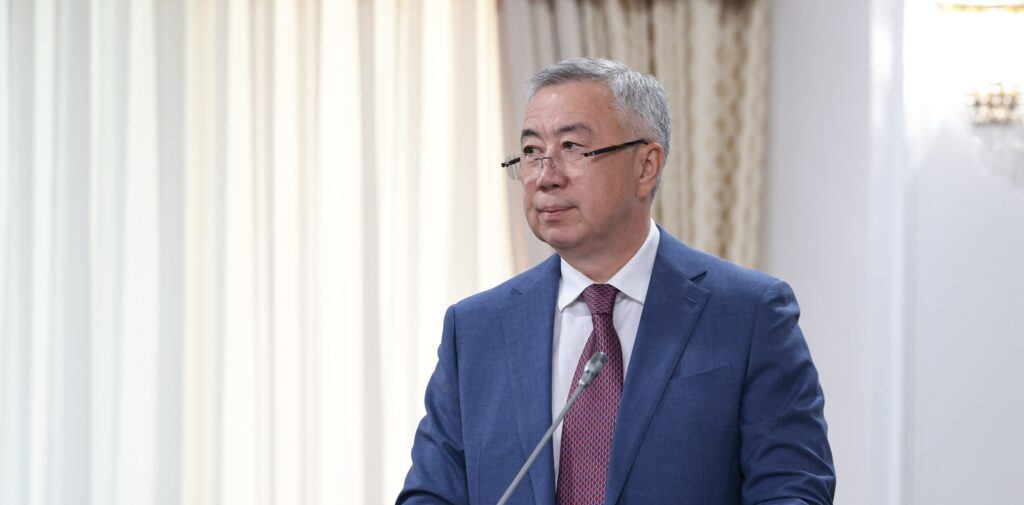
The Universal Declaration initiative was intended to include approximately 8 million additional citizens in 2025, encompassing private sector employees, pensioners, and students. However, widespread public concern about the burden on taxpayers and tax authorities prompted a reevaluation. Finance Minister Madi Takiyev announced the exemption on November 19, citing the country’s advanced digital infrastructure, which already tracks key financial data.

Prime Minister Olzhas Bektenov echoed these sentiments, directing the Ministries of Finance, National Economy, and Justice to draft legislative amendments within three days. He emphasized that the reform had “caused concern of the population, which was brought to the attention of the head of state.”  He added that a widespread income declaration is unnecessary because the databases of state agencies in Kazakhstan are “highly digitized.”

Streamlined Tax Obligations

The revised approach retains declaration requirements for specific groups, including:

  • Citizens with assets abroad.
  • Individuals making significant purchases (exceeding 74 million KZT, or approximately $149,000, in 2024).
  • Those receiving income are subject to independent taxation.

Voluntary declarations will remain an option for all citizens.

A Phased Reform

The universal declaration system began in 2021 and was implemented in stages. Initially, it targeted government officials and their spouses. The requirement extended to public sector employees and the quasi-public sector in subsequent phases. By 2024, business leaders, entrepreneurs, and their spouses were included.

The final stage, which aimed to include the broader population, faced criticism for being outdated in the digital era. President Kassym-Jomart Tokayev acknowledged this, stating, “It is planned that about 8 million more people will submit declarations next year. However, we should consider that the concept of universal income declaration was adopted 14 years ago. During this time, the country has made significant progress in digitalization and fintech. Databases of various government agencies have been integrated. Financial and tax control has been strengthened. Given these large-scale changes, the question arises as to whether it is advisable for citizens falling under the fourth and final stage to submit declarations. The government needs to work out a solution to this.”

Expert Analysis

Political scientist Gaziz Abishev highlighted the effectiveness of the reform’s earlier stages, which targeted those most likely to influence public funds or earn significant income.

“The first three stages have already included bureaucrats, civil servants, quasi-public sector employees, and businesspeople. Everyone who manages public funds or earns a considerable income within Kazakhstan’s economy has already been required to report and will continue to submit declarations,” Abishev explained.

The fourth stage, set to include around 8 million additional citizens, drew criticism for its lack of economic and practical justification.

“Who are the remaining 8 million subject to the fourth stage? Most are low-income people—pensioners, simple rural laborers, niche industry specialists, and other self-employed individuals. Generally, these people neither have access to the budget trough nor lucrative sectors of the economy. The likelihood that they are hiding assets in foreign jurisdictions is virtually zero. Moreover, all information about their property ownership in Kazakhstan and bank accounts is already accessible to the Tax Committee, the Financial Monitoring Agency, Anticor, and other responsible authorities,” Abishev added.

The reform’s potential for public discontent further complicates its implementation.

“It is not only economically inefficient but also politically damaging to scrutinize these people’s finances in search of a few unaccounted-for bills. Ordinary people might think: ‘You work tirelessly from morning till night to support your family, struggling to keep up with inflation, and now you’re expected to account for every tenge while fearing that the tax authorities might show up with an audit,’” the political scientist concluded.

The concerns underline the importance of tailoring tax policies to the realities of citizens’ lives, balancing economic efficiency with public sentiment.

Kazakhstan and Serbia Strengthen Ties Despite Different Geopolitical Paths

Serbian President Vucic (54) might physically resemble Kazakh leader Kassym-Jomart Tokayev (71), but the geopolitical positions of Sebia and Kazakhstan could not be more different. While the Balkan nation – a European Union candidate since 2012 – remains in the EU’s “eternal waiting room”, the Central Asian country – a member of the Russian-led Eurasian Economic Union – seems to have found a delicate balance between Russia, China, and the West.

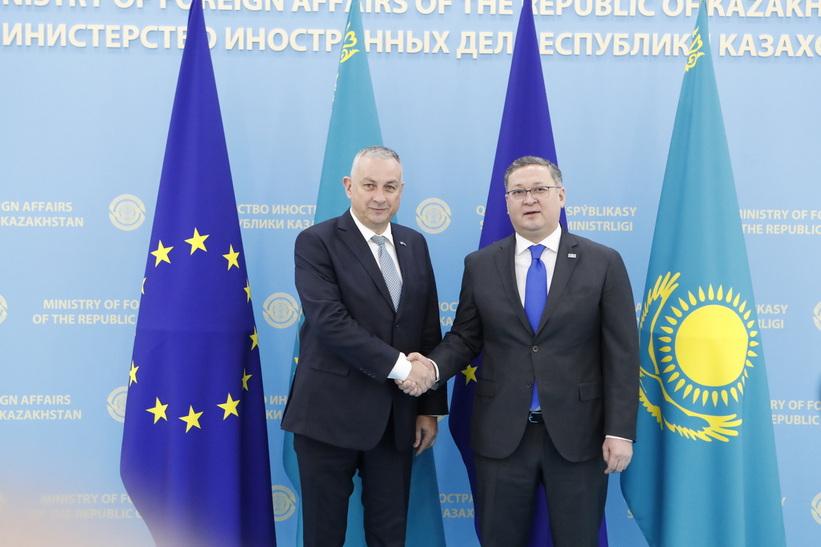
Those differences, however, have not prevented Serbia and Kazakhstan from strengthening their bilateral ties. Over the past six months, the two countries have been actively preparing for Tokayev’s trip to Serbia. This year, he spoke by phone with Vucic twice, while various Serbian and Kazakh officials held several meetings. On November 18-19, Tokayev finally visited the Southeastern European nation, where he met with his Serbian counterpart.

According to the Kazakh leader, they discussed strengthening trade and economic relations and bilateral partnerships between the two nations.

“It is essential that we develop cooperation. We had constructive talks and reached important deals,” Tokayev stressed.

During his visit to the Balkan country, Serbian and Kazakh ministers signed several bilateral agreements. One of them is a 2025 plan on military cooperation. It is, therefore, no surprise that, following the talks in Belgrade, Vucic and Tokayev attended an exhibition of arms and military equipment at the Batajnica military airport near the Serbian capital.

Indeed, military ties seem to be an important aspect of the Serbian-Kazakh relationship. Back in 2017, the two nations signed a memorandum of understanding in the field of military-technical collaboration. Six years later, in November 2023, Kazakhstan and Serbia inked intergovernmental agreements on military-technical cooperation, while in June of this year Serbian and Kazakh defense ministers discussed in Astana military relations between the two countries. Also, in September, Roman Vassilenko, Kazakhstan’s Deputy Foreign Minister, announced that Belgrade and Astana plan то expand cooperation in the defense industry.

It remains to be seen how Moscow – Astana’s nominal ally in the Collective Security Treaty Organization (CSTO) – will react to Kazakhstan’s ambitions to deepen military ties with Serbia – a nominally neutral country that has indirectly supplied Ukraine with $885 million worth of weapons.

Despite being in different geopolitical positions, Serbia and Kazakhstan seem to share the same approach regarding Ukraine. Both nations support the Eastern European country’s territorial integrity, while trying to preserve relatively good relations with the Kremlin. At the same time, they support each other’s territorial integrity, which is particularly important for Serbia given that Kazakhstan does not recognize the 2008 unilateral independence of Kosovo.

In 2022, sitting next to Russian President Vladimir Putin, Tokayev said that if the right to self-determination is put into practice worldwide, then there will be over 600 countries instead of the 193 states which are currently members of the United Nations.

“For this reason, we do not recognize either Taiwan, or Kosovo, or South Ossetia, or Abkhazia… This principle will also be applied to quasi-state territories, which, in our opinion, are Lugansk and Donetsk,” Kazakhstan’s leader stressed.

Such a position allows Astana to strengthen political, military, and also economic ties with Belgrade, which considers Kosovo to be part of Serbia. According to Murat Karimsakov, the chairman of the board of the Chamber of International Commerce of Kazakhstan, the trade balance between the two nations increased by 23% last year compared to 2022, reaching $91 million. In his view, the fact that 36 Serbian companies are currently operating in Kazakhstan shows a “growing interest of Serbian investors” in the former Soviet republic.

Just days before Tokayev’s trip to the Balkan state, a Kazakhstan-Serbia business forum was held in the Serbian capital, providing a platform to explore economic cooperation opportunities between the two countries. Previously, in September, the two nations held their 3rd meeting of the Kazakh-Serbian intergovernmental commission, where Kazakhstan announced plans to increase its non-resource goods supplies to Serbia by over $500 million.

Serbia remains a key trading partner for Kazakhstan in Southeastern Europe, while for Belgrade, Astana is its main partner in Central Asia. That is why the Serbian authorities are hoping to launch direct flights between Belgrade and Astana, or Almaty. They announced their ambitions back in 2016, but as of now no air link has been established.

In spite of that, Belgrade and Astana are expected to continue strengthening economic ties. Although their economic structures are rather different – with the Serbian economy being mainly based on foreign capital-supported manufacturing and exports, while Kazakhstan remains highly dependent on shipments of oil and related products – the West seems to view both countries as an important resource bases.

In Serbia, the European Union is eyeing lithium – a mineral that plays a critical role in the green energy transition – while in Kazakhstan it seeks not only oil, gas, coal and uranium, but also a range of critical raw materials.

“Kazakhstan, in addition to being rich in natural resources, plays a significant strategic role because it is located on one of the most important logistics routes of the next century, along the China-Europe corridor,” Mihailo Vesovic, Director of the Sector for Strategic Analysis, Services, and Internationalization of the Chamber of Commerce and Industry of Serbia, said on November 12.

But will Serbia, preoccupied with its own internal issues, be able to capitalize on Kazakhstan’s strategic position and fully benefit from its cooperation with Astana?

One Person Killed, Five Wounded in Incident on the Tajik-Afghan Border

On the night of November 18, an attack occurred on the Tajik-Afghan border in Zarbuz Gorge, Shamsiddin Shokhin District, resulting in the death of a Chinese citizen and injuries to five others, including four Chinese nationals and a local resident. The incident was reported by Radio Ozodi, citing sources familiar with the situation. Tajik officials have not yet issued a statement on the matter.

Details of the Attack

According to sources, the attack originated from the Afghan side of the border, though it remains unclear whether the perpetrators were drug smugglers or militants. The injured were transported to the Shamsiddin Shokhin District Hospital, and law enforcement officials have launched an investigation at the scene.

The presence of Chinese citizens in the area is connected to the operations of a gold mining enterprise located in the Dashti-Jum Nature Protection Zone, which adjoins the Zarbuz Gorge. The region is near the Sari Ghor border outpost, making it particularly susceptible to incursions from Afghan territory.

A History of Tensions

The Shamsiddin Shokhin section of the Tajik-Afghan border, stretching over 100 kilometers, has long been one of the most problematic areas. It has witnessed numerous incidents, including hostage-takings and attacks on Tajik citizens and military personnel. The region was also the site of the infamous 1993 attack on the Sari Gore border post, when Islamist militants targeted Russian border guards. This latest incident, however, marks the first time a Chinese citizen has fallen victim to violence at the border.

Despite assurances from the Taliban that Afghan territories will not harbor terrorist groups, the Tajik authorities remain concerned about instability in the neighboring country. In 2023, there were multiple incidents involving drug smugglers and militants crossing into Tajikistan.

On August 6, Tajikistan’s State Committee for National Security (SCNS) reported the killing of three members of the extremist group Ansarullah. The SCNS stated that the individuals had smuggled weapons, ammunition, explosives, and communications equipment into Tajikistan, which were later discovered in caches.

Independent verification of the November 18 attack is difficult, but the incident highlights Tajikistan’s ongoing vulnerability to threats from Afghanistan.

Caspian Sea Water Decline Requires Urgent Action, Says UNEP Chief

By the end of this century, the water levels of the Caspian Sea could drop by up to 18 meters, a decline that would devastate ecosystems and species, threaten livelihoods, and jeopardize food security and regional stability. Inger Andersen, Under-Secretary-General of the United Nations and Executive Director of the United Nations Environment Programme (UNEP), highlighted this concern during the event, “Caspian Sea Water Decline in Light of Climate Change” at COP29 in Baku, Azerbaijan, on November 18.

According to Andersen, the Caspian Sea, the largest enclosed body of water on Earth, “is under siege from the triple planetary crisis: the crisis of climate change, the crisis of nature, land and biodiversity loss, and the crisis of pollution and waste.” Andersen warned that without urgent action, this environmental and human crisis may result in as many as five million people being displaced from the Caspian basin by the middle of the century.

Inger Andersun; image: UNEP

The UNEP chief mentioned the impacts of the Caspian crisis: declining fisheries, salinization threatening agriculture, and the critically endangered Caspian seal — a species found nowhere else on Earth — facing extinction. Andersen emphasized the critical importance of the Tehran Convention — “the cornerstone for regional cooperation on the Caspian Sea.” The Framework Convention for the Protection of the Marine Environment of the Caspian Sea (Tehran Convention) was signed by the five Caspian littoral states — Azerbaijan, Iran, Kazakhstan, Russia, and Turkmenistan — in 2003 and entered into force in August 2006 after being ratified by all five governments.

Aktau, Kazakhstan; image: TCA, Ola Fiedorczuk

The Tehran Convention “provides a platform to align our efforts, to unite science and policy, and to prioritize sustainable development across this unique region. As the interim Secretariat of the Tehran Convention, UNEP is proud to support these vital efforts and remains firm in its commitment to providing technical expertise, fostering collaboration, and supporting innovative financing mechanisms to address this urgent challenge,” said Andersen, emphasizing that robust monitoring and predictive models are essential to understanding and managing the drivers of Caspian water level changes.

“Science must inform every decision we take, whether on climate adaptation, biodiversity protection or pollution control,” Andersen stated, calling for regional cooperation to be strengthened. “The challenges the Caspian faces transcend borders. Solutions must do the same. Through trans-boundary collaboration, we can craft integrated solutions that safeguard ecosystems, support livelihoods, and promote equitable economic growth,” she stated.

The Times of Central Asia earlier reported that the abundant floodwater in April-May 2024 raised Kazakhstan’s Caspian Sea water level by over a meter. On July 1, Kazakhstan’s Ministry of Water Resources and Irrigation announced that the water level in the northeastern part of the Caspian Sea had risen by 119 cm since the beginning of 2024.

The COP29 summit has been widely criticized for its “theatrics,” “slow progress,” and handing out the “red carpet” treatment to fossil fuel bosses.

Unified Digital Health System to Transform Kyrgyzstan’s Healthcare

The United Nations Office in Kyrgyzstan, in collaboration with the Ministry of Health, has launched a program to create a unified digital health system in the country.

The Ministry of Health stated that the digitization initiative aims to harmonize Kyrgyzstan’s healthcare system. By providing easier access to medical information, the program is expected to expedite the delivery of medical services, even to the most remote and underserved communities. As part of this effort, specialists will enhance government e-services and telemedicine.

According to the UN, the project will require an investment of over $4 million, and is scheduled to run until 2027. “One of the key features of the program is to improve the digital health profile, giving citizens access to information about their health,” the Ministry of Health noted in a press release.

The authorities plan to integrate a unified registry of citizen vaccinations, which currently holds approximately 3 million records, with a national electronic medical records platform.

The program will also focus on supporting vulnerable groups. For example:
• 120,000 people will receive digital disability certificates; and
• 280,000 people will gain access to digital sick leave documentation, reducing hospital queues and making medical services faster and more convenient.

Telemedicine will be expanded to 10 districts, offering medical consultations to more than 700,000 children under the age of 14.

Additionally, 60 healthcare facilities will provide specialized care to 140,000 mothers and newborns, all connected to the unified electronic health records (EHR) platform.

“This digital health initiative is an important step forward for Kyrgyzstan. By improving access to important medical information, we can make healthcare more efficient and improve outcomes for all,” said Bakyt Dzhangaziev, Deputy Minister for Digital Development of Kyrgyzstan.

UN Resident Coordinator in Kyrgyzstan Antje Grave added: “Digital technologies are transforming our world, opening up new opportunities. It is necessary to bridge the digital divide between countries, promote the goals of sustainable development, and ensure that no one is left behind.”

The program is being implemented with support from international organizations, including the World Health Organization (WHO), UNICEF, the UN Population Fund, and the UN Development Programme (UNDP).

EDB Conference in Almaty to Focus on Sustainable Development in Central Asia

The Eurasian Development Bank (EDB) will host its annual conference, titled “Promoting Sustainable Development in Central Asia,” on December 6 in Almaty, Kazakhstan.

The EDB, an international financial institution focused on fostering economic cooperation and development across Eurasia, counts Armenia, Belarus, Kazakhstan, Kyrgyzstan, Russia, and Tajikistan among its member countries. Kazakhstan alone accounts for nearly 60% of the Bank’s investment portfolio, reflecting its pivotal role in regional development efforts.

The conference will focus on the EDB’s most pressing priorities for 2024, including the urgent need for sustainable and rapid economic growth to alleviate poverty in Central Asia. Discussions will address the persistent challenges of transport connectivity, which are particularly acute for the landlocked countries of the region.

Additionally, the event will explore the integrated development of the water, energy, and food nexus, which the EDB views as essential for ensuring the region’s security, peace, and sustainable development.

Participants will also examine trade facilitation, investment strategies, and innovative solutions for infrastructure development. These topics are considered crucial for advancing the region’s economic prospects and improving the quality of life for its citizens.

The conference will host representatives from leading international organizations, including the World Bank, the Islamic Development Bank (IsDB) and its Institute, the World Food Programme, and the UN Development Programme. Other participants include the Development Bank of Kazakhstan, the UN Economic and Social Commission for Asia and the Pacific (ESCAP), and the UN Climate Technology Centre & Network (CTCN), alongside government officials and regional stakeholders.

This annual event is expected to provide a platform for actionable discussions, fostering collaboration among key players and paving the way for sustainable economic development in Central Asia.