• KGS/USD = 0.01144 0%
  • KZT/USD = 0.00196 -0%
  • TJS/USD = 0.10899 -0%
  • UZS/USD = 0.00008 -0%
  • TMT/USD = 0.28490 0%
  • KGS/USD = 0.01144 0%
  • KZT/USD = 0.00196 -0%
  • TJS/USD = 0.10899 -0%
  • UZS/USD = 0.00008 -0%
  • TMT/USD = 0.28490 0%
  • KGS/USD = 0.01144 0%
  • KZT/USD = 0.00196 -0%
  • TJS/USD = 0.10899 -0%
  • UZS/USD = 0.00008 -0%
  • TMT/USD = 0.28490 0%
  • KGS/USD = 0.01144 0%
  • KZT/USD = 0.00196 -0%
  • TJS/USD = 0.10899 -0%
  • UZS/USD = 0.00008 -0%
  • TMT/USD = 0.28490 0%
  • KGS/USD = 0.01144 0%
  • KZT/USD = 0.00196 -0%
  • TJS/USD = 0.10899 -0%
  • UZS/USD = 0.00008 -0%
  • TMT/USD = 0.28490 0%
  • KGS/USD = 0.01144 0%
  • KZT/USD = 0.00196 -0%
  • TJS/USD = 0.10899 -0%
  • UZS/USD = 0.00008 -0%
  • TMT/USD = 0.28490 0%
  • KGS/USD = 0.01144 0%
  • KZT/USD = 0.00196 -0%
  • TJS/USD = 0.10899 -0%
  • UZS/USD = 0.00008 -0%
  • TMT/USD = 0.28490 0%
  • KGS/USD = 0.01144 0%
  • KZT/USD = 0.00196 -0%
  • TJS/USD = 0.10899 -0%
  • UZS/USD = 0.00008 -0%
  • TMT/USD = 0.28490 0%
08 December 2025

Kazakhstan’s Development Bank Launches $1 Billion Program for Rare Earth Metals Processing

The Bank for Development of Kazakhstan (BDK) has announced the launch of a $1 billion program to finance projects for the extraction and processing of rare, rare earth, and critical materials between 2025 and 2030.

According to a press release from the bank, the new program is intended to support the mining and metallurgical industries as part of Kazakhstan’s strategic push into high-tech sectors. The minimum project financing threshold has been reduced to $9.4 million, down from the usual $13 million. Funding will be available in various currencies, including dollars, euros, and yuan, for terms of up to 20 years.

The bank stated that it will not charge commissions for organizing or altering the terms of financing under this initiative. Borrowers will also benefit from grace periods.

BDK described the program as strategically important for diversifying Kazakhstan’s industrial base and integrating the country into global value chains. It will also support the implementation of the 2024-2028 Comprehensive Development Plan for the Rare and Rare Earth Metals Industry.

“The launch of the program reflects BDK’s strategic focus on supporting new growth points in the economy. We are creating conditions for Kazakhstan to become a producer of finished products with high added value. This will allow us to form new technological chains, increase the competitiveness of domestic industry, and strengthen the country’s position in the global market for critical materials,” said Marat Yelibaev, Chairman of the Board of BDK.

The financing will target projects in the metallurgical industry, including mining enterprises with processing capabilities. All applicants must confirm reserves in accordance with the JORC international standard, which governs reporting on geological exploration, mineral resources, and ore reserves.

Eligible materials include lanthanides, scandium, yttrium, lithium, cobalt, tungsten, germanium, gallium, graphite, and other critical elements used in advanced technologies, green energy, and electronics.

Separately, Kazakhstan’s Minister of Industry and Construction, Yersayin Nagaspayev, announced during the Kazakhstan Global Investment Roundtable (KGIR) that the country plans to launch more than $6 billion worth of mining projects. “Investments in this sector have already reached $3.6 billion. In the near future, we plan to implement five major projects worth over $6 billion, which will create about 8,000 new jobs,” he said.

Nagaspayev emphasized Kazakhstan’s global standing in reserves of tungsten, uranium, and chrome ores, and its role as a top producer of manganese, silver, and zinc. In 2024, the mining sector accounted for 8% of GDP, with total production surpassing $29 billion and metallurgical exports totaling $21 billion.

“Today, Kazakhstan is one of the key suppliers of non-ferrous, ferrous, and rare earth metals. We are actively working to diversify both our export products and sales markets,” Nagaspayev noted.

Recent geological studies suggest that Kazakhstan’s rare earth metal reserves exceed previous estimates, bolstering the country’s potential as a global supplier of these strategic resources. To support this shift from raw material exports to domestic processing, Kazakhstan also plans to open an internationally accredited rare earth metals laboratory.

Border Violence Between Afghanistan and Pakistan: A New Risk for Central Asia

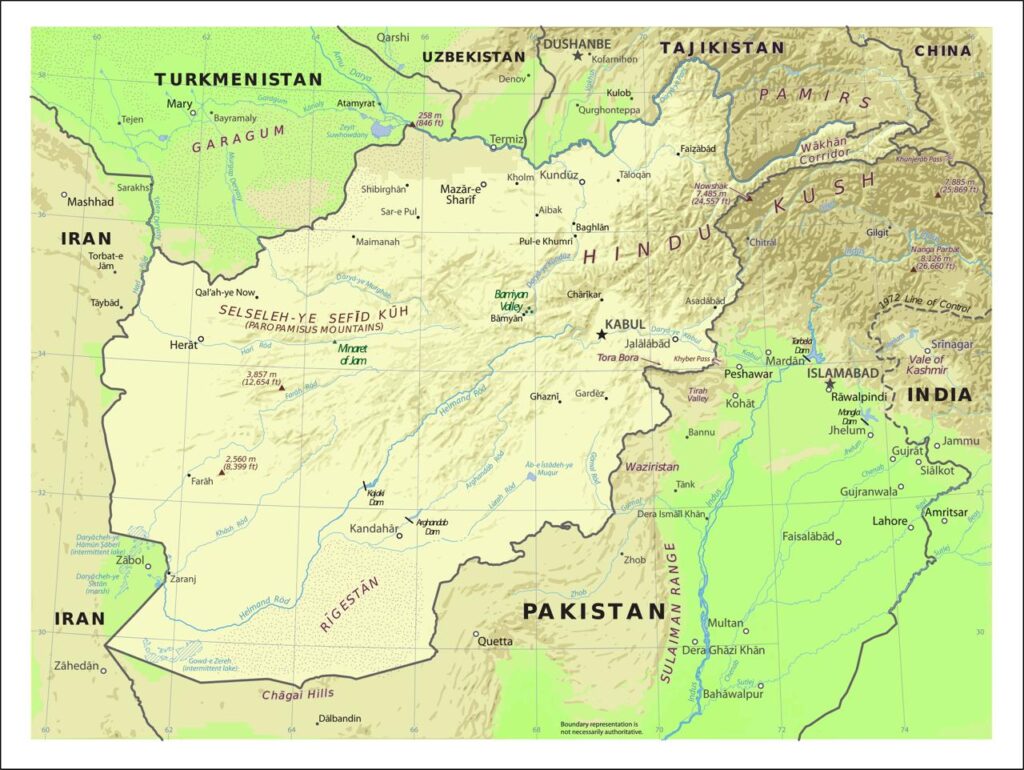
The escalating tensions between Afghanistan and Pakistan are forcing a reassessment of Afghanistan’s viability as a “partner space.” With cross-border clashes increasingly resembling a prolonged pattern rather than isolated incidents, and with both sides showing little willingness to compromise, the question grows more urgent: Can Afghanistan realistically become a partner for Central Asian countries, or is it destined to remain a persistent source of regional instability?

This confrontation is deeply unsettling for the countries of Central Asia. Still in the early stages of formulating coherent policies toward Afghanistan, they have tentatively linked their development strategies to the hope of having a stable neighbor to the south – one that might serve as a bridge to South Asia. Against this backdrop, deteriorating Afghan-Pakistani relations breed more frustration and anxiety than hope.

No country in the world, except Russia, has recognized the Taliban regime de jure. This broad reluctance reflects deep skepticism; few are willing to assume legal obligations or share responsibility for Kabul’s actions. Yet, Afghanistan remains far from isolated. Its geographic centrality makes it impossible to ignore.

Accordingly, Central Asia has developed a distinct approach to dealing with its southern neighbor. It can be summarized as: We do not recognize, but we cooperate; we do not trust, but we verify; we do not agree, but we engage.

In essence, Afghanistan’s neighbors, particularly the ones in Central Asia, have adopted a pragmatic, long-term strategy: engage without illusions or formal recognition, while maintaining the flexibility to adjust based on Kabul’s behavior.

For these countries, Afghanistan does not stand as an independent priority. Its role is evaluated solely within the broader regional framework. In the most favorable scenario, Afghanistan serves as a transit corridor linking South and Central Asia. Yet even this utility is not indispensable; viable alternatives through Iran, the South Caucasus, Turkey, and China already exist and are expanding.

Looking ahead, three broad scenarios can be envisioned:

Optimistic: The Taliban demonstrate readiness for responsible engagement. This would enable Afghanistan’s gradual integration into trade and transport initiatives, expansion of economic ties, and a firm establishment as a bridge between Central and South Asia.

Pessimistic: Afghanistan remains a chronic risk factor and flashpoint for regional crises. The ongoing Afghan-Pakistani confrontation, no longer a fleeting episode but an entrenched conflict, is a clear warning sign. If this becomes the norm, it will deter serious investment, no stakeholder will commit to a country that cannot guarantee peace with its neighbors.

Inertia: Central Asian states continue their cautious balancing act under the logic that “a bad peace is better than a good war.” While cooperation continues at a minimal level, countries prioritize alternative routes and avoid deep commitments.

Under this status quo, ambitious projects like the Trans-Afghanistan Railway and the TAPI pipeline are unlikely to materialize. The former risks losing the “trans” prefix; the latter may, for now, become little more than a Turkmenistan-Afghanistan venture.

Nonetheless, there remains a window for diplomacy. Pressured by Turkey and Qatar, Kabul and Islamabad have agreed to resume negotiations aimed at a long-term de-escalation framework. This opens the door to a political resolution, and lowers the risk of irreversible rupture.

If Pakistan and Afghanistan seek regional stability, they have no choice but to move forward with mutual accommodation. Pakistan, unlike the Taliban-led emirate, is a full member of the international system and must continue engaging regional partners, including China, Iran, Russia, the countries of Central Asia, and the United Nations.

At the same time, the Taliban, in pursuit of international recognition, must show flexibility and a willingness to compromise. Their greatest risk is not just isolation, but irrelevance. Should regional powers shift decisively toward alternative transit corridors, Afghanistan may forfeit its only strategic asset, its geography. Rather than a bridge, it risks becoming a void on the regional map.

Progress in talks with Pakistan presents the Taliban with a chance to demonstrate that Afghanistan can act as a responsible stakeholder in regional security. If those negotiations transition into a formalized institutional process, it would mark a significant step forward, not just for Afghanistan and Pakistan, but for Eurasian connectivity as a whole.

Inside Uzbekistan’s Regional Defense Strategy: An In-Depth Interview with Michael Hilliard

Michael Hilliard is Director of Defense & Security Analysis at the Oxus Society for Central Asian Affairs, where he leads a specialist project analyzing the armed forces of Central Asia. The Oxus Society’s latest report, focusing on Uzbekistan’s military, has just been released.

The Times of Central Asia spoke with Hilliard about the report, Uzbekistan’s evolving defense doctrine, and its future role as a military power in the region.

TCA: In light of the new report on Uzbekistan’s military, how would you characterize Uzbekistan’s overarching security and defense doctrine, especially in relation to the broader Central Asian region?

Michael Hilliard: Uzbekistan’s primary defense doctrine is essentially internally focused.

Since independence, and particularly since the events in Andijan in 2005, Tashkent has concentrated on transforming its forces into a rapid-response military with specializations in counterterrorism, crowd control, and dispersal operations.

When you speak with officers or policymakers within the defense establishment, 2005 is a recurring reference point. During those early hours, protestors overran a motor rifle unit and seized weapons. Many defense personnel still believe that if they had been able to react faster, the final outcome in the square might have been different. This need for rapid adaptability has driven much of Tashkent’s defense policy since then.

TCA: The report notes that Kazakhstan has now overtaken Uzbekistan as the region’s leading military power and that this gap is likely to widen. To what extent does this reflect Tashkent’s greater emphasis on regional cooperation and the resolution of border disputes, rather than competition?

Hilliard: Kazakhstan’s economic dominance makes this outcome unsurprising. The country now accounts for just under 60% of Central Asia’s total GDP as of 2024. With that level of wealth, Astana naturally has greater resources to allocate to defense.

However, Uzbekistan traditionally spends a higher proportion of its budget on the military. Despite having only half of Kazakhstan’s GDP, it has often matched Kazakhstan’s defense spending in real terms.

If Kazakhstan simply accelerates its defense spending to the regional average, it will quickly surge ahead. Ultimately, it’s an issue of economics; Kazakhstan has more money to spend.

TCA: What is the role of the Shanghai Cooperation Organisation (SCO) and its Regional Anti-Terrorist Structure (RATS) in shaping Uzbekistan’s regional military posture?

Hilliard: While some once had ambitious visions for the SCO, today it’s primarily intelligence-focused. Joint exercises are still held but remain limited, and RATS’ influence has declined somewhat following China’s controversial maneuvering within the organization.

At present, RATS focuses more on identifying individuals or groups, such as traffickers or terrorist networks, that all member states have a shared interest in apprehending. It’s quite different from the CSTO, where Moscow wields far greater control.

TCA: How might Tashkent view the recent clashes between Taliban and Pakistani forces, given that Pakistan currently chairs RATS?

Hilliard: Tashkent’s attention is mainly on northern Afghanistan, not the Taliban-Pakistan clashes in the southeast. These incidents appear limited, so they’re unlikely to alter Tashkent’s calculus significantly. However, they do make cross-regional initiatives such as the Tajikistan-Afghanistan-Pakistan-India (TAPI) pipeline even less likely.

Regardless, Uzbekistan remains deeply concerned about overall stability in Afghanistan and the risk of unrest spilling across borders.

TCA: Given Uzbekistan’s focus on preventing instability in Afghanistan from spreading, whether through the IMU, ISKP, or other groups, how capable is its military of meeting such challenges?

Hilliard: Uzbekistan maintains substantial garrisons along the Afghan border, particularly around Termez. The city is heavily fortified, a legacy of Soviet preparations before the 1979 invasion of Afghanistan.

By contrast, many of the country’s best rapid-response units are based in the Fergana Valley. For example, some of the newest drone units, Special Operations Battalions (SOBs), and elite formations like the 17th Air Assault Brigade, one of Uzbekistan’s best-trained and best-equipped units, are stationed in Fergana rather than Termez or Tashkent.
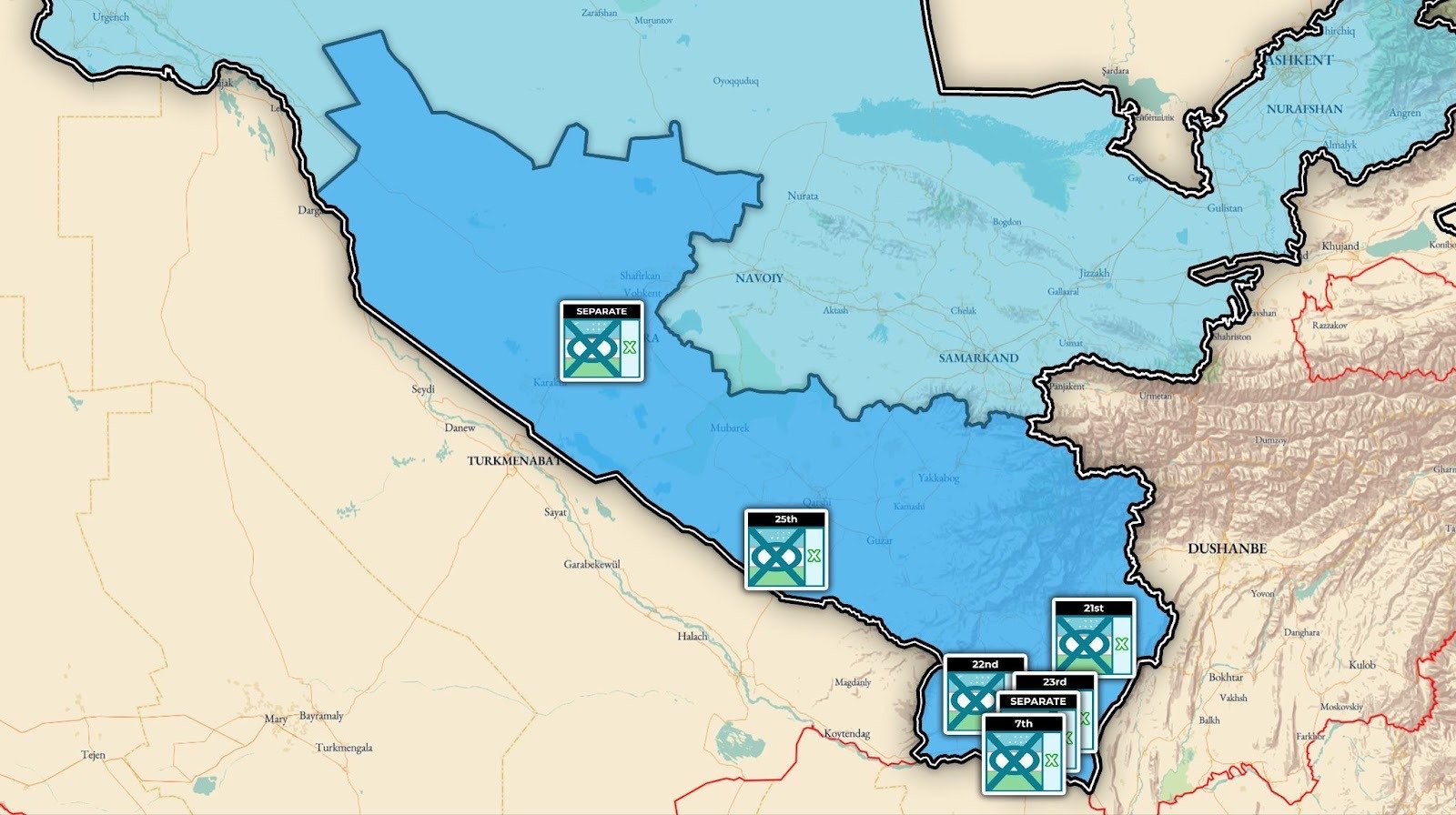
Map of major ground force brigades, under the command of Southwest Special Military District

TCA: To what extent do Uzbekistan’s joint military exercises with the SCO or other regional partners improve interoperability, particularly with Kazakhstan?

Hilliard: That’s an interesting question. Uzbekistan conducts many multilateral exercises and gains value from them.

However, the benefits are somewhat limited. The same personnel often rotate through multiple exercises, reducing the breadth of experience across the force. Moreover, many of these drills resemble what I’d call “pageantry exercises”, highly choreographed events, similar to pre-2022 Russian displays, designed more for optics than for genuine combat readiness.

TCA: How has resolving border disputes with Kyrgyzstan influenced Uzbekistan’s defense posture, especially in the Fergana Valley, which is vital to both its economy and population?

Hilliard: While some disputes have been settled officially, the underlying tensions remain. Border incidents tend to arise in the field, not in headquarters.

Patrols operate in remote areas with broad engagement rules; they can fire on illegal border crossers or insurgents. That means 18-year-olds with minimal training must make split-second life-or-death decisions.

In calm times, patrols from both sides often just wave to one another. But during tense periods, such as before the 2022 Batken clashes, nervousness on either side can cause confrontations to escalate quickly.

Recent demarcation efforts have eased some tensions, but they haven’t eliminated the risk of future flare-ups. What happens on the ground often differs greatly from the official narrative in headquarters.

TCA: How would you assess the strategic depth of the Kazakhstan-Uzbekistan relationship? Are there hidden points of tension behind the public cooperation?

Hilliard: There’s a lot of potential for defense cooperation, especially in industrial and logistical areas, but limited trust.

Both countries use similar equipment and munitions, so pooling repair and maintenance facilities could save time and money. For instance, both currently send their aircraft to Belarus for major overhauls. It would make sense to jointly refurbish facilities like the aircraft plant in Chirchik. But Astana may be reluctant to depend that heavily on a regional peer and potential competitor.

TCA: How prominently does Karakalpakstan figure in Uzbekistan’s internal security planning after the 2022 unrest?

Hilliard: Karakalpakstan remains highly sensitive at all levels of government.

Most of Uzbekistan’s ground force units are stationed in the east, far from Karakalpakstan. While smaller units operate in Urgench and a single Ground Forces brigade is based in Nukus, the majority of personnel in the region belong to the Ministry of Internal Affairs, the Border Service, or the National Guard, forces specialized in crowd control and disaster response rather than conventional warfare.

Since 2022, training and communications capabilities in the region have improved significantly, and the government has strengthened its ability to redeploy troops rapidly if necessary.

TCA: Given Uzbekistan’s internal focus and close alignment with Kazakhstan, is there any plausible scenario in which Astana might view Tashkent as a threat?

Hilliard: I’d say no. Neither country has built its military with large-scale offensive operations in mind.

At worst, they might envision a short, localized border skirmish. While some mutual distrust remains among planners, the overall level of trust and cooperation has improved markedly over the past decade. Both governments share broadly similar goals for regional stability.

TCA: How does Tashkent view its long-term dependency on Russia for defense manufacturing and munitions? Can it realistically change that?

Hilliard: Uzbekistan remains deeply embedded in the Russian defense ecosystem because most of its arsenal is Russian or ex-Soviet.

It’s a bit like the “Apple vs. Android” dilemma: switching platforms would require enormous capital outlays to retrain personnel and replace maintenance systems. For an Uzbek general managing a limited budget, upgrading a Russian tank for 5% of the cost of buying a new U.S.-made Abrams makes practical sense.

Russian equipment is also cheaper now due to the weaker ruble, and Moscow often sells to Tashkent at near cost, sometimes even bartering raw materials for weapons. Russia also allows installment payments, which the U.S. would not.

That said, when it comes to new systems rather than upgrades, especially drones, Tashkent looks elsewhere. Russia lags far behind suppliers like Turkey and China in drone technology, and Uzbekistan prioritizes partnerships with those states for modern platforms.

TCA: Is the recent joint venture with a Russian company to build drones in Uzbekistan an example of dependency or capacity building?

Hilliard: It’s part of building domestic capacity. Uzbekistan is investing heavily in drones, which makes sense given the technology’s strategic importance.

While it’s working with Russian firms, it’s also developing joint ventures with Turkey for military drones and with Iran for agricultural drones, where Tehran has relevant expertise. For Tashkent, this is about cultivating an industry rather than deepening dependency.

TCA: Thank you, Michael, for such an interesting in-depth discussion of Uzbekistan’s armed forces and the broader Central Asian security landscape.

Readers of The Times of Central Asia can access the full report as well as the Oxus Society’s Central Asian Military Units Map at the Oxus Society’s website.

UNESCO Conference in Samarkand Highlights Uzbekistan’s Heritage

At the opening ceremony of the 43rd session of the UNESCO General Conference in Samarkand, Uzbek President Shavkat Mirziyoyev highlighted Uzbekistan’s growing role in global cultural dialogue and its expanding cooperation with UNESCO. Held on October 30, the event marked the first time in four decades that the conference had convened outside UNESCO’s headquarters in Paris.

The ceremony welcomed high-level participants, including UNESCO Director-General Audrey Azoulay, Serbian President Aleksandar Vučić, Slovak President Peter Pellegrini, and representatives from UNESCO member states.

In his address, Mirziyoyev said that hosting such a prominent international forum reflects global recognition of Uzbekistan’s reform efforts and its active role in cultural and educational cooperation. He commended UNESCO’s decades-long contributions to education, science, culture, and media, noting Samarkand’s symbolic importance as one of the world’s oldest cities.

“Samarkand has always been a crossroads of civilizations, science, and tolerance,” Mirziyoyev said.

The president highlighted the 2023–2027 cooperation program between Uzbekistan and UNESCO, which focuses on cultural heritage preservation, educational reform, and digital innovation. He also noted that Khiva, Bukhara, Shahrisabz, and Samarkand are inscribed on UNESCO’s World Heritage List, and that the Zarafshan-Karakum Corridor was recently added as part of the Silk Roads network.

Uzbekistan’s rich intangible heritage, including Shashmaqom music, the Lazgi dance, Navruz celebrations, and traditional crafts such as embroidery and ceramics, has also earned UNESCO recognition, strengthening the country’s identity as a cultural hub in Central Asia.

During the session, Mirziyoyev proposed several initiatives for UNESCO’s consideration:

  • Establishing a UNESCO Platform for Inclusive Education with AI-integrated learning tools;

  • Organizing a Global Summit on Vocational Education to prepare youth for future professions;

  • Declaring November 19 as the International Day of Documentary Heritage;

  • Creating an International Digital Heritage Institute under UNESCO auspices;

  • Launching a UNESCO Academy for Women Leaders to advance women’s participation in science, culture, and education; and

  • Hosting a World Forum of Women Researchers and Artists in Samarkand.

Addressing global challenges, the president called for stronger international cooperation on climate issues and proposed designating a “UNESCO Ecological Capital” each year to recognize cities promoting sustainable environmental practices.

Mirziyoyev also spoke about the dangers of misinformation, calling for improved media literacy among young people and greater support for responsible journalism and intercultural dialogue.

Concluding his speech, the president reaffirmed Uzbekistan’s readiness to serve as a bridge between East and West and to actively support UNESCO’s mission to promote peace, sustainable development, and mutual understanding around the world.

Kazakhstan to Block Foreign Marketplaces for Unpaid Taxes

Foreign online platforms that do not complete conditional VAT registration and begin paying taxes in Kazakhstan by January 1, 2026, will be blocked in the country, according to Edil Azimshayyk, head of the VAT Administration Department at the State Revenue Committee under the Ministry of Finance.

Speaking at a briefing in Astana, Azimshayyk said a new mechanism, conditional VAT registration for foreign companies, will take effect at the beginning of 2026. Under this system, the tax authorities will create a registry of foreign companies liable for VAT. The new rules will primarily target foreign suppliers of goods, services, and works that operate in Kazakhstan’s digital marketplace.

To register, a foreign company must submit a confirmation letter containing its corporate details to Kazakhstan’s tax authority within one month of receiving its first payment from a buyer in Kazakhstan. The date of this initial payment will determine when the company is recognized as a VAT payer. Once registered, these companies will be required to pay VAT on a monthly basis.

“We will send them notifications requiring registration,” Azimshayyk stated. “However, blocking their banking operations is not applicable, as they do not open accounts in Kazakhstan. Instead, if they fail to comply with the registration notification, access to their online platforms will be suspended.”

The State Revenue Committee, in cooperation with the National Bank and commercial banks, will identify non-compliant companies by analyzing payments made by Kazakhstani citizens to foreign marketplaces.

The VAT rate for such foreign platforms will also increase from 12% to 16% starting in 2026.

Kazakh companies that are not yet registered for VAT will likewise receive notifications and be given 30 working days to comply. “If the notification is ignored, expenditure transactions on the taxpayer’s bank accounts will be suspended. This restriction will be lifted once the company completes registration,” Azimshayyk added.

As previously reported by The Times of Central Asia, foreign online purchases in Kazakhstan totaled $1.3 billion in 2023, representing approximately 20% of the country’s total online sales. Overall e-commerce volume exceeded $4.8 billion, accounting for 13% of total retail trade.

The Kazakh government aims to raise the share of e-commerce in total retail trade to 18.5% by 2029 and 20% by 2030.

Uzbekistan Sends Over 20 Crop Varieties to Global Seed Vault in Norway

Uzbekistan has deposited more than 20 types of agricultural crop seeds, including varieties of watermelon, melon, and eggplant, into the Svalbard Global Seed Vault, the world’s most secure seed storage facility, located in the Norwegian archipelago of Svalbard, the Ministry of Agriculture has announced.

According to the ministry, the seed samples represent ancient and local Uzbek crop varieties and were delivered through a joint effort involving Uzbekistan’s Ministry of Agriculture, the Scientific Research Institute of Plant Genetic Resources, the UN Food and Agriculture Organization (FAO), and the Nordic Genetic Resource Center (NordGen).

Officials say the initiative marks a significant step in Uzbekistan’s efforts to preserve genetic diversity, strengthen its national gene pool, and contribute to global food security. The seeds deposited include traditional varieties of melon, watermelon, tomato, pepper, eggplant, carrot, onion, and wheat. Among these, the native “Qayroqtosh” wheat variety is of particular cultural and agricultural importance.

Representatives from the Institute of Plant Genetic Resources emphasized that the initiative reflects Uzbekistan’s ongoing commitment to protecting plant biodiversity, supporting global food resilience, and safeguarding genetic material for future generations.

The Svalbard Global Seed Vault, located deep within the Arctic permafrost and maintained at a constant temperature of -18°C, currently stores more than 1.1 million seed samples from around the world. Operated by the Norwegian government in partnership with the Crop Trust and NordGen, the vault provides a secure backup for global seed collections, offering protection against threats such as climate change, natural disasters, or geopolitical crises.