• KGS/USD = 0.01144 0%
  • KZT/USD = 0.00195 0%
  • TJS/USD = 0.10861 0.18%
  • UZS/USD = 0.00008 0%
  • TMT/USD = 0.28571 0%
  • KGS/USD = 0.01144 0%
  • KZT/USD = 0.00195 0%
  • TJS/USD = 0.10861 0.18%
  • UZS/USD = 0.00008 0%
  • TMT/USD = 0.28571 0%
  • KGS/USD = 0.01144 0%
  • KZT/USD = 0.00195 0%
  • TJS/USD = 0.10861 0.18%
  • UZS/USD = 0.00008 0%
  • TMT/USD = 0.28571 0%
  • KGS/USD = 0.01144 0%
  • KZT/USD = 0.00195 0%
  • TJS/USD = 0.10861 0.18%
  • UZS/USD = 0.00008 0%
  • TMT/USD = 0.28571 0%
  • KGS/USD = 0.01144 0%
  • KZT/USD = 0.00195 0%
  • TJS/USD = 0.10861 0.18%
  • UZS/USD = 0.00008 0%
  • TMT/USD = 0.28571 0%
  • KGS/USD = 0.01144 0%
  • KZT/USD = 0.00195 0%
  • TJS/USD = 0.10861 0.18%
  • UZS/USD = 0.00008 0%
  • TMT/USD = 0.28571 0%
  • KGS/USD = 0.01144 0%
  • KZT/USD = 0.00195 0%
  • TJS/USD = 0.10861 0.18%
  • UZS/USD = 0.00008 0%
  • TMT/USD = 0.28571 0%
  • KGS/USD = 0.01144 0%
  • KZT/USD = 0.00195 0%
  • TJS/USD = 0.10861 0.18%
  • UZS/USD = 0.00008 0%
  • TMT/USD = 0.28571 0%
18 December 2025

Kazakhstan’s Strategic Stand: Navigating BRICS Amidst Geopolitical Tensions

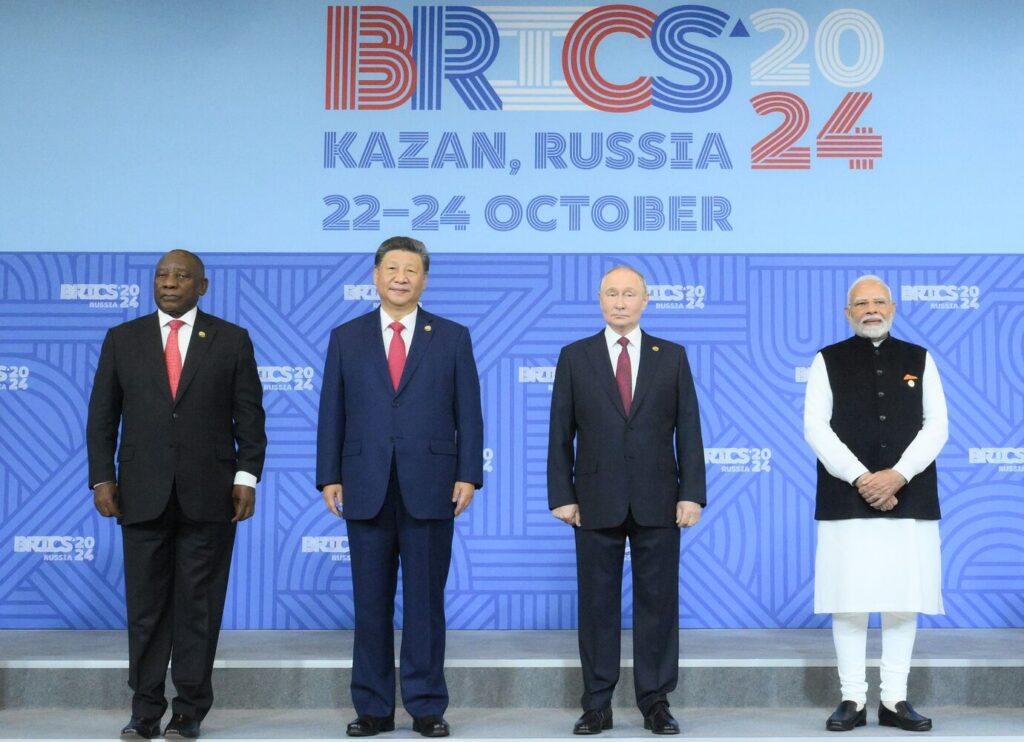
In recent days, BRICS – an intergovernmental organization comprising Brazil, Russia, India, China, South Africa, Iran, Egypt, Ethiopia, and the UAE – has become one of the most critical topics on the Eurasian region’s information agenda. Russian propaganda has presented the BRICS summit, which is taking place in Kazan, as a global event. However, the press secretary of Kazakhstan’s president, Kassym-Jomart Tokayev, has stated that the republic has no plans to apply for BRICS membership in the foreseeable future, which has caused an adverse reaction in the Russian media, and led to a seemingly retaliatory Russian ban on Kazakhstan’s agro-products.

The Kazakhstani side, represented by the expert community, has tried to explain that its reasoning is based not only on Astana’s national interest, but also on its obligations to its partners in Central Asia. Perhaps the most convincing argument is that the C5+1 mechanism is effective as a format for the region’s interactions with the outside world. Therefore, it is not worth breaking this mechanism. No Central Asian country besides Kazakhstan has been invited to join BRICS, but Astana cannot afford to damage the established alliance by creating the conditions for distrust from its neighbors; Central Asia has already gone through a period of distrust.

At the same time, rejecting the idea of joining BRICS, where India, Russia, Brazil and China are the founding members, does not unduly affect Kazakhstan’s interactions with these powers. Kazakhstan works with China and Russia within the framework of the SCO (Shanghai Cooperation Organisation) and EAEU (Eurasian Economic Union), and has signed multiple partnership and alliance agreements with Beijing and Moscow. In other words, the information hysteria that Kazakhstan will exit Russia’s sphere tomorrow and join the “Global West” (a term used in the Russian media) has no basis in reality.

At the same time, however, it is evident that most Central Asian countries are trying to distance themselves from Russia as much as possible, maintaining cooperation only along certain economic lines. Even banks in Kyrgyzstan, a republic maximally dependent on Moscow on several essential issues, have stopped working with Russian banks. The Kazakhstan Stock Exchange, meanwhile, recently announced the end of cooperation with the sanctioned Moscow Stock Exchange. Moreover, Rosselkhoznadzor’s ban on imports of a wide range of agro-industrial products from Kazakhstan, if not a response to the refusal to join the BRICS, clearly hints that behind the scenes, economic relations between Astana and Moscow are not all that smooth.

Another argument against joining BRICS was voiced not just within Kazakhstan, but also by Russian experts. Despite the organization’s purportedly representative nature, which includes countries with a combined population of 3.5 billion people (45% of the Earth’s population), the association has no structure. Russian analysts opposed to the Kremlin believe that BRICS is a club where one can come, sabre-rattle at the West, conclude bilateral agreements, and forget about everything until the next summit.

No coordinating center monitors the implementation of any agreements reached.

BRICS was conceived as an intercontinental organization, uniting similar economies in volume and GDP. Thus, it initially included Brazil, representing Latin America; Russia, representing Eurasia; and China, representing Asia, whilst South Africa, representing the continent of Africa, joined in 2010 at the invitation of China. Including another Eurasian country in the shape of Kazakhstan, could therefore upset the balance and strengthen the preponderance of the organization in favor of this continent.

Finally, in this geopolitical balancing act, Kazakhstan’s decision not to join BRICS must also be seen from another point of view, for were Kazakhstan to sign up, partners from the EU and the U.S. would have good reason to raise doubts regarding Kazakhstan’s long-stated positions of a multi-vector foreign policy, multi-lateralism, and all the rhetoric about the role of “middle powers.”

Russia’s unbridled propaganda, meanwhile, has also negatively influenced the perception of BRICS in the Central Asian region itself, where it is largely perceived as a bloc opposed to the “Global West.” Central Asian republics, which lost so much due to the Cold War and the subsequent collapse of the Soviet Union, do not want a repeat of this long stand-off between two worlds. Therefore, they will continue to balance the interests of major powers as much as possible without joining more blocs and alliances. That said, however, Kazakhstan will shortly face a tough geopolitical challenge in its choice of partners for the construction of its first nuclear power plant.


Tajikistan Has Baked the World’s Tallest National-Themed Cake

In Dushanbe, 15 pastry chefs and representatives of the World Federation of Restaurant Sports (WFRS) from Kyrgyzstan, Russia, and Tajikistan set a world record by making a cake weighing 200 kg and 2.10 meters high. This culinary masterpiece became the world’s tallest nationally-themed cake, which was confirmed by the Eurasian Rating Agency (ERA).

The cake was transported by truck to Abulkasim Ferdowsi Park and placed on a decorated table. A copy of the 45-centimeter-high Ismoil Somoni monument was placed on the cake, and the confectionery had a square base with a side of 1.1 m. The cake was decorated with gingerbread figures of Tajikistan’s landmarks, national ornaments, and more than 300 marshmallow elements stylized as watermelons, melons, grapes, and other fruits.

Pastry chef Natalie Vee said the cake is designed for 100-200 people. The team created it in four days, using 160 eggs, 25 kg of sugar, about 45 kg of sugar paste, several kilograms of flour, and about 30 liters of juice.

“We have set records in Russia, Africa, and Europe. This is the first record for Tajikistan, and I hope it will remain for a long time,” said Alexander Rabinovich, chairman of the ERA’s Service and Hospitality Committee and WFRS secretary general.

He explained that the cake preparation coincided with World Chef’s Day and the national holiday Mehrgon. On that day, Ferdowsi Park also became the center of Mehrgon celebrations, where a harvest and culinary fair was organized, offering vegetables, fruits, honey, and drinks from different regions of Tajikistan.

Two cake records stand out for their impressive scale and global attention. The tallest cake, created in Indonesia for a Christmas event in Jakarta in 2008, reached an astounding 33 meters. Equally remarkable is the record for the longest cake, stretching 5,300 meters, made in India in 2020. Both cakes captivated international audiences with their sheer size and uniqueness.

Uzbekistan Prepares for the Polls: Embracing a New Electoral System

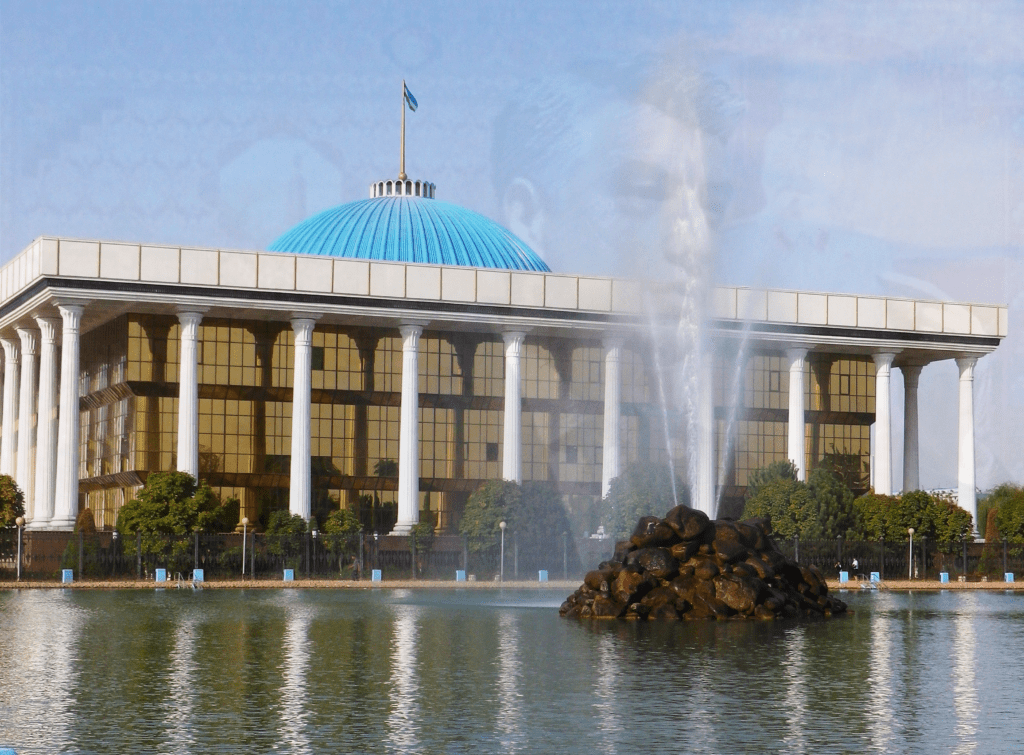
On October 27, citizens of Uzbekistan will cast their ballots under a new mixed electoral system for the 150-member Legislative Chamber of the Oliy Majlis (Lower House of Parliament) in elections billed as “My choice is my prospering Motherland.”

Half of the candidates will be elected from single-member districts using a first-past-the-post system, whilst the other half will come from nationwide proportional representation which requires parties to surpass a 7% electoral threshold. If fewer than one-third of eligible voters participate, the election will be deemed invalid, and should no party meet the threshold for proportional seats, those elections will be considered void. By mandate, at least 40% of the candidates must be women, up from 30% in the elections held in 2019.

Additionally, 56 members of the upper chamber, 65 deputies of the Jokargy Kenes of the Republic of Karakalpakstan, 12 regional and 208 district and city council seats are also being contested by approximately 30,000 candidates. At the invitation of the authorities in Uzbekistan, at the end of September, the OSCE’s Office for Democratic Institutions and Human Rights (ODIHR) dispatched a team of long-term observers.

On October 5, Uzbekistan held a groundbreaking pre-election TV debate for party leaders which was broadcast live on multiple TV channels and social media platforms in Uzbek, Russian, English, and Karakalpak. Reportedly modeled on the BBC’s Question Time, the debate’s audience featured voices from the nation’s youth, women, and ethnic minorities as part of a drive to engage with voters described by organizers as “innovate, creative [and] interactive.

Five parties – the Liberal-Democratic Party of Uzbekistan, Milli Tiklanish (National Revival) Democratic Party, the Ecological Party of Uzbekistan, the People’s Democratic Party of Uzbekistan (PDP), and the Adolat (Justice) Social-Democratic Party – have been registered for the upcoming elections. However, others have faced a backlash for attempting to register. According to The Diplomat, all of the entities running “have always been perceived as mere extensions of the state.”

Since the death of long-term despot, Islam Karimov, however, Uzbekistan’s “state apparatus [have] become more open,” as noted by an election observer in 2019, whilst the platforms of figures such as Alisher Qodirov have increasingly chimed with the public. Amidst reforms aimed at tackling endemic corruption, in recent years Uzbekistan has gained ground on Transparency International’s global corruption perception index, and recently partnered with the World Bank on “training, projects, and research to combat corruption.”

Uzbekistan Wants To Produce Drinking Water From the Air

Uzbekistan has tested an innovative unit for extracting moisture from the atmosphere to create drinking water.

Sergei Dorzhiev, head of the Russian company Aquagenica which developed the technology, states that it was previously utilized in Russia and African countries, but more difficult climatic conditions were required for the final test of the equipment, which is why the Kyzylkum desert was chosen.

The plant, which was launched in the Navoi Free Economic Zone (FEZ) in July, has now completed its tests, and according to FEZ director Habib Abdullayev, the equipment can produce up to 1,000 liters of clean water daily.

“The machine works in extreme conditions of hot-dry climate with water content from 4 g/m3 and higher in atmospheric air and in the temperature range from 10-70 degrees Celsius. At the same time, foreign analogs extract water from the air at a humidity of 8-10 g/m3 of air and above in the temperature range of 20-40 degrees Celsius. We expect our installation will help solve problems with access to good quality drinking water,” said Dorzhiev.

The unusual installation is expected to begin serial production in 2025. More than 30 African and Asian countries have already expressed interest in producing equipment for extracting water from the air.

In various countries, atmospheric moisture extraction technologies are becoming an important solution to freshwater scarcity. One of the most promising approaches is using atmospheric water generators (AWGs), capable of producing potable water from moisture in the air. In the United States, such plants have been successfully used to help provide clean water to communities. Similar technologies have also been implemented in the United Arab Emirates.

Kazakhstan Opens its Longest Bridge

The Kazakh government’s press service has reported that on October 21, Prime Minister Olzhas Bektenov  attended the opening of Kazakhstan’s longest bridge.

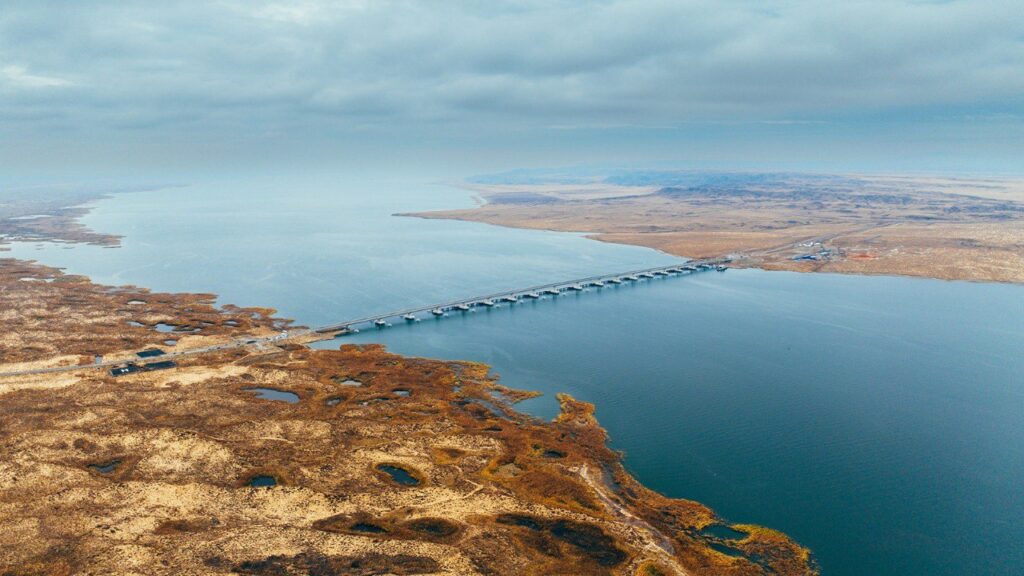
Spanning 1,316 meters across the Bukhtarma Reservoir, the new bridge which connects six districts of  Kazakhstan’s eastern region, can accommodate up to 80,000 vehicles per day and reduce travelling time from hours to minutes.

In his address at the launch, the president stressed that the bridge would allow for safe year-round traffic and accelerate the region’s socio-economic development, stating: “For 50 years, residents of the region traveled [across the reservoir] either by ferry in the summer or directly on the ice in the winter and have been waiting for the bridge’s construction for a long time.”

East Kazakhstan is a strategic region through which important transport corridors pass. The bridge across the Bukhtarma Reservoir will improve transport and logistics routes, ensure uninterrupted connections with bordering countries, and help unlock the region’s tourism potential.

The new bridge follows the opening of the country’s longest automobile tunnel in September at the Shakpak Baba Pass in southern Turkestan.

Kazakhstan and Afghanistan Discuss Transport Links for Trade with China

At a meeting in Almaty on October 21, Kazakhstan’s Deputy Prime Minister Serik Zhumangarin and Afghanistan’s Minister of Industry and Commerce Nuriddin Azizi addressed the logistics of transportation of goods from China to Afghanistan and back through Kazakhstan.

In June, Kazakhstan’s President Kassym-Jomart Tokayev announced that his country had removed the Taliban from its list of terrorist organizations in a move to develop trade and economic ties with Afghanistan. In late August, Kazakhstan’s Foreign Ministry accredited a chargé d’affaires of Taliban-led Afghanistan to expand trade, financial, and humanitarian cooperation between the two countries.

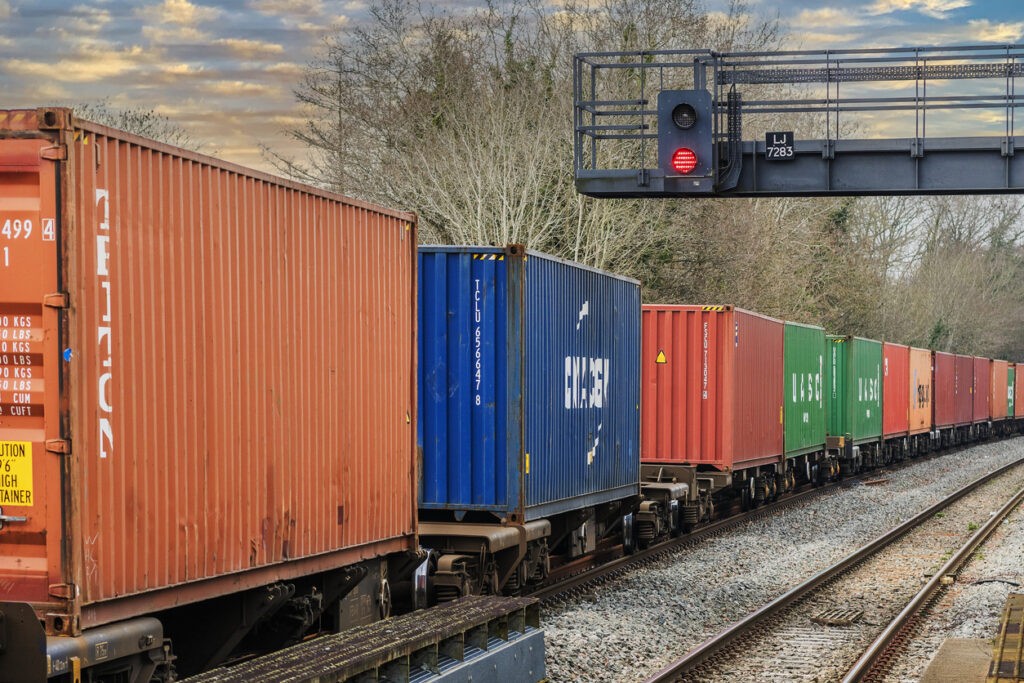
As the Kazakh Ministry of Trade and Integration reported, one critical issue is the reverse loading of railcars and containers on their way back from Afghanistan. To reduce the cost of logistics, Kazakhstan is considering loading empty railcars with Afghan fruits and vegetables, persimmons, beans, and other food products for delivery to Kazakhstan.

Bauyrzhan Urynbasarov, managing director of Kazakhstan Temir Zholy (KTZ), the country’s national railway company, proposed two options for reverse loading empty containers and railcars.

The first is a circular train route: container trains traveling from China through Kazakhstan to Afghanistan are loaded with Afghan goods bound for China. From there, they pass through the port of Karachi in Pakistan before returning to China.

In the second route, trains reach Afghanistan, where they are reloaded and loaded with Afghan goods, then return to Kazakhstan, where, after unloading, they are packed with Kazakh goods and go to China.

Zhumangarin proposed that the Afghan side use the capacities of the Kazakh terminal in the Chinese dry port in Xi’an, the Kazakh-Chinese logistics terminal in the port of Lianyungang, and the terminal currently under construction in the dry port of Urumqi in China’s Xinjiang.

The parties also agreed to organize an interregional Kazakh-Afghan forum, where the provinces of Afghanistan and the regions of Kazakhstan could discuss cooperation projects.

According to Kazakh statistics, trade turnover between Kazakhstan and Afghanistan amounted to $330.7 million from January to August 2024. Exports from Kazakhstan to Afghanistan totaled $316.5 million, including flour, sunflower oil, natural gas, and fertilizers. Afghanistan’s exports reached $14.1 million, mainly mineral water, fruits, juices, and aluminum products.

The Afghan delegation arrived in Almaty on October 20 to participate in an exhibition of Afghan food and industrial products.