• KGS/USD = 0.01144 0%
  • KZT/USD = 0.00193 -0%
  • TJS/USD = 0.10811 -0.28%
  • UZS/USD = 0.00008 0%
  • TMT/USD = 0.28490 0%
  • KGS/USD = 0.01144 0%
  • KZT/USD = 0.00193 -0%
  • TJS/USD = 0.10811 -0.28%
  • UZS/USD = 0.00008 0%
  • TMT/USD = 0.28490 0%
  • KGS/USD = 0.01144 0%
  • KZT/USD = 0.00193 -0%
  • TJS/USD = 0.10811 -0.28%
  • UZS/USD = 0.00008 0%
  • TMT/USD = 0.28490 0%
  • KGS/USD = 0.01144 0%
  • KZT/USD = 0.00193 -0%
  • TJS/USD = 0.10811 -0.28%
  • UZS/USD = 0.00008 0%
  • TMT/USD = 0.28490 0%
  • KGS/USD = 0.01144 0%
  • KZT/USD = 0.00193 -0%
  • TJS/USD = 0.10811 -0.28%
  • UZS/USD = 0.00008 0%
  • TMT/USD = 0.28490 0%
  • KGS/USD = 0.01144 0%
  • KZT/USD = 0.00193 -0%
  • TJS/USD = 0.10811 -0.28%
  • UZS/USD = 0.00008 0%
  • TMT/USD = 0.28490 0%
  • KGS/USD = 0.01144 0%
  • KZT/USD = 0.00193 -0%
  • TJS/USD = 0.10811 -0.28%
  • UZS/USD = 0.00008 0%
  • TMT/USD = 0.28490 0%
  • KGS/USD = 0.01144 0%
  • KZT/USD = 0.00193 -0%
  • TJS/USD = 0.10811 -0.28%
  • UZS/USD = 0.00008 0%
  • TMT/USD = 0.28490 0%
10 December 2025

Kazakh-German Consortium to Build Cargo-Passenger Airport in Khorgos–Eastern Gate SEZ

On September 16, Kazakhstan’s Ministry of Transport and Kazakh-German consortium SKYHANSA signed a framework agreement on a project to construct a cargo-passenger airport in the special economic zone (SEZ) Khorgos-Eastern Gate on the border between Kazakhstan and China.

The document was signed as part of the official visit of Germany’s Federal Chancellor Olaf Scholz to Kazakhstan.

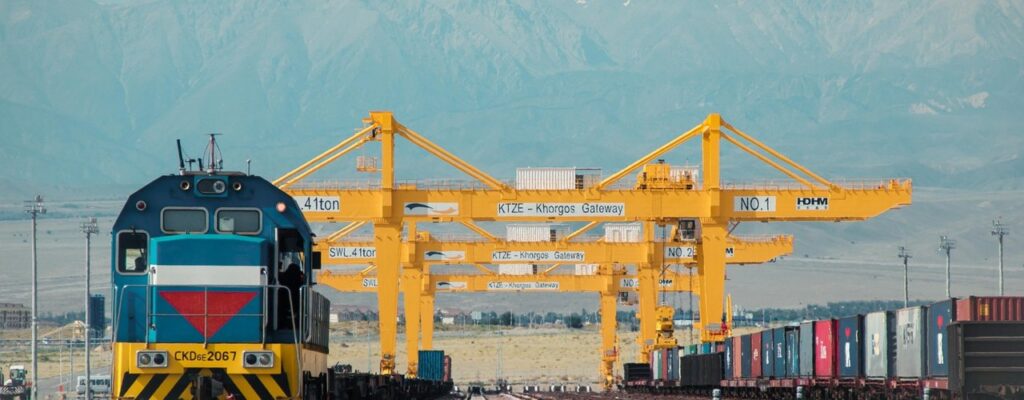
The Khorgos–Eastern Gate SEZ is located in Kazakh territory, one kilometer from the state border and China’s border city, Khorgos.
The SEZ is strategically located on the route of the Western Europe – Western China highway. It is also a central hub on the Trans-Caspian International Transport Route (TITR) that connects China and Europe.

The SEZ includes a dry port and a multimodal logistics zone. The first stage of construction of a China-Kazakhstan industrial park on the territory of the SEZ began in November 2023.

The Kazakh-German project involves the construction of an airport with a passenger terminal capable of handling up to 500 passengers per hour, a cargo terminal capable of handling up to 250,000 tons per year, a fuel storage facility capable of holding 550,000 tons, a technical center for servicing aircraft, and tourism, shopping, and entertainment facilities.

Private investments in the project are expected to exceed $500 million, and more than 300 permanent jobs will be created.

The administration of Kazakhstan’s Zhetysu region, where the SEZ is located, has now allocated a land plot for the airport’s construction, and the investor plans to begin construction works after concluding the Investment Agreement.
Citing Obstacles, Polling Group ‘Central Asia Barometer’ to Stop Work

Central Asia Barometer, a non-governmental group that surveys public opinion in Central Asia with the help of international partners, said on Monday that it faces insecurity and challenges to “academic freedom” and will temporarily suspend all operations on December 1.

“This long-planned decision is due to the growing insecurity and challenges in conducting ethical survey research in the region, which has significantly impacted our ability to continue our work,” Kasiet Ysmanova, director of the Central Asia Barometer, said in a statement. The group is based in Bishkek, Kyrgyzstan.

While Ysmanova did not go into details about the problems that the Central Asia Barometer was encountering, rights groups have long pointed out that advocates for freedom of expression and other democratic principles can face persecution in a region steeped in authoritarian traditions. 

Earlier this year, Kyrgyzstan´s passage of a law tightening control over non-governmental organizations that receive foreign funding raised more concern about the erosion of such rights, though the government there alleges that some of the groups are corrupt and has urged international critics to stay out of its internal affairs. In April, the Open Society Foundations criticized the law as restrictive and ill-defined and said it was closing its national foundation in Kyrgyzstan.

Maximilian Hess, founder of Ementena Advisory, a political risk company based in London, said on X that the Central Asia Barometer was “long a valuable resource to researchers such as myself” and that its suspension of operations was a “very worrying development.”

The Central Asia Barometer says its mission is to provide data that helps institutions make informed decisions for the benefit of people in the region. Its website lists 18 partners, including the U.N. International Organization for Migration, Sunway University in Malaysia, the Friedrich Ebert Foundation in Germany and Abu Dhabi-based TRENDS Research & Advisory. American partners include D3 Systems, Inc. and the Central Asia Program at George Washington University. 

The Central Asia polling group says it gets funding from research grants, paid subscriptions to survey data, omnibus surveys and contract work for research. 

Last year, the Central Asia Barometer conducted research on attitudes in Central Asia toward Russia’s war in Ukraine, and Central Asian perceptions of Turkey and other countries. In addition, Ysmanova, the director, wrote an article about awareness in Central Asia of discrimination against labor migrants for a book about human rights in the region. The group has also surveyed people about the economy, the environment, public health and other issues.

The group said that it will maintain a small team to answer emails and other requests after ceasing operations on December 1.  

“We hope that the situation regarding academic freedom in the region improves, allowing us to resume our activities in the future,” Ysmanova said. 

Uzbekistan Concludes WTO Membership Talks With 18 Countries

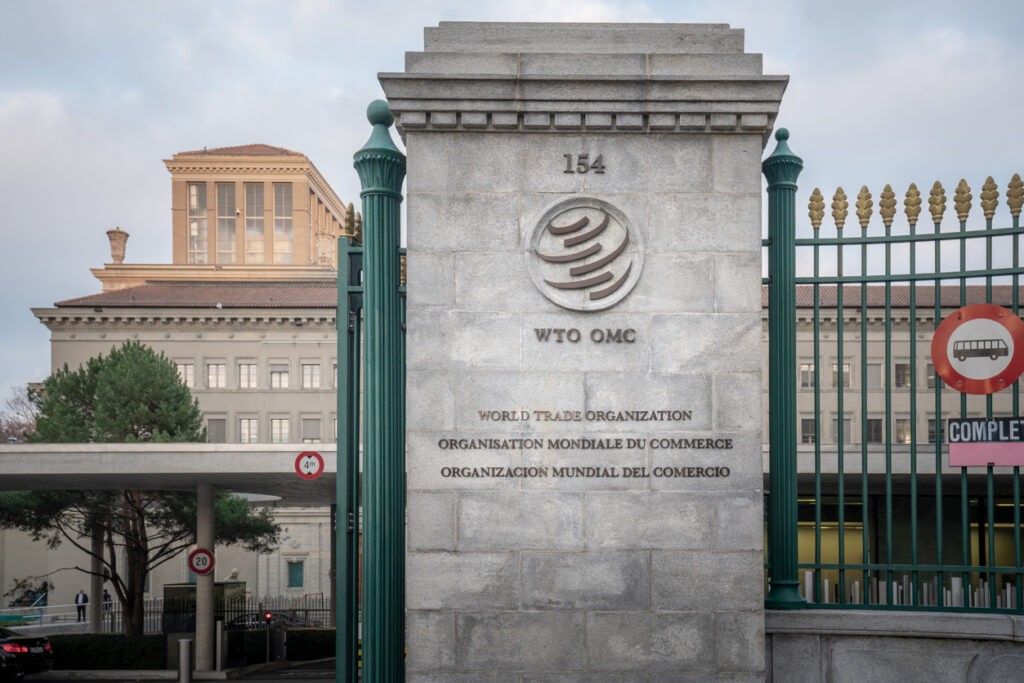
According to a report issued by Azizbek Urunov, President Special Representative on International Trade, Uzbekistan has now completed negotiations on membership of the World Trade Organization (WTO) with 18 countries.

Negotiations with Argentina closed on September 13, and protocols on finalizing market access negotiations have been signed with 14 of the 18 member countries, including Brazil and Sri Lanka. Posting on LinkedIn on September 12, Urunov wrote: “In the margins of the WTO Public Forum, we had signing ceremonies with the participation of DPM Jamshid Khodjaev, DDG Xiangchen Zhang, and ex-DDG Alan Wolff. The Uzbek delegation, led by Madam Saida Mirziyoyeva, is participating in the 2024 WTO Public Forum in Geneva.”

After pursuing its goal for almost 30 years, Uzbekistan seeks further support from the U.S. support to join the World Trade Organization. To date, the U.S. has provided some technical help, and during a recent visit, U.S. Trade Representative Katherine Tai reaffirmed America’s support.  However, to forward progress and strengthen trade ties, Uzbekistan could benefit from greater involvement from such U.S. institutions as the Development Finance Corporation (DFC), Export-Import Bank (EXIM), and the U.S. Trade and Development Agency (USTDA).

Following a meeting with Katherine Tai during her visit to Uzbekistan in June, Uzbekistan’s Presidential Assistant, Saida Mirziyoyeva stated,  “We intend to become a full-fledged participant in the international trade system and rely on the support of the United States to accelerate the process of Uzbekistan becoming a member of the WTO.”

For background, Uzbekistan initiated the process of joining the WTO in 1994 before abandoning it 2005. In 2019, the country strengthened its efforts to become a member of the WTO, and on July 7, 2020, the joint working group was restored.

Economy Minister: 70% of Tajikistan’s Trade is With SCO Countries

The Pakistani capital of Islamabad has hosted the 23rd meeting of the Ministers of the Shanghai Cooperation Organization (SCO) Member States responsible for Foreign Economic and Trade Activities.

The Minister of Economic Development and Trade of Tajikistan, Zavqi Zavqizoda, who participated in the meeting, said that the country considers the development of relations within the SCO as one of its foreign policy priorities.

“Foreign trade turnover between Tajikistan and the SCO countries demonstrates steady growth, and every year, more than 70% of the republic’s foreign trade is with SCO countries,” Zavqizoda said.

He recalled that the SCO accounts for almost half of the world’s population and 27% of global GDP, making the region a massive market with great opportunities.

Zavqizoda noted that Tajikistan initiated the economic development strategy for the next five years with the SCO, which was developed and adopted by the organization’s member states.

He proposed to the participants a plan related to developing and implementing large infrastructure projects and expanding cooperation in digital and green economy, green energy, and e-commerce.

It was also noted that wide use of transit opportunities of Tajikistan is envisaged.

The Times of Central Asia has reported that Tajikistan seeks to become a central international transit hub. In the next two years, 317 kilometers of international highways will be commissioned in Tajikistan. In the remaining months of 2024, Tajikistan will continue implementing projects for highway reconstruction, with the construction of 32 bridges, five tunnels with a length of 11.2 km, and seven avalanche corridors aiming to turn the country into an international transit route.

Tajikistan to Host First International Tourism Exhibition

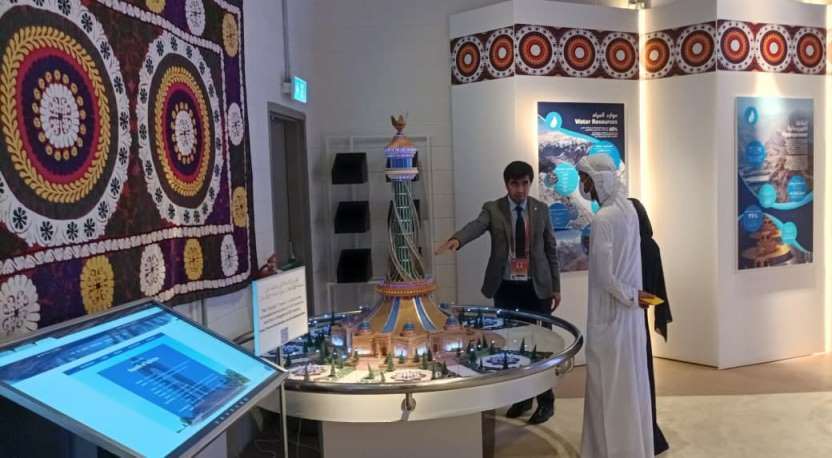
To coincide with World Tourism Day, Tajikistan will host its first International Tourism Exhibition (DITE) in Dushanbe from September 25 to 27, 2024.

Initiated by the city’s head, Rustami Emomali, the key aims of the event are to promote the development of the tourism industry and the formation of a regional tourism market, and attract foreign investment.

The exhibition will bring together Tajikistan’s tourism companies as well as representatives of tourist industries in countries including Austria, Pakistan, Iran, Russia, Belarus, Turkey, China, Turkmenistan, Kazakhstan, Azerbaijan, Qatar, and Uzbekistan, and will be complemented by an International Tourism Forum and B2B meetings where new cooperation agreements will be signed.

In addition, consulting sessions will provide opportunities for hotel businesses and guides to improve their levels of service and professionalism in the industry.

As reported by the Committee for Tourism Development of Tajikistan to ASIA-Plus, 748.3 thousand foreigners, of which 91.9% were residents of CIS countries, visited Tajikistan within the first six months of this year. The number of tourists totaled 580.5 thousand, 422,614 of whom hailed from neighboring Uzbekistan, rose by 19.1% compared to the same period last year.


Tokayev: Russia is “Militarily Invincible”

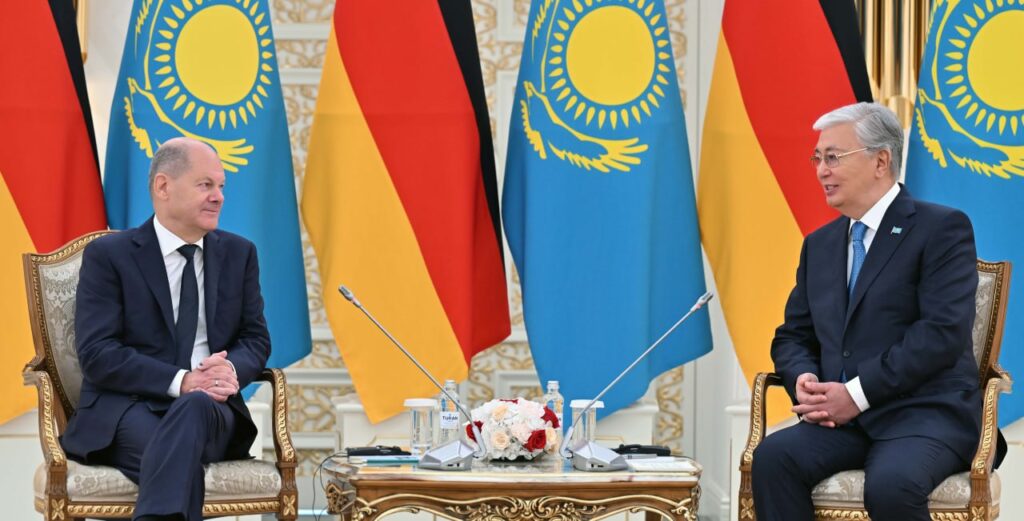
During a meeting in Astana with German Chancellor Olaf Scholz, Kazakhstan’s President Kassym-Jomart Tokayev spoke about resolving the Russian-Ukrainian war.

According to Tokayev, further escalation of the war will only lead to irreparable consequences for all mankind and, above all, for all countries directly involved in the war.

Tokayev said: “The fact is that Russia is militarily invincible. Unfortunately, a good chance to achieve at least a truce was lost with the refusal to conclude the Istanbul Agreement. But the opportunity for peace still exists. We need to carefully consider all peace initiatives put forward by various states, come to a decision to stop hostilities, and then move on to discussing territorial issues. In our opinion, the peace plan of China and Brazil deserves support.”

Tokayev reminded the public that Kazakhstan has the world’s longest delimited land border with Russia. He further stated that “cooperation between our countries is developing within the framework of strategic partnership and alliance. In Kazakhstan, we have genuine sympathy for the Ukrainian people and their distinctive culture. There have never been any disagreements between our states. The embassy of our country continues to function in Kyiv.”

While his comments about seeking peace before discussing territorial issues may seem like Tokayev is backing Russia, in 2022, he said that Kazakhstan would not recognize the independence of the so-called Donetsk and Luhansk people’s republics (“DNR” and “LNR”). Speaking about the ‘republics’, he noted that the two basic principles of the UN Charter — the right to self-determination for nations, and the territorial integrity of states — have come into mutual contradiction. On this topic, Tokayev noted: “It is estimated that if the right of self-determination for a nation is realized on the globe, then instead of the current 193 states, more than 500-600 states will emerge on Earth. It will be chaos. For this reason, we do not recognize Taiwan, Kosovo, South Ossetia, or Abkhazia. We will apply this principle to all quasi-state territories, which, in our opinion, includes Luhansk and Donetsk.”