• KGS/USD = 0.01144 0%
  • KZT/USD = 0.00211 0%
  • TJS/USD = 0.10460 0%
  • UZS/USD = 0.00008 0%
  • TMT/USD = 0.28571 0.28%
  • KGS/USD = 0.01144 0%
  • KZT/USD = 0.00211 0%
  • TJS/USD = 0.10460 0%
  • UZS/USD = 0.00008 0%
  • TMT/USD = 0.28571 0.28%
  • KGS/USD = 0.01144 0%
  • KZT/USD = 0.00211 0%
  • TJS/USD = 0.10460 0%
  • UZS/USD = 0.00008 0%
  • TMT/USD = 0.28571 0.28%
  • KGS/USD = 0.01144 0%
  • KZT/USD = 0.00211 0%
  • TJS/USD = 0.10460 0%
  • UZS/USD = 0.00008 0%
  • TMT/USD = 0.28571 0.28%
  • KGS/USD = 0.01144 0%
  • KZT/USD = 0.00211 0%
  • TJS/USD = 0.10460 0%
  • UZS/USD = 0.00008 0%
  • TMT/USD = 0.28571 0.28%
  • KGS/USD = 0.01144 0%
  • KZT/USD = 0.00211 0%
  • TJS/USD = 0.10460 0%
  • UZS/USD = 0.00008 0%
  • TMT/USD = 0.28571 0.28%
  • KGS/USD = 0.01144 0%
  • KZT/USD = 0.00211 0%
  • TJS/USD = 0.10460 0%
  • UZS/USD = 0.00008 0%
  • TMT/USD = 0.28571 0.28%
  • KGS/USD = 0.01144 0%
  • KZT/USD = 0.00211 0%
  • TJS/USD = 0.10460 0%
  • UZS/USD = 0.00008 0%
  • TMT/USD = 0.28571 0.28%

Kazakhstan’s Lamb Gaining Ground in Arab Markets

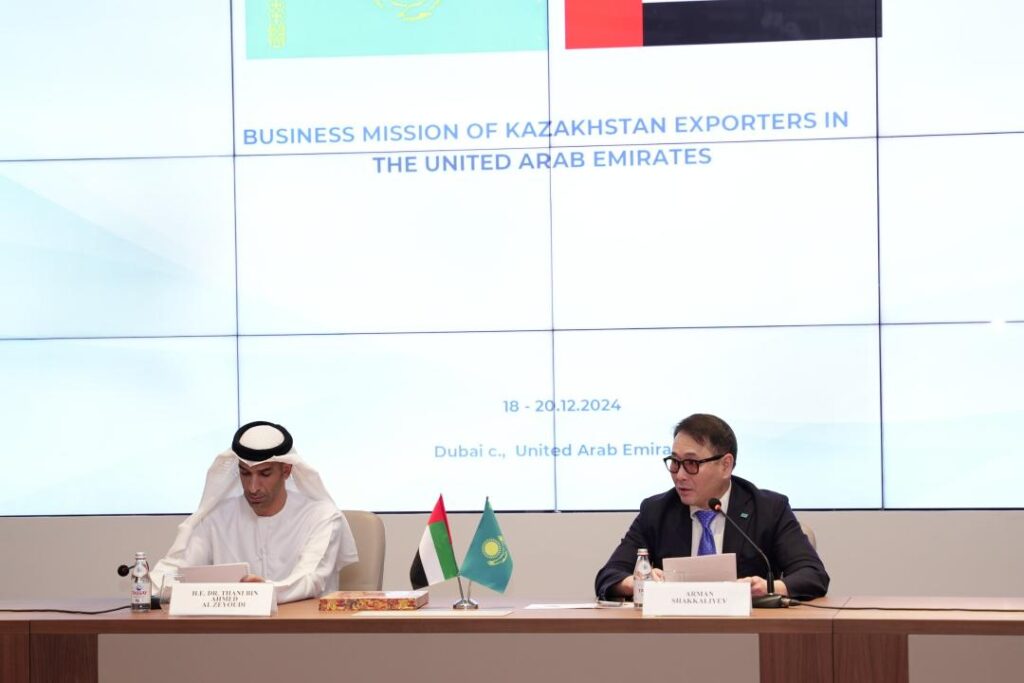
Demand for Kazakh food products is on the rise in the United Arab Emirates (UAE), which imports over $23 billion worth of agricultural goods annually. Kazakhstan’s agricultural exports to the UAE were a key focus during a meeting in Dubai between Kazakhstan’s Minister of Trade and Integration, Arman Shakkaliyev, and UAE Minister of State for Foreign Trade, Thani bin Ahmed Al Zeyoudi​.

Shakkaliyev reaffirmed Kazakhstan’s readiness to supply organic agricultural products, with chilled lamb emerging as a standout item in the UAE market.

During the first ten months of 2024, Kazakhstan exported 13,300 tons of lamb to the UAE, valued at $45.3 million. This marks a twofold increase in export volume and a 64% rise in revenue compared to the same period in 2023.

In addition to lamb, Shakkaliyev highlighted Kazakhstan’s capacity to export high-quality flour, sunflower oil, confectionery, and dairy products to the UAE.

The minister also emphasized Kazakhstan’s commitment to developing halal certification for its agricultural products. “Since 2014, more than 1,800 domestic and foreign companies have been certified, demonstrating the high quality and compliance of Kazakhstani products with international standards,” he noted.

As part of the meeting, a tasting session showcased Kazakhstani lamb, confectionery, and apples, further promoting the country’s agricultural offerings.

Kazakhstan’s lamb exports have also seen significant growth in other Arab markets. According to the Kazakh Ministry of Trade and Integration, lamb exports to Qatar have increased by 75% since the beginning of 2024.

Kyrgyzstan Cracks Down on Major Religious Extremist Organization

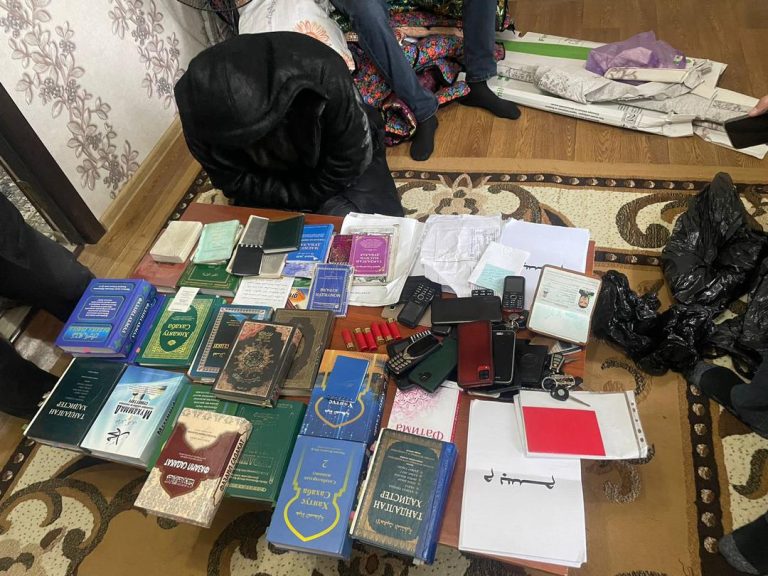
In Jalal-Abad, officers of Kyrgyzstan’s State Committee for National Security (SCNS) neutralized one of the largest structural networks of the banned religious extremist organization Hizb ut-Tahrir.

According to the SCNS press service, 22 active members of the organization were detained, including the leader (“masul”), five spiritual leaders (“nakibs”), and eight teachers (“mushrifs”) who taught extremist ideology to small groups of 3-5 students in clandestine settings.

The SCNS reported that the detainees had been actively spreading destructive ideas, recruiting supporters, and distributing extremist materials for several years.

During the operation, authorities discovered an underground printing house where extremist materials were being produced. A large cache of literature, as well as computers and copying equipment, was seized. The SCNS also noted that members of the network used drones to ensure the security of their meetings by detecting possible surveillance by law enforcement agencies.

The detainees are currently being held in the SCNS detention center, and investigations are ongoing to identify additional members of the network and their activities.

Hizb ut-Tahrir is an international religious extremist organization banned in Kyrgyzstan since 2003. Its goal is to establish a global Islamic caliphate by overthrowing secular governments. The organization is particularly active in Kyrgyzstan’s southern regions, where it promotes extremist ideology and recruits new members. Kyrgyz authorities have been proactive in combating Hizb ut-Tahrir, regularly detaining its members and working to suppress its activities.

Kyrgyzstan Unveils Ambitious Growth Plans at People’s Kurultai

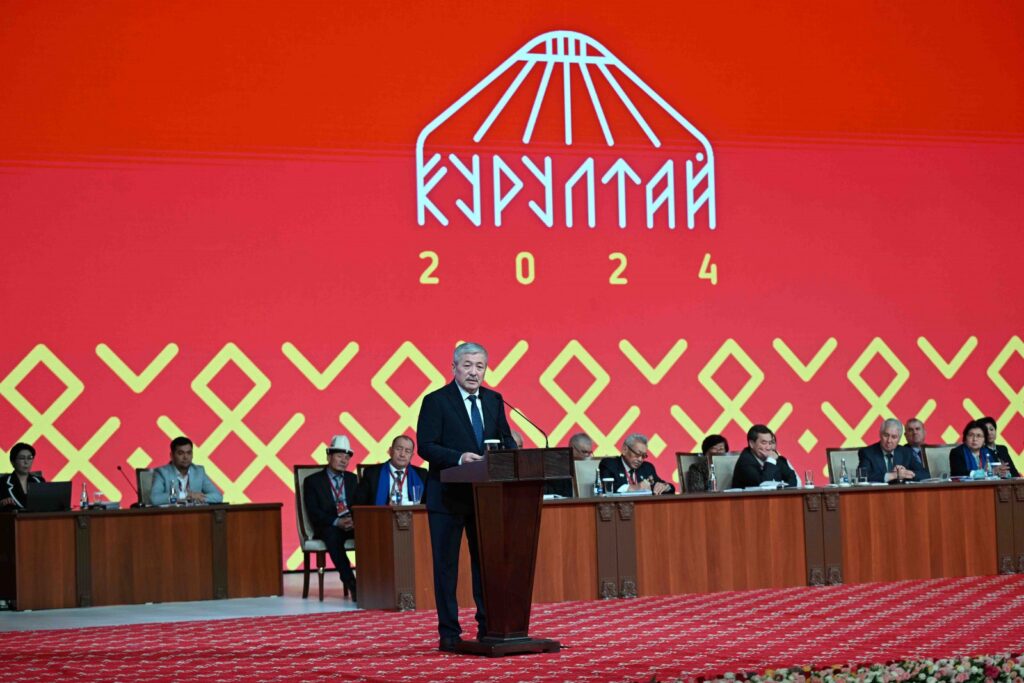
On December 20, Bishkek hosted the third People’s Kurultai (Congress), a platform for direct dialogue between representatives of local communities from across Kyrgyzstan and the country’s top leadership. The event featured opening remarks by President Sadyr Japarov and a detailed address by newly appointed Chairman of the Cabinet of Ministers, Adylbek Kasymaliyev, who outlined the government’s economic priorities and strategic plans for the future.

Japarov set the tone for the event by sharing his vision for Kyrgyzstan’s development priorities. He announced that construction of the long-anticipated China-Kyrgyzstan-Uzbekistan railway will commence on December 27.

Kasymaliev, in his address, emphasized Kyrgyzstan’s ability to sustain economic momentum, citing the country’s 9% annual GDP growth rate over the past three years. He highlighted key initiatives aimed at transforming Kyrgyzstan’s economic landscape, including:

  • Strategic Infrastructure Projects: Kasymaliyev underscored the significance of the China-Kyrgyzstan-Uzbekistan railway, which is expected to create new economic centers and logistics hubs, effectively positioning Kyrgyzstan as a “land port” in the region.
  • Hydropower and Renewable Energy: As a reliable partner in Central Asia’s hydropower sector, Kyrgyzstan will continue collaborating with Kazakhstan and Uzbekistan on the flagship Kambarata-1 hydroelectric power plant. Kasymaliyev also announced plans to expand solar and wind energy, eliminate state monopolies in the energy sector, and create conditions to attract private investment.
  • Agriculture and Food Security: The government will prioritize agricultural processing to add value to raw products, ensuring food security and bolstering rural economic development.
  • Construction as an Economic Driver: With construction contributing 7.4% of Kyrgyzstan’s GDP – a tenfold increase since 2013 – Kasymaliyev called the industry a vital indicator of economic growth. He noted that construction has significantly improved citizens’ well-being over the past three years.

Government’s Strategic Goals

Kasymaliyev laid out an ambitious roadmap for the Cabinet of Ministers, aiming for the following by 2030:

  • Economic Growth: Maintaining a GDP growth rate of 9% and achieving a GDP of $30 billion.
  • Income Growth: Raising GDP per capita from $2,500 to $4,000.
  • Economic Transition: Shifting from a services-oriented economy to an industrial-agrarian model.
  • Support for Small and Medium Businesses: Increasing their share in GDP from the current 40.5% to 50%.
  • Poverty Reduction: Lowering the poverty rate to 17%.
  • Education Expansion: Ensuring 80% of preschool-age children have access to kindergarten.

Kasymaliyev’s address underscored the government’s commitment to comprehensive economic reforms and regional cooperation. His plans reflected an optimistic vision for Kyrgyzstan’s development while addressing key challenges in energy, infrastructure, and social services.

Central Asia Faces Devastating $9 Billion Annual Loss from Climate Crises

Central Asia faces a complex mix of development challenges, according to a study conducted by the Analytical Credit Rating Agency (ACRA). These include global issues such as climate change, rising inequality, and demographic shifts, alongside regional concerns like water crises, aging infrastructure, border conflicts, and lack of access to sea routes.

The region’s challenges can be categorized into external and internal risks. Since gaining independence, Central Asia has been shaped by the influence of global powers. Trade, security, energy, and education ties with Russia remain strong, while China’s Belt and Road Initiative has led to significant investment in infrastructure. Western nations and multinational corporations are active primarily in the raw materials sector, particularly in Kazakhstan, Uzbekistan, and Turkmenistan.

While these international connections drive economic growth, they also heighten the region’s vulnerability to global shocks. For example, heavy reliance on remittances from migrant workers and low export diversification increase economic fragility.

Climate change poses one of the most pressing threats to the region. Natural disasters—including floods, which affect about one million people annually, and earthquakes, impacting two million – result in $9 billion in annual GDP losses. Rising temperatures are expected to exacerbate issues such as water scarcity, droughts, heat waves, and the loss of agricultural land. Adopting sustainable development practices and green technologies could help mitigate these effects.

Aging water and energy infrastructure is a major hurdle for the region. Energy insecurity, compounded by climate change, limits economic potential. Despite a rise in foreign investment from $1.5 billion in 2000 to $7.4 billion in 2023, the majority of funds are concentrated in raw materials, with only a small share allocated to infrastructure improvements.

Transport development is equally critical. The lack of sea access places Central Asia at a 20% developmental disadvantage compared to coastal nations. Expanding roads, railways, and logistics hubs could significantly enhance regional and international trade.

Territorial disputes, particularly around enclaves, remain a source of periodic clashes, with the Kyrgyz-Tajik border clashes of 2022 being a notable example. While these conflicts may not immediately affect economic stability, escalations could damage the region’s investment climate and trade prospects. A peace agreement signed later in 2022 has helped to stabilize the situation.

Additionally, the situation in Afghanistan continues to present challenges, including terrorism, refugee flows, and border security concerns. These risks intensified following the regime change in Afghanistan in 2021, increasing the urgency for stronger border controls.

Addressing these interconnected challenges will require coordinated efforts among all Central Asian nations. International organizations and major global partners must also play a role by supporting infrastructure and technological modernization. Such collaboration is essential to mitigating economic risks and fostering long-term development in the region.

Kyrgyzstan MP Proposes Legalization of Marijuana

At a recent session of the Jogorku Kenesh, Kyrgyzstan’s parliament, Kyrgyz MP Dastan Bekeshev proposed revising the country’s approach to drug policy. Bekeshev suggested distinguishing between the lesser and greater evils of drug use, advocating for the legalization of light natural substances, such as marijuana, while emphasizing the dangers of synthetic drugs​​​.

Bekeshev argued that banning and destroying natural drugs only drives up their prices, pushing young people toward cheaper but far more harmful synthetic alternatives. He stressed that this approach exacerbates the drug problem rather than solving it.

The idea of legalizing light drugs is not new for Bekeshev. In 2019, he proposed creating a designated zone at the former Manas airbase where the sale and use of light drugs would be permitted. Similarly, in 2017, former National Bank head Tolkunbek Abdygulov suggested that legalizing marijuana could help boost tourism in Kyrgyzstan​​.

These proposals have sparked heated debates among Kyrgyz society and lawmakers, with opinions divided over balancing drug control with reducing the negative consequences of drug use.

Regional Context

The debate on legalizing light drugs is not unique to Kyrgyzstan. Across the Eurasia region, similar proposals have surfaced but have yet to gain official approval. In 2013, Russia called on CIS countries to adopt a joint statement opposing the legalization of light drugs, citing the potential risks of their spread. In 2023, Russian Interior Minister Vladimir Kolokoltsev reiterated Moscow’s firm stance against legalization, blaming Western propaganda for negatively influencing youth​​.

Belarus has also explored the idea of legalizing psychedelics and other light drugs. However, no official measures have been enacted, reflecting the prevailing opposition to drug legalization within the CIS.

Bekeshev’s proposal continues to fuel conversations about whether Kyrgyzstan could break with the regional norm and take a different approach to drug policy. As the debate unfolds, questions remain about the potential economic and social impacts of such a move.

Kazakhstan’s Construction Sector Pushes for Easier Access to Migrant Labor

The Chairman of the Union of Builders of Kazakhstan (UBK), Talgat Yergaliyev, has called for simplifying the hiring process for foreign labor in Kazakhstan’s construction industry, citing a severe workforce shortage.

“Today, our young people prefer office jobs, and no one wants to work in production. Year after year, the number of workers in the labor market is shrinking, and even government agencies are facing staffing shortages. In the construction industry, this problem is even more pronounced,” Yergaliyev said during a joint press conference with the National Chamber of Entrepreneurs of Kazakhstan, Atameken. “That’s why we propose following Russia’s example by attracting foreign labor to the construction sector.”

However, Yergaliyev noted that Kazakhstan lacks mechanisms to support the large-scale hiring of migrant workers. By comparison, Russian construction companies pay 80,000 rubles ($790) annually for a patent to hire foreign workers, while a similar permit in Kazakhstan costs construction firms nearly double—700,000 KZT ($1,300) or more.

Yergaliyev also acknowledged that low wages are a significant factor deterring Kazakhs from working in construction. “To retain Kazakhstani workers on construction sites today, they must be paid between $800 and $2,000. Otherwise, they will move to other sectors where the work is less demanding,” he explained.

The labor shortage in Kazakhstan’s construction industry is reaching critical levels. According to The Times of Central Asia, there are currently about 111,000 unfilled vacancies in the sector, and authorities project that this deficit could double by 2030​. Despite this growing need, Kazakhstan’s Ministry of Labor and Social Protection reduced the foreign labor quota in November, potentially exacerbating the issue.

Yergaliyev’s proposal underscores the urgent need to address the labor shortfall while balancing fair wages for local workers with the costs of hiring migrant labor.