• KGS/USD = 0.01144 0%
  • KZT/USD = 0.00193 -0%
  • TJS/USD = 0.10811 -0.28%
  • UZS/USD = 0.00008 0%
  • TMT/USD = 0.28490 0%
  • KGS/USD = 0.01144 0%
  • KZT/USD = 0.00193 -0%
  • TJS/USD = 0.10811 -0.28%
  • UZS/USD = 0.00008 0%
  • TMT/USD = 0.28490 0%
  • KGS/USD = 0.01144 0%
  • KZT/USD = 0.00193 -0%
  • TJS/USD = 0.10811 -0.28%
  • UZS/USD = 0.00008 0%
  • TMT/USD = 0.28490 0%
  • KGS/USD = 0.01144 0%
  • KZT/USD = 0.00193 -0%
  • TJS/USD = 0.10811 -0.28%
  • UZS/USD = 0.00008 0%
  • TMT/USD = 0.28490 0%
  • KGS/USD = 0.01144 0%
  • KZT/USD = 0.00193 -0%
  • TJS/USD = 0.10811 -0.28%
  • UZS/USD = 0.00008 0%
  • TMT/USD = 0.28490 0%
  • KGS/USD = 0.01144 0%
  • KZT/USD = 0.00193 -0%
  • TJS/USD = 0.10811 -0.28%
  • UZS/USD = 0.00008 0%
  • TMT/USD = 0.28490 0%
  • KGS/USD = 0.01144 0%
  • KZT/USD = 0.00193 -0%
  • TJS/USD = 0.10811 -0.28%
  • UZS/USD = 0.00008 0%
  • TMT/USD = 0.28490 0%
  • KGS/USD = 0.01144 0%
  • KZT/USD = 0.00193 -0%
  • TJS/USD = 0.10811 -0.28%
  • UZS/USD = 0.00008 0%
  • TMT/USD = 0.28490 0%
10 December 2025

Chinese Firms to Build 250 MW Solar Power Plant in Southern Kyrgyzstan

Kyrgyzstan’s Ministry of Energy has signed an investment agreement with China’s State’s Technology Co., Limited and San Energy Co. for the construction of a 250-megawatt solar power plant in the country’s south.

According to the ministry, the facility will be built on 669 hectares in the village of Ak-Turpak in the Batken region. Construction is set to begin this year, with commissioning planned for 2027. Once operational, the plant will supply electricity to the National Electric Grids of Kyrgyzstan.

The Ministry of Energy also signed a memorandum of cooperation with the Power Construction Corporation of China (POWERCHINA). The agreement aims to attract international investors and financial institutions to support joint energy projects in Kyrgyzstan.

The memorandum outlines provisions for conducting long-term energy system development planning, providing training for Kyrgyz energy managers and engineers, and exploring the feasibility of constructing floating solar power plants on the Toktogul Reservoir, the country’s largest.

These initiatives are part of a broader strategy to expand Kyrgyzstan’s power generation capacity and address persistent electricity shortages nationwide.

Karakalpakstan to Become Data Center Hub Under Uzbekistan’s Digital Strategy

Uzbek President Shavkat Mirziyoyev has launched the second phase of the IT Park Uzbekistan innovation complex in Tashkent’s Mirzo-Ulugbek district, signaling a major advance in the country’s digital transformation agenda.

Speaking to Uzbekistan 24, Minister of Digital Technologies Sherzod Xotamovich said the next stage of digital development will prioritize AI integration. Mirziyoyev has directed that AI technologies be embedded in the expansion of IT Park to foster a comprehensive national innovation ecosystem.

The new phase of IT Park will accommodate AI-focused startups and modern data centers equipped with high-performance graphic processors capable of handling large-scale data processing. A flagship project is a 12-megawatt data center under construction by Saudi firm DataVolt, which is set to become the largest facility of its kind in Central Asia, purpose-built for AI applications.

DataVolt intends to expand its investments in Uzbekistan, with the total capacity of future data centers expected to reach 500 megawatts. This would position Uzbekistan as a leading regional hub for data storage and processing.

Mirziyoyev also identified Karakalpakstan as a strategic location for energy-intensive digital projects. He proposed transforming the region into a large-scale data center hub, offering major incentives to investors contributing more than $100 million. These include tax breaks and infrastructure support, as well as a preferential electricity tariff of five cents per kWh, significantly lower than the current average rate of about eight cents.

Authorities are targeting global tech firms such as Google, Microsoft, Meta, and Amazon to establish data operations in Uzbekistan. The initiative is designed to strengthen the country’s position as a regional digital hub and accelerate the integration of AI across key sectors of the economy.

U.S. Envoys Experience Kazakhstan’s Living Nomadic Traditions

U.S. Special Representative for South and Central Asia Sergio Gor and Deputy Secretary of State Christopher Landau recently visited Kazakhstan as part of preparations for the upcoming C5+1 summit. While official releases highlighted meetings on regional cooperation and stability, local media also noted cultural engagements showcasing Kazakhstan’s living nomadic traditions.

While in Almaty, the U.S. delegation also toured the Shymbulak ski resort and the Medeu high-altitude skating rink. Amidst the picturesque alpine scenery, they participated in traditional archery, an enduring symbol of the nomadic peoples’ skill and heritage.

Archery: A Living Legacy

Traditional archery, known as sadak atu, is experiencing a revival in Kazakhstan. As in the past, both boys and girls train in the discipline, a tradition rooted in the realities of steppe life, where women were equally taught to hunt and defend their communities.

Far more than a sport, archery reflects a nomadic philosophy. In ancient times, the bow served both as a hunting tool and a weapon of war, requiring intricate craftsmanship using wood, bone, and animal tendons. Archers learned to shoot from horseback, relying on instinct and experience rather than sights.

Today, this heritage is inspiring a resurgence of interest among young Kazakhs. Archery clubs are opening across the country, competitions are being held, and the traditional art is gaining popularity.

The 5th World Nomad Games, held in Astana in 2024, prominently featured sadak atu among other ethnic sports. Petropavl also hosted the Kazakhstan Youth Traditional Archery Championship, drawing 400 participants aged 10 to 17, many in national attire. Meanwhile, Uralsk hosted the 4th Republican Traditional Archery Championship, with 270 athletes from 18 regions competing. Coaches expect the popularity of sadak atu and zhamba atu, mounted archery, to grow, offering Kazakhs a tangible link to their ancestral culture and a spectacle that continues to impress international visitors.

Horseback archery at the World Nomad Games 2024; image: TCA, Ilyas Otan

The Tazy: A National Symbol

The Tazy dog, sometimes referred to as the Kazakh or Central Asian greyhound, holds a special place in Turkic heritage. Once indispensable to nomadic hunters, the breed’s cultural and historical value is now protected by state policy.

In 2023, Kazakh President Kassym-Jomart Tokayev was gifted a Tazy puppy called Nauryz, which is named after the spring festival celebrating renewal. The president emphasized the importance of promoting the Tazy and Tobet breeds internationally and called on the Ministry of Foreign Affairs to participate in preservation efforts. A special law was adopted to support this cause.

By 2024, President Tokayev had three Tazy dogs under his care. He is known to walk them personally in his free time. That same year, he gifted two Tazy puppies to French President Emmanuel Macron. Delivered to Paris, the puppies were named Jules and Jeanne.

The Tazy; image: TCA, Stephen M. Bland

Hunting with Birds of Prey: The Wings of Victory

The tradition of hunting with birds of prey, kusbegilik, has deep roots in Turkic culture, dating back millennia. Archaeological evidence from burial mounds confirms its ancient origins. Today, national competitions in kusbegilik are regularly held in Kazakhstan, with top berkutchi (also known as kusbegi) vying for national titles.

Often passed down through generations, kusbegilik is a family tradition. Young hunters typically start with hawks and falcons before progressing to golden eagles, renowned for their power and difficulty to train. According to legend, during times of hardship, skilled eagle hunters helped entire villages survive by providing food.
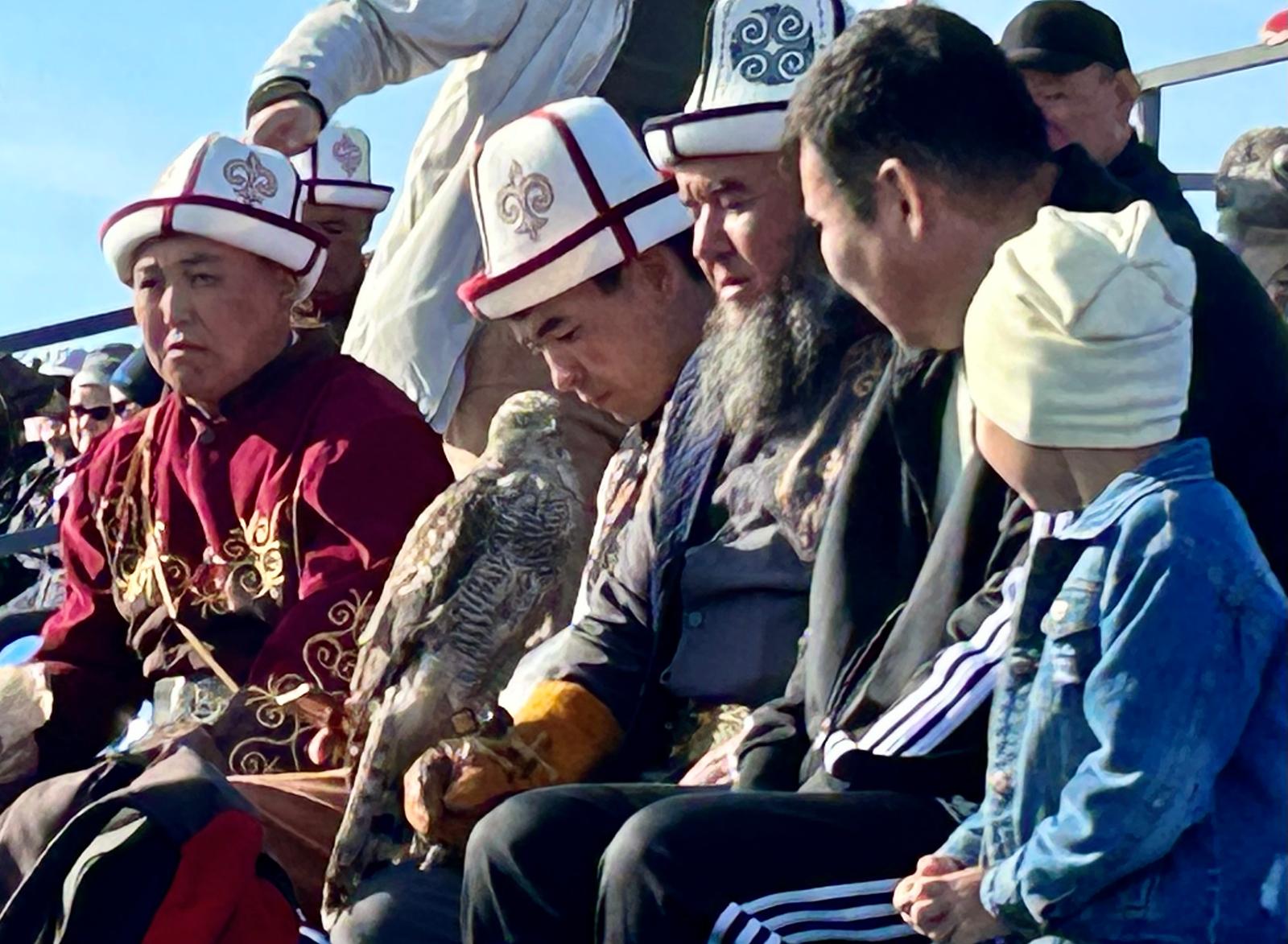
Participants prepare to compete at the World Nomad Games 2024; image: TCA, Stephen M. Bland

Golden eagles, alongside the Tazy and the swift horse, are considered treasured symbols of Kazakh identity. At the 5th World Nomad Games, Kazakhstan took first place in the “Hunting with a Golden Eagle” and “Hunting with a Hawk” categories, while Kyrgyzstan won gold in “Hunting with a Falcon.”

Experts say the revival of these ancient hunting practices does more than preserve cultural heritage; it also supports sports development and boosts tourism.

Massive Glacier Collapse Reported on Mount Ismoil Somoni in Tajikistan

A large section of glacier broke away from Mount Ismoil Somoni in Tajikistan’s Tajikabad district on October 25, according to Asia-Plus, citing the Committee for Emergency Situations (CoES). The incident occurred around 11:00 a.m. near the village of Safedobi.

The CoES reported that the detached ice mass measured approximately two kilometers in length, 25 meters in height, and 150-200 meters in width. It slid down a nearby gorge, prompting swift intervention. By 2:00 p.m., the situation was under control, with no casualties or significant damage reported. However, officials warned that ongoing rainfall and the risk of further glacier collapse could endanger agriculture in the nearby Gulrez area. Emergency services remain on high alert and are monitoring the site closely.

The Ismoil Somoni glacier, one of the largest high-altitude ice masses in Tajikistan, is critical to regional water systems. Experts say the latest collapse is yet another indicator of the accelerating impact of climate change in the Pamir Mountains. Continued glacier retreat could have serious long-term environmental and economic consequences, particularly for water availability used in irrigation and hydropower generation.

A recent study by the Institute of Science and Technology Austria (ISTA) found that the once-stable Pamir-Karakoram glaciers have been losing mass rapidly since 2018. Researchers, led by Francesca Pelliccotti, observed a 40-centimeter reduction in snow depth and a one-third decline in annual precipitation, conditions they described as marking a “point of no return.”

The Pamir and Karakoram glaciers feed the Amu Darya and Syr Darya rivers, which support agriculture and energy production for millions across Central Asia. As glacial melt accelerates, inflow into these rivers has dropped sharply, threatening food and water security across the region.

The Times of Central Asia previously reported that farmers in Tajikistan’s Vahdat district are already grappling with melting glaciers and growing irrigation demands. The recent incident on Mount Ismoil Somoni reinforces the urgency of addressing climate-related risks, which are now directly impacting both ecosystems and livelihoods across the region.

Kyrgyzstan Loosens Livestock Export Ban, But Only by Air

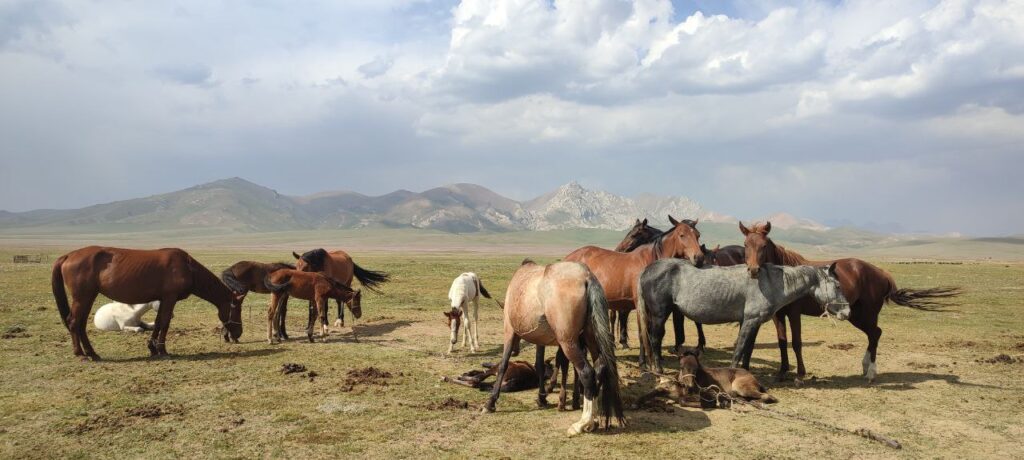
The Kyrgyz government has made an exception to its current ban on livestock exports, allowing horses to be exported by air under specific conditions.

According to an official decree, the temporary export restrictions do not apply to horses transported via aircraft. Other permitted exceptions include the transit of livestock through Kyrgyz territory, the export of animals for participation in international competitions, and the gifting of horses to foreign dignitaries and international organizations.

The exclusive right to export horses abroad has been granted to the state-owned enterprise Kyrgyz Agroholding.

Customs and border control authorities have been ordered to step up oversight to prevent illegal animal exports.

The Cabinet of Ministers initially imposed a six-month ban on the export of cattle, horses, sheep, and goats in response to rising meat prices in the domestic market. Authorities cited the widening price gap between Kyrgyzstan and neighboring countries as a key factor, with significantly higher meat prices abroad prompting farmers to sell livestock across borders.

Tajikistan’s Tigrovaya Balka Nature Reserve Under Threat

The International Union for Conservation of Nature (IUCN) has raised serious concerns about the condition of Tajikistan’s Tigrovaya Balka Nature Reserve, a UNESCO World Heritage site. The IUCN has classified the state of this rare ecosystem as “alarming,” citing deteriorating hydrological conditions and mounting risks to regional biodiversity.

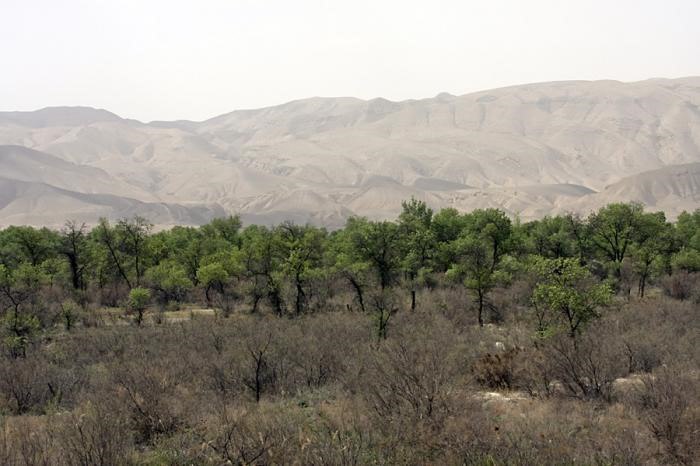
Located at the confluence of the Vakhsh and Panj rivers in southern Tajikistan, Tigrovaya Balka is home to Central Asia’s only remaining natural Tugai forest, a unique riparian ecosystem that depends on periodic flooding for its survival.

The IUCN’s World Heritage Outlook uses four categories to assess sites: “good,” “good with some concerns,” “alarming,” and “critical.” In its latest report, the organization identifies water regulation on the Vakhsh River as the primary threat to the reserve. The construction of reservoirs and increased water extraction for agriculture have disrupted the seasonal floods that historically sustained the forest.

Prior to the 1960s, before large-scale hydropower development began, spring floods replenished groundwater, restored ecosystems, and prevented soil erosion. Today, experts say, the Tugai forest relies almost entirely on surface runoff and drainage water, insufficient to maintain its ecological balance.

The IUCN report notes that approximately one-third of the Vakhsh River’s flow is diverted for irrigation, while about 20% of the remaining water consists of chemically polluted wastewater. This contamination is degrading water quality across the reserve and contributing to the decline of rare aquatic species.

“Pollution damages the aquatic ecosystem, and many species cannot withstand environmental changes,” the report states.

The IUCN emphasizes that much of the available data is observational and requires further scientific validation. It recommends a comprehensive hydrological study that considers the effects of climate change to more accurately assess the threats facing the reserve and to develop effective conservation measures.

Established on November 4, 1938, the Tigrovaya Balka Nature Reserve spans 49,700 hectares across the Dusti, Jaihun, and Kubodyon districts in the Khatlon region. Renowned for its natural beauty, it remains one of the Vakhsh Valley’s key ecological and tourist sites.

The name “Tigrovaya Balka” (Russian for “Tiger Valley” or Beshaï Palangon in Tajik) commemorates the now-extinct Turanian tiger, which once roamed these lands. The last confirmed sighting of the species in the area dates back to the 1950s.