• KGS/USD = 0.01144 0%
  • KZT/USD = 0.00196 -0%
  • TJS/USD = 0.10899 -0%
  • UZS/USD = 0.00008 -0%
  • TMT/USD = 0.28490 0%
  • KGS/USD = 0.01144 0%
  • KZT/USD = 0.00196 -0%
  • TJS/USD = 0.10899 -0%
  • UZS/USD = 0.00008 -0%
  • TMT/USD = 0.28490 0%
  • KGS/USD = 0.01144 0%
  • KZT/USD = 0.00196 -0%
  • TJS/USD = 0.10899 -0%
  • UZS/USD = 0.00008 -0%
  • TMT/USD = 0.28490 0%
  • KGS/USD = 0.01144 0%
  • KZT/USD = 0.00196 -0%
  • TJS/USD = 0.10899 -0%
  • UZS/USD = 0.00008 -0%
  • TMT/USD = 0.28490 0%
  • KGS/USD = 0.01144 0%
  • KZT/USD = 0.00196 -0%
  • TJS/USD = 0.10899 -0%
  • UZS/USD = 0.00008 -0%
  • TMT/USD = 0.28490 0%
  • KGS/USD = 0.01144 0%
  • KZT/USD = 0.00196 -0%
  • TJS/USD = 0.10899 -0%
  • UZS/USD = 0.00008 -0%
  • TMT/USD = 0.28490 0%
  • KGS/USD = 0.01144 0%
  • KZT/USD = 0.00196 -0%
  • TJS/USD = 0.10899 -0%
  • UZS/USD = 0.00008 -0%
  • TMT/USD = 0.28490 0%
  • KGS/USD = 0.01144 0%
  • KZT/USD = 0.00196 -0%
  • TJS/USD = 0.10899 -0%
  • UZS/USD = 0.00008 -0%
  • TMT/USD = 0.28490 0%
08 December 2025

Kyrgyzstan Government Temporarily Bans Road Coal Exports as Shipments to China Surge

On December 3, the government of Kyrgyzstan imposed a six-month ban on the export of coal by road transport. The restriction aims to stabilize the domestic market amid rising demand and does not apply to shipments passing through the Irkeshtam and Torugart checkpoints on the border with China.

Despite its environmental impact, coal remains a critical fuel source for winter heating in Kyrgyzstan, which continues to face chronic electricity shortages. In an effort to curb domestic price increases, the government introduced temporary state regulation of coal prices in September, effective for 90 days.

While domestic needs remain high, coal is also a key export commodity. China has emerged as a growing destination for Kyrgyz coal, with exports reaching 11,600 tons in September 2025, the highest monthly volume recorded this year, according to China’s General Administration of Customs.

Data from the National Statistics Committee of Kyrgyzstan shows that in 2024, the country exported 1.1 million tons of coal worth $52.7 million. Uzbekistan remained the largest buyer, importing 996,600 tons. However, exports to China surged to 118,200 tons, up from just 13,000 tons in 2023.

In late November, Chairman of the Cabinet of Ministers Adylbek Kasymaliev visited the Torugart border checkpoint and the newly opened Torugart-1 coal mine, which began operations on November 12. Kyrgyzkomur OJSC, the national coal company, holds the exploration license for a 557.6-hectare section of the deposit in the At-Bashy District of Naryn Province. Total reserves are estimated at 423,400 tons.

Kasymaliev instructed officials to ensure stable operations at the site and to initiate coal exports from the Torugart-1 mine as soon as possible.

China’s Power Play in Central Asia’s Energy Sector

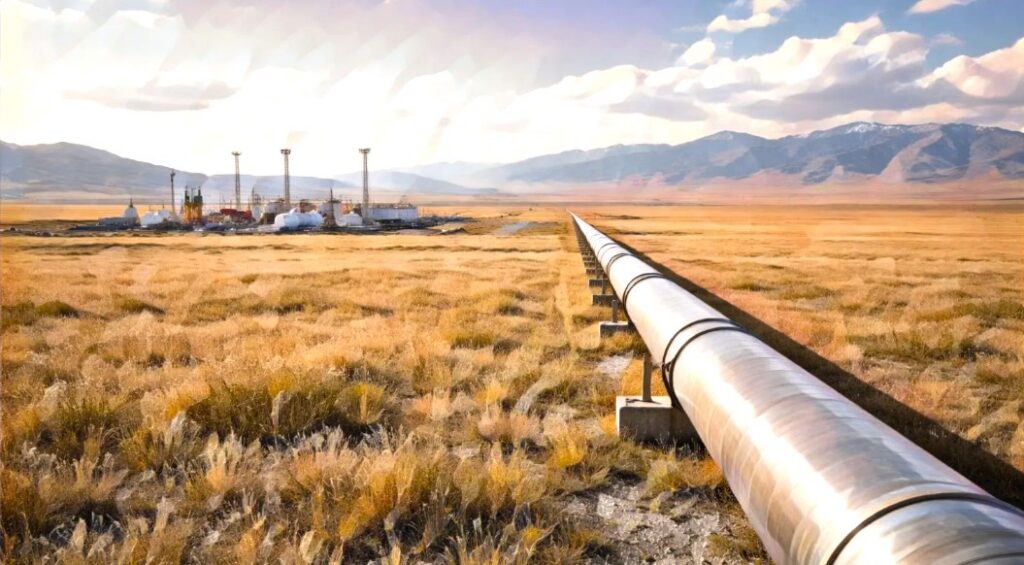
China is steadily expanding its influence in Central Asia’s oil and gas sector through multi-billion-dollar investments, long-term supply agreements, and a growing network of strategic partnerships. From Kazakhstan to Turkmenistan, Beijing’s state-backed companies are securing key upstream and midstream assets, financing new petrochemical and pipeline projects, and positioning themselves as indispensable players in the region’s resource development.

This expansion is driven not only by China’s rising energy demand, but also by Beijing’s ambition to establish durable overland energy corridors that reduce reliance on maritime routes vulnerable to disruption. Central Asia’s existing and planned pipelines provide China with rare direct access to oil and gas fields across its western frontier, making the region a focal point of its broader energy-security strategy and a cornerstone of Beijing’s efforts to diversify supply while deepening political and economic footholds across Eurasia.

Kazakhstan Eyes Chinese Investment Amid Lukoil Sanctions

Kazakhstan may seek to transfer Russian company Lukoil’s stake in the offshore Kalamkas-Khazar oil and gas project to a new partner, with some industry channels, including the Telegram channel Energy Monitor, speculating about possible Chinese interest.

Lukoil, which has been targeted by Western sanctions, is reportedly planning to exit Kalamkas-Khazar Operating LLP, a joint venture with KazMunayGas (KMG). Each company currently holds a 50% stake. Some commentators have suggested that a Chinese investor could step in, but no replacement has been officially confirmed.

Seconded engineers from KMG Engineering are expected to be withdrawn from the project as of January 1, 2026, with several Kalamkas-Khazar staff members temporarily reassigned to other KMG subsidiaries until a new partner is confirmed.

The project is considered highly promising, with earlier estimates citing reserves of 81 million tons of oil and 22 billion cubic meters of gas. New exploration has identified additional oil-bearing structures. A final investment decision (FID) worth more than $6.5 billion was originally expected by the end of 2025. However, U.S. sanctions against Lukoil have delayed progress.

Located 120 km from the Kashagan field in the North Caspian Basin, the Kalamkas-Khazar block comprises the Kalamkas-More and Khazar fields. The site is situated in Kazakhstan’s Mangistau Region, 60 km from the Buzachi Peninsula.

KazMunayGas Chairman Askhat Khasenov previously confirmed that production was expected to begin in 2028-2029, with peak output reaching four million tons annually. Lukoil was sanctioned by the UK on October 15, followed by the U.S., complicating ongoing negotiations. Despite this, major projects where Lukoil holds minority stakes, such as Tengiz, Karachaganak, and the Caspian Pipeline Consortium, have not been impacted.

A Lukoil withdrawal would create a rare opening for China to secure its first significant offshore position in the North Caspian, a zone historically dominated by Western majors and Russian firms. Such an entry would represent a notable shift in Kazakhstan’s offshore partnership landscape.

Beijing’s Billion-Dollar Energy Deals in Kazakhstan

In September 2025, President Kassym-Jomart Tokayev announced a series of energy deals with China valued at $1.5 billion. During his official visit to China, more than 70 commercial agreements totaling approximately $15 billion were signed, several directly involving Kazakhstan’s oil and gas sector.

The breadth of agreements indicates that Kazakhstan is aiming to move beyond raw-resource exports and position itself as a regional petrochemical and processing hub integrated with Chinese industrial supply chains. Key projects include the construction of a gas chemical complex in the Aktobe Region to produce urea, with China National Petroleum Corporation (CNPC) expected to invest around $1 billion.

The China Development Bank has also signaled its readiness to finance the construction of trunk pipelines for transporting ethane and propane in the Atyrau Region, with investment volumes reported at around $530 million.

China’s CNOOC has been reported as receiving a contract for exploration and production at the Zhylyoi field in the Atyrau Region in June, and on December 3, KazMunayGas launched a joint venture with Sinopec to carry out geological surveys.

In October, KazMunayGas announced a new contract with a Sinopec subsidiary to explore and develop hydrocarbons in the Berezovsky area of the West Kazakhstan Region.

During a visit to China in August 2024, KMG Chairman Askhat Khasenov held high-level meetings with CNPC and Sinopec to discuss joint ventures in petrochemicals, geological exploration, refining, and transport. Among the projects was the urea complex, addressing Kazakhstan’s domestic demand of 350,000-400,000 tons annually.

Other initiatives include gas processing at the Urihtau field, expansion of the Shymkent Oil Refinery (PKOP LLP), and increasing capacity along the Atyrau-Kenkik and Kenkik-Kumkol oil pipelines. Additionally, talks covered plans to manufacture polyethylene, terephthalic acid (TFC), and polyethylene terephthalate (PET), with total investments that could exceed $8 billion.

Many of these projects fall under the China–Kazakhstan Industrial Capacity Cooperation framework, which Beijing uses to export Chinese engineering, technology, and financing models abroad.

Despite strengthening ties with Beijing, Kazakh officials stress that the country remains open to investment from the U.S., Russia, and the European Union. The development of Kazakhstan’s fuel and energy complex remains a central pillar of the national economic strategy.

China’s Deepening Energy Ties with Uzbekistan and Turkmenistan

China is also solidifying its energy partnerships with Uzbekistan. In October, Uzbekistan’s Ministry of Energy met with a CNPC delegation led by Chairman Dai Houliang to discuss projects such as the Central Asia-China gas pipeline, new gas condensate field development in the Bukhara Region, underground storage construction, and workforce training for the energy sector.

CNPC’s direct investments in Uzbekistan now exceed $5 billion. Through its joint venture with Uzbekneftegaz, CNPC has built parts of the Central Asia-China gas pipeline, developed the Mingbulak oil field, and modernized the Bukhara refinery.

Uzbekistan has embraced Chinese financing as it works to reverse declining gas output and manage recurring domestic shortages, making Beijing an increasingly vital partner in stabilizing the sector.

In Turkmenistan, CNPC is developing the fourth phase of the massive Galkynysh gas field, with a planned annual capacity of ten billion cubic meters. This project follows high-level talks between President Serdar Berdimuhamedov and Chinese President Xi Jinping in Beijing in September.

China currently imports about 40 billion cubic meters of Turkmen gas annually via three pipeline routes: A, B, and C. With the completion of Line D, total export capacity is expected to rise to 65 billion cubic meters per year.

Turkmenistan sends more than 80% of its gas exports to China, giving Beijing unparalleled leverage in the country’s energy sector and making the completion of Line D strategically important for both sides.

China’s Emerging Dominance in Central Asia’s Energy Architecture

Taken together, these developments show how China is embedding itself across the entire Central Asian energy ecosystem, not only as a buyer of hydrocarbons but increasingly as a financier, operator, and industrial partner. Beijing’s state-backed companies are moving upstream into exploration and production, downstream into petrochemicals and refining, and horizontally into pipeline construction, gas storage, and equipment manufacturing. This multi-layered presence is allowing China to shape investment decisions, infrastructure layout, and export routes across Kazakhstan, Uzbekistan, and Turkmenistan.

By leveraging long-term financing, rapid project execution, and integration into Chinese supply chains, Beijing is steadily building structural influence in a region where Russia once dominated and where Western companies now play more selective roles. The result is an emerging energy order in which China is positioned not simply as a commercial actor, but as a central external power capable of setting the pace and direction of the region’s resource development.

Over Half a Million Tons of Cargo Blocked from Entering Kyrgyzstan in 2025 Over Phytosanitary Violations

In the first 11 months of 2025, Kyrgyzstan’s Department of Plant Protection, Quarantine, and Chemicalization detected 35 cases of non-compliance with phytosanitary requirements at border checkpoints. As a result, 562.5 tons of agricultural cargo were denied entry and returned to the countries of origin.

According to the agency, authorities also blocked the import of more than 70,000 plant seedlings, over 11,000 flowers, and 136 cubic meters of lumber. Diplomatic notes regarding the violations were formally sent to China and the Netherlands.

Violating shipments were either returned, destroyed, or decontaminated, the agency said.

Officials emphasized that phytosanitary controls are a vital component of the country’s environmental safety strategy. These measures are intended to prevent the entry of dangerous quarantine organisms and to safeguard Kyrgyzstan’s agricultural sector and export capabilities.

Border Challenges with Kazakhstan and Russia

Despite efforts to maintain phytosanitary integrity, Kyrgyz exporters continue to face challenges at regional borders. A significant portion of Kyrgyz agricultural exports transit through Kazakhstan to reach Russia. However, Russian authorities frequently reject these shipments, citing non-compliance with their own import standards.

This has led to growing criticism of Kyrgyz representatives at the Eurasian Economic Commission, with farmers accusing them of failing to effectively advocate for the interests of domestic producers.

In response, the Department of Plant Protection and Quarantine has increased outreach to farmers and freight carriers, urging them to meet export quality standards and ensure that accompanying documents are completed correctly.

Compounding the issue, cargo delays at the Kyrgyz-Kazakh border remain common, with transport operators sometimes waiting for several weeks. Similar bottlenecks occur periodically at the Kazakhstan-Russia border. Many Kyrgyz businesses view these delays as unjustified, given that Kyrgyzstan, Kazakhstan, and Russia are all members of the Eurasian Economic Union (EAEU), which guarantees the free movement of goods among member states.

Uzbekistan Plans Chemical Sector Expansion as Cotton Output Target Set at 4.5 Million Tons

On December 3, President Shavkat Mirziyoyev reviewed proposals to expand production, increase exports, and reduce costs in Uzbekistan’s chemical industry, according to a statement from the presidential press service.

The government aims to double the size of the chemical sector by 2030, increase mineral fertilizer production by 1.5 times, and boost annual exports to $1 billion. Currently, 21 major projects worth $1 billion are underway, with an additional $4.5 billion in investments planned over the next three years.

Officials noted that many of Uzbekistan’s large chemical plants still rely on outdated equipment, resulting in high energy consumption and limited competitiveness. For instance, energy costs account for up to 55% of the production price of nitrogen fertilizers. The introduction of energy-efficient technologies and expanded digital management systems was emphasized as a key strategy to reduce production costs across the sector.

Despite strong global demand for chemical products and favorable logistics in neighboring markets, where potential demand is estimated at $1 billion, Uzbekistan has yet to fully tap into these opportunities. Officials proposed increasing domestic raw material processing to develop new products and at least double current export volumes.

In 2025, new production lines for “green” mineral fertilizers, cyanide salts, potassium xanthate, and potassium sulfate began operating in the Tashkent, Navoi, and Jizzakh regions.

In parallel, the government has set a target to produce 4.5 million tons of cotton next year. To support this goal, authorities have instructed officials to build strategic reserves of phosphorus fertilizers, maintain steady supplies of sulfuric acid to manufacturers, and begin issuing preferential loans to farmers for fertilizer purchases as soon as possible.

Mirziyoyev underscored the chemical industry’s strategic role in the national economy, directing officials to ensure reliable domestic supply, enhance export capacity, and create new jobs in the sector.

Uzbekistan’s textile industry has also experienced rapid growth. Since 2017, cotton yarn production has more than doubled, knitted fabric output has increased significantly, and garment manufacturing has expanded from under 1 billion units to over 3 billion. As a result, textile exports have risen from approximately $1.1 billion in 2016 to an estimated $2.8 billion in 2024.

Kazakhstan’s Central Bank Raises Inflation Forecast for 2025-2026

The National Bank of Kazakhstan has raised its inflation forecast for 2025 and 2026 in its baseline scenario, according to the regulator’s November Monetary Policy Report.

The updated forecast projects inflation in the range of 12-13% in 2025 and 9.5-12.5% in 2026. The outlook for 2027 remains unchanged, with inflation expected to slow to 5.5-7.5%.

In comparison, the Bank’s August report had forecast inflation at 11-12.5% for 2025 and 9.5-11.5% for 2026.

The revision reflects persistent inflationary pressures, as both actual inflation and inflation expectations among households and businesses continue to exceed earlier projections. Additionally, administered prices are contributing to the increase. While their growth is expected to decelerate under the “inflation +5%” framework in 2026-2027, the cost of goods and services remains under significant pressure.

The broader forecast range for 2026 highlights rising uncertainty related to the planned tax reform, its impact on aggregate demand, and expanded financing by the quasi-budgetary sector.

Key risks identified by the regulator include:

– rising domestic consumer demand
– accelerating external inflation
– sustained high inflation expectations
– secondary effects from increased regulated prices, including fuel and VAT

A new Tax Code is scheduled to take effect in 2026, raising the VAT rate from 12% to 16%. Additionally, utility tariff and fuel price freezes will be lifted by early Q2 2025, further contributing to inflationary pressure.

The report also flags the scale of state involvement in the economy as a potential inflation driver. “A significant amount of quasi-fiscal injections could increase inflationary pressure and partially offset the effect of the upcoming fiscal consolidation of the republican budget,” the Bank stated.

Despite these risks, the National Bank expects inflationary pressures to ease gradually, supported by a moderately tight monetary policy and anti-inflation measures implemented under a joint program with the government and the Agency for Regulation and Development of the Financial Market.

A further stabilizing factor could be a decline in inflation among Kazakhstan’s key trading partners.

The Times of Central Asia previously reported that the International Monetary Fund links Kazakhstan’s high inflation to signs of economic overheating.

Reuters News Agency Pulls Report on Tajik-Russian Talks on Guarding Afghan Border

The Reuters news agency has withdrawn a story, denied by Tajikistan, that Tajikistan was negotiating with Russia about joint patrols along its troubled border with Afghanistan. 

The removal of the news story comes as China urges Tajikistan to upgrade security along the border, where security officials say five Chinese workers were killed in two separate attacks launched into Tajikistan from Afghanistan last week. Tajik President Emomali Rahmon met senior security officials in his government this week to discuss border security. 

“A Reuters story about Tajikistan holding talks with Russia about helping guard its Afghan border has been withdrawn following a post-publication review showing insufficient evidence. There will be no substitute story,” Reuters said in a statement from Almaty, Kazakhstan. 

Tajikistan has previously said it seeks to collaborate with the Collective Security Treaty Organization (CSTO), a regional group in which Russia is the most powerful member, on efforts to conter threats along its border with Afghanistan. As far back as 2013, the organization said it was planning to provide “military-technical assistance” to Tajikistan’s border of nearly 1,400 kilometers with Afghanistan. 

But Tajikistan’s Ministry of Foreign Affairs denied the Reuters report about “alleged discussions between Tajikistan and the Collective Security Treaty Organization regarding the involvement of Russian military personnel” in joint patrols along the Tajik-Afghan border.

“The Ministry emphasizes that this publication is untrue and that the dissemination of such false information misleads the international audience,” the ministry said on Wednesday. 

Tajikistan is “constantly” taking steps to strengthen the border with Afghanistan and that the situation there “remains stable and is under the full control of the competent authorities” in the country, according to the foreign ministry. Even so, Chinese media reported that the Chinese embassy in Tajikistan has urged its nationals to urgently leave the border area. 

The ruling Taliban in Afghanistan condemned the border attacks and pledged to collaborate in efforts to find those responsible. Mohammad Naeem, the deputy foreign minister, told Zhao Xing, China’s top diplomat in Afghanistan, during a meeting in Kabul that investigations were underway, the Afghan government said Wednesday.