• KGS/USD = 0.01144 0%
  • KZT/USD = 0.00210 0%
  • TJS/USD = 0.10438 0%
  • UZS/USD = 0.00008 0%
  • TMT/USD = 0.28490 0%
  • KGS/USD = 0.01144 0%
  • KZT/USD = 0.00210 0%
  • TJS/USD = 0.10438 0%
  • UZS/USD = 0.00008 0%
  • TMT/USD = 0.28490 0%
  • KGS/USD = 0.01144 0%
  • KZT/USD = 0.00210 0%
  • TJS/USD = 0.10438 0%
  • UZS/USD = 0.00008 0%
  • TMT/USD = 0.28490 0%
  • KGS/USD = 0.01144 0%
  • KZT/USD = 0.00210 0%
  • TJS/USD = 0.10438 0%
  • UZS/USD = 0.00008 0%
  • TMT/USD = 0.28490 0%
  • KGS/USD = 0.01144 0%
  • KZT/USD = 0.00210 0%
  • TJS/USD = 0.10438 0%
  • UZS/USD = 0.00008 0%
  • TMT/USD = 0.28490 0%
  • KGS/USD = 0.01144 0%
  • KZT/USD = 0.00210 0%
  • TJS/USD = 0.10438 0%
  • UZS/USD = 0.00008 0%
  • TMT/USD = 0.28490 0%
  • KGS/USD = 0.01144 0%
  • KZT/USD = 0.00210 0%
  • TJS/USD = 0.10438 0%
  • UZS/USD = 0.00008 0%
  • TMT/USD = 0.28490 0%
  • KGS/USD = 0.01144 0%
  • KZT/USD = 0.00210 0%
  • TJS/USD = 0.10438 0%
  • UZS/USD = 0.00008 0%
  • TMT/USD = 0.28490 0%

Uzbekistan Nuclear Project Could Bring Russia Orders Worth $22 Billion

Uzbekistan’s first nuclear power plant, based on small modular reactor (SMR) technology, has entered a new phase, with initial construction, including concrete works, beginning at the site in the Farish district of the Jizzakh region on March 24. The project is part of Uzbekistan’s long-running plan to diversify its energy mix and reduce reliance on gas-fired power generation.

The milestone was marked by parallel ceremonies held in Tashkent and at the construction site. During the events, Uzbekistan’s nuclear energy agency Uzatom and Russia’s state nuclear corporation Rosatom signed several key documents, formally advancing the project to the implementation stage. These included a cooperation roadmap covering nuclear and related sectors, as well as an addendum to the contract for building an integrated nuclear power facility in Uzbekistan. The documents were signed by Uzatom Director Azim Akhmedkhadjaev and Rosatom Director General Alexey Likhachev.

Speaking to reporters, Likhachev said the project could also have significant economic benefits for Russia. According to the Russian news agency TASS, he stated that construction of even a small reactor unit at the Uzbek site could generate orders worth up to $22 billion for Russian companies. He added that the project could create around 1,000 jobs in Russia.

Likhachev also outlined broader potential economic returns, saying that for every ruble invested during construction, up to 1.5 rubles could be returned to the Russian economy, rising to as much as two rubles during the plant’s operational phase.

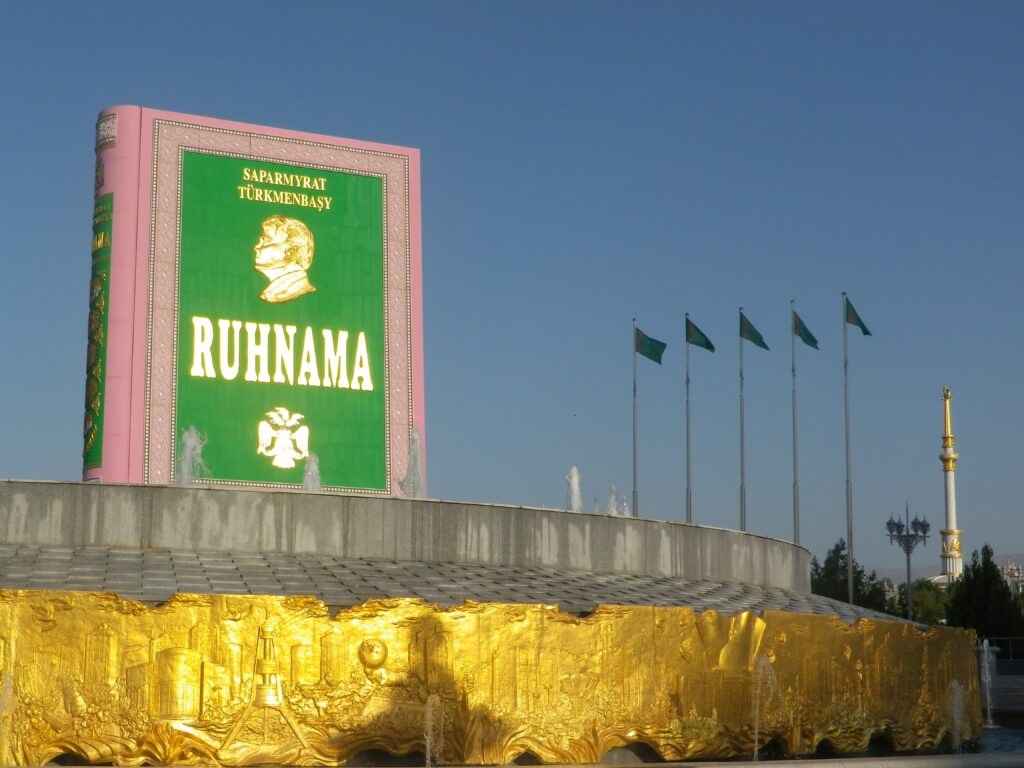
Turkmenistan Promotes Tourism Abroad — While Keeping Its Borders Closed

Turkmen authorities are preparing to host an international tourism forum, once again emphasizing the sector’s potential. However, the reality appears less optimistic. The number of foreign visitors remains extremely low, while a strict visa regime continues to deter not only tourists but also business travellers.

The Turkmen Travel international forum and exhibition is scheduled to take place in Ashgabat from April 14 to 16. Preparations are reportedly being carried out at a high level. Deputy Prime Minister for Culture, Bahar Seydova, briefed officials on the event, and President Serdar Berdimuhamedov has instructed organizers to present the country’s tourism potential in a dignified manner.

At the same time, a paradoxical situation has emerged. Despite the construction of modern hotels in Ashgabat and the Avaza tourist zone, the opening of new airports, and the hosting of international events, foreign tourists visit Turkmenistan extremely rarely. Even travellers with a genuine interest in the country frequently encounter significant visa restrictions.

According to sources, these challenges affect not only tourists. Representatives of international companies also face lengthy and complicated entry procedures.

Market participants note that interest in Turkmenistan does exist. A representative of a travel agency in Ashgabat said that combined tours of Central Asia remain popular among tourists from China, the U.S., European countries, Australia, South America, and Russia. By 2024, demand for trips to Turkmenistan had increased by about 50% compared with the 2018-2020 period. Nevertheless, actual visitor numbers remain very low.

Strict entry rules are also affecting business activity. For example, in February 2024, specialists from South Korea’s Hyundai Engineering were unable to arrive in Turkmenistan on time to carry out restoration work at the polymer plant in Kiyanly following an accident. Their visas were delayed due to bureaucratic procedures. Such cases are reported to occur regularly. While the state is seeking to attract foreign companies to major projects, it often fails to provide basic conditions for their operations.

Against this backdrop, calls to reconsider current policies are becoming more frequent. Without a more open approach, Turkmenistan may struggle not only to increase tourist arrivals but also to support broader economic development.

Repeated Drone Incidents Expose Airspace Risks on Russia–Central Asia Frontier

A new drone-related incident in western Kazakhstan has reinforced a pattern that is becoming harder to dismiss. Police in West Kazakhstan Region confirmed that an object resembling an unmanned aerial vehicle was found in the Akzhayik district near the village of Karaulytobe. Images circulating locally appeared to show a largely intact fixed-wing drone. No casualties or damage were reported.

“The object was discovered outside a populated area. All circumstances of the incident are being investigated,” the department said. Reports and images of the object initially circulated on messaging apps before being confirmed by regional authorities.

This latest discovery fits a sequence of similar incidents across the same region over the past year. As previously reported by The Times of Central Asia, on March 18, 2025, a drone about three meters long was found near Atameken village in Taskala district, around 60 kilometers from the district center.

That case followed another discovery on February 18, 2025, in the Bokeyorda district, where a smaller unidentified object was recovered in a remote area. Within days, further debris was found near the Russian border in Zhanibek district, marking the third such case in a single month.

The pattern continued later in the year. On October 23, 2025, a drone of unknown origin exploded near Kyzyltal village in the Burlin district. Residents reported an explosion that damaged rooftops and left a crater near the village, although no casualties were recorded. Authorities opened a criminal case, with the military prosecutor’s office involved alongside police and emergency services.

Similar findings have appeared beyond the West Kazakhstan Region. On June 19, 2025, fragments resembling a UAV were found in Mangistau Region near the Bolashak border station. The debris was located in an uninhabited area, and no damage was reported.

Taken together, these incidents form a clear geographic cluster along Kazakhstan’s western frontier. Most occurred near the Russian border and in sparsely populated areas. The objects were typically discovered after impact, with no confirmed flight paths or official attribution.

Investigations into earlier cases have linked several incidents to areas used for Russian military testing. Western Kazakhstan includes zones connected to long-standing Russian defense activity under bilateral agreements, and parts of the region remain associated with testing operations.

This context explains the cautious official response. None of the incidents have been described as attacks, and none have been attributed to a foreign state. At the same time, the repeated discoveries point to a growing exposure that goes beyond routine testing.

The wider regional environment has shifted rapidly. The war in Ukraine has driven a sharp expansion in drone use across Eurasia. Both Russia and Ukraine deploy long-range UAVs for reconnaissance and strikes, often over extended distances.

Drone activity has already affected infrastructure linked to Kazakhstan’s economy. On February 17, 2025, a drone attack targeted the Caspian Pipeline Consortium’s Kropotkinskaya pumping station in Russia’s Krasnodar region, part of a key export route for Kazakh oil. Further attacks on offshore loading facilities and terminals continued later in the year, with additional incidents in early 2026. This string of incidents disrupted operations and highlighted Kazakhstan’s indirect exposure to drone warfare beyond its borders. Even when incidents occur outside the country, they can affect the infrastructure that underpins its economy.

The repeated discoveries inside Kazakhstan show a different form of exposure. They do not involve confirmed strikes or deliberate targeting but reflect spillover from expanding drone activity across shared airspace. Western Kazakhstan’s proximity to Russian military activity increases the risk of unintended incursions. The terrain is flat and sparsely populated, allowing UAVs to travel long distances without detection, while navigation failures or signal loss can push them off course.

As drone use expands, such incidents are becoming more likely. More systems are operating over longer ranges, increasing the risk of cross-border drift. Countries near testing zones or conflict-adjacent regions face growing exposure, even without direct involvement.

Kazakhstan has begun to respond. Following the Burlin district explosion, the Ministry of Defense introduced additional measures to strengthen airspace monitoring and prevent unauthorized aerial crossings.

The incidents in western Kazakhstan show how this challenge is developing. The country is not a battlefield, but it lies close to areas where military activity continues at scale. Repeated drone discoveries now show that Central Asia is no longer insulated from the technological and military changes reshaping nearby regions.

Despite Growth Plans, Trade Between Kazakhstan and Russia Declined in 2025

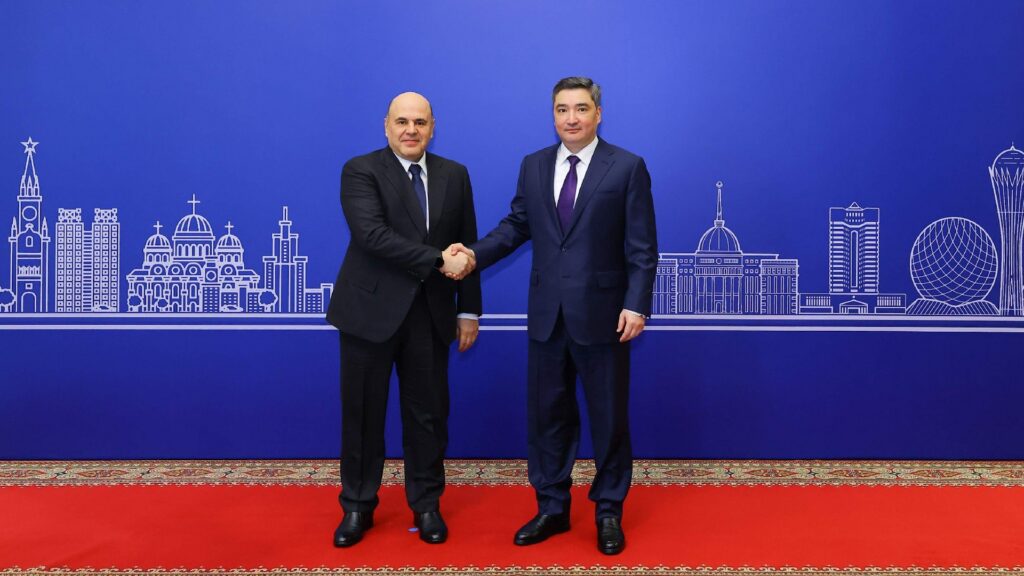
Trade and economic ties between Kazakhstan and Russia showed signs of slowing in 2025. By the end of the year, bilateral trade totaled $27.4 billion, a slight decrease compared with the previous year. The figures were announced by Kazakhstan’s Minister of Trade and Integration, Arman Shakkaliev, following talks in Astana between Prime Minister Olzhas Bektenov and Russian Prime Minister Mikhail Mishustin.

A year earlier, bilateral trade had demonstrated growth. In 2024, trade turnover increased by 3% to reach $27.8 billion, largely driven by rising imports of Russian goods into Kazakhstan.

At the same time, exports of Kazakhstani products to Russia declined, pointing to a persistent imbalance in the structure of trade.

The contraction recorded in 2025 reflects a broader trend, a slowdown in growth while overall trade volumes remain relatively high. Despite the decline, both sides continue to set ambitious targets for expanding economic cooperation.

“At the same time, the goal has been set to bring bilateral trade to $30 billion. During the meeting of the heads of government, measures and priority sectors that could generate additional trade growth were discussed. These include energy, commerce, transport and logistics. We also reviewed issues related to the negotiation process and our integration agenda,” Shakkaliev said.

Kazakh authorities expect digitalisation measures to help accelerate trade flows.

Kazakhstan’s Deputy Minister of Finance, Yerzhan Birzhanov, outlined plans to introduce electronic waybills and modernize 30 checkpoints along the Kazakhstan–Russia border. These steps are expected to reduce transit times and improve operational transparency.

Russia remains one of the largest investors in Kazakhstan’s economy.

“There is a very significant presence of Russian business in Kazakhstan, and we welcome it. We are ready to explore new areas of cooperation. I am confident that there are ample opportunities for this. The Government of Kazakhstan will make every effort to intensify and enhance our cooperation,” Bektenov said.

In turn, Mishustin highlighted prospects for further joint initiatives.

“There is considerable potential in bilateral cooperation to launch joint projects in energy, industry, transport infrastructure, agriculture and the digital economy,” he stated.

In addition to economic issues, the two sides discussed joint efforts to preserve the ecosystem of the Caspian Sea and implement environmental initiatives.

External factors are also influencing trade dynamics. In particular, tighter foreign trade procedures introduced by Russia could reshape logistics routes and alter commodity flows across Central Asia.

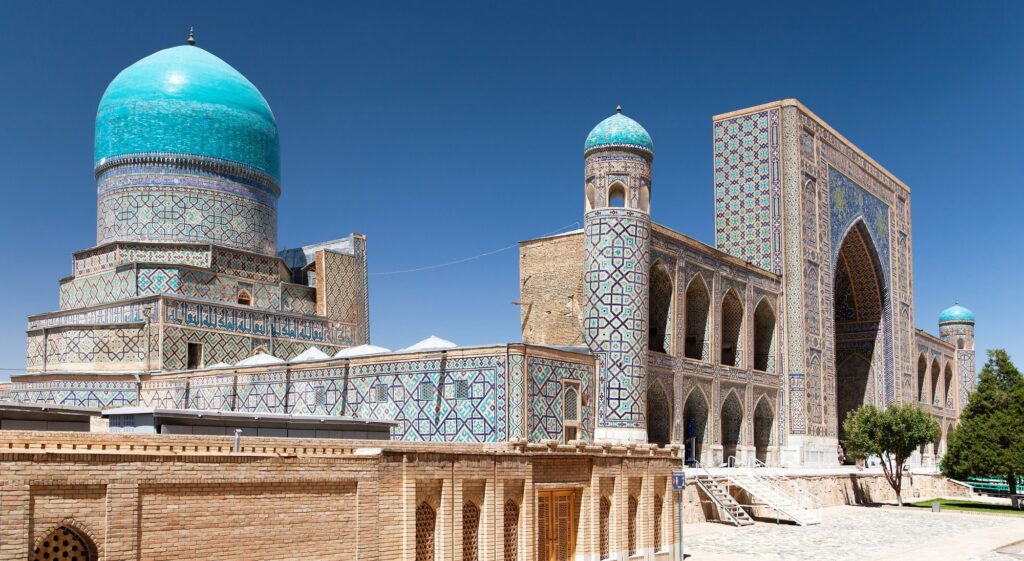
Mosques in Uzbekistan Begin Broadcasting Emergency Alerts in New Warning System

Uzbekistan has introduced a new system for warning citizens about emergencies using mosque loudspeakers, significantly expanding the reach of early warning messages across the country. The initiative was reported by the United Nations Development Programme (UNDP) and is being implemented in partnership with the Ministry of Emergency Situations.

According to a UNDP report, the project provides a technical solution aimed at strengthening Uzbekistan’s multi-hazard early warning system. As part of the pilot phase, special alert broadcasting devices have been installed in 272 mosques across seven regions: Fergana, Jizzakh, Kashkadarya, Namangan, Samarkand, Syrdarya and Tashkent. These devices enable authorities to transmit emergency messages through mosque loudspeakers.

UNDP noted that mosques were selected because of their established role in local communities, and their wide geographic distribution. Most are equipped with powerful external loudspeakers capable of covering distances of between 500 and 2,000 meters. Since announcements are broadcast outdoors, residents within range can receive alerts regardless of whether they are inside the mosque.

Project estimates cited by UNDP suggest that the system could reach around 6.5 million people, including vulnerable groups such as children and the elderly. Another advantage highlighted in the report is its potential reliability during disruptions to mobile networks or electricity supply, when conventional communication channels may be unavailable.

UNDP also stated that the initiative forms part of broader efforts to modernise Uzbekistan’s early warning capabilities in response to growing climate-related risks. Alongside mosque-based alerts, 28 large outdoor screens have been installed along major highways in densely populated areas to provide emergency information.

The wider project, funded by the Green Climate Fund and implemented jointly by UNDP, the Ministry of Emergency Situations and Uzhydromet, focuses on improving preparedness for hazards such as floods, landslides, avalanches, mudflows and drought, particularly in Uzbekistan’s eastern mountainous regions.

Kazakhstan Launches Water Spring Clean-Up Campaign

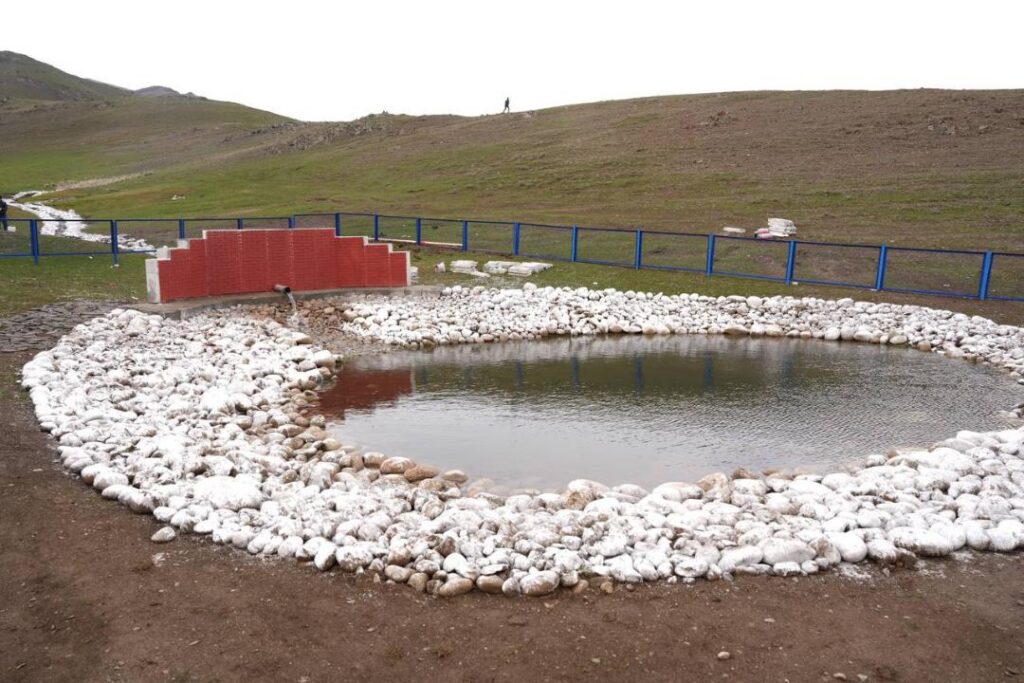
Kazakhstan’s Ministry of Water Resources and Irrigation has launched an environmental campaign titled Möldir Bülak (“Transparent, Clean Spring”) aimed at restoring and protecting water springs across the country.

The initiative began with the clean-up of 28 springs in southern regions: Shymkent, Almaty, Zhambyl, Kyzylorda, Turkestan and Zhetisu. Around 3,800 people, including volunteers and students, took part in the effort. Participants cleared debris, restored natural spring outlets, improved surrounding areas and planted tree saplings.

At the ministry’s initiative, the first volunteer movement in the water sector, Bolashaktyn Kainary, has been established in the Zhambyl region. It brings together students from the Kazakh National University of Water Management and Irrigation in Taraz. Similar volunteer groups are expected to be formed in other regions.

According to officials, the movement will not be limited to environmental campaigns. It is also intended to support long-term efforts to promote water conservation and strengthen environmental awareness.

At the same time, the Kaz hydrogeology National Hydrogeological Service is conducting a nationwide inventory of springs. So far, specialists have identified 711 potential springs, while a broader map of 2,772 sites has been compiled using archival materials. Springs are viewed as an additional source of water supply amid growing water shortages.

By 2027, the Ministry of Water Resources and Irrigation plans to carry out geological exploration to identify new groundwater sources in five regions: Akmola, West Kazakhstan, Kostanay, Zhetisu and Ulytau. The initiative aims to expand groundwater reserves and provide additional water supplies for settlements, agriculture and economic sectors.

Overall, 4,803 groundwater deposits have been explored in Kazakhstan for drinking water supply, irrigation and industrial use. Usable groundwater reserves are estimated at 43.2 million cubic meters per day, while only about 1.5 million cubic meters per day, roughly 3% of the total, is currently being utilised. Of the proven reserves, 21.2 million cubic meters per day could be used for drinking water, 2.4 million cubic meters per day for industrial and technical needs, and 19.6 million cubic meters per day for irrigation.

“In the context of increasing water shortages and climate change, developing groundwater potential is considered a key priority for ensuring sustainable water use. Despite the significant potential of groundwater resources, a large portion remains insufficiently studied,” said Deputy Minister of Water Resources and Irrigation Talgat Momyshev.