• KGS/USD = 0.01144 0%
  • KZT/USD = 0.00213 0%
  • TJS/USD = 0.10456 0.19%
  • UZS/USD = 0.00008 0%
  • TMT/USD = 0.28490 0%
  • KGS/USD = 0.01144 0%
  • KZT/USD = 0.00213 0%
  • TJS/USD = 0.10456 0.19%
  • UZS/USD = 0.00008 0%
  • TMT/USD = 0.28490 0%
  • KGS/USD = 0.01144 0%
  • KZT/USD = 0.00213 0%
  • TJS/USD = 0.10456 0.19%
  • UZS/USD = 0.00008 0%
  • TMT/USD = 0.28490 0%
  • KGS/USD = 0.01144 0%
  • KZT/USD = 0.00213 0%
  • TJS/USD = 0.10456 0.19%
  • UZS/USD = 0.00008 0%
  • TMT/USD = 0.28490 0%
  • KGS/USD = 0.01144 0%
  • KZT/USD = 0.00213 0%
  • TJS/USD = 0.10456 0.19%
  • UZS/USD = 0.00008 0%
  • TMT/USD = 0.28490 0%
  • KGS/USD = 0.01144 0%
  • KZT/USD = 0.00213 0%
  • TJS/USD = 0.10456 0.19%
  • UZS/USD = 0.00008 0%
  • TMT/USD = 0.28490 0%
  • KGS/USD = 0.01144 0%
  • KZT/USD = 0.00213 0%
  • TJS/USD = 0.10456 0.19%
  • UZS/USD = 0.00008 0%
  • TMT/USD = 0.28490 0%
  • KGS/USD = 0.01144 0%
  • KZT/USD = 0.00213 0%
  • TJS/USD = 0.10456 0.19%
  • UZS/USD = 0.00008 0%
  • TMT/USD = 0.28490 0%

Opinion: Turning Rivalry into Opportunity: Kazakhstan’s Strategic Autonomy

Over the past decade, global geopolitics has witnessed a clear return to Great Power competition, reviving elements of Cold War-style rivalry and a pronounced East-West divide.

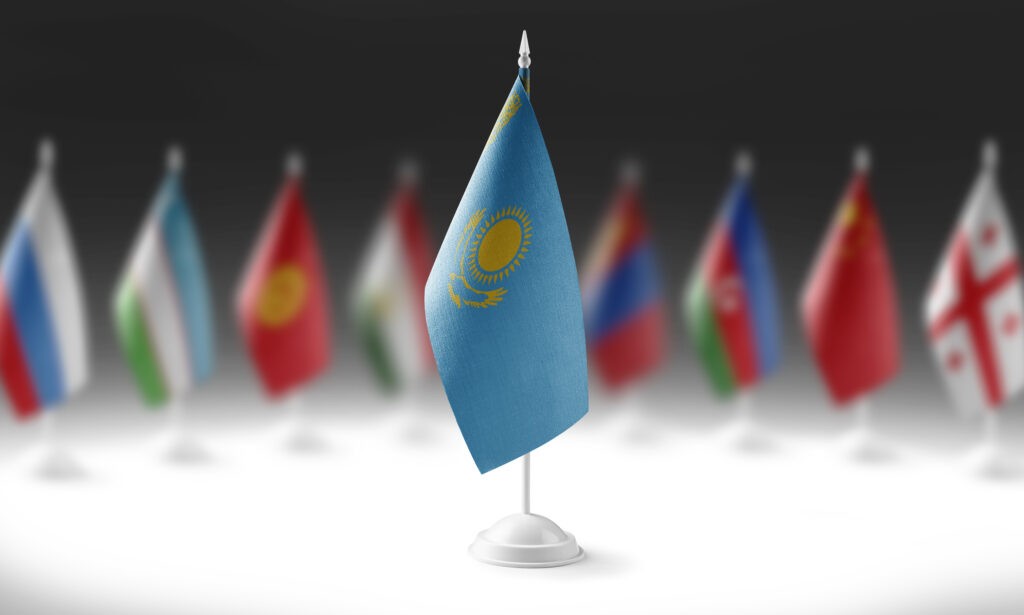
Yet, contrary to the belief that international relations are defined exclusively by great powers, the countries of Central Asia, historically perceived as chess pieces between Moscow, Washington, and Beijing, have been exercising their own autonomy and asserting independent foreign policy paths. Kazakhstan, the region’s largest and most resilient economy, has arguably emerged as a leading example of this movement.

Through a careful balancing strategy, Kazakhstan has worked to avoid firmly aligning itself with any one geopolitical camp. Rather than choosing sides, it has chosen options. However, when pressure from one power arises, Astana’s response has rarely been resistance for its own sake, but rather negotiation and taking advantage of the opportunities that power can offer it. Essentially, if alignment is expected, it comes at a price. In this sense, great-power competition is treated less as an existential threat and more as a marketplace – one in which influence is traded. However, the question is, is there space for both Beijing and Washington?

In this context, there is much to examine regarding last week’s B5+1 forum in Bishkek. Bringing together government officials and private sector representatives from Kazakhstan, Kyrgyzstan, Tajikistan, Turkmenistan, Uzbekistan, and the United States, the forum aimed to deepen economic ties and explore investment opportunities. Among the attendees was Sergio Gor, the U.S. Special Envoy for South and Central Asia. Perhaps the B5+1 forum is not just a routine investment event; it’s a signal from the U.S. to China.

A cornerstone of the cooperation between the U.S. and Kazakhstan was illustrated by the creation of a partnership in rare metals. The Ulba Metallurgical Plant (UMP) is located in north-eastern Kazakhstan. UMP is one of the very few facilities worldwide capable of carrying out the full processing cycle for rare metals. What elevates this cooperation beyond conventional trade is UMP’s production of materials such as beryllium and tantalum. These materials are critical inputs for the defense industry supplied to major aerospace and defense contractors, including Boeing and Lockheed Martin, both of which conduct business with the U.S. Department of Defense. Thus, Kazakhstan’s contribution to the U.S. defense supply chains signals a broader shift in regional geopolitics. By enabling access to strategically important resources that underpin advanced military technologies, Astana is strengthening its economic alignment with Washington, while subtly influencing the broader balance of defense capabilities between Western and Eastern powers.

Furthermore, another one of the headline-making deals at the B5+1 forum was the announcement of a joint venture between U.S.-based Cove Capital LLC and Kazakhstan’s National Mining Company to develop the world’s largest known undeveloped tungsten resource. This deal is significant against the backdrop of the ongoing tug-of-war between Beijing and Washington over strategic natural resources, and analysts note that the U.S. and China are already competing for Kazakhstan’s tungsten – another material crucial in the defence and microelectronics industries. China presently controls nearly 80% of the worldwide tungsten market, and a Chinese company has reportedly made an aggressive bid for the development rights to these deposits. Ultimately, U.S.-based Cove Kaz Capital’s successful bid hinged on two factors. Firstly, funding support from the U.S. Development Finance Corporation (DFC), which enabled them to equal the Chinese offer; and secondly, arguably more importantly, the American firm’s pledge to enhance tungsten processing capacity within Kazakhstan.

This deal underscores a dynamic often overlooked: while global powers may appear to dictate the trajectory of Central Asian development and geopolitics, the reality is that the competition between them creates leverage for countries like Kazakhstan. By strategically engaging with multiple powers, Kazakhstan can advance its own economic and strategic agenda, effectively turning great-power rivalry into a tool rather than a constraint. In this case, the country is not merely a passive actor in the greater East-West chess game; rather, it is spoilt for choice and thus has much more autonomy in deciding its economic future.

While the agenda covered a range of issues, transport infrastructure emerged as the most consequential and arguably the most sensitive topic. Connectivity lies at the core of Central Asia’s economic future, but it is also an area where geopolitical competition is visible. For example, the attendance of representatives from the American Rail Group and discussions regarding rail infrastructure projects in Kyrgyzstan signals American interest in regional transport development alongside existing and planned Chinese-led railway initiatives.

This raises a key question: is there room for a U.S.-backed alternative corridor alongside China’s Belt and Road? Perhaps there is – and perhaps this is precisely the point. As Beijing and Washington compete for influence through infrastructure and investment rivalry, Central Asian states find themselves in an advantageous position. By welcoming parallel initiatives, they are able to advance economically by diversifying partnerships and enhancing their strategic autonomy without having to overtly align with either side.

But what can be said about China’s reaction to more U.S. involvement in the region? It’s important to define and differentiate their approaches. For China, Central Asia is primarily a conduit for transport routes, access to critical materials, and strategic depth. On the other hand, the U.S. takes a different approach, viewing the region largely through a geopolitical lens and increasing influence.

However, the U.S. overtaking China will be difficult in the near future as China solidified its position in 2025 as Central Asia’s top trade partner, with overall turnover topping $106.3 billion, a 12 percent increase over the previous year’s total. Moreover, China doesn’t seem concerned, for now, as it is comfortable in its position in Central Asia; however, might there be a threat down the road? Only time and the aggression of U.S. involvement in Central Asia will tell. Beijing and Washington will continue advancing their geoeconomic and geopolitical strategies.


The views expressed in this article are those of the author and do not necessarily reflect the official policy or position of the publication, its affiliates, or any other organizations mentioned.
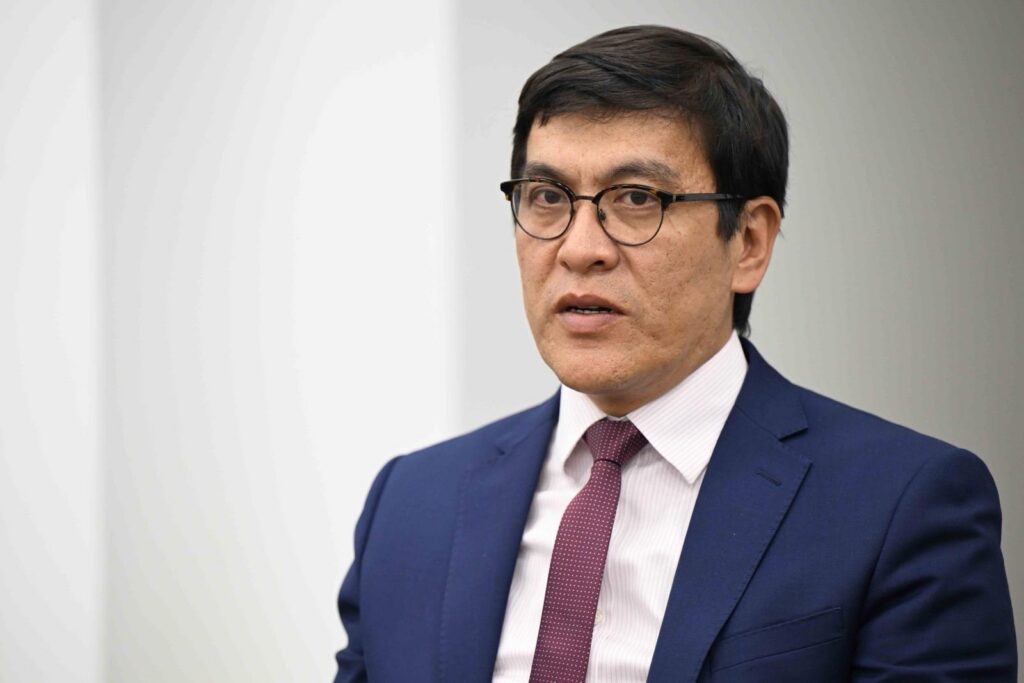

Kyrgyzstan Between the Russian World and Global Chaos: An Interview With Deputy Prime Minister Edil Baisalov

Edil Baisalov is a politician who began his career as a civil-rights activist, became a prominent member of Kyrgyzstan’s non-governmental organization (NGO) sector, and is now serving as the country’s Deputy Prime Minister. In an exclusive interview with The Times of Central Asia, he explained not only how his views have changed over the years, but also how Kyrgyzstan is seeking to find its place in what he described as a rapidly changing global landscape.

In Baisalov’s assessment, the global system is facing a crisis of democracy. “The world order, as we know it, is collapsing – or at least is under attack from both within and without,” Baisalov told TCA. “The era of global hypocrisy is over, and the people of Kyrgyzstan have woken up.

“What various international institutions have taught us over the years – their lectures on how to develop an economy, how to pursue nation-building, and so forth – has been proven wrong. Throughout the 1990s, Kyrgyzstan was one of the most diligent students of the liberal policies promoted by the “Chicago Boys.” We followed their instructions to the letter. Kyrgyzstan was the first post-Soviet country to join the World Trade Organization in 1998, and we were the first to receive normalized trade relations with the U.S. with the permanent repeal of the Jackson-Vanik amendment. All of our previous governments followed IMF conditionality dictates to the letter, especially in deregulation, mass privatization, and all the austerity programs and budget sequestrations. We were promised prosperity; that the free markets and the invisible hand would take care of everything. But it did not work.

“I remember it well: at the time, U.S. President Bill Clinton laughed at China, saying that Beijing needed to adopt certain policies, to liberalize, or that science could not prosper in a closed society. He claimed the Chinese model was doomed to fail, arguing that scientific and technological breakthroughs could only occur in a Western-style society with minimal state intervention. Yet today, we witness the triumphant rise of the People’s Republic of China. This is not only an emergence but also a return to the rightful place of a great civilization that has, for millennia, contributed enormously to humankind.”

TCA: Does this mean you now see China, rather than the West, as a model for Kyrgyzstan to follow?

Baisalov: It’s not about the Chinese model or any particular foreign template. What we understood is that as a nation, we are in competition with other nations. Just like corporations compete with each other, nations must look out for themselves. If our state does not actively develop industries and sciences, there is no formula for success. All those ideologies promoting the “invisible hand” – the idea that everything will naturally flourish on its own – are simply false.

TCA: When did Kyrgyzstan stop taking orders from outside forces and begin making independent national decisions?

Baisalov: We used to be naive about wanting to be liked by others. But not anymore. In the last five years of our development, most of what we did went against the prescriptions of outside forces. We realized that it wasn’t just about following advice – it was about maturing as a nation and taking responsibility for ourselves. Now, we are pursuing a pragmatic course of development and making decisions based on our own best interests.

TCA: It seems this change came about when you became Deputy Prime Minister.

Baisalov: I didn’t want to join President Sadyr Japarov’s team initially. They tried to recruit me, but I resisted. However, I am proud that I eventually accepted his proposal. I’m very proud of our achievements. This country is three times richer than it was five years ago. I could leave tomorrow and spend the rest of my life proudly, knowing what I have significantly contributed to the development of Kyrgyzstan. But for the time being, I’m serving my nation. I believe there is no higher calling than that.

TCA: How do you see President Japarov’s future in light of his recent decision to dismiss Kamchybek Tashiyev as head of the State Committee for National Security and Deputy Prime Minister?

Baisalov: I strongly believe that President Sadyr Japarov will be reelected, and I’m looking forward to the presidential election next January. There may be some interesting developments and strong contention, but I don’t believe General Tashiyev will run for president, even though many people are urging him to do so. General Tashiyev is a great patriot, and he will not risk the stability of this country. I believe he will endorse President Japarov, as he has publicly pledged on numerous occasions.

TCA: You argue for a stronger presidential system now, while in the past you supported a rather liberal model. How did your attitude change?

Baisalov: I used to be a very individualistic libertarian, but I changed. The whole world has changed, not just me.

TCA: Are you more conservative now?

Baisalov: I’m probably more conservative than I used to be, but I’m still much more liberal than most people in my country. If I were from Moldova, Georgia, or Serbia, I wouldn’t be in politics. I would have gone into business or emigrated. Because sooner or later, all these countries will join the European Union. There’s no choice; it’s just a matter of time – of course, if the EU doesn’t collapse before then. But right now, the EU is like a huge magnet, a very attractive model that draws you in. Here in Kyrgyzstan, we don’t have a choice between the EU and the Eurasian Economic Union. We are here, and we are doing what we must do. That’s why I’m in this fight – because I want to steer this country toward the best possible outcome.

TCA: Why did you recently say that Kyrgyzstan was forced into the Eurasian Union?

Baisalov: I criticized the then national leadership for selling Kyrgyzstan’s accession to the Eurasian Economic Union as if we would automatically reap all the benefits. At the time, we really didn’t gain much. Other EAEU member states have significant exports, but for us, besides a few mineral resources, mainly gold, the main “export” is our labor to Russia and Kazakhstan. One supposed benefit is the free movement of labor. Theoretically, under Union law, Kyrgyz citizens have the fundamental right to work in Russia on equal terms with Russian citizens. But in reality, it’s not working. Most recent legislation in Russia actually places our labor migrants in the same category as migrants from neighboring Uzbekistan and Tajikistan, who are not even members of the EAEU.

TCA: Does that mean you plan to leave the EAEU?

Baisalov: We don’t have such plans. What we actually want is to attract foreign investors – for example, to build a manufacturing base here in Kyrgyzstan, as that would give them access to the Eurasian market. We want to take full advantage of our membership in the EAEU.

TCA: While you aim to improve the status of Kyrgyzstan’s labor migrants in Russia, at the same time, you have a growing number of foreign workers in Kyrgyzstan.

Baisalov: We had a big argument inside the Cabinet and the Presidential Administration. Of course, we want to provide jobs in our growing economy for our own people. In the social sector of the Cabinet, some of us, including myself, wanted to protect the market and put up barriers to foreign workers. But we were overruled by the pro-business part of the Cabinet. They argued that our construction boom needs foreign laborers, and our expanding manufacturing base – especially in the garment industries – faces challenges because the salary expectations of our own nationals are already too high, making us less competitive. So yes, we already have at least 25,000, if not more, foreign workers. This is a very unique experience for us.

TCA: Your critics would say that if you cannot provide jobs to your own people, why bring in foreign workers?

Baisalov: The world is not black and white. There are no easy solutions. My instinct was to protect our own labor market and only allow highly qualified foreign workers. But the pro-business part of the Cabinet won the argument. Even for the construction of the Presidential Administration, we initially relied on our own workforce, but in the end, we had to bring in foreign workers. We have moved from one way of thinking to another. That is why we now follow a very pragmatic path of development that prioritizes our national well-being and prosperity. In a way, this coincides with what has happened in the United States.

TCA: In what way?

Baisalov: I remember very well in the 1990s, NAFTA – the North American Free Trade Agreement – was presented as a globalist project that would improve the lives of every American family while helping develop Canada and Mexico. But the reality is different. I’ve seen small towns in America devastated, and I completely understand why the vast majority of American voters, who have been negatively affected by this globalist system, are choosing to vote for Trump and support the America First approach.

TCA: Speaking of “America First” and protecting national interests, you recently said that Kyrgyzstan is part of the Russian world. How does that view fit into your vision of national priorities?

Baisalov: My statement was misinterpreted, and some people, both in Kyrgyzstan and abroad, even accused me of being “sold out” to the Russians. There were many negative comments. But what I said is simply a fact. The average Kyrgyz villager, when using social media, watching Hollywood movies, or researching something online, overwhelmingly consumes this content in Russian. It’s a fact. I even consider it a failure of our national elites and cultural institutions that our children grew up watching Hollywood movies and cartoons in Russian.

TCA: Do you plan to change that?

Baisalov: There are countries that have built their national identity on not being Russia, or being “anti-Russia.” Former Ukrainian President Leonid Kuchma even wrote a book, Ukraine is not Russia. There are also quite a few activists in Kyrgyzstan who are promoting an anti-colonial narrative. I am not among them. I do believe that we need to build a strong Kyrgyz identity, but it should not be based on anti-Russian sentiment. I believe we must preserve the Russian language. We are bilingual, and we are proud of it. For example, our children, by default, are much smarter than many monolingual people. Studies even say it can give you around 20 extra IQ points.

TCA: Do you personally feel yourself as part of the Russian world?

Baisalov: I don’t live in the Russian world. I read The New York Times, Svenska Dagbladet, The Economist, or Hürriyet. I’m glad that I can also watch Hollywood movies in English. I’m cosmopolitan, and I strongly believe that our people should also learn to speak English – but not at the cost of abandoning the Russian language.

Japarov Breaks the Kyrgyz Tandem

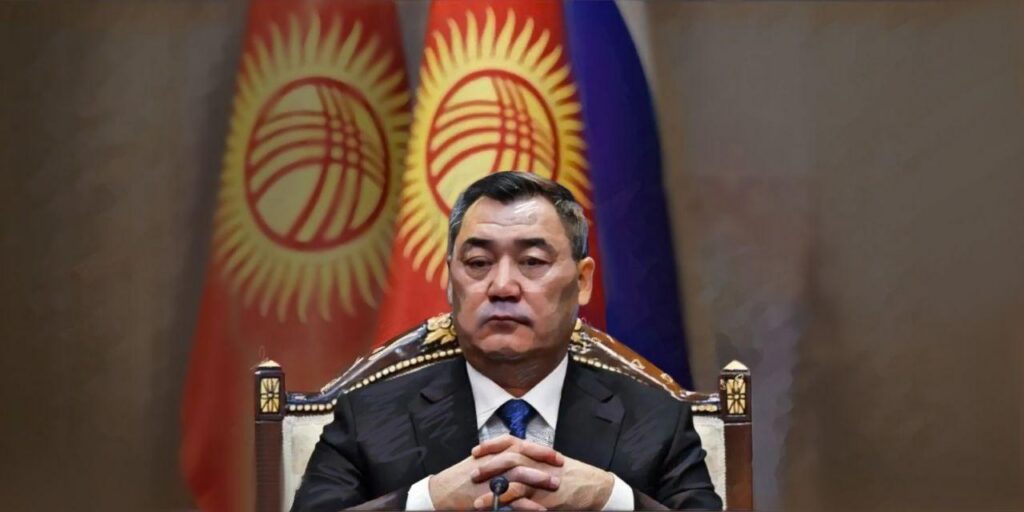
When Kamchybek Tashiyev returned to Bishkek from medical travel abroad after losing his post as Chairman of the State Committee for National Security (GKNB), as well as the deputy chairmanship of the Cabinet of Ministers, he returned to a system already being disassembled. Kyrgyzstan’s President Sadyr Japarov dismissed him on February 10, ending a five-year arrangement in which the presidency and the security apparatus were closely fused. The decision deliberately dismantled the governing tandem that had defined Kyrgyzstan’s power structure since 2020. The immediate question was whether this was a closing of an episode or the opening of a new one. The first wave of moves suggests the latter: a transition toward a more personalized presidency, with the internal-security bloc fractured and its succession logic unsettled.

Japarov publicly framed the decision as preempting an institutional split. He explicitly pointed to parliamentary groupings that began sorting deputies into “pro-president” versus “pro-general” camps. Russian-language coverage has tended to present the episode as an effort to end a dual-power configuration, not merely to remove one official. This narrative implies that the state’s operative center of gravity had already begun drifting away from predictable office-holding and toward informal allegiance tests. Once such a dynamic becomes evident, according to such a telling, the preservation of regime coherence often requires rapid, coercive re-centering.

Domestic Political Configurations

The first domestic signal was indeed speed. Along with Tashiyev, senior security officials were removed, and an acting head was installed pending parliamentary procedures. The point here was not just about personnel but about the timing: the presidency moved first, then moved again, so that no alternative pole could consolidate inside the security institutions. If the system had been built around a Japarov–Tashiyev tandem, then the immediate dismantling of Tashiyev’s proximate layers was also a message to the broader stakeholder society that the presidency would decide who inherits the southern security networks and clan linkages. Japarov was clearly conveying a signal of dominance that ruled out negotiation.

A second signal came through parliament. Speaker Nurlanbek Turgunbek uulu resigned shortly after the dismissal, amid reporting that he was politically close to Tashiyev and vulnerable once the security bloc shifted. Russian reporting treated the speaker’s resignation as part of the same chain reaction set off by the February 10 decree. This was part of a pattern whereby institutional actors in Kyrgyzstan’s domestic politics reorient quickly toward whoever appears to be winning in the short term. Loyalty is anticipatory because the penalty for backing the wrong camp can arrive through law enforcement, prosecutorial pressure, or reputational destruction.

A third signal emerged through the revived early-election debate. The open-letter campaign and talk about a “snap election” did not arise in a vacuum; it built on a preexisting argument about constitutional timing and mandate renewal. That development provided a political vocabulary for testing whether the tandem’s first stage had ended. The credible possibility of early elections has destabilized patronage, compelling every member of the political class at every level to recalculate expectations. Every political actor has been forced to reassess political loyalty, mobilization capacity, and regional leverage.

The fourth domestic signal was the continuity of coercive habit. Under Tashiyev, the GKNB repeatedly treated even low-grade political discussion as a potential precursor to “mass unrest,” including high-profile cases against opposition figures before elections. That background makes the present moment awkward: if the letter campaign and associated machinations were undertaken without Tashiyev’s knowledge, then it exposes a severe lapse of control inside the system he claimed to run; however, if he encouraged these maneuvers as a pressure mechanism, then the rift with Japarov is no longer an internal reshuffle but a failed attempt to accelerate succession politics. Both possible interpretations point toward structural fragility rather than orderly transition.

International Implications

These domestic dynamics spill outward because Kyrgyzstan is a regional bellwether precisely when it is least predictable. The country has a history of rapid political reversals, recurrent elite fragmentation, and street-linked legitimacy crises. These have repeatedly forced external powers to reassess how they manage influence and risk. For Russia and China, the problem is not ideological but operational. Both countries have treated Kyrgyzstan as a core territory for security management and regional connectivity. Both prefer dealing with stable domestic hierarchies, but the political risk produced by uncertainty increases transaction costs. A personalized presidency paired with a fractured security bloc degrades their ability to rely on any single channel.

Sanctions politics sharpen the external stakes. Kyrgyzstan has been under sustained Western scrutiny over re-export and sanctions-evasion pathways connected to Russia’s war against Ukraine. The timing of Tashiyev’s dismissal and the accompanying elite uncertainty raise the likelihood that sanctions compliance becomes inconsistent across agencies, private intermediaries, and political patrons, even if the presidency attempts to impose discipline. In other words, institutional fragility in Kyrgyzstan is not just a domestic governance problem but a transactional risk for foreign economic partners.

Russia’s immediate concern is whether the dismissal represents consolidation or instability. As noted above, Russian commentary has presented the move as ending a dual-power arrangement and reasserting presidential primacy, but it has also pointed to the uncertainty of the transition and the possibility that the “system” built under the security chief could unravel. Moscow has seen Bishkek swing rapidly between political centers in the past, and it has seen how intra-elite conflict can spill into broader mobilization. A more personalized presidency can look like consolidation; however, the increased centralization can also become a single point of failure if elite sabotage rises.

Authoritarian centralization in Kyrgyzstan is not inherently destabilizing from Moscow’s or Beijing’s perspective. Both powers are accustomed to dealing with dominant executives, but they prefer regimes in which coercive capacity is distributed across multiple loyal structures rather than concentrated in a single personalized node. Such a “pluralism” of security structures, even if they compete with one another, facilitates succession management, internal monitoring, and resilience during a crisis. A “unipolar” consolidated regime, by contrast, carries the risk of hardening into brittleness.

China’s calculus differs in form but not in substance. Beijing is less exposed to Kyrgyzstan’s domestic legitimacy narratives, but it is deeply exposed to the risk of administrative incoherence in the state structure. That is especially the case where Chinese firms, lenders, and contractors rely on predictable enforcement and protection. Tashiyev’s dismissal destabilizes the informal patron-client equilibrium upon which many large projects depend for perimeter control, problem-solving capacity, and administrative continuity. If regional networks begin testing the new boundaries or if political replacements are contested, then not even a strong presidency relying on authoritative rhetoric can substitute for a coherent security bloc.

Succession Without a Second Pole

Whether this episode settles or metastasizes will depend in part upon Tashiyev’s own posture. Reporting based on Kyrgyz media has described his dismissal as unexpected and emphasized his public acceptance of the presidential decision. If Japarov has offered a graceful exit, that offer holds only if Tashiyev’s networks do not interpret such restraint as weakness and begin freelancing to preserve their own positions.

The succession question inside the system of security institutions remains the central domestic variable. The entire architecture of recent years was built on the tandem of Japarov as the institutional face and Tashiyev as the coercive hardball player who was also influential across multiple policy domains. Removing the second pole leaves the presidency with a choice. Either it recreates a comparable enforcer, or it distributes security power across multiple actors, but the latter strategy increases coordination costs and the risk of intra-elite sabotage. The pressure on the sub-elites is heightened by changes already underway in electoral rules that are reshaping how regional patrons imagine their future bargaining power.

For external observers, events underscore Kyrgyzstan’s established significance as a bellwether for how Russia and China manage volatility at the core of their shared neighborhood. If Japarov succeeds in recentralizing coercive capacity without provoking regional backlash, then Moscow and Beijing can treat the episode as consolidation and resume routine transactional politics. But if the unraveling continues, both will adjust by hedging across domestic factions and by demanding tighter guarantees for any security-sensitive or capital-intensive engagement. Either way, Tashiyev’s dismissal marks the start of a new chapter in the Japarov era, not the resolution of the last one.

Kazakhstan Moves to Require Content Creators and Online Course Authors to Confirm Qualifications

Kazakhstan is preparing new legislative measures that would tighten requirements for content creators and authors of online courses who publish educational content. Under the proposed rules, such materials would have to include confirmation of the author’s relevant education or professional qualifications.

The initiative is outlined in an official response by Prime Minister Olzhas Bektenov to a parliamentary inquiry regarding the regulation of online educational content.

According to Bektenov, a draft law on online platforms and mass media has already been developed, along with amendments to the Code of Administrative Offenses. The proposed legislation would require users of online platforms who distribute educational courses or training materials in a specific field to disclose information confirming their qualifications, including details of a diploma or certificate.

The government also plans to introduce administrative liability for online platforms operating in Kazakhstan that fail to comply with authorized bodies’ orders to remove illegal content. Authorities note that existing legislation already provides for advertising and selling unregistered medicines and prescription drugs.

Bektenov stated that state bodies continuously monitor social networks and cooperate with the administrations of major platforms, including Meta and TikTok, to remove prohibited content. According to him, up to 91% of identified violating materials are removed from TikTok.

Oversight is also conducted through the Cyber Surveillance system, which tracks advertisements related to pyramid schemes, online casinos and drug trafficking. Over the past year, authorities identified and blocked more than 13,800 pieces of content promoting drugs, more than 34,700 posts advertising online casinos and over 13,500 materials involving citizens in pyramid schemes. Access to the relevant resources was restricted, and site owners were issued warnings.

The Times of Central Asia previously reported that members of the Senate, the upper house of parliament, had proposed introducing licensing requirements for content creators in response to widespread violations of the ban on advertising online casinos on social networks and messaging platforms.

Kazakhstan-Singapore Center for Quantum Technologies Opens at Farabi University

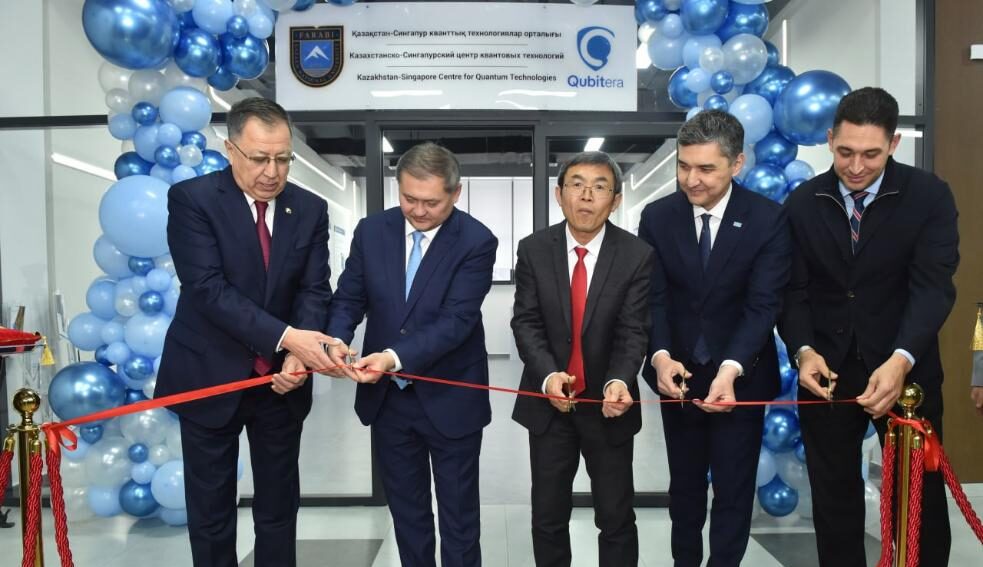
The Kazakhstan-Singapore Center for Quantum Technologies has been inaugurated at Al-Farabi Kazakh National University in Almaty. The project, implemented in partnership with Singapore-based ASTRASEC PTE. LTD and Qubitera LLP, aims to serve as a foundation for developing a national quantum technology ecosystem in Kazakhstan.

According to the Ministry of Science and Higher Education, the center will focus on both fundamental and applied research, the training of researchers, engineers, and technology entrepreneurs, and the development of quantum-secure communication and computing solutions. It also plans to facilitate the transfer of advanced international expertise and support the creation of joint technology startups.

The first phase of the project includes the launch of a laboratory dedicated to quantum cryptography and quantum communications. The facility is equipped with photonic systems and experimental infrastructure intended for research and specialist training.

At the opening ceremony, Minister of Science and Higher Education Sayasat Nurbek said that the world is entering what he described as a “quantum revolution,” noting that traditional silicon-based digital and computing technologies are approaching their practical limits. He stated that the establishment of the center creates new opportunities for the development of Kazakhstan’s scientific and technological capacity.

KazNU Rector and Chairman of the Board Zhanseit Tuimebayev emphasized the importance of integrating academia and industry, describing the center as part of the university’s strategy to transform into a research-oriented institution of international standing. He said cooperation with Singaporean partners would help combine academic expertise with advanced technological experience.

Zhang Yinghua, Chairman of the Board of Directors of ASTRASEC PTE. LTD, described the development of quantum technologies as strategically important for national information security and digital resilience, highlighting quantum communication as a growing global priority.

The inauguration concluded with a roundtable discussion focused on the center’s future development, quantum cybersecurity, industrial partnerships, and intellectual property protection for joint projects.

Turkmen Arkadag Without “Unnecessary” People: Crackdown on Residents Without Jobs or Registration Intensifies

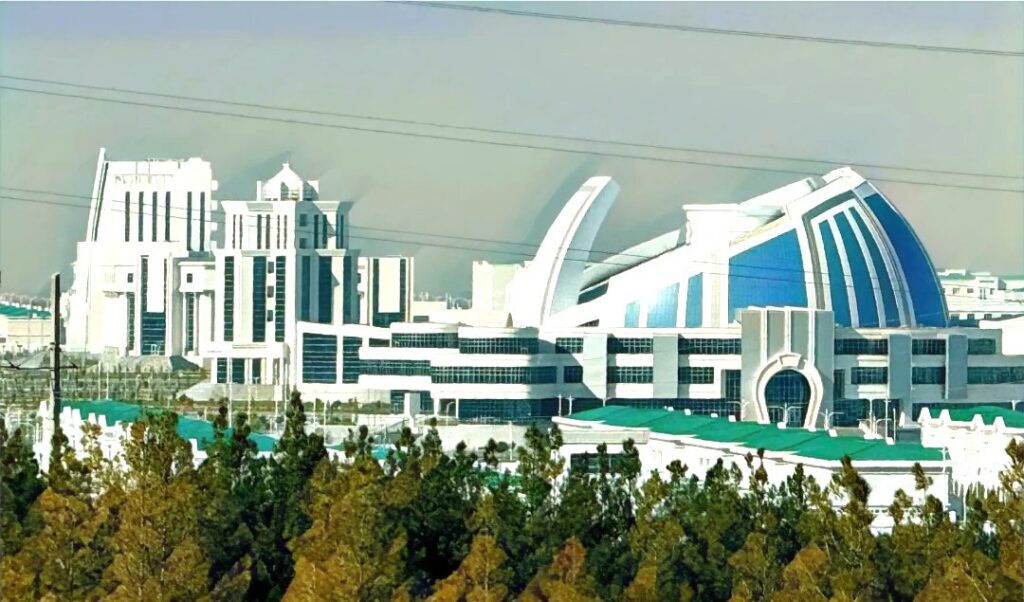
The “smart” city of Arkadag, developed at the initiative of Turkmenistan’s National Leader Gurbanguly Berdimuhamedov, has once again become the focus of a campaign to “clean up” its population, according to Turkmen.news. Local officials are reportedly conducting apartment inspections to identify residents who do not hold official employment in the city.

Inspectors are said to be focusing on three main criteria: possession of a local residence permit, confirmed employment in Arkadag, and the degree of kinship with the property owner. The legal basis for these inspections remains unclear, but reports indicate that authorities are taking a strict approach, requiring individuals who do not meet the criteria to vacate their accommodation immediately.

According to informal rules described by sources, a “proper” resident of Arkadag must be employed and registered at their actual place of residence. Only immediate family members, spouses, children, and parents are permitted to live together. Brothers, sisters, and more distant relatives residing in the same apartment may face eviction.

A local source stated that even individuals officially employed in Arkadag but registered in another region may face restrictions. For example, a person who has secured employment in the city but is temporarily staying with a sibling could be required to return to their place of permanent registration and commute daily.

The same restrictions reportedly apply to students. Those enrolled at the International Academy of Horse Breeding and vocational institutions are permitted to reside only in dormitories and may not live with relatives, including close family members.

Legally renting accommodation in Arkadag is described as virtually impossible. Property owners are not issued permits authorizing them to lease apartments, resulting in an informal rental market. As a consequence, renters cannot obtain temporary registration, and no tax payments are made on rental income.

This situation leaves newcomers in what sources describe as a legal vacuum: they may be able to secure employment but lack lawful housing options.

Formally, purchasing an apartment is presented as the only pathway to full residency in the city. Individuals employed in Arkadag may qualify for a mortgage, but strict conditions apply. Authorities reportedly verify that applicants do not hold permanent registration elsewhere. An initial down payment of 10% of the property value, estimated at approximately $2,000-$3,000, is required. In addition, sources allege that intermediaries demand unofficial payments ranging from $2,000 to $4,000 to facilitate mortgage approval.

Similar practices have been reported in Ashgabat in recent years. As previously reported by The Times of Central Asia, ahead of the 30th anniversary of Turkmenistan’s neutrality, inspections targeting visitors from other regions intensified in the capital. Witness accounts at the time described interrogations at checkpoints, alleged physical abuse, and raids at locations where day laborers gather.

Developments in Arkadag suggest that comparable internal migration controls may now be taking shape in the newly built city. Arkadag was conceived as a symbol of modernity and national pride; the reported controls suggest it is also emerging as a laboratory for managing who is permitted to belong.