Peaceful coexistence is turning out to be complicated for Tajikistan and the Taliban government in Afghanistan.
The Tajik government has viewed the Taliban as a threat since the militant group appeared in Afghanistan in the mid-1990s. But now that modest efforts are underway to establish some sort of amicable ties, there has been an uptick of violence directly involving the two sides along the Tajik-Afghan border.
Let’s Keep This Between Us
Tajikistan is the lone government in Central Asia that remained hostile to the Taliban after the latter returned to power in Afghanistan in August 2021. In the weeks that followed, the Taliban again exerted control over Afghanistan, and the Tajik government and the Taliban sent reinforcements to their common border. Russia and Pakistan had to intervene to ease tensions.
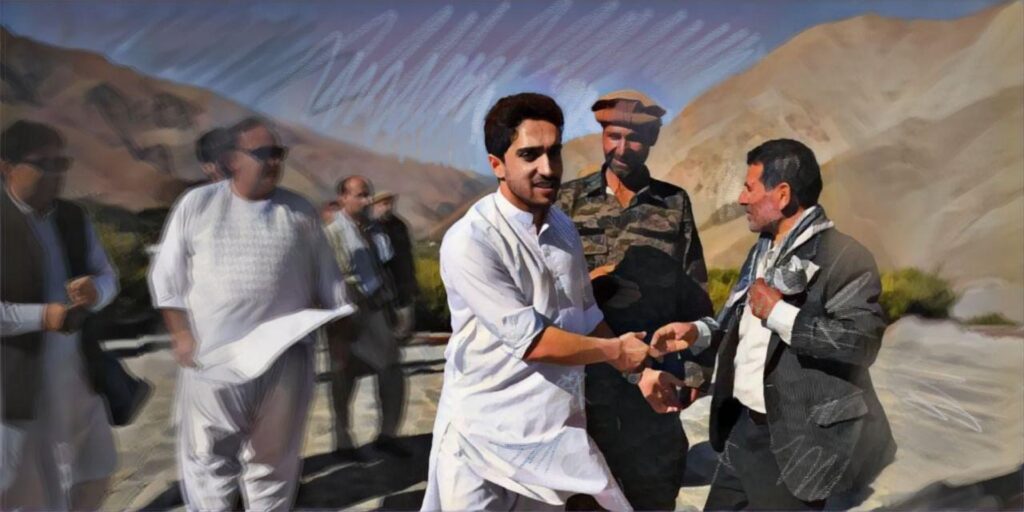
The other Central Asian states, Kazakhstan, Kyrgyzstan, Turkmenistan, and Uzbekistan, have all established a business relationship with the Taliban government since the Taliban again seized control, but Tajikistan has remained aloof. Which is why the visit of Muhammad Yusuf Vafo, the governor of Afghanistan’s northern province of Balkh, to the Tajik capital Dushanbe on October 23 came as such a surprise.
The Tajik government did not say anything about Vafo’s trip. The independent Tajik news agency Asia-Plus cited Afghan media as reporting on the visit, during which Vafo met with the head of Tajikistan’s National Security Committee (GKNB), Saimumin Yatimov. Vafo and Yatimov reportedly discussed ways to improve ties in a variety of spheres and pledged not to let any “hostile elements” use their territory to plot or carry out attacks on the country.
An estimated several hundred Jamaat Ansarullah militants of Tajik origin continue to operate in Afghanistan. The group allied with the Taliban during the last years foreign forces were in Afghanistan, propping up the government of Ashraf Ghani, and stayed in Afghanistan after the Ghani government fell. Jamaat Ansarullah fighters were among the reinforcements the Taliban sent to the Tajik border during the weeks of tension in late 2021.
There were reports soon after the Taliban returned to power that Tajikistan was aiding the National Resistance Front (NRF), a mainly ethnic Tajik group of former government soldiers who continue to wage a guerrilla campaign against the Taliban. NRF leader Ahmad Masoud, the son of the legendary Afghan field commander and ethnic Tajik, Ahmad Shah Masoud, has been in Dushanbe several times since August 2021, and there was a report that the NRF opened an office in Dushanbe in October that year.
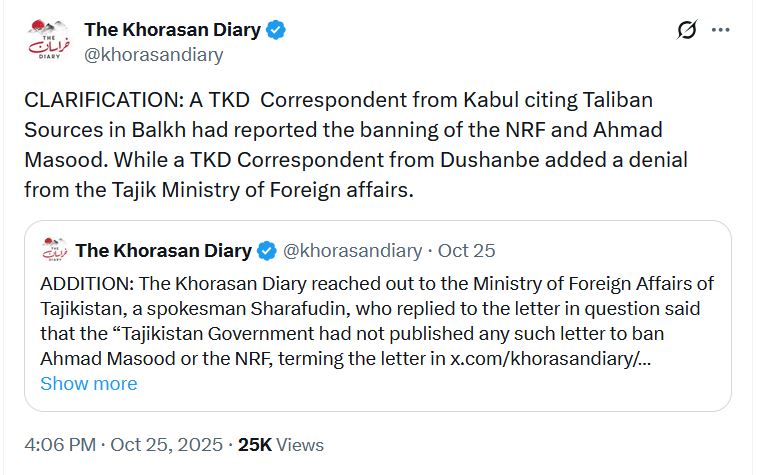
Shortly after Vafo’s visit to Dushanbe, Taliban sources in Balkh Province told the Pakistani-based Khorasan Diary website that Tajik authorities had banned the NRF, but the Tajik authorities stated that no such decision was made.
 Yatimov’s meeting with Vafo was not the first time the Tajik GKNB chief had met with Taliban representatives. In September 2024, Yatimov went to Kabul to hold security talks with Taliban officials, though the Tajik authorities never confirmed that meeting.
Both parties are concerned about militants from the Islamic State of Khorasan Province (ISKP).
ISKP is based in Afghanistan and continues to carry out attacks against the Taliban. ISKP also disseminates propaganda in the Tajik language, some of which calls on Tajik citizens to overthrow their government.
In May 2022, ISKP militants fired several rockets from Afghanistan into Tajikistan. That motivated Tajikistan’s first contact with the Taliban, and the Tajik authorities sent former security officer Samariddin Chuyanzoda to Kabul, though the Tajik government never publicly mentioned Chuyanzoda’s trip to Kabul.
Vafo is not the first Taliban official to visit Tajikistan.
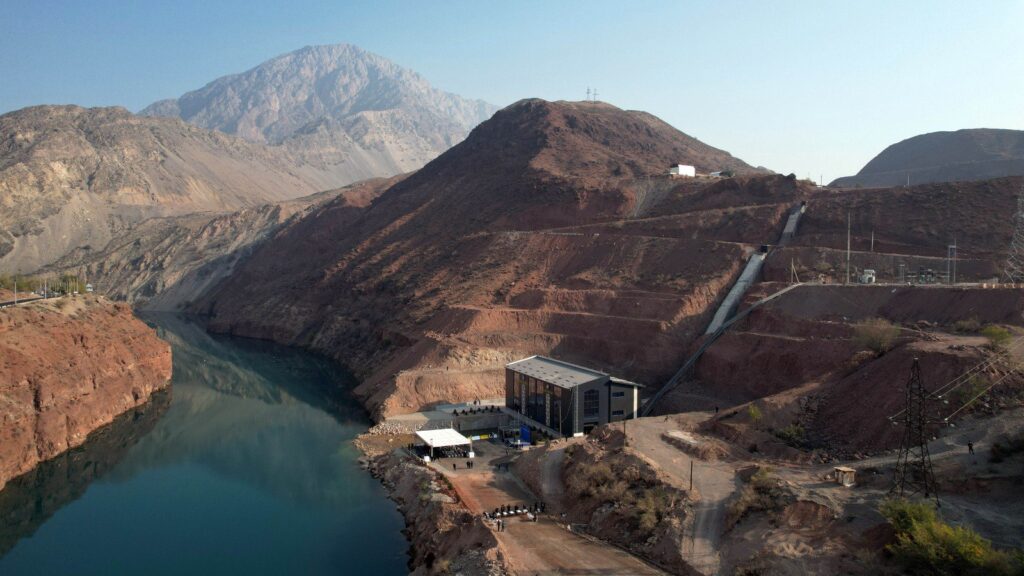
In May 2025, Abdul Bari Omar, the head of Afghanistan’s state power utility Da Afghanistan Breshna Sherkat, was in Dushanbe for a meeting of representatives of countries involved in the Central Asia-South Asia (CASA-1000) power transmission project.
Armed Clashes
The meetings of officials from the two countries seem to be an encouraging sign, but along one section of the Tajik-Afghan border, there have been two shoot-outs between Tajik border guards and the Taliban since late August. The most recent incident occurred on October 25, right after Vafo departed Tajikistan. Tajik and Taliban troops clashed near a gold-mining site on the Afghan side of the Pyanj River that divides Tajikistan and Afghanistan.
The reason for the fighting remains unclear. Afghanistan’s Hashti Subh newspaper said the conflict started because work at the gold mining operation on the Afghan side of the border has caused water to periodically flood areas on the Tajik side of the river. The report mentioned that there were people killed and wounded, but did not say how many or on which side of the river.
No one in the Tajik or Taliban governments has spoken about the reported incident.
On August 24, there was an exchange of fire in roughly the same area. At least one Taliban fighter was killed, and four others were wounded. What sparked that fighting is still unclear, though again, there was speculation it was due to the gold-mining operation on the Afghan side. Residents of communities on the Tajik side of the border complain that the work has increased the risk of flooding in their villages and compelled local authorities to reinforce the riverbanks.
Shortly after the shooting stopped in the August incident, the local Tajik border guard commander led a small group of border guards across the river and met with local officials on the Afghan side. Photos showed them sitting outside at a table. The talks seemed to have calmed the immediate tensions, but apparently did not resolve all the issues between the two sides.
The violence so far has affected only this part of the Tajik-Afghan border, but it still represents a significant escalation.
Even when the Taliban were in power in the late 1990s, Tajik border guards (and at that time, Russian border guards also) and Taliban fighters were careful not to shoot at each other. There have been frequent shoot-outs with drug smugglers crossing from Afghanistan into Tajikistan since shortly after Tajikistan became independent in late 1991.
In early August 2025, before the first skirmish between Tajik border guards and Taliban fighters, the director of the Tajik president’s Agency for Narcotics Control, Zafar Samad, said there had been ten clashes with armed Afghan drug smugglers since the start of the year. But there were no reports of Tajik troops and Taliban fighters exchanging fire.
The Tajik government seems to be following its Central Asian neighbors in accepting that the Taliban are now their neighbor, and there is much to be gained by cooperating with the Taliban government in trade and transit of goods through Afghanistan. It is ironic that as ties between the two parties are finally, albeit slowly, improving, they are experiencing outbreaks of armed conflict with each other.