• KGS/USD = 0.01144 0%
  • KZT/USD = 0.00213 0%
  • TJS/USD = 0.10456 0.19%
  • UZS/USD = 0.00008 0%
  • TMT/USD = 0.28490 0%
  • KGS/USD = 0.01144 0%
  • KZT/USD = 0.00213 0%
  • TJS/USD = 0.10456 0.19%
  • UZS/USD = 0.00008 0%
  • TMT/USD = 0.28490 0%
  • KGS/USD = 0.01144 0%
  • KZT/USD = 0.00213 0%
  • TJS/USD = 0.10456 0.19%
  • UZS/USD = 0.00008 0%
  • TMT/USD = 0.28490 0%
  • KGS/USD = 0.01144 0%
  • KZT/USD = 0.00213 0%
  • TJS/USD = 0.10456 0.19%
  • UZS/USD = 0.00008 0%
  • TMT/USD = 0.28490 0%
  • KGS/USD = 0.01144 0%
  • KZT/USD = 0.00213 0%
  • TJS/USD = 0.10456 0.19%
  • UZS/USD = 0.00008 0%
  • TMT/USD = 0.28490 0%
  • KGS/USD = 0.01144 0%
  • KZT/USD = 0.00213 0%
  • TJS/USD = 0.10456 0.19%
  • UZS/USD = 0.00008 0%
  • TMT/USD = 0.28490 0%
  • KGS/USD = 0.01144 0%
  • KZT/USD = 0.00213 0%
  • TJS/USD = 0.10456 0.19%
  • UZS/USD = 0.00008 0%
  • TMT/USD = 0.28490 0%
  • KGS/USD = 0.01144 0%
  • KZT/USD = 0.00213 0%
  • TJS/USD = 0.10456 0.19%
  • UZS/USD = 0.00008 0%
  • TMT/USD = 0.28490 0%

Kyrgyzstan Tests Technologies for Tracking Civilian Drones

Kyrgyz authorities are evaluating new technological solutions to monitor and control civilian drone flights. A Romanian company recently presented its Argonian UTM and Drone Detection service to the State Agency for Civil Aviation of Kyrgyzstan. The system is designed to determine the location of unmanned aerial vehicles (UAVs) and track their flight parameters.

According to the agency, company representatives delivered a detailed presentation outlining the system’s operating principles and technical capabilities. Officials expressed particular interest in functions related to UAV detection and real-time monitoring of key flight parameters.

Following the presentation, a practical demonstration was conducted in an urban area of Bishkek. Four drones were launched simultaneously from different locations in the capital. The system reportedly recorded take-off points, altitude, and flight speed in real time, and mapped the flight paths of each device.

In addition, the Argonian UTM system identified the location of one drone operator, indicating that the device was being controlled from a moving vehicle. The data was shown to participants at the meeting and said to correspond with the drones’ actual flight parameters.

The State Agency for Civil Aviation stated that the solution “ensures effective detection of unmanned aerial vehicles, enables real-time monitoring of key flight parameters, and is of practical interest for improving UAV operational safety.”

Agency representatives described the presentation as positively received, adding that the potential acquisition of the system will be considered as part of broader efforts to enhance drone flight safety and introduce new technical solutions in the country.

Interest in such technologies is increasing amid tighter regulation of UAV operations. Since the beginning of 2026, a new law has required drone owners in Kyrgyzstan to register with the State Agency for Civil Aviation and undergo a medical examination by a psychiatrist. UAV operations are now permitted only with a one-time authorization or an annual permit issued by state authorities.

Hundreds of Central Asian Nationals Have Served in Israeli Army During Gaza War

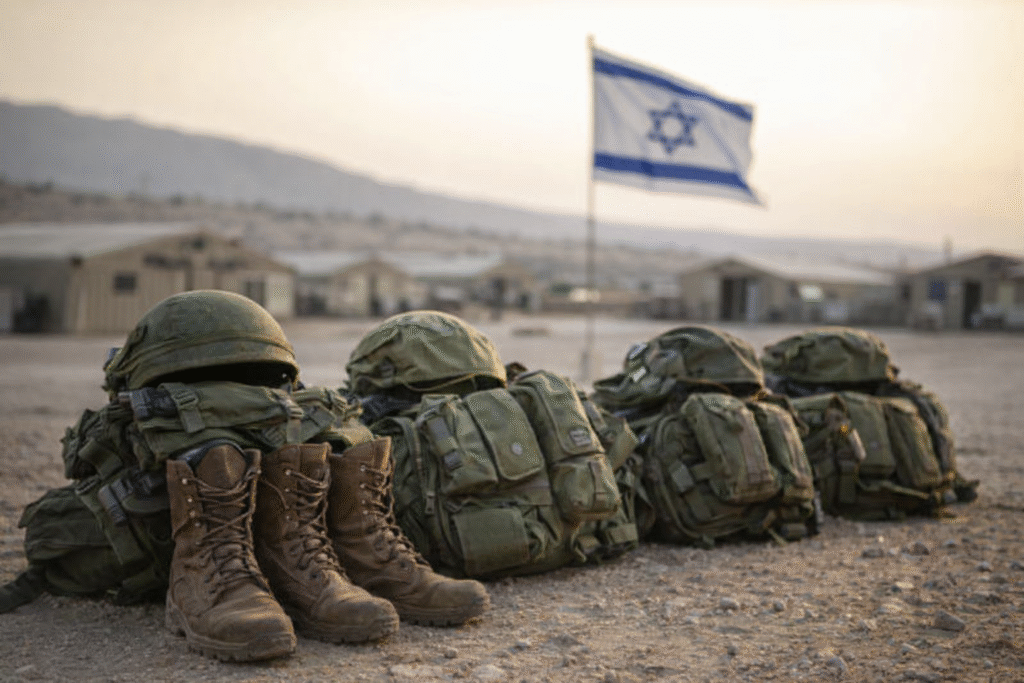
Hundreds of citizens from Central Asia have served in the Israeli military during its ongoing campaign in Gaza, according to an analytical report published by Al Jazeera, which cited official data provided by Israeli sources.

The data, shared with Al Jazeera by Israeli lawyer Elad Man, legal counsel for the organization Hatzlacha, indicates that as of March 2025, thousands of foreign nationals were enlisted in the Israeli army, 17 months after the outbreak of the war in Gaza in October 2023.

Among them were 264 individuals holding Uzbek citizenship, according to the report. The publication noted that these individuals were described as belonging to five different ethnic groups, although their specific backgrounds were not disclosed. It was also stated that they hold Israeli citizenship in addition to Uzbek nationality.

The figures suggest that foreign nationals serve in significant numbers within the Israeli military. Between 12,000 and 13,000 service members are reported to be U.S. citizens, forming the largest group. The data lists 6,127 French nationals, 5,067 Russian citizens, 3,901 Ukrainians, and 1,668 Germans. The Israeli military clarified that individuals with multiple citizenships are counted more than once in the country-by-country breakdown.

In addition to Uzbekistan, other Central Asian states were represented. The report states that 189 citizens of Kazakhstan, 52 citizens of Kyrgyzstan, 31 citizens of Turkmenistan, and eight citizens of Tajikistan were serving in the Israeli armed forces.

Since October 7, 2023, Israel’s military campaign in Gaza has resulted in at least 72,061 deaths, according to figures cited in the report. Human rights organizations have described aspects of the campaign as constituting war crimes and crimes against humanity. Rights groups have sought to identify and pursue legal action against foreign nationals allegedly involved in violations, including individuals who have shared footage from the conflict on social media.

In March 2024, the International Centre of Justice for Palestinians launched the “Global 195” campaign, aimed at holding Israeli and dual-national individuals accountable for alleged crimes committed in Gaza. The initiative seeks to pursue private arrest warrants and initiate proceedings across multiple jurisdictions. For countries that are parties to the Rome Statute of the International Criminal Court, including Palestine, which acceded in 2015, the court may assert jurisdiction in relevant cases.

Israel’s relations with Central Asia have drawn increased attention in recent years. In late 2025, Kazakhstan became the first Muslim-majority country outside the Middle East to join the Abraham Accords framework, while Uzbekistan has maintained longstanding diplomatic and trade ties with Israel. Analysts note that these established relations contrast with the more critical positions adopted by some European countries.

How Kazakhstan Once Again Finds Itself Vulnerable to Measles

Kazakhstan is once again experiencing a rise in measles cases. According to the Ministry of Health, nearly 2,000 infections were registered between the beginning of the year and February 5, accounting for almost half of the total recorded in 2024. Analysts at Energyprom.kz attribute the renewed outbreak to systemic gaps in prevention and declining vaccination coverage.

Over the past decade, measles incidence in Kazakhstan has fluctuated significantly. In 2017, 2021, and 2022, the country reported only isolated cases and was considered close to eliminating the disease. However, the situation deteriorated sharply in 2023-2024. In 2023, reported cases surged to 29,700. The peak incidence rate occurred in 2023-2024, reaching 149.4 cases per 100,000 people. For comparison, in 2021-2022 incidence was minimal, and in 2024 it stood at 20.8 per 100,000.

Experts cite the growing proportion of unvaccinated individuals as the primary driver of the new wave. According to official data, 79% of those infected since the beginning of the year had not received the measles, mumps, and rubella (MMR) vaccine. A further 8% were children who had received only the first dose and had not yet reached the age of six, when the second dose is administered.

More than 59% of unvaccinated individuals are children whose parents declined immunization, reportedly influenced by anti-vaccination beliefs. Health specialists warn that unvaccinated children face a significantly higher risk of severe complications and long-term immune suppression. One of the most serious complications, measles encephalitis, remains difficult to treat effectively.

At the same time, vaccination does not guarantee absolute protection. Approximately 10% of those infected had received both recommended doses. However, epidemiologists emphasize that vaccines are most effective when herd immunity is maintained at sufficiently high levels.

“People have stopped fearing infection. Our parents’ generation saw the consequences of these diseases and understood the risks. Today there is no mass mortality from such infections, and some people fear vaccines more than the diseases themselves. In fact, vaccines are safe,” said Nurshay Azimbayeva, head of the Department of Sanitary and Epidemiological Control at the Ministry of Health.

To maintain herd immunity against measles, vaccination coverage must reach at least 95%. In recent years, however, Kazakhstan has fallen short of that threshold. Among children under two years of age, first-dose coverage has declined to 92.7%. The lowest revaccination rates were recorded in 2020, during the COVID-19 pandemic, at 90.7%, and again in 2024, at 92.5%. Data for 2025 has not yet been published.

As a result, Kazakhstan is among the countries that have experienced setbacks in measles immunization coverage between 2005 and 2024. Other countries on this list include Russia, Kyrgyzstan, Belarus, Mexico, Moldova, Finland, the Netherlands, and Japan.

Globally, the long-term trend has been upward. According to data compiled by Our World in Data, average global coverage for the first dose of the measles vaccine increased from 77% to 84% over the past two decades.

Within Central Asia, Turkmenistan and Uzbekistan report first-dose coverage of 99% among one-year-olds. Belarus and Tajikistan report 98%, while Russia reports 97%. The European regional average stands at 94%.

Vaccination rates also correlate with income levels. In high-income countries, first-dose coverage averages 94%; in upper-middle-income countries, 90%; and in middle-income countries, 87%. The lowest rates are found in low-income countries, at 66%.

Kazakhstan May Introduce Traffic Restrictions Based on Beijing Model

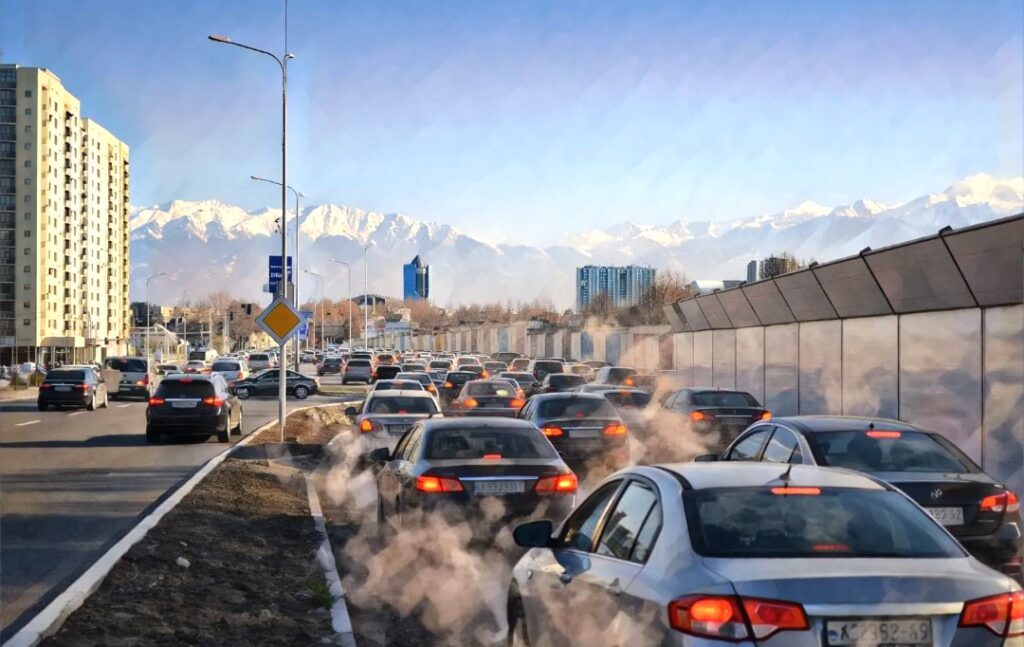
Kazakhstan’s Ministry of Ecology and Natural Resources has proposed that city authorities draw on Beijing’s experience in restricting private vehicle traffic on days with unfavorable weather conditions as part of efforts to combat air pollution.

Beijing has operated an “even-odd” traffic system since 2011, under which vehicles with even-numbered license plates may drive on even dates, and those with odd-numbered plates on odd dates. While the measure in the Chinese capital was initially introduced to reduce traffic congestion, in Kazakhstan, it is being considered primarily as a tool to improve air quality.

After reviewing Beijing’s practice, the ministry has instructed local authorities and regional environmental departments to prepare air protection plans for 2026-2028, including the possible introduction of similar restrictions.

The ministry cited data from Kazhydromet indicating that by the end of 2025, eleven cities in Kazakhstan are expected to record persistently high levels of air pollution. The most affected cities remain Almaty, Ust-Kamenogorsk, Karaganda, Temirtau, and Aktobe. Despite the modernization of major industrial facilities and the adoption of best available technologies, a significant share of emissions originates from smaller sources, including motor vehicles, private households, and small businesses.

In Almaty, approximately 60% of emissions are attributed to transport, while a further 12% comes from private homes and small boiler houses. A similar pattern is observed in Ust-Kamenogorsk.

In response, the Ministry of Ecology has proposed that city authorities not only consider temporary traffic restrictions during periods of unfavorable weather but also accelerate the transition of public transport and taxis to electric and gas-powered vehicles, establish green belts around industrial zones, subsidize the gasification of private homes, promote connections to centralized heating systems, and ban the use of solid fuels in catering establishments and small boiler houses.

The Times of Central Asia previously reported that the most severe smog and adverse weather conditions have recently been recorded in Ust-Kamenogorsk.

Kazakhstan Intends to Accelerate Oil Refining Expansion to 40 Million Tons per Year

Kazakhstan plans to accelerate the expansion of its oil refining capacity to reach 40 million tons per year by 2033, seven years earlier than the previously announced 2040 target. The revised timeline was announced by Deputy Energy Minister Kaiyrkhan Tutkyshbaev at a government meeting on February 17.

A full cycle of work is scheduled for 2026-2033, covering feasibility studies, design, construction, and the commissioning of a fourth large refinery with a projected capacity of 10 million tons per year. Once completed, the new facility would increase Kazakhstan’s total refining capacity to 40 million tons annually.

Previously, in its updated Concept for the Development of the Oil Refining Industry, the Ministry of Energy had set a target of increasing refining capacity from 18 million to 38 million tons by 2040. The decision to accelerate the timetable follows criticism from President Kassym-Jomart Tokayev at an expanded government meeting on February 10.

Addressing Kazakhstan’s dependence on imports, Tokayev noted that the country produces approximately 100 million tons of oil annually but refines only about 18 million tons domestically. This imbalance, he said, has contributed to chronic diesel fuel shortages and reliance on imported aviation kerosene.

According to him, modernization of the three existing refineries in Pavlodar, Atyrau, and Shymkent is expected to increase processing capacity from 18.4 million to 27.4 million tons per year. An additional 10 million tons of capacity is to be provided by a new refinery planned for the Mangistau region, near the Caspian Sea coast. Tokayev emphasized that the project should be implemented with the participation of private investors, arguing that financing the construction of a refinery solely from the state budget would be economically unjustified.

Tutkyshbaev stated that the ministry has begun preparing initial data on raw material sources and the product mix for the future plant, taking into account demand forecasts and potential export markets. These calculations will determine the refinery’s configuration, the choice of technology licensor, and the precise construction site. The results are expected to be presented in the coming months.

The Ministry of Energy expects that expanding existing refineries and constructing a new plant will gradually resolve domestic fuel shortages. Between 2028 and 2030, the deficit of aviation kerosene is projected to decline from 500,000 to 300,000 tons per year, with full elimination anticipated by 2033. Following the launch of the fourth refinery, Kazakhstan is expected to begin exporting diesel fuel and gasoline to neighboring countries.

Plans also call for increasing the depth of oil refining from 89% to 94% at existing plants, and to 95% at the new facility. The quality of motor fuels is expected to improve from environmental class K4 to K5.

As previously reported by The Times of Central Asia, the Kazakh government began seeking private investors to build the fourth refinery even before Tokayev’s most recent comments on the need for increased refining capacity.

U.S. Ambassador to Kazakhstan Highlights Cultural Diplomacy, AI, and Strategic Partnerships

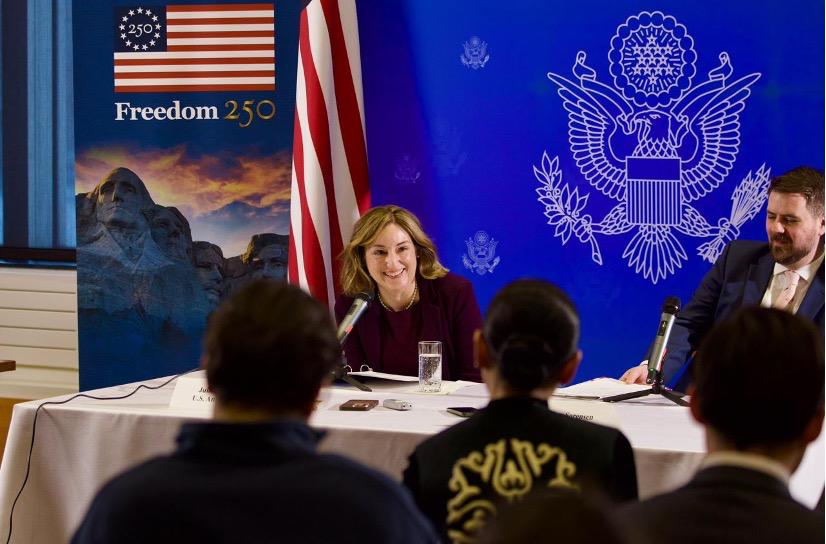
At a wide-ranging press conference at the U.S. Embassy in Astana, the recently appointed U.S. Ambassador to Kazakhstan, Julie M. Stufft, underscored the deepening ties between the United States and Kazakhstan, highlighting cooperation in cultural diplomacy, artificial intelligence, and critical minerals.

“I arrived in Astana a month ago, and while the weather has been a little cold, the welcome has been very warm. It has been exciting to meet the embassy team, our colleagues in government and civil society, and the people of Kazakhstan. I am very excited to be here and already feel at home. U.S.-Kazakhstan relations are the strongest they have been in the history of our two countries,” Ambassador Stufft said. She pointed to the convergence of political, commercial, and cultural factors that make the partnership distinctive, noting that bilateral ties have evolved beyond their initial commercial foundation. Thirty-five years ago, U.S. companies began investing in Kazakhstan, she said; today, cooperation spans security, cultural exchange, and economic collaboration.

A key priority for the ambassador is expanding people-to-people exchanges. “Since Kazakhstan’s independence, 22,000 Kazakh students and professionals have participated in U.S. exchange programs,” she said, adding that 3,000 Kazakh students studied in the United States last year. “We need more Americans here, and we need more Kazakhs in the United States. These ties go far beyond political diplomacy.”

Ambassador Stufft also identified artificial intelligence as a major growth sector. “Already, $3.7 billion in deals with U.S. AI companies have been concluded in Kazakhstan,” she said. “This is the year of AI development in Kazakhstan. The youth here are exceptionally creative and talented. AI represents a significant area for growth.”

Critical minerals featured prominently in the discussion. The ambassador described Kazakhstan as a major holder of rare-earth resources and stressed the importance of establishing reliable, transparent supply chains. “Kazakhstan is cooperating with at least 53 other countries to ensure a world market that is fair and accessible,” she said, referring to a recent ministerial meeting in Washington at which Kazakhstan’sForeign Minister Yermek Kosherbayev delivered a keynote address.

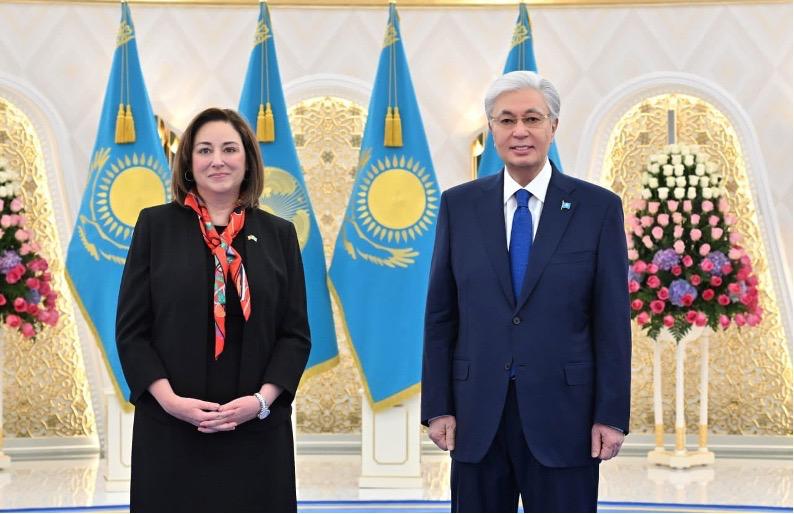
U.S. Ambassador Julie Stufft presents her credentials to President Kassym-Jomart Tokayev of Kazakhstan; image: Akorda

Addressing commercial ties, Ambassador Stufft discussed efforts to facilitate investment and mining projects, including a joint venture between U.S.-based Cove Capital and the national mining company Tau-Ken Samruk in the Karaganda region. She emphasized that such agreements are commercially driven and not politically imposed. “This is a commercial deal, and it opens the door to a new chapter in our cooperation,” she said.

The press conference also touched on broader geopolitical issues. Asked about Kazakhstan’s strategic partnerships with Russia and China, Ambassador Stufft said the United States respects Kazakhstan’s multi-vector foreign policy while seeking to remain a partner of choice. On U.S. visa policy, she clarified that temporary pauses on certain immigrant visa categories were procedural and do not affect the majority of Kazakh applicants. “Hundreds of thousands of visas are issued every week,” she said, pointing to the continued growth of educational exchanges.

Ambassador Stufft praised Kazakhstan’s role in multilateral diplomacy and its engagement with international sanctions regimes. She emphasized that the United States has never asked Kazakhstan to sever ties with other partners and described sanctions as international measures rather than unilateral U.S. actions. According to the ambassador, Kazakhstan has cooperated closely with the international community to comply with sanctions while working to mitigate negative consequences for its population.

Concluding on a personal note, Ambassador Stufft said: “I am very excited to be here and to live in Kazakhstan. My family is thrilled to explore the beauty of your country and meet its warm and inspiring people.”

As Kazakhstan navigates a rapidly evolving regional and global environment, the ambassador’s message was clear: the U.S.-Kazakhstan partnership extends beyond government-to-government relations, encompassing cultural, technological, educational, and strategic dimensions with significant potential for further growth. As Astana continues to navigate its multi-vector course, the United States is signaling that it intends to be not just a partner, but a durable presence in Kazakhstan’s economic and technological transformation.