• KGS/USD = 0.01144 0%
  • KZT/USD = 0.00196 -0%
  • TJS/USD = 0.10899 -0%
  • UZS/USD = 0.00008 -0%
  • TMT/USD = 0.28490 0%
  • KGS/USD = 0.01144 0%
  • KZT/USD = 0.00196 -0%
  • TJS/USD = 0.10899 -0%
  • UZS/USD = 0.00008 -0%
  • TMT/USD = 0.28490 0%
  • KGS/USD = 0.01144 0%
  • KZT/USD = 0.00196 -0%
  • TJS/USD = 0.10899 -0%
  • UZS/USD = 0.00008 -0%
  • TMT/USD = 0.28490 0%
  • KGS/USD = 0.01144 0%
  • KZT/USD = 0.00196 -0%
  • TJS/USD = 0.10899 -0%
  • UZS/USD = 0.00008 -0%
  • TMT/USD = 0.28490 0%
  • KGS/USD = 0.01144 0%
  • KZT/USD = 0.00196 -0%
  • TJS/USD = 0.10899 -0%
  • UZS/USD = 0.00008 -0%
  • TMT/USD = 0.28490 0%
  • KGS/USD = 0.01144 0%
  • KZT/USD = 0.00196 -0%
  • TJS/USD = 0.10899 -0%
  • UZS/USD = 0.00008 -0%
  • TMT/USD = 0.28490 0%
  • KGS/USD = 0.01144 0%
  • KZT/USD = 0.00196 -0%
  • TJS/USD = 0.10899 -0%
  • UZS/USD = 0.00008 -0%
  • TMT/USD = 0.28490 0%
  • KGS/USD = 0.01144 0%
  • KZT/USD = 0.00196 -0%
  • TJS/USD = 0.10899 -0%
  • UZS/USD = 0.00008 -0%
  • TMT/USD = 0.28490 0%
08 December 2025

Samarkand: The City that Forged a Country’s Nationhood

The city of Samarkand holds great significance in the history of Central Asia.

The etymology of the name “Samarkand” has multiple possible origins. One train of thought is that it is derived from Sanskrit and Old Persian words, with “Samar” meaning “war” and “kand,” a “square” or “place.” Another roots it in the ancient Sogdian language with “Samar” interpreted as “stone” or “rock,” and “kand,” as “fort” or “town.” Some foreign toponymists claim the name originated in the Sanskrit word “Samaria,” signifying a gathering or meeting, whilst according to certain historical accounts, it evolved from the name of its king, Samar, and “kand,” the Turkish word for city. Yet another theory involves Shamar, a Yemen royal, who after seizing the town from the Sogdians, reconstructed and renamed it Samarkand.

Today’s Samarkand, one of Central Asia’s oldest cities, is a testament to its enduring resilience and indomitable spirit against centuries of numerous conquests.

According to the Encyclopaedia Britannica, the city then known as Maracanda, was the capital of Sogdiana prior to its conquest by Alexander the Great in the 4th century BC. It was subsequently ruled by various groups, including Central Asian Turks, Arabs, the Samanids of Iran, various Turkic peoples, and the Khwārezm-Shāh dynasty, before being ravaged by Genghis Khan in 1220. After a successful revolt against Mongol rulers in 1365, Samarkand rose to the fore as Central Asia’s economic and cultural capital under the reign of Timur (Tamerlane). In 1550, the city was conquered by Uzbeks and integrated into the Khanate of Bukhara. By the 18th century, the city had fallen into serious decline and remained uninhabited from the 1720s to the 1770s, but once again rose from the ashes when in 1887, it became a provincial capital of the Russian Empire and a railroad center. The city then served as the capital of the Uzbek Soviet Socialist Republic from 1924 to 1936.

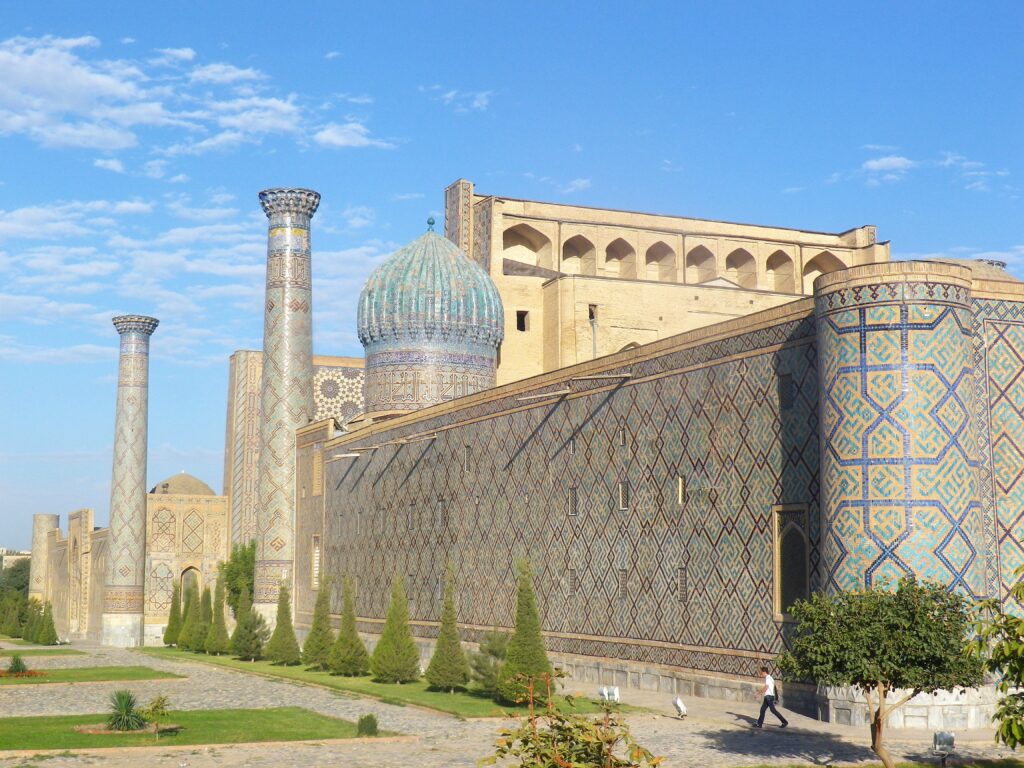
Samarkand is a city of two parts; the first dating back to medieval times, and the second after the Russian conquest in the 19th century. Despite large-scale destruction by the Russians, the old city’s walls, erected in the 11th century and spanning five miles, remain true to their original plan with the streets running from six gates towards the center housing some of the most magnificent monuments of Central Asian architecture. Constructed between the 14th and 20th centuries, these include the Bībī-Khānom Mosque (1399–1404), commissioned by Timur’s favorite Chinese wife, Timur’s tomb, the Gūr-e Amīr Mausoleum, built around 1405, and the late 15th century Ak Saray tomb with its superb interior fresco. The madrasahs (Islamic schools) of Timur’s grandson, the astronomer Ulūgh Beg (1417–20), and those of Shirdar (1619–1635/36) and Tilakari (mid-17th century) flanking the central Registan Square are but the finest of Samarkand’s many historic mausoleums, madrasahs, and mosques. Famously adorned with magnificent portals, vast colored domes, and remarkable exterior decorations in majolica, mosaic, marble, and gold, the city’s awe-inspiring architecture resulted in Samarkand’s recognition as a UNESCO World Heritage site in 2001.

The newer section of Samarkand was introduced in 1871, and during the Soviet-era led to a substantial growth of the city through the addition of public buildings, housing and parks as well as the establishment of Uzbek and Russian theaters, the Samarkand State University, founded in 1927, and various higher education facilities focusing on agriculture, medicine, architecture, and trade. Historical records suggest that the University originated in the Ulugbek Madrasa, established by the Uzbek astronomer-ruler Ulugbek in 1420 alongside an observatory, for the study of mathematics, astronomy, and religious education. The transformation of the traditional madrasa into a modern university bridges the past and present, and looking to the future is proactive in its repositioning as a leading center of knowledge in the light of current global challenges.

Samarkand’s historical significance as a commercial hub is deeply rooted in its strategic location at the crossroads of trade routes between China and India. The city’s buoyant economic legacy was furthered by the introduction of the railway in 1888, which secured its position as a pivotal center for exporting commodities such as wine, dried and fresh fruit, cotton, rice, silk, and leather. In addition to key industries in agriculture, particularly cotton ginning, silk spinning and weaving, fruit canning, and wine production, Samarkand also manufactures tractors, automobile parts, cinema equipment, clothing, leather goods, footwear, and tobacco, all of which testify to the historic city’s enduring and constantly evolving economic vitality.

Last but not least is Samarkand’s tourist industry, which thanks to its rich and diverse cultural   heritage and the traditional Uzbek generosity of spirit, attracts an ever-increasing flow of visitors from across the globe.

ADB: Central Asia’s Economic Growth and Decreasing Inflation in 2024

The Asian Development Bank has published its latest report, “Asian Development Outlook (ADO) July 2024: Steady Growth, Slowing Inflation,” in which it has increased its forecast for economic growth in Central Asia from 4.3% to 4.5% in 2024.

In the first quarter (Q1) of 2024, the Kyrgyz Republic is expected to have grown at a rate of 8.8% thanks to robust service and construction industry output supported by both foreign and domestic investment. Other regional economies have also experienced solid economic activity. As a result of a notable increase in exports, which included gold sales, Tajikistan maintained its robust economic trajectory in Q1 2024, with an 8.2% growth rate. Net gas exports and government investment, meanwhile, are Turkmenistan’s primary sources of growth. The first quarter of 2024 also saw 6.2% growth in Uzbekistan, due to a spike in fixed capital investment.

The growth prospects of Kazakhstan, however, the largest economy in the region, remain unchanged. With the main growth drivers being construction, manufacturing, and services, GDP expanded by 3.7% in Q1 2024. This year, manufacturing and construction will continue to be the primary forces behind economic expansion. Strong building growth will be supported by government assistance to victims and restoration of damaged infrastructure following the worst floods in thirty years. Mining is also anticipated to contribute significantly to Kazakhstan’s medium-term growth following the Tengiz oil field expansion project’s completion in Q2 2025.

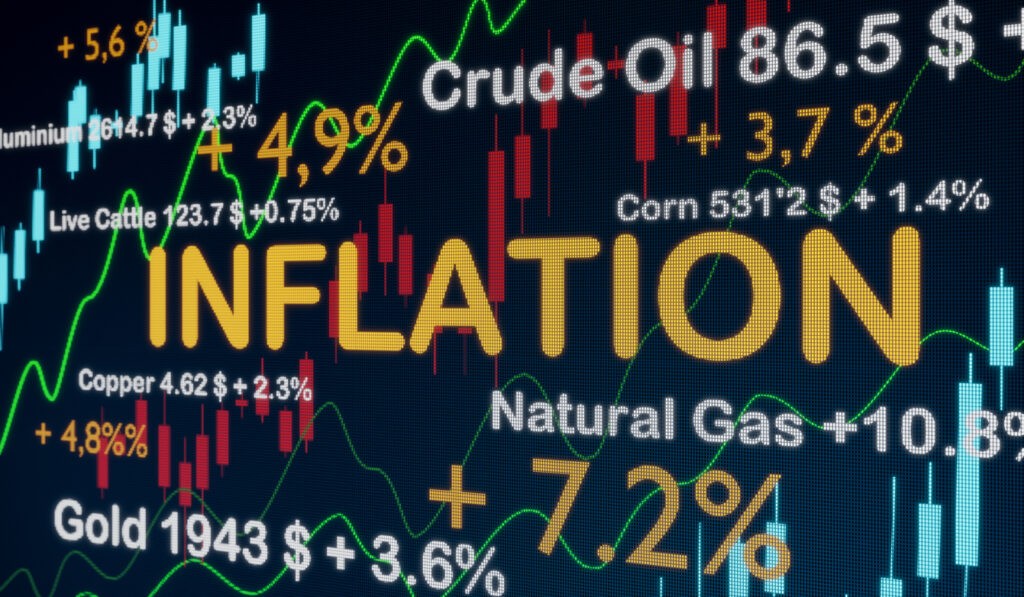
The ADB has also lowered inflation forecasts for 2024 and 2025. In May 2024, the Kyrgyz Republic experienced a decrease in inflation from 11.3% to 4.6%, primarily due to fluctuations in the prices of essential commodities. Other regional economies are also experiencing a reduction in inflationary pressures. A steady exchange rate and relatively restrictive monetary policy decreased Kazakhstan’s inflation rate to 9.0% from 18.5% from 2023 to January–May 2024. Inflation in Tajikistan for the first four months of 2024 was 3.8%. Inflation in Uzbekistan has also dropped from 11.4% in the previous year to 9.2% in the first five months of 2024.

Direct Flights Between U.S. and Kazakhstan to Begin in Late 2025

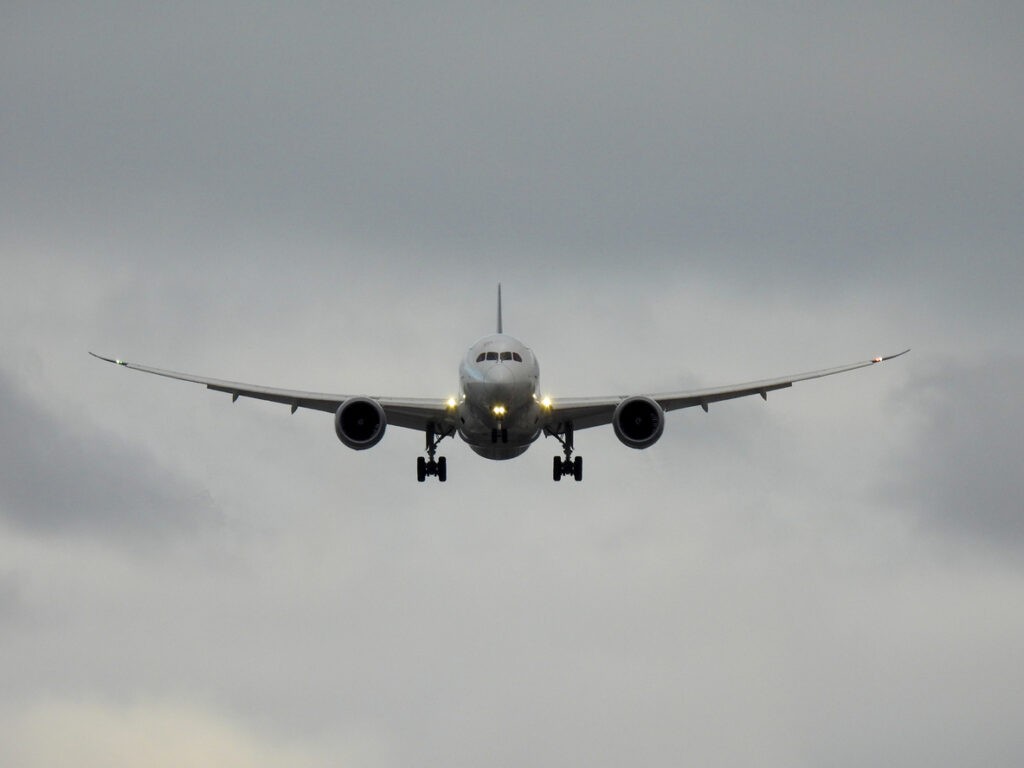
Following a meeting between Zhaslan Madiyev, the Minister of Digital Development, Innovation, and Aerospace, and officials from Boeing, the authorities in Kazakhstan have stated that the first B787 “Dreamliner” will be delivered in late 2025, bringing Astana’s long-held goal of direct flights between Kazakhstan and the United States by the end of 2025 a step closer.

This new aircraft will strengthen Kazakhstan’s aircraft fleet, and expand the country’s air route map.

Boeing’s manufacturing facilities are located worldwide, and in 2023 alone, Boeing earned almost $80 billion The company had long been known for its innovative solutions and high-quality standards until a series of crashes and groundings following cost-cutting measures. On average, a Boeing airplane takes off every two minutes worldwide.

Why Does Germany’s New Hydrogen Policy Suit Kazakhstan?

DW shares that Germany has adopted a strategy for importing hydrogen (H2), which is good news for Kazakhstan and a challenge for Russia.

The document, approved on July 24, reportedly outlines plans to replace fossil natural gas with renewable hydrogen. Berlin promises a stable market for H2 producers, as Europe’s largest economy intends to increase its imports due to the lack of domestic production capacity.

Private companies in Germany plan to build a hydrogen pipeline network of about 10,000 kilometers by 2032. Around 40% of this network will be built specifically for hydrogen, while 60% will be adapted gas pipelines. One of these pipelines will be one of the two pipelines previously laid from Lubmin on the Baltic coast to the Czech border, initially intended for Russian gas from Nord Stream.

Germany plans to import 50-70% of its hydrogen needs by 2030, between 95 and 130 terawatt-hours (about 9.5-13 billion cubic meters of natural gas). That’s about as much as Gazprom plans to deliver to the EU this year via the Ukrainian route. Hydrogen demand could reach 500 terawatt-hours by 2045, comparable to the amount of gas supplied through the first Nord Stream before the war in Ukraine.

These plans preclude renewed gas cooperation with Russia, as infrastructure would be adapted to replace natural gas with hydrogen, signaling a long-term change in Germany’s energy policy and a shift from Russian gas.

With its ideal conditions for green hydrogen production in the country’s west, Kazakhstan could become a key supplier for Germany. The strategy envisions a wide range of suppliers to avoid dependence on a single source. Around 40 countries are listed as potential partners, including Kazakhstan and Ukraine. Germany already has specific cooperation agreements with 15 of these countries.

The German economy is preparing to import hydrogen in various forms: gaseous, liquefied, or in the form of hydrogen-containing chemicals such as ammonia and methanol. This diversifies sources and minimizes the risks of dependence on individual suppliers.

Germany’s hydrogen import strategy thus presents significant opportunities for Kazakhstan and other partner countries, creating new prospects for hydrogen exports. At the same time, it presents severe challenges for Russia, limiting its role in Germany’s future energy market.

Iran-Turkmenistan-Kazakhstan-China Rail Transport Route Resumes Operation

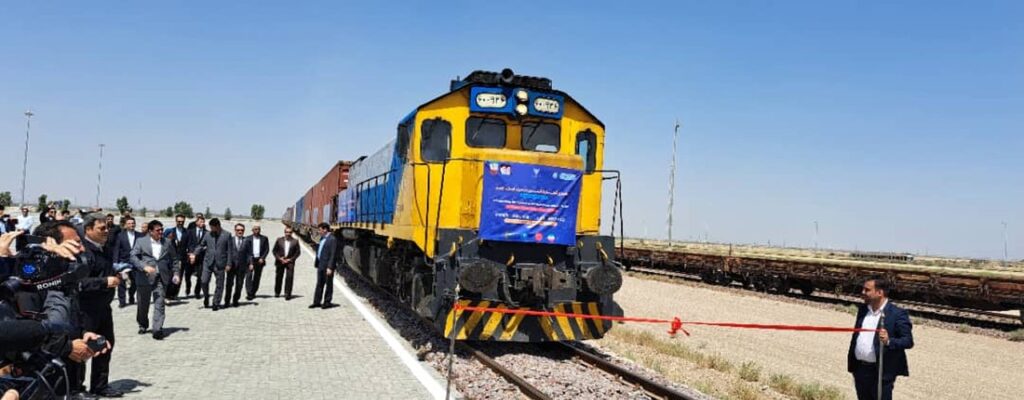
KTZ Express, a subsidiary of Kazakhstan’s national railways company Kazakhstan Temir Zholy (KTZ), and China Railway Container Transport Co. Ltd. have resumed the operation of  container trains on the Iran-Turkmenistan-Kazakhstan-China route.

As reported by KTZ’s press service, representatives of Iran, China, Kazakhstan, and Turkmenistan attended a ceremony on July 21 at Iran’s Aprin station to mark the departure of a container train to China.

The train, consisting of 50 forty-foot containers, will arrive in China within 12 days.

This shipment marks the restoration of the transport corridor, strengthening trade relations between participating countries.

Kazakhstan Looks to Increase Oil Shipment Across Caspian Sea

Kazakhstan’s national oil and gas company, KazMunayGas (KMG), is studying options to increase the shipment of Kazakh crude oil through the Trans-Caspian route. Askhat Khassenov, KMG’s CEO, announced this during negotiations in Baku last week with Rovshan Najaf, president of Azerbaijan’s State Oil Company SOCAR.

In 2022, KMG and SOCAR signed the five-year Aktau-Baku-Ceyhan Oil Transit Agreement to transport 1.5 million tons of crude oil annually.

In 2023, 1.057 million tons of oil were shipped from the Kazakh port of Aktau, and in the first half of this year, the figure exceeded 700,000 tons.

During his visit to Baku, Khassenov visited the BP Sangachal and Azertrans terminals, a Kazakh oil transit hub.