• KGS/USD = 0.01144 0%
  • KZT/USD = 0.00210 0%
  • TJS/USD = 0.10528 0.19%
  • UZS/USD = 0.00008 0%
  • TMT/USD = 0.28571 0.28%
  • KGS/USD = 0.01144 0%
  • KZT/USD = 0.00210 0%
  • TJS/USD = 0.10528 0.19%
  • UZS/USD = 0.00008 0%
  • TMT/USD = 0.28571 0.28%
  • KGS/USD = 0.01144 0%
  • KZT/USD = 0.00210 0%
  • TJS/USD = 0.10528 0.19%
  • UZS/USD = 0.00008 0%
  • TMT/USD = 0.28571 0.28%
  • KGS/USD = 0.01144 0%
  • KZT/USD = 0.00210 0%
  • TJS/USD = 0.10528 0.19%
  • UZS/USD = 0.00008 0%
  • TMT/USD = 0.28571 0.28%
  • KGS/USD = 0.01144 0%
  • KZT/USD = 0.00210 0%
  • TJS/USD = 0.10528 0.19%
  • UZS/USD = 0.00008 0%
  • TMT/USD = 0.28571 0.28%
  • KGS/USD = 0.01144 0%
  • KZT/USD = 0.00210 0%
  • TJS/USD = 0.10528 0.19%
  • UZS/USD = 0.00008 0%
  • TMT/USD = 0.28571 0.28%
  • KGS/USD = 0.01144 0%
  • KZT/USD = 0.00210 0%
  • TJS/USD = 0.10528 0.19%
  • UZS/USD = 0.00008 0%
  • TMT/USD = 0.28571 0.28%
  • KGS/USD = 0.01144 0%
  • KZT/USD = 0.00210 0%
  • TJS/USD = 0.10528 0.19%
  • UZS/USD = 0.00008 0%
  • TMT/USD = 0.28571 0.28%

Climate Crisis in Central Asia: Kyrgyz Geologist Spells Out Threat of Disappearing Glaciers

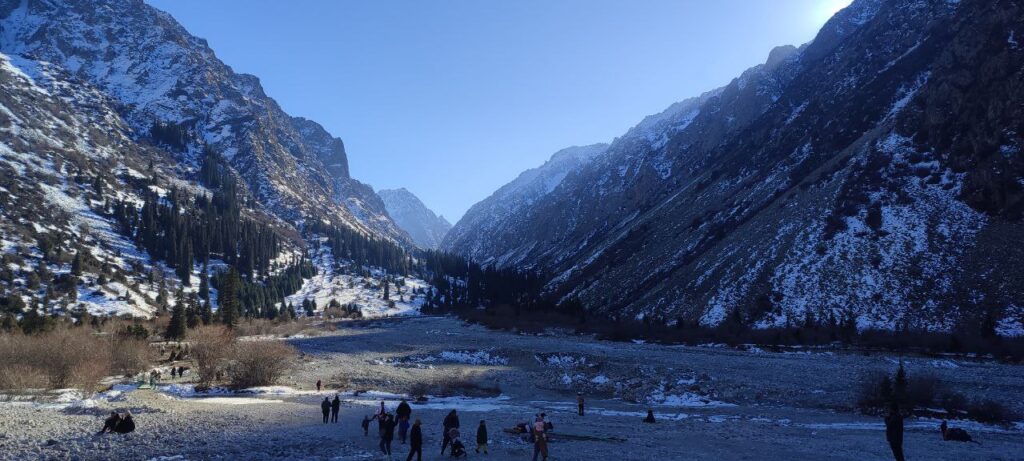
Kyrgyzstan’s President Sadyr Japarov has warned at the COP29 climate summit in Baku that Kyrgyzstan’s glaciers have shrunk by 16% over the past 70 years, a trend that could accelerate if immediate action is not taken.

Glaciers are a crucial source of drinking water for Kyrgyzstan and the broader Central Asian region. Japarov emphasized that the continued reduction in glacier size will lead to water scarcity and bring severe social, economic, and environmental consequences.

“Our region is among the most vulnerable to global warming. By 2100, we may lose more than half of all glaciers,” he said, stressing the need for regional cooperation on green projects to mitigate the impacts of climate change.

Kyrgyz glaciologists at the Institute of Geology have been monitoring the region’s glaciers since the early 1940s. Senior researcher Ilya Mezgin explained the alarming rate of glacier loss. “If you look at maps from 1943, two-kilometer glaciers were visible on the Chatkal Ridge in western Kyrgyzstan. Today, they’ve disappeared entirely from satellite images,” Mezgin told The Times of Central Asia.

The melting has worsened over time. In 1985, Kyrgyzstan had 8,200 glaciers. That number has since dropped to just 6,500. Glaciers at lower altitudes are melting the fastest, while larger glaciers are expected to last until 2100. Mezgin noted that western glaciers in the Talas region are particularly at risk of disappearing.

The mountains of the Tian Shan are composed in the main of crystalline and sedimentary rocks of the Paleozoic Era (i.e., about 540–250 million years ago). growth of the Tian Shan continued until 250 million years ago, when a large continental plate, known as Tarim, collided with Asia.

The State Agency for Geology of Kyrgyzstan has suggested that glaciers can both retreat and regrow over time. However, the current trend is one of significant retreat.

Saudi Arabia to Build Electricity Storage Systems in Uzbekistan

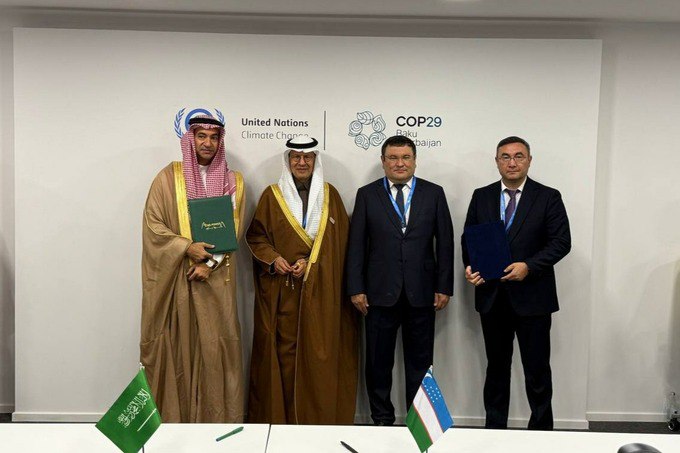
Saudi company ACWA Power has signed an agreement with Uzbekistan to construct electricity storage systems with a total capacity of 2,000 MWh. The agreement was formalized during the COP-29 climate conference in Baku, Azerbaijan.

Under the agreement, ACWA Power will collaborate with Uzbekistan’s Ministry of Energy to develop energy storage systems across the country. The implementation will be based on a comprehensive analysis of the national grid’s condition. The project will begin with feasibility studies to determine the most suitable regions for phased deployment.

The initiative is estimated to cost $1.1 billion and is expected to create over 1,000 jobs during its lifetime.

Uzbekistan has ambitious plans to expand its energy storage capacity to 4.2 GW by 2030. The first energy storage system in the country is slated for launch in early 2025 in the Fergana region.

Deputy Energy Minister Umid Mamadaminov recently noted that Uzbekistan needs to build 10 GW of backup capacity by 2030 to support the integration of renewable energy sources. He emphasized that the country’s minimum reserve should equal 50% of its solar and wind power capacity.

Kazakhstan’s Caspian Sea Ports Increase Cargo Transportation

Kazakhstan’s Ministry of Transport has announced that from January to October 2024, the country’s Caspian Sea ports transported 6.2 million tons of cargo, reflecting a 3% increase compared to the same period last year. Transit cargo shipments saw even stronger growth, rising by 18%.

Truck transshipment via the Kuryk port’s ferry complex increased by 22%, while container transportation through the Aktau port surged by 84%, with approximately 27,000 containers moved along the East-West transit route.

During the same period, the Sarzha terminal at Kuryk port handled 55,000 tons of cargo, including non-ferrous metals, fertilizers, and barley, destined for Turkey and Iran. In October, a new grain terminal with an annual capacity of 1 million tons was inaugurated at the Kuryk port.

Efforts to enhance the port’s capacity continue. The Times of Central Asia previously reported that Kazakhstan’s Ministry of Transport has undertaken dredging operations at the Kuryk port to ensure sufficient depth for ship access, bolstering the capacity of the Trans-Caspian International Transport Route (TITR).

The dredging project will support further expansion of Kuryk’s terminal capacity, currently set at 6 million tons annually—4 million tons through its railway terminal and 2 million tons via its automobile terminal.

Kyrgyzstan’s High Technology Park Confirms Indefinite Preferential Tax Regime

Kyrgyzstan’s President Sadyr Japarov has signed amendments to the Law “On the High Technology Park of the Kyrgyz Republic,” extending the Park’s preferential tax regime indefinitely.

Established in 2011, the High Technology Park was designed to foster IT businesses by drastically reducing or eliminating tax burdens for companies exporting digital goods and services.

Previously, the High Technology Park offered tax exemptions for export-oriented IT companies for a 15-year period, set to expire in 2026. Under the new amendments, this regime is now permanent.

Currently, resident companies of the Park benefit from exemptions on sales tax, profit tax, and value-added tax (VAT). Employees of these companies enjoy a reduced income tax rate of 5%, while the social insurance tax is 12% of their average monthly wage.

The amendments also grant the Park’s supervisory board the authority to independently elect its chairperson, a change expected to enhance the Board’s efficiency.

This move significantly boosts the Park’s appeal to both domestic and international IT businesses. Kyrgyzstan’s IT sector is among the country’s fastest-growing industries.

In 2021, Kyrgyzstan established the Ministry of Digital Development, tasked with advancing e-government initiatives and expanding the range of government services available online.

Chinese Companies to Purchase Uranium Concentrates from Kazatomprom for $2.5 Billion

Shareholders of Kazatomprom, Kazakhstan’s national uranium producer, have approved agreements with two Chinese partners: CNNC Overseas and China National Uranium Corporation (CNUC). These agreements include a spot contract with CNNC Overseas and a long-term contract with CNUC.

Under the terms of these deals, Kazatomprom plans to supply uranium concentrates to China valued at approximately KZT1.25 trillion (around $2.5 billion). While the company has not disclosed specific delivery timelines or volumes, the agreements mark a significant development in Kazakhstan-China nuclear energy cooperation.

CNNC Overseas registered in Hong Kong, and CNUC, based in China, are both subsidiaries of the China National Nuclear Corporation, a state-owned entity responsible for operating nuclear power plants across China.

Kazatomprom has been deepening its ties with China in the nuclear energy sector. In May 2023, a ceremony at the Fangchenggang Nuclear Power Plant marked the acceptance of fuel assemblies produced by Ulba-TVS LLP, a Kazakh-Chinese joint venture in Ust-Kamenogorsk. These assemblies, made from Kazakhstani uranium feedstock, are destined for use in Chinese nuclear power facilities.

Kazakhstan to Create Horse Breeding Institute

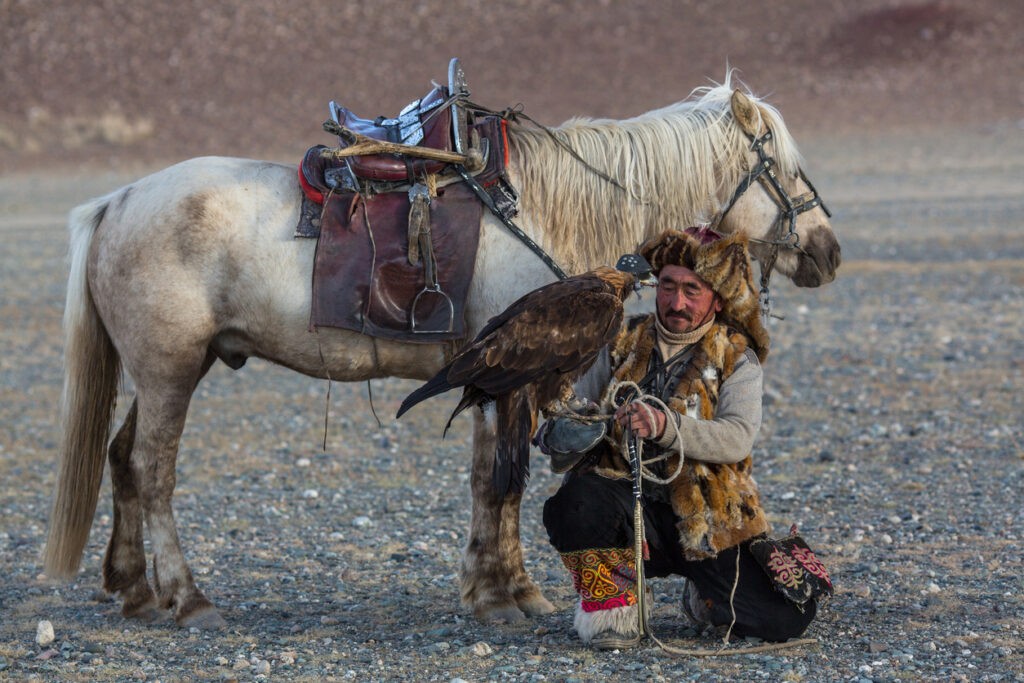
Kazakhstan’s President, Kassym-Jomart Tokayev, has directed the government to establish and fund a Horse Breeding Institute to boost the horse population and advance the breeding of traditional Kazakh breeds.

Speaking at the inaugural Forum of Agricultural Workers of Kazakhstan, Tokayev highlighted the steady growth in the country’s horse population. According to the Bureau of National Statistics, as of January 1, Kazakhstan had 4 million horses—a 5.4% increase from the previous year. This number has since risen to 4.2 million. However, only 1% of the total population comprises purebred horses, with approximately 40,000 being thoroughbreds. Tokayev stressed the importance of prioritizing the breeding and development of thoroughbred horses alongside overall population growth.

“I instruct the government to create the Institute of Horse Breeding. The issue of its establishment has long been raised by experts. Relevant authorities must urgently address this matter and identify funding sources for the institute,”said Tokayev.

The president underscored the significance of several horse breeds in Kazakhstan’s cultural and historical heritage. The Jabe breed, for instance, has a history deeply intertwined with the lives of the Kazakh people, spanning thousands of years. Known for its resilience in harsh environments, the Jabe was historically used as a draft animal, as well as a source of meat and milk. Modern Kazakhstan is also home to other notable breeds, including the Kostanai, Kushum, and Imugaljar breeds, which were developed locally.

Tokayev also praised the Adai breed, calling it a “priceless treasure of Mangystau.” He recounted his earlier directive to promote this breed globally. “Today, the Adai breed has received official recognition and represents our country proudly in races and competitions,” he noted. However, he expressed concern over the dwindling population of the Kostanai horse, with only 280 remaining. “The key task, alongside increasing the horse population, is to enhance their breeding and productive qualities,” Tokayev concluded.

In November 2022, during a public meeting in Mangystau, Tokayev recognized the Adai horse as a unique asset of the region. He instructed the government to begin work on achieving scientific recognition for the Adai as an independent breed and to ensure its reproduction as a breeding animal. By January 2024, the Ministry of Agriculture and the Ministry of Justice awarded the Association of Legal Entities and Individual Entrepreneurs “Adai Breed of Horse” a certificate granting exclusive rights to use the Adai horse brand.
Kazakhstan has also taken legislative steps to protect and preserve its domestic breeds. A law passed in the summer of 2024 facilitates the acquisition of foreign sport stallions by local breeding centers, supports selective breeding efforts, and reimburses related expenses. This law aims to foster the development of Kazakh sport horse breeds and promote traditional equestrian sports, including kokpar, audaryspak, zhambi atu, and tenge alu.

The law also establishes strict compliance standards for horse breeding. Only purebred animals that meet the breed standard and are registered under Kazakhstan’s livestock legislation are classified as breeding animals. Experts, however, have advocated for the creation of an independent institute to oversee compliance and enhance breeding standards, as these responsibilities currently exceed the capacity of the Ministry of Agriculture.

Horse meat production is another area of focus for the institute. In 2023, Kazakhstan produced 167,400 tons of horse meat—a 6.4% increase from the previous year. The Turkestan region led production with 20,800 tons, followed by the Abay region (19,900 tons) and the Pavlodar region (14,500 tons).

Despite surplus domestic supply, exports of horse meat remain limited. According to Askar Zhubatyrov, Executive Director of the Meat Union of Kazakhstan, horse meat faces low demand in major markets like Russia and China, while in Europe, Kazakhstani exports struggle to compete on price with meat from Latin America. Addressing these economic challenges, in addition to breeding goals, will likely form a key part of the Horse Breeding Institute’s mission.