• KGS/USD = 0.01144 0%
  • KZT/USD = 0.00211 0%
  • TJS/USD = 0.10432 -0.29%
  • UZS/USD = 0.00008 0%
  • TMT/USD = 0.28571 0.28%
  • KGS/USD = 0.01144 0%
  • KZT/USD = 0.00211 0%
  • TJS/USD = 0.10432 -0.29%
  • UZS/USD = 0.00008 0%
  • TMT/USD = 0.28571 0.28%
  • KGS/USD = 0.01144 0%
  • KZT/USD = 0.00211 0%
  • TJS/USD = 0.10432 -0.29%
  • UZS/USD = 0.00008 0%
  • TMT/USD = 0.28571 0.28%
  • KGS/USD = 0.01144 0%
  • KZT/USD = 0.00211 0%
  • TJS/USD = 0.10432 -0.29%
  • UZS/USD = 0.00008 0%
  • TMT/USD = 0.28571 0.28%
  • KGS/USD = 0.01144 0%
  • KZT/USD = 0.00211 0%
  • TJS/USD = 0.10432 -0.29%
  • UZS/USD = 0.00008 0%
  • TMT/USD = 0.28571 0.28%
  • KGS/USD = 0.01144 0%
  • KZT/USD = 0.00211 0%
  • TJS/USD = 0.10432 -0.29%
  • UZS/USD = 0.00008 0%
  • TMT/USD = 0.28571 0.28%
  • KGS/USD = 0.01144 0%
  • KZT/USD = 0.00211 0%
  • TJS/USD = 0.10432 -0.29%
  • UZS/USD = 0.00008 0%
  • TMT/USD = 0.28571 0.28%
  • KGS/USD = 0.01144 0%
  • KZT/USD = 0.00211 0%
  • TJS/USD = 0.10432 -0.29%
  • UZS/USD = 0.00008 0%
  • TMT/USD = 0.28571 0.28%

Berdimuhamedov’s Beijing Visit and the Reshaping of Central Asia’s Gas System

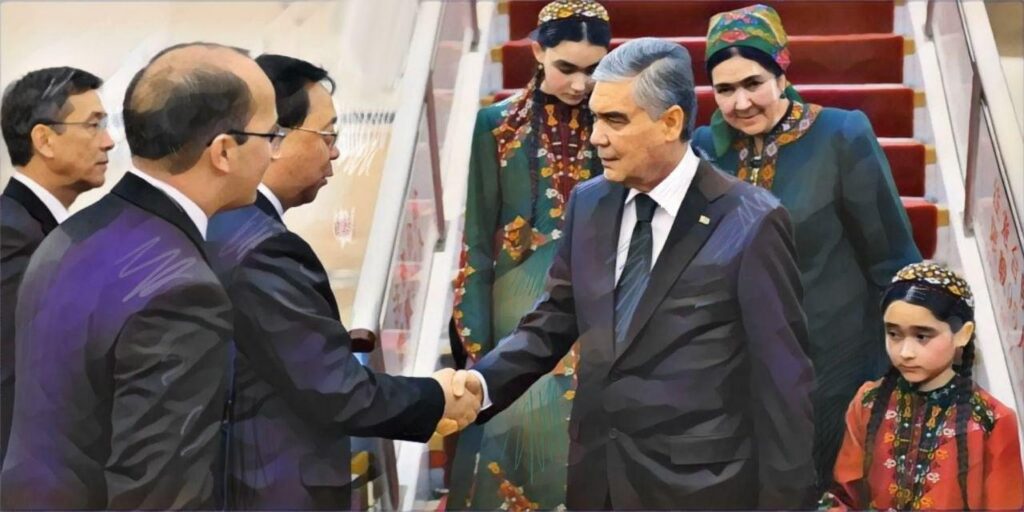
The visit by Turkmenistan’s Gurbanguly Berdimuhamedov, Chairman of the Halk Maslahaty, to Beijing on March 17–19 did more than routinely reaffirm Turkmenistan’s ties with China. It opened onto a wider issue in Central Asian energy, not simply about continuing the cooperation between Ashgabat and Beijing, but about how the renewal of that cooperation would affect the Central Asia–wide gas production and transmission system that increasingly intersects with China’s wider infrastructural and industrial presence in the region.

No dramatic announcement of any new export route highlighted that wider significance, which emerged from a narrower sequence of policy initiatives that carried broader implications. Xi Jinping used the visit to restate the importance of cooperation in natural gas while widening the agenda to include connectivity, clean energy, artificial intelligence, and the digital economy. Within days of the meeting, Turkmenistan moved ahead on a new phase of development at Galkynysh with CNPC. These events signal a further deepening Chinese role in the upstream and systemic organization of Central Asian energy.

What Beijing Actually Signaled

Beijing’s own language about the matter was direct. In the official Xinhua account of Xi’s March 18 meeting with Berdimuhamedov, China called for the two sides to “expand the scale of cooperation in the natural gas sector” and to raise trade and investment levels. Such language confirms that gas remains at the center of the relationship even as the bilateral agenda widens. For all the parallel discussions of digitalization, transport links, and non-resource cooperation, the political weight of Sino-Turkmen ties still rests primarily on energy.

The Chinese side, however, did not treat gas as a self-contained file. Gas remains the primary, but it is increasingly embedded within a wider pattern of regional engagement comprising energy, transport, and adjacent economic sectors. The same Beijing readout on the meeting with Berdimuhamedov placed connectivity, artificial intelligence, the digital economy, and clean energy alongside natural gas under a broader heading of expanded cooperation. This framing removes gas from its status as a stand-alone commodity and places it within a larger operational perspective.

Neither the main Chinese readout nor the public official Turkmen framing of the visit highlighted Line D of the Central Asia–China gas pipeline system. Line D has long stood as the clearest indicator of a future expansion of Turkmen gas exports through Tajikistan and Kyrgyzstan into China. Had the visit produced a concrete breakthrough on that front, the official language would have been the obvious place to signal it. The practical movement after the trip lay elsewhere.

Why It Matters Beyond Turkmenistan

The focus lay at Galkynysh. In the immediate wake of the visit, President Serdar Berdimuhamedov authorized Turkmengaz to conclude a turnkey contract with CNPC Amudarya Petroleum Company Ltd. for Phase 4 of the Galkynysh gas field. The official Turkmen account linked the decision to meetings held during Gurbanguly Berdimuhamedov’s visit to China and specified facilities capable of processing 10 billion cubic meters of marketable gas per year. TCA reported the same move as a new phase of CNPC-backed field development. So far as energy is concerned, the operative result of the visit was not a new pipeline announcement but new upstream capacity.

Yet the move has a wider Central Asian significance, because Uzbekistan and Kazakhstan are part of the existing China-bound gas architecture. CNPC’s own description of Line C identifies supply not only from Turkmenistan, but also from Uzbekistan and Kazakhstan. Any serious increase in Turkmen upstream capacity is therefore more than a bilateral supply matter between Ashgabat and Beijing. It bears on a system in which other Central Asian states are also contracted participants.

The significance of Uzbekistan and Kazakhstan becomes sharper when recent supply realities are taken into account. TCA reported in December that both countries have struggled to meet their own export commitments to China, while Russian gas has been used domestically to ease the resulting pressure on internal balances. Kazakhstan’s gas exports to China were estimated at about 5 bcm in 2025, still only half of its nominal 10 bcm annual commitment. In this context, additional Turkmen upstream capacity holds the potential to rearrange the pipeline system where Uzbekistan and Kazakhstan are already under strain, and thus the regional gas order.

What It Reveals About China’s Regional Role

The broader setting reinforces that reading. Around the time of Berdimuhamedov’s visit, Chinese firms were also advancing logistics projects in Uzbekistan and Kazakhstan, including a major multimodal hub near Tashkent and an agro-logistics center in Kazakhstan. These initiatives did not follow from the visit itself, but they show China expanding its regional role at the same time in gas, transport, and industrial logistics. That wider activity gives the bilateral energy relationship with Turkmenistan a broader regional meaning.

Kazakhstan’s search for outside capital in critical minerals and clean energy belongs to the same pattern. Together, these developments show that Turkmen gas ties with China no longer stand apart from other regional dynamics. They are becoming part of a wider structure in which energy links, transport corridors, and industrial investment increasingly develop alongside one another.

Kyrgyzstan and Tajikistan occupy a different place in this picture from Kazakhstan and Uzbekistan. Their importance lies less in the present than in a possible future tied to Line D. Caution remains necessary here. Construction on Line D has been suspended for years, and Tajikistan’s energy minister said in February 2024 that pricing disagreements among the participating states were still blocking progress. As of Berdimuhamedov’s March 2026 visit to Beijing, there was still no official Chinese or Turkmen indication that this had changed. Kyrgyzstan and Tajikistan, therefore, remain relevant to the future shape of the system, but not to any immediate operational consequence of the visit.

From Bilateral Gas Ties to a Regional System

The takeaway from this constellation of events is that the visit signaled a renewed Chinese commitment to gas-sector cooperation with Turkmenistan, with knock-on effects for the rest of Central Asia, even if it did not signify a restart of Line D. The almost immediate move to advance Galkynysh further, likely for reinforcement of China’s access to Turkmen supply, by itself makes the visit regionally significant, given how the China-bound gas system links Turkmenistan to other Central Asian producers and participants through the existing regional gas system.

The implications differ for each country in the region. Turkmenistan remains the anchor supplier to China. Uzbekistan and Kazakhstan are already embedded in the functioning export architecture and have struggled to meet their own commitments within it. Kyrgyzstan and Tajikistan come into play only if the suspended Line D construction is revived. The larger point is that China’s role in Central Asia is becoming more tightly connected across several domains.

Gas remains the base layer for inter-industrial cooperation, but logistics, infrastructure, clean energy, and digital-economic cooperation increasingly accompany it. Berdimuhamedov’s Beijing visit has brought this pattern more clearly into view. It is not merely a bilateral diplomatic episode, but a marker of how Central Asian energy is being organized within a broader regional framework shaped in growing measure by China.


World’s Top Fencers Compete in Astana and Tashkent 

Kazakhstan and Uzbekistan are hosting World Cup fencing competitions this week, reflecting the growth of the sport in Central Asia.

Top fencers from around the world have gathered in the Kazakhstani capital of Astana for the men’s and women’s epee competition, which started on Thursday and runs until Sunday. The two-day women’s saber contest in Tashkent, Uzbekistan began on Friday. A third World Cup, in men’s saber, is currently underway in Budapest, Hungary.

In total, more than 800 elite fencers are participating in the three events, according to the International Fencing Federation.

The federation says second-ranked Giulia Rizzi of Italy and sixth-ranked Hungarian Eszter Muhari are the fencers “to watch” on the women’s side in Astana, while on the men’s side, tenth-ranked Tristen Tulen of the Netherlands has had a breakout year. In Tashkent, two-time world champion Misaki Emura of Japan is a favorite.

Still, Kazakhstan and Uzbekistan are establishing their presence in international fencing, winning medals in high-level competitions.

Last year, the men’s epee team of Kazakhstan won bronze at the World Fencing Championships in Tbilisi, Georgia, beating France for the medal.

The Uzbek competition will be hosted in the state-of-the-art Olympic City, the largest sports complex in Central Asia, and the designated hub for the 4th Asian Youth Games in 2029.

One of Uzbekistan’s top women is Zaynab Dayibekova, who competed in the Olympic Games in Tokyo and Paris and is currently ranked 29th in the world. She was part of the women’s saber team from Uzbekistan that won gold at the 2023 Asian Games, defeating host China in the semifinal and then Japan in the final.

Speaking at the opening ceremony in Tashkent, Otabek Umarov, First Deputy Chairman of the National Olympic Committee of Uzbekistan and Vice-President of the Olympic Council of Asia, said: “We are delighted to welcome the world’s best senior female fencers to Tashkent to experience Uzbekistan’s renowned hospitality, rich cultural heritage, and world-class sports facilities. We are grateful to our friends at the International Fencing Federation for their trust in our ability to host a spectacular event.”

“Great News” for the Striped Hyena at Brazil Meeting, Conservation Group Says

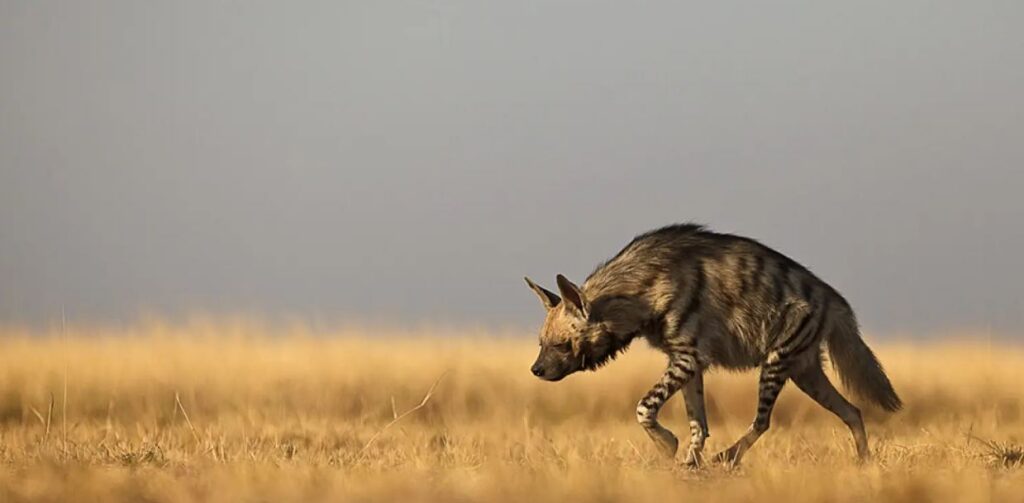
Countries attending a U.N.-backed migratory species conference in Brazil have agreed to increased protections for the striped hyena, whose vast range includes parts of Central Asia, according to an international conservation group.

Tajikistan and Uzbekistan had submitted the proposal to upgrade protections for the species during a meeting of the Convention on the Conservation of Migratory Species of Wild Animals in Campo Grande this week.

“The Committee agreed by consensus to the proposal to include the striped hyena in Appendices I and II,” and the approval will become official at a plenary meeting on Sunday, said Susan Lieberman, vice president for international policy with the New York-based Wildlife Conservation Society.

Appendix I is a designation that would require countries to restore habitats, bar killing or capture except in limited cases and take other robust steps to protect the striped hyena. Appendix II requires governments to coordinate their efforts across the species’ range, which also includes parts of Africa, the Middle East and South Asia.

“It’s great news for the species, and will hopefully stimulate action for its conservation and protection across its vast range—it will give this endangered, misunderstood species a chance,” Lieberman told TCA on Friday.

The striped hyena is listed as “near threatened” on the global IUCN Red List of Threatened Species, though conservationists warn that its population is steadily dropping. Habitat loss, human-wildlife conflict and illegal hunting and trade are factors in its decline.

Delegates at a United Nations wildlife trade conference in Samarkand in 2025 ultimately approved the inclusion of the striped hyena in Appendix II of CITES, introducing controls on international trade after an initial proposal for stricter Appendix I protections failed to pass.

Uzbekistan Targets $50 Billion in Investment with Financial Reforms

Uzbekistan is preparing to introduce Islamic finance services nationwide, with the first offerings expected in 2027. Under the country’s updated “Uzbekistan 2030” development strategy, at least three commercial banks are expected to provide Sharia-compliant financial services by the end of the decade, marking a significant shift in the structure of the banking sector.

Against this backdrop, President Shavkat Mirziyoyev was briefed on March 25 on a broader set of initiatives aimed at strengthening the country’s investment climate. These include plans to establish the Tashkent International Financial Center, launch an International Center for Digital Technologies, and gradually introduce Islamic finance mechanisms.

The presentation comes as Uzbekistan seeks to position itself more competitively in the global economy amid rising geopolitical uncertainty and intensifying competition for foreign investment. Officials said the country’s natural resources, economic potential, and ongoing reforms create favorable conditions for attracting international companies exploring new markets.

Mirziyoyev stressed the need to act swiftly to capitalize on emerging opportunities, noting that attracting foreign investors requires modern infrastructure, a transparent business environment, and legal systems aligned with international standards. Uzbekistan aims to attract more than $50 billion in investment this year.

A central component of the strategy is the Tashkent International Financial Center, which is expected to serve as a platform for new investment flows and long-term economic growth. By 2030, it is projected to attract an additional $20-25 billion, contribute up to 1% of annual GDP growth, and create as many as 15,000 highly skilled jobs.

The center will operate under a special legal regime incorporating elements of the common law system of England and Wales, while allowing its governing bodies to adopt independent regulations. Plans include the establishment of a Tashkent International Commercial Court and an International Arbitration Center to handle disputes. Investors are expected to benefit from tax incentives, simplified visa procedures, and the ability to freely move and repatriate capital, alongside access to modern financial instruments, including digital assets.

In parallel, Uzbekistan is developing the International Center for Digital Technologies under the Enterprise Uzbekistan brand. The center will function under a special legal framework expected to remain in place until 2100. Within a regulatory sandbox, companies will be able to test new technologies, pay salaries in foreign currency, and operate under international labor and data standards.

The digital center will focus on artificial intelligence, data processing, research and development, and startup support. By 2030, it is expected to attract up to 1,000 companies, create more than 300,000 jobs, and generate export revenues of up to $5 billion. Several major international technology firms have already expressed interest in the initiative.

The introduction of Islamic finance is another key pillar of the reform agenda. The proposed system includes instruments such as murabaha, mudarabah, musharakah, and Islamic leasing, all designed to comply with national legislation. Tax measures are also under consideration, including exemptions on certain transactions and investment income.

To oversee the sector, an Islamic Finance Council will be established under the Central Bank, with similar bodies to be created within participating banks. These councils will be responsible for setting standards, reviewing contracts, and ensuring compliance.

Initial steps are expected this year, with at least one commercial bank planning to introduce Islamic “window” operations. Between 2026 and 2030, two fully fledged Islamic banks are expected to be established. Officials estimate that these measures could attract an additional $1 billion in investment and deposits.

Kyrgyzstan Seeks Chinese Cooperation to Develop EV Charging Infrastructure

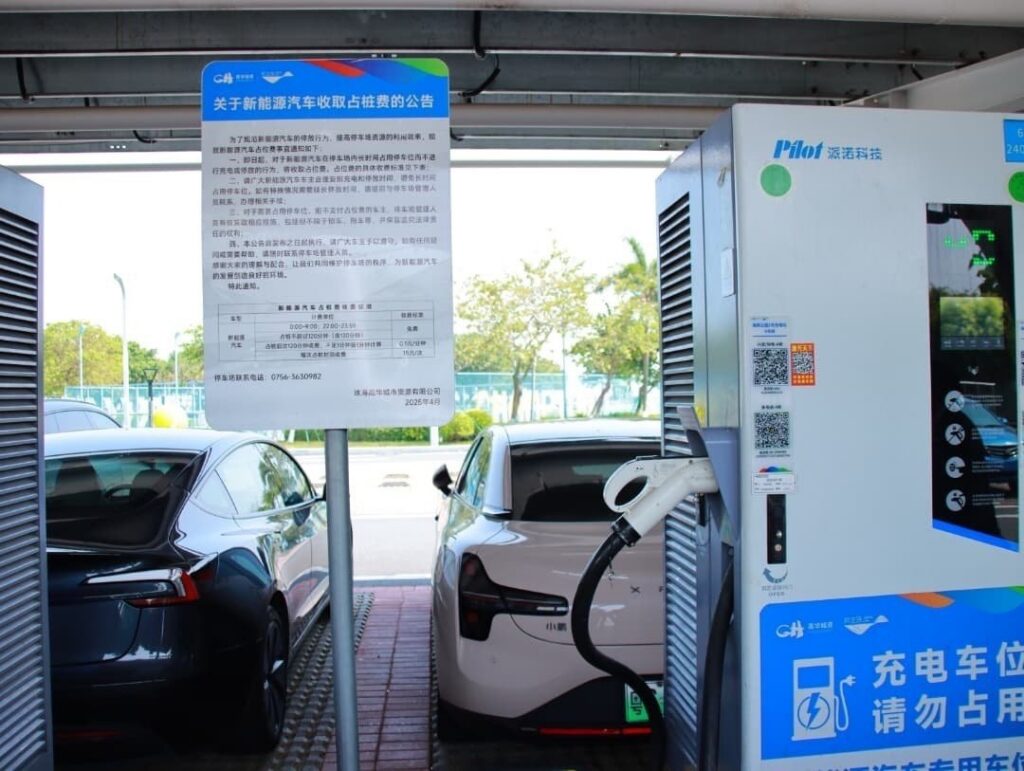
Kyrgyzstan is seeking to collaborate with Chinese companies to develop electric vehicle (EV) charging infrastructure as part of efforts to modernize its energy sector and promote sustainable transport.

On March 25, Energy Minister Taalaibek Ibrayev visited China, where he held a series of meetings with energy and technology companies involved in EV infrastructure development.

During the visit, Ibrayev toured a manufacturing facility operated by ShuiFa Group and signed a memorandum of understanding between the Kyrgyz Ministry of Energy and the company. The agreement involves cooperation in energy infrastructure, including the development of EV charging stations and energy storage systems. Officials said the memorandum represents a step toward modernizing Kyrgyzstan’s energy sector and supporting sustainable transport.

Ibrayev also met with representatives of NUCL New Energy Technology (GD) Ltd to discuss potential cooperation on EV charging infrastructure and the introduction of modern technologies. The company expressed readiness to work with Kyrgyz authorities.

In addition, talks were held with Zhejiang Anfu New Energy Technology Co., Ltd. regarding the possible supply of equipment and the localization of production in Kyrgyzstan

These initiatives align with the government’s broader strategy to promote environmentally friendly transport and reduce air pollution in Bishkek and other major cities.

The number of electric vehicles in Kyrgyzstan has been rising steadily. According to First Deputy Prime Minister Daniyar Amangeldiev, more than 200 electric vehicles are imported into the country daily under a value-added tax (VAT) exemption scheme.

As a member of the Eurasian Economic Union (EAEU), Kyrgyzstan also benefits from an annual quota allowing the duty-free import of up to 15,000 electric vehicles.

Despite this growth, EVs still account for a small share of the country’s total vehicle fleet.

According to the Ministry of Natural Resources, Ecology, and Technical Supervision, Kyrgyzstan had more than 1.9 million registered vehicles as of early 2026, a 13% increase compared with 2024. Of these, 972,000 run on gasoline, 339,000 on diesel, 56,900 on gas, and 37,000 are hybrids. Electric vehicles make up about 0.8% of the total, or approximately 15,200 vehicles.

Kyrgyzstan Earned Almost $1.1 Billion from Tourism in 2025

Kyrgyzstan’s tourism industry continued to expand in 2025, remaining an important contributor to the country’s economic growth.

According to the National Statistical Committee, revenue from foreign visitors reached $1.098 billion in 2025, up from $1.016 billion in 2024.

Tourism accounted for 3.8% of GDP, compared to 3.6% the previous year. At the same time, Kyrgyz citizens spent $564 million on travel abroad.

As of January 1, 2026, the country had 148,100 registered tourism-related businesses. Revenue from passenger transportation serving tourists across all modes of transport totaled nearly 17.3 billion soms (approximately $197 million), compared to 16.9 billion soms in 2024.

Kyrgyzstan’s main tourist attractions include Lake Issyk-Kul and its mountain ski resorts, with the largest and most popular located in Karakol.

In recent years, more than 95% of foreign tourists have come from neighboring Central Asian countries and Russia.

According to the Tourism Development Fund, most visitors arrive from Uzbekistan, followed by Kazakhstan and Russia. At the same time, the number of tourists from Arab and European countries, as well as from China, India, and the United States, has been steadily increasing.