• KGS/USD = 0.01144 0%
  • KZT/USD = 0.00214 0%
  • TJS/USD = 0.10508 0.48%
  • UZS/USD = 0.00008 0%
  • TMT/USD = 0.28571 0%
  • KGS/USD = 0.01144 0%
  • KZT/USD = 0.00214 0%
  • TJS/USD = 0.10508 0.48%
  • UZS/USD = 0.00008 0%
  • TMT/USD = 0.28571 0%
  • KGS/USD = 0.01144 0%
  • KZT/USD = 0.00214 0%
  • TJS/USD = 0.10508 0.48%
  • UZS/USD = 0.00008 0%
  • TMT/USD = 0.28571 0%
  • KGS/USD = 0.01144 0%
  • KZT/USD = 0.00214 0%
  • TJS/USD = 0.10508 0.48%
  • UZS/USD = 0.00008 0%
  • TMT/USD = 0.28571 0%
  • KGS/USD = 0.01144 0%
  • KZT/USD = 0.00214 0%
  • TJS/USD = 0.10508 0.48%
  • UZS/USD = 0.00008 0%
  • TMT/USD = 0.28571 0%
  • KGS/USD = 0.01144 0%
  • KZT/USD = 0.00214 0%
  • TJS/USD = 0.10508 0.48%
  • UZS/USD = 0.00008 0%
  • TMT/USD = 0.28571 0%
  • KGS/USD = 0.01144 0%
  • KZT/USD = 0.00214 0%
  • TJS/USD = 0.10508 0.48%
  • UZS/USD = 0.00008 0%
  • TMT/USD = 0.28571 0%
  • KGS/USD = 0.01144 0%
  • KZT/USD = 0.00214 0%
  • TJS/USD = 0.10508 0.48%
  • UZS/USD = 0.00008 0%
  • TMT/USD = 0.28571 0%

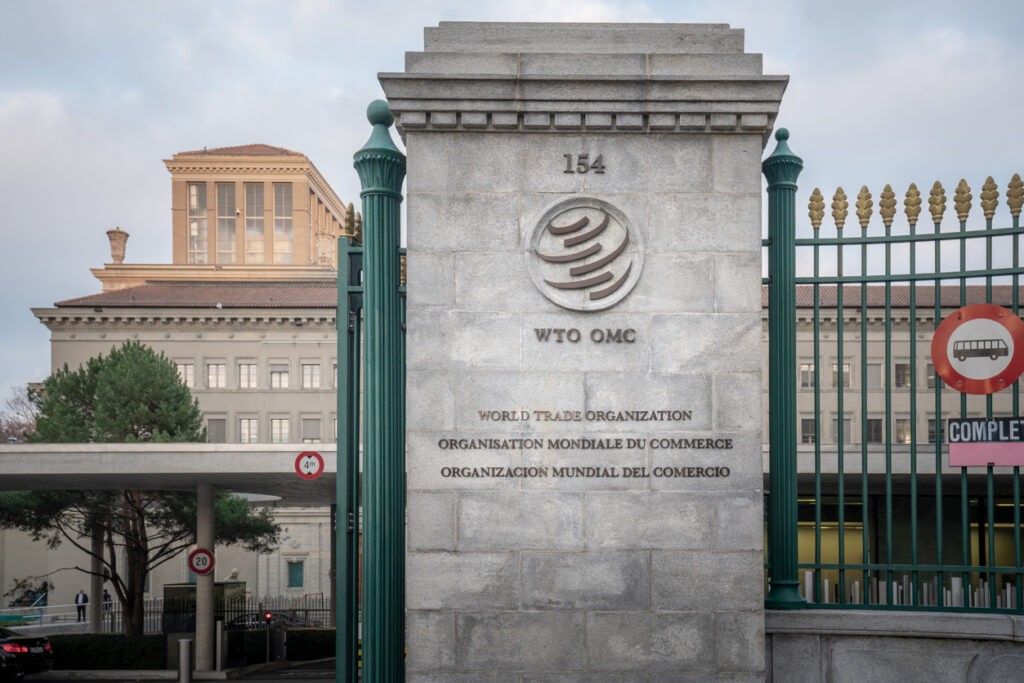
Uzbekistan Concludes WTO Membership Talks With 18 Countries

According to a report issued by Azizbek Urunov, President Special Representative on International Trade, Uzbekistan has now completed negotiations on membership of the World Trade Organization (WTO) with 18 countries.

Negotiations with Argentina closed on September 13, and protocols on finalizing market access negotiations have been signed with 14 of the 18 member countries, including Brazil and Sri Lanka. Posting on LinkedIn on September 12, Urunov wrote: “In the margins of the WTO Public Forum, we had signing ceremonies with the participation of DPM Jamshid Khodjaev, DDG Xiangchen Zhang, and ex-DDG Alan Wolff. The Uzbek delegation, led by Madam Saida Mirziyoyeva, is participating in the 2024 WTO Public Forum in Geneva.”

After pursuing its goal for almost 30 years, Uzbekistan seeks further support from the U.S. support to join the World Trade Organization. To date, the U.S. has provided some technical help, and during a recent visit, U.S. Trade Representative Katherine Tai reaffirmed America’s support.  However, to forward progress and strengthen trade ties, Uzbekistan could benefit from greater involvement from such U.S. institutions as the Development Finance Corporation (DFC), Export-Import Bank (EXIM), and the U.S. Trade and Development Agency (USTDA).

Following a meeting with Katherine Tai during her visit to Uzbekistan in June, Uzbekistan’s Presidential Assistant, Saida Mirziyoyeva stated,  “We intend to become a full-fledged participant in the international trade system and rely on the support of the United States to accelerate the process of Uzbekistan becoming a member of the WTO.”

For background, Uzbekistan initiated the process of joining the WTO in 1994 before abandoning it 2005. In 2019, the country strengthened its efforts to become a member of the WTO, and on July 7, 2020, the joint working group was restored.

Economy Minister: 70% of Tajikistan’s Trade is With SCO Countries

The Pakistani capital of Islamabad has hosted the 23rd meeting of the Ministers of the Shanghai Cooperation Organization (SCO) Member States responsible for Foreign Economic and Trade Activities.

The Minister of Economic Development and Trade of Tajikistan, Zavqi Zavqizoda, who participated in the meeting, said that the country considers the development of relations within the SCO as one of its foreign policy priorities.

“Foreign trade turnover between Tajikistan and the SCO countries demonstrates steady growth, and every year, more than 70% of the republic’s foreign trade is with SCO countries,” Zavqizoda said.

He recalled that the SCO accounts for almost half of the world’s population and 27% of global GDP, making the region a massive market with great opportunities.

Zavqizoda noted that Tajikistan initiated the economic development strategy for the next five years with the SCO, which was developed and adopted by the organization’s member states.

He proposed to the participants a plan related to developing and implementing large infrastructure projects and expanding cooperation in digital and green economy, green energy, and e-commerce.

It was also noted that wide use of transit opportunities of Tajikistan is envisaged.

The Times of Central Asia has reported that Tajikistan seeks to become a central international transit hub. In the next two years, 317 kilometers of international highways will be commissioned in Tajikistan. In the remaining months of 2024, Tajikistan will continue implementing projects for highway reconstruction, with the construction of 32 bridges, five tunnels with a length of 11.2 km, and seven avalanche corridors aiming to turn the country into an international transit route.

Tajikistan to Host First International Tourism Exhibition

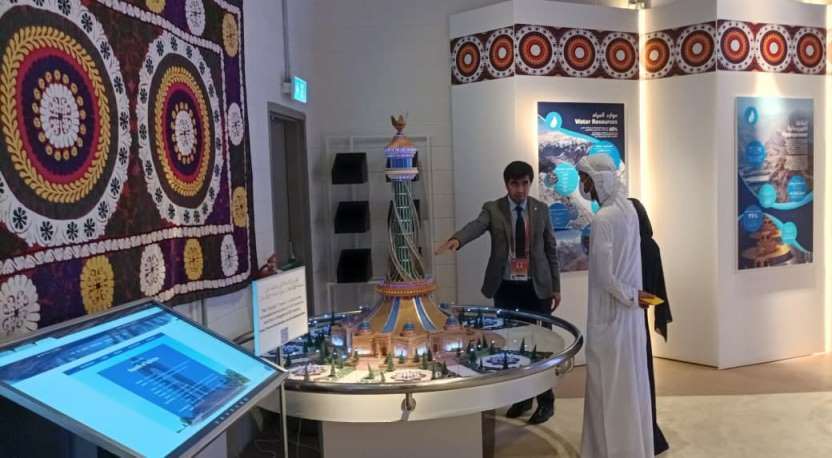
To coincide with World Tourism Day, Tajikistan will host its first International Tourism Exhibition (DITE) in Dushanbe from September 25 to 27, 2024.

Initiated by the city’s head, Rustami Emomali, the key aims of the event are to promote the development of the tourism industry and the formation of a regional tourism market, and attract foreign investment.

The exhibition will bring together Tajikistan’s tourism companies as well as representatives of tourist industries in countries including Austria, Pakistan, Iran, Russia, Belarus, Turkey, China, Turkmenistan, Kazakhstan, Azerbaijan, Qatar, and Uzbekistan, and will be complemented by an International Tourism Forum and B2B meetings where new cooperation agreements will be signed.

In addition, consulting sessions will provide opportunities for hotel businesses and guides to improve their levels of service and professionalism in the industry.

As reported by the Committee for Tourism Development of Tajikistan to ASIA-Plus, 748.3 thousand foreigners, of which 91.9% were residents of CIS countries, visited Tajikistan within the first six months of this year. The number of tourists totaled 580.5 thousand, 422,614 of whom hailed from neighboring Uzbekistan, rose by 19.1% compared to the same period last year.


Tokayev: Russia is “Militarily Invincible”

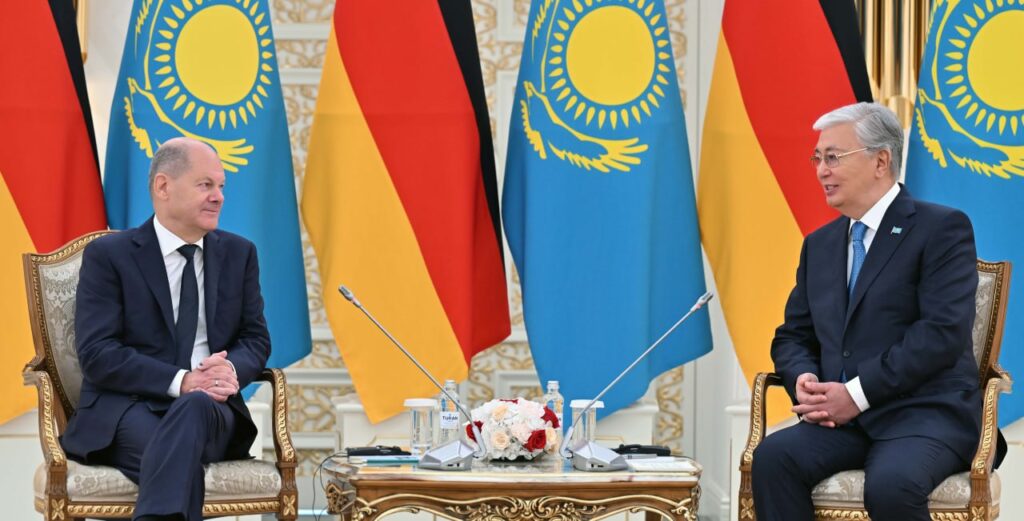
During a meeting in Astana with German Chancellor Olaf Scholz, Kazakhstan’s President Kassym-Jomart Tokayev spoke about resolving the Russian-Ukrainian war.

According to Tokayev, further escalation of the war will only lead to irreparable consequences for all mankind and, above all, for all countries directly involved in the war.

Tokayev said: “The fact is that Russia is militarily invincible. Unfortunately, a good chance to achieve at least a truce was lost with the refusal to conclude the Istanbul Agreement. But the opportunity for peace still exists. We need to carefully consider all peace initiatives put forward by various states, come to a decision to stop hostilities, and then move on to discussing territorial issues. In our opinion, the peace plan of China and Brazil deserves support.”

Tokayev reminded the public that Kazakhstan has the world’s longest delimited land border with Russia. He further stated that “cooperation between our countries is developing within the framework of strategic partnership and alliance. In Kazakhstan, we have genuine sympathy for the Ukrainian people and their distinctive culture. There have never been any disagreements between our states. The embassy of our country continues to function in Kyiv.”

While his comments about seeking peace before discussing territorial issues may seem like Tokayev is backing Russia, in 2022, he said that Kazakhstan would not recognize the independence of the so-called Donetsk and Luhansk people’s republics (“DNR” and “LNR”). Speaking about the ‘republics’, he noted that the two basic principles of the UN Charter — the right to self-determination for nations, and the territorial integrity of states — have come into mutual contradiction. On this topic, Tokayev noted: “It is estimated that if the right of self-determination for a nation is realized on the globe, then instead of the current 193 states, more than 500-600 states will emerge on Earth. It will be chaos. For this reason, we do not recognize Taiwan, Kosovo, South Ossetia, or Abkhazia. We will apply this principle to all quasi-state territories, which, in our opinion, includes Luhansk and Donetsk.”

Former Prosecutor General Beknazarov Detained in Kyrgyzstan

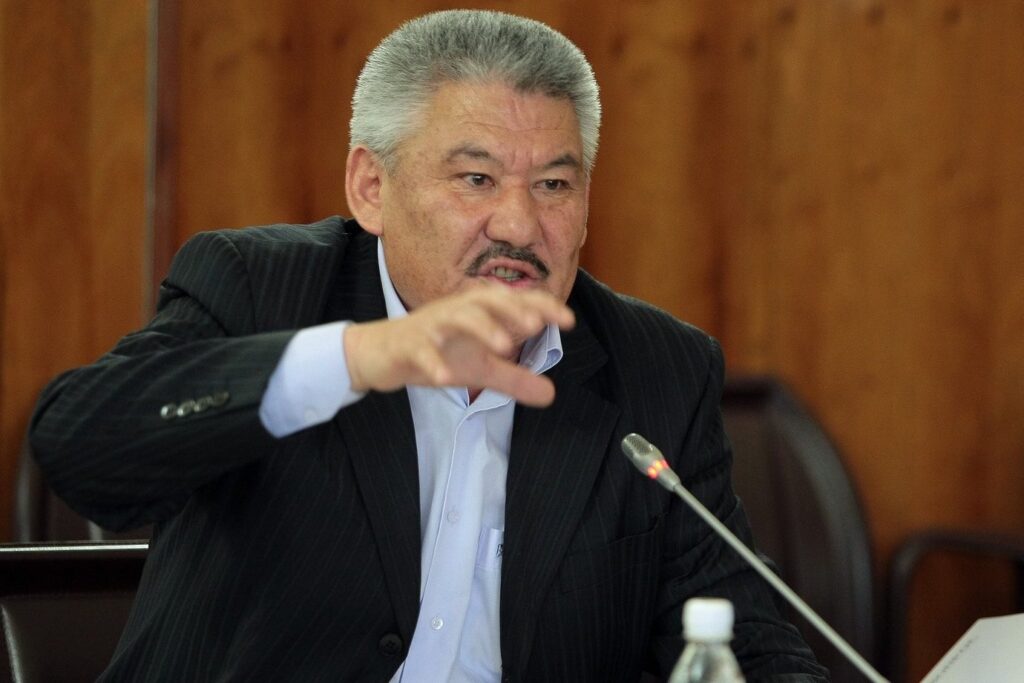
A former member of the Provisional Government and former Prosecutor General, Azimbek Beknazarov, has been detained in Kyrgyzstan. The State Committee for National Security (SCNS) said he is suspected of embezzling significant sums of money.

The money in question was seized in April 2010 from bank boxes and the Government House during the revolutionary events. The investigation found that Beknazarov, then a member of the Provisional Government, was involved in the theft of these funds through the purchase of expensive real estate in Kyrgyzstan, including in Issyk-Kul, Bishkek, and the Chui and Jalal-Abad regions.

“On September 12, 2024, A. Beknazarov was detained and placed in the temporary detention facility of the SIZO of the SCNS KR on suspicion of committing a crime under Article 222 part 3 p.3 of the Criminal Code of the Kyrgyz Republic (Legalization, laundering of criminal proceeds in large amounts),” the SCNS said in a statement.

According to the investigation, the funds were allegedly seized from several bank boxes with the permission of the Bishkek prosecutor. At that time, $21 million belonged to President Kurmanbek Bakiyev’s cronies. These funds were transferred to the National Bank for safekeeping. However, according to unconfirmed reports, the seized funds may have reached $100 million, which led to rumors that some money did not get into the vault.

Azimbek Beknazarov is one of the key figures in Kyrgyz political life. He served as Prosecutor General and Deputy Prime Minister of Roza Otunbayeva’s interim government from 2005 to 2010. Beknazarov was also actively involved in the coups d’état of 2005 and 2010, for which he was nicknamed “the bulldozer of revolutions.” The politician was also among the defendants in the “Kempir-Abad case”, in which he was acquitted in June 2024 with his associates.

Social Researcher: Serious Effort Required for Women’s Representation in Kazakh Politics

According to Gulmira Ileuova, a sociologist and the head of the Strategy Centre for Social and Political Research, gender equality in Kazakhstan has severely deteriorated. In an interview with TCA, she explains how social regression and a depletion of human resources are making it difficult for women to participate in political parties, social movements, and public services.

TCA: Sources illustrate that after the 2023 parliamentary elections, the representation of women deputies in the Mazhilis fell from 27% to 18%. In addition, Kazakhstan’s performance in the Global Gender Gap Index (GGGI) has deteriorated. This year, the country fell from 62nd to 76th place. This index, which can be used to judge the economy’s stability and legal security, has a serious impact on investors.  What, in your opinion, is the reason for this deterioration?

First of all, I would like to point out that until 2021, the Labor Code had restrictions on where women could work based on concerns about their health. Now that the restrictions have been lifted, progress is steadily being made in involving women in areas previously inaccessible to them. Some companies have already published data that women have begun operating heavy machinery, such as big trucks, which was not the case before.

As for politics and the civil service, it appears that under the spread of influence from the south, the country is reinstating traditional social relations. Independent Kazakhstan has entered a new period where traditional and non-traditional forms of Islam thrive, and hyper-masculine and patriarchal attitudes are on the rise. I emphasize the patriarchal division of life through reinforced gender roles because it is gaining strength and spreading across all regions of the country. Furthermore, this trend is moving into the sphere of politics and civil services.

Let’s take a look at what preceded these trends. In many regions, primarily in the south, there is a huge number of women who wishing to undertake the important work of reproduction, were receiving TSA (targeted social assistance). According to statistics in 2019, there were 2 million and 221 thousand recipients of TSA (about 12% of the population). Today, their number has decreased six fold to about 350 thousand. These numbers include women who thought they would bypass employment through state support systems. And now these women are in trouble. The state is revising its social policy, but the paternalistic trend has long been developing and a large number of people have abused it.

TCA: Are you saying that women, in receipt of child allowances, prefer to stay at home as opposed to actively entering economic relations or aspiring to participate in civil services or politics?

Yes, and I am afraid that this trend cannot be overcome by quick measures or be alleviated by even quotas for women. In a ‘strategy’ study conducted by the Center for Social and Political Research in the Turkestan region, an official working in gender policy said that at some point, the political representation of women fell to 5%. There were actually no women in senior positions to begin with. Women were never elected as vice Akims (heads) of the region, or with the exception of the Social Security Department, heads of departments. The representation of women was minimal, with just one woman as a district Akim and a few in Maslikhats.

In fear of being accused of discrimination, officials introduced quotas. The region then realized that over the past decades, despite constant talk about gender equality, the recruitment pool of politically active women had dried up. Literally unable to find suitable female candidates, they were forced to take on less able women.

The situation is not dissimilar sport. It’s not enough to invest huge amounts of money in high-performance sports: this is not the way to raise champions. You need to invest in mass sports, including children’s and youth sports, Only then, will you nurture strong athletes, or in our case, women politicians and officials. And they should be trained not only in politics but also in non-governmental organizations and companies. Women should be willing and able to occupy positions at all levels. Otherwise, to fulfil the quota, we will have to hire just anyone.

TCA: This is the same country where, in the past, a lot of effort was invested in the “liberation of the Eastern woman.” The term even became a slogan. Has the situation changed for the worst?

In our work with violence against women, it is clear that their rights achieved 100 years ago, must be rewritten and laid down as law. You can’t buy a woman for a kalym or bribe; you can’t kidnap her for marriage, and you can’t beat and humiliate her. Under the Soviet Union, gender equality was very closely monitored; the strict party line introduced women into politics and the civil service at all levels. In other words, gender equality once achieved, cannot be allowed to rest. We need constant, serious work to maintain the balance and bridge the gap. Unfortunately, it seems that the authorities in our country have decided that gender balance is automatic and will take care of itself.

For many years they talked about it but made no active effort to address the situation. As a result, we now we have large families with their ASP, state paternalism, and a return to the traditions which belittle the position of women. One example that can be applied to all of Central Asia, is illustrated by a Tajik woman and fellow student in “Anthropology of Gender in Tajikistan: An Insider’s View.” In her book, she highlights the resurgent view of women as quivering “biological” beings  requiring incessant management from a more socially engaged, more evolved man. This opposition between masculinity and femininity has recently become more deeply embedded in culture, repeatedly reiterated in literature and movies. There is no doubt that this “return to roots” has a very strong impact on women and determines their role in the governance of the country.

TCA: How accurate are statistics that claim over 50% of civil service employees are women?

We all know very well, that this figure in the main, reflects the educational sector – considered a women’s field-  as well as medical and social sectors. The picture in the Ministry of Finance, for example, will not however, be as rosy as that in the Ministry of Education. There are very few women in the economic, financial, and technological blocks and if we look at the statistics, the proportion of women in the civil service is 55.9%, of which only 7.2% are political civil servants.

TCA: We have almost no women in political parties, no women akims of large territorial units, and few women ministers. However, in large cities, especially in Almaty, there is a small but very vociferous band of female activists from various NGOs, including feminist organizations. Why don’t Kazakhstani women exploit this as a means of promotion?

It takes a lot of effort, among other things, to create an attractive image of working in politics, especially in high positions. Many women are discouraged by the risk of exploitation as well as a lack of time for family. Unfortunately, an image has formed that the civil service is not a good place for women. To redress the situation, we must first create a pool from which women civil servants will be recruited. We must also instil the concept that women are no worse, or even much better, than the conventional choice of the men charged with making important decisions. Right now, women are largely immersed in complexes; they perceive politics as a place “not for us.”

The erosion of charismatic women in all spheres was gradual. They do not fall from the moon and to reap the benefits of their reinstatement, a community must be formed which will push women forward to the first roles in the state.

As far as activism is concerned, we managed to launch gender policy just at the moment when radical feminism, which is closely linked to the transgender movement, reared its head. They are essentially different agendas, but today, even going to a rally for women’s rights is unacceptable to many people. You find yourself in a group of people who are not ideologically close to you. In many minds, gender equality and feminism are being substituted, and moreover, feminism, through the efforts of certain groups, is perceived only in its radical form. As cited in surveys, we women ” don’t want to be in the crowd of misfits.” As a result, women who would like to defend their rights, the rights of their daughters, will sadly think very hard before going to rallies.