• KGS/USD = 0.01144 0%
  • KZT/USD = 0.00193 -0%
  • TJS/USD = 0.10811 -0.28%
  • UZS/USD = 0.00008 0%
  • TMT/USD = 0.28490 0%
  • KGS/USD = 0.01144 0%
  • KZT/USD = 0.00193 -0%
  • TJS/USD = 0.10811 -0.28%
  • UZS/USD = 0.00008 0%
  • TMT/USD = 0.28490 0%
  • KGS/USD = 0.01144 0%
  • KZT/USD = 0.00193 -0%
  • TJS/USD = 0.10811 -0.28%
  • UZS/USD = 0.00008 0%
  • TMT/USD = 0.28490 0%
  • KGS/USD = 0.01144 0%
  • KZT/USD = 0.00193 -0%
  • TJS/USD = 0.10811 -0.28%
  • UZS/USD = 0.00008 0%
  • TMT/USD = 0.28490 0%
  • KGS/USD = 0.01144 0%
  • KZT/USD = 0.00193 -0%
  • TJS/USD = 0.10811 -0.28%
  • UZS/USD = 0.00008 0%
  • TMT/USD = 0.28490 0%
  • KGS/USD = 0.01144 0%
  • KZT/USD = 0.00193 -0%
  • TJS/USD = 0.10811 -0.28%
  • UZS/USD = 0.00008 0%
  • TMT/USD = 0.28490 0%
  • KGS/USD = 0.01144 0%
  • KZT/USD = 0.00193 -0%
  • TJS/USD = 0.10811 -0.28%
  • UZS/USD = 0.00008 0%
  • TMT/USD = 0.28490 0%
  • KGS/USD = 0.01144 0%
  • KZT/USD = 0.00193 -0%
  • TJS/USD = 0.10811 -0.28%
  • UZS/USD = 0.00008 0%
  • TMT/USD = 0.28490 0%
10 December 2025

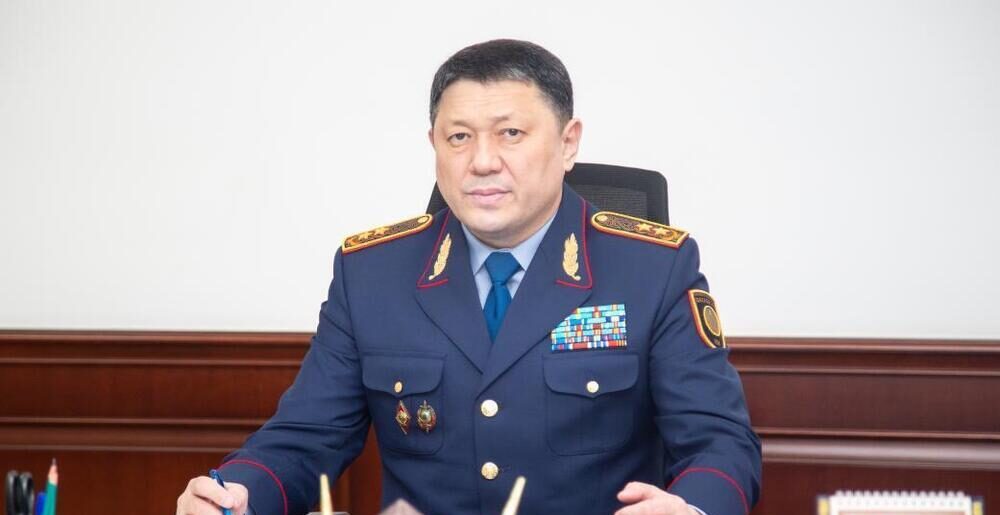
Crimes Against Individuals Decrease in Kazakhstan

Kazakhstan’s Minister of Internal Affairs Yerzhan Sadenov has reported a decline in serious crimes and public offenses for the January-September 2025 period. According to Sadenov, comprehensive measures implemented by the Ministry of Internal Affairs have produced tangible results: overall crime fell by 7%, a reduction of 6,000 cases, compared to the same period in 2024.

Declines were recorded across key categories, including murder, grievous bodily harm, robbery, assault, hooliganism, and theft. Offenses committed in streets and other public spaces also decreased.

“The main thing is people’s safety: fewer crimes against individuals means greater protection for citizens,” the minister said.

The ministry also reported progress in dismantling criminal organizations. Over the past nine months, 70 criminal cases have been initiated against organized crime groups, including 13 transnational operations, with 248 individuals brought to justice. Priorities include combating illegal extraction of natural resources and ensuring the security of freight transport.

Road safety remains a top concern: more than 26,000 traffic accidents have been recorded so far in 2025, although the number of fatalities has decreased. Meanwhile, efforts to prevent domestic violence have intensified. In the same period, over 70,000 protective orders were issued, and 6,500 women and children were referred to crisis centers.

To strengthen crime prevention and response, Sadenov has called for broader implementation of digital tools, the development of operational control centers, and improved crime detection rates.

Kazakhstan has also expanded its surveillance infrastructure. As previously reported by The Times of Central Asia, more than 19,000 AI-enabled CCTV cameras have been installed nationwide, enabling law enforcement to respond more quickly to incidents.

Kazakh Surgeons Use MAKO Robotic System in Tashkent for the First Time

Kazakh surgeons have performed groundbreaking joint replacement procedures in Uzbekistan’s capital Tashkent using the MAKO robotic system, an advanced technology in orthopedic surgery. The operations were a centerpiece of the event ‘Days of Kazakh Medicine in Uzbekistan’.

A surgical team led by traumatologist-orthopedist Timur Baidalin, head of the endoprosthetics department at the Batpenov National Scientific Center for Orthopedics and Traumatology, successfully conducted two joint replacements, one knee and one hip, using the MAKO robotic assistant. The system enables surgeons to plan and execute procedures with exceptional precision and reduced risk of complications.

Developed by the U.S. based company Stryker, the MAKO system functions as an intelligent surgical assistant using 3D modeling technology. It creates a virtual replica of the patient’s joint, allowing the surgical team to pre-calculate the optimal implant angle, depth, and trajectory.

During the procedure, the surgeon guides the MAKO manipulator, which operates with micromillimeter accuracy. This significantly lowers the risk of tissue damage and extends the lifespan of the implanted prosthesis.

“The main advantage of MAKO is the ability to combine the surgeon’s experience with machine precision. This sets a new standard in endoprosthetics,” said Baidalin.

For Uzbek specialists, the event served as a hands-on masterclass. In addition to observing the procedures, local doctors operated the system under the supervision of the Kazakh team.

“We’ve been anticipating this technology for a long time. Today, we not only saw it in action but experienced the difference. This is a milestone for Uzbek orthopedics, and we’re grateful to our Kazakh colleagues for the opportunity to gain this experience,” said Odil Valiev, head of the adult orthopedics department at Uzbekistan’s Republican Specialized Scientific and Practical Center for Traumatology and Orthopedics.

This collaboration follows another recent highlight: in spring 2025, Kazakh specialists from UMC, led by cardiac surgeon Yuri Pii, presented the ALEM device at EXPO 2025 in Osaka. The technology enables the long-term preservation of donor organs and represents another significant advance in regional medical innovation.

Turkmen Activist Saddam Gulamov Faces Harsh Sentence for Government Criticism

Russia has extradited Saddam Gulamov, a Turkmen citizen and outspoken critic of the regime, to Turkmenistan, where he was sentenced to a lengthy prison term in 2024, according to a report by Turkmen.news.

Born in 1991 in Ashgabat, Gulamov had publicly condemned the government’s handling of the food crisis, its denial of the COVID-19 pandemic, and its silence following a devastating hurricane. He is reportedly being held in solitary confinement in prison alongside another activist.

Gulamov had been residing in Russia, working in minor roles in theater and film. He was deported to Turkmenistan between late 2023 and early 2024 and convicted by the spring of 2024. The precise charges and length of his sentence have not been disclosed.

Before his arrest, Gulamov had used social media to denounce the country’s former president, Gurbanguly Berdimuhamedov, calling him a “dictator and thief,” and urging citizens to reject the culture of blind obedience toward Turkmenistan’s leadership. All of his online content has since been removed.

His case is part of a broader crackdown on dissent that intensified in 2020, when the government’s inaction during crises led to rising political awareness among citizens. This growing unrest sparked the formation of opposition movements abroad, with activists using social media to call for unity and reform. Turkmen intelligence services closely monitored these activities, and once pandemic-era border restrictions were lifted, many dissidents were forcibly repatriated.

Several activists, including Farhat Meymankuliev, Rovshen Klychev, and Merdan Mukhammedov, were deported from Turkey, while others sought asylum in European Union countries. Russia, though less involved than Turkey, has also played a significant role in these forced returns. Notable cases include Azat Isakov, who disappeared in Moscow in 2021 after saying he was hiding from security agents, and Myalikberdy Allamuradov, who was deported in December 2023 and later imprisoned.

The list of targeted activists now includes Gulamov. According to Turkmen.news, both he and Allamuradov are being held in solitary confinement in the LB-E/12 penal colony.

His extradition follows a similar incident in May, when activist Umida Bekchanova was detained in Istanbul and faced possible deportation to Turkmenistan. Human rights groups warn these actions are part of an expanding campaign of transnational repression aimed at silencing critics abroad through intimidation and forced returns.

Uzbek Man Forced into Russian Army Pleads for Help to Return Home from Ukraine

A 31-year-old Uzbek citizen from Bukhara, Zukhriddin Yuldoshev, who was forcibly recruited into the Russian army, surrendered to Ukrainian forces almost immediately after arriving at the front. His case, reported by Nexta Live and other media outlets, highlights the growing number of Central Asian nationals being coerced into Russia’s war against Ukraine.

According to Yuldoshev, Russian police planted narcotics on him and threatened him with a prison sentence of 12 to 18 years unless he signed a military contract. “I was given two choices: prison or the front,” he said. After arriving at the battlefield, he was quickly detected by a Ukrainian drone and surrendered without resistance.

Yuldoshev described dire conditions within the Russian military, saying he had to purchase his own communication equipment and gear. He also spoke of widespread disarray and deception among Russian troops. “There were so many dead bodies that there was nowhere to step,” he recalled. He says he has no intention of returning to Russia and is appealing to the Uzbek government for assistance in returning home.

In a June report, Ukraine’s military intelligence stated that citizens of Uzbekistan, Tajikistan, and other Central Asian countries are increasingly being coerced or misled into joining the Russian war effort. Many had initially traveled to Russia as labor migrants and were later pressured into signing military contracts, often with promises of fast cash. Ukrainian officials say many of these recruits are deployed to the most dangerous sections of the front and face high casualty rates.

The forced conscription of migrants has drawn increasing criticism from human rights groups, who argue the practice violates international law. Yuldoshev’s plea for repatriation places added pressure on the Uzbek government to act on behalf of its citizens caught up in Russia’s war.

Kyrgyzstan to Eliminate Service Charges in Cafes and Restaurants

Kyrgyzstan’s Cabinet of Ministers has approved amendments to the regulations governing public catering establishments, effectively banning separate service charges in cafes and restaurants. Beginning January 1, 2026, businesses across the country will no longer be allowed to list service fees, typically 10-15% of the total bill, as a separate line item.

Under the new rules, the full cost of service must be incorporated into the listed prices of food and beverages on the menu. According to the Ministry of Economy and Commerce, the reform aims to enhance price transparency and better protect consumer rights.

“The consumer must see the final price before placing an order. Information about the cost of services must be transparent, accessible, and understandable,” the ministry stated.

While customers may still tip at their discretion, the tipping culture in Kyrgyzstan remains underdeveloped, largely due to the existing practice of automatically including service charges. Authorities expect the new pricing model to gradually shift public attitudes toward discretionary tipping.

Government officials emphasized that the primary objective of the reform is to eliminate hidden charges and simplify oversight.

“Consumers should understand how much they are paying and what they are paying for. This not only protects citizens’ rights but also streamlines tax control,” the Ministry of Economy and Commerce added.

Restaurant and café operators have been urged to adjust their menu pricing and update point-of-sale systems ahead of the new regulation’s implementation. Staff are advised to inform customers about the changes and ensure that menu prices match the final bill.

Beneath the Silk Road: China’s Archaeological Diplomacy in Uzbekistan

As China’s economic footprint expands across Central Asia, Beijing is quietly pursuing another, subtler form of influence – one that reaches beneath the soil rather than above it. Alongside highways, pipelines, and industrial parks, China is investing in archaeological diplomacy that uses shared history and cultural discovery to deepen ties with its neighbors.

Uzbekistan has emerged as a key partner in this effort. Beyond trade and infrastructure, the two countries are now working hand in hand to uncover the remnants of ancient civilizations that once thrived along the Silk Road. This collaboration combines science and strategy, offering a soft power approach that complements China’s growing hard power presence in the region.

Across Uzbekistan’s Surkhandarya, Samarkand, Ferghana, and Khorezm regions, joint Chinese-Uzbek teams are making discoveries. One notable example is the joint Chinese-Uzbek team working at the Chinar-Tepa site in the upper Surkhandarya River valley, where researchers have uncovered more than 30 ancient house foundations along with a rich collection of cultural artifacts.

Another major project has revealed the remains of an Iron Age city-state in the Surkhandarya River basin in southern Uzbekistan. These findings are the result of three excavation seasons conducted between 2024 and 2025, during which the joint team surveyed 47 sites across the basin and identified the area as a major center of ancient Bactria. This cooperation is not just confined to the field.

In October 2023, Ferghana State University and Chinese partners launched a joint archaeology department. Their subsequent joint studies of the ancient city of Kuva have revealed key insights into urban planning, including city walls, moats, and roads dating back centuries. Meanwhile, China’s funding for the restoration of the ancient city of Khiva highlights another layer of cultural collaboration on the preservation of shared heritage.

For both countries, archaeology is more than an academic pursuit; it’s a bridge between culture, economy, and future cooperation. For Uzbekistan, cities like Samarkand, Bukhara, and Khiva are already world-renowned tourist destinations. The government’s ambition to attract up to 15 million foreign visitors underscores tourism’s growing role in national development.

Unearthing new historical sites expands this potential, offering travelers a richer experience that spans both the pre-Islamic and Islamic eras. Each discovery deepens the cultural map of Uzbekistan, and each new site means more visitors, more investment, and greater economic diversification for the state.

Beyond the economic dimension, the partnership with China is also cultivating a new generation of experts in archaeology and heritage preservation. Many members of these joint excavation teams belong to the post-2000 generation, young professionals who are gaining firsthand experience through collaboration.

With access to cutting-edge technologies such as drone-based aerial photography, geomagnetic surveying, and 3D modeling, Uzbek archaeologists and students are learning to combine traditional excavation with modern science. Over time, this knowledge transfer strengthens the country’s human capital base, empowering Uzbekistan to pursue its own archaeological research and heritage conservation independently on a larger scale.

For China, promoting joint archaeological exploration aligns closely with the Belt and Road Initiative’s vision of soft connectivity. By supporting the excavation and preservation of Silk Road heritage, Beijing presents the BRI not as a new geopolitical project but as a revival of ancient and mutually beneficial exchanges that once linked East and West.

In this way, China may aim to frame its modern economic and infrastructural expansion as a continuation of history, a return to a natural order rather than an external intervention. This narrative serves a broader diplomatic purpose. By emphasizing shared history and cultural revival, China seeks to project itself as a responsible and benevolent power in contrast to actors often associated with military presence or political conditionality.

Such efforts help to reduce the perception of China as a threat in Central Asia and position Beijing as a cultural and academic partner instead of a dominating economic force. Cooperation in archaeology also provides a unique space for people-to-people engagement. For young Uzbek scholars and students, working alongside Chinese teams offers not only technical training but also a personal connection with China.

While growing trade and infrastructure ties strengthen Beijing’s relationships with political and economic elites, cultural heritage projects expand its reach into academia and civil society. Together, these layers of engagement in economic, cultural, and educational fields help to humanize China’s presence in Central Asia and build lasting soft power foundations.

China’s growing involvement in archaeological cooperation across Uzbekistan and the wider Central Asian region illustrates that diplomacy is not only conducted through trade deals or infrastructure projects but also built through the work of excavation, preservation, and shared discovery.

For Uzbekistan, the partnership strengthens tourism, education, and national pride while helping to build the skills of a new generation of researchers. For China, it provides an opportunity to reshape its image from a dominant investor into a trusted cultural partner. The combination of archaeological collaboration with expanding media and educational exchanges reflects a strategic shift in Beijing’s approach.

China is no longer focused solely on strengthening elite-to-elite ties but is increasingly investing in long-term people-to-people engagement. This approach helps to build the foundation for genuine soft power, gradually reshaping how local communities perceive China and its role in the region.