• KGS/USD = 0.01144 0%
  • KZT/USD = 0.00210 0%
  • TJS/USD = 0.10617 1.05%
  • UZS/USD = 0.00008 0%
  • TMT/USD = 0.28490 0%
  • KGS/USD = 0.01144 0%
  • KZT/USD = 0.00210 0%
  • TJS/USD = 0.10617 1.05%
  • UZS/USD = 0.00008 0%
  • TMT/USD = 0.28490 0%
  • KGS/USD = 0.01144 0%
  • KZT/USD = 0.00210 0%
  • TJS/USD = 0.10617 1.05%
  • UZS/USD = 0.00008 0%
  • TMT/USD = 0.28490 0%
  • KGS/USD = 0.01144 0%
  • KZT/USD = 0.00210 0%
  • TJS/USD = 0.10617 1.05%
  • UZS/USD = 0.00008 0%
  • TMT/USD = 0.28490 0%
  • KGS/USD = 0.01144 0%
  • KZT/USD = 0.00210 0%
  • TJS/USD = 0.10617 1.05%
  • UZS/USD = 0.00008 0%
  • TMT/USD = 0.28490 0%
  • KGS/USD = 0.01144 0%
  • KZT/USD = 0.00210 0%
  • TJS/USD = 0.10617 1.05%
  • UZS/USD = 0.00008 0%
  • TMT/USD = 0.28490 0%
  • KGS/USD = 0.01144 0%
  • KZT/USD = 0.00210 0%
  • TJS/USD = 0.10617 1.05%
  • UZS/USD = 0.00008 0%
  • TMT/USD = 0.28490 0%
  • KGS/USD = 0.01144 0%
  • KZT/USD = 0.00210 0%
  • TJS/USD = 0.10617 1.05%
  • UZS/USD = 0.00008 0%
  • TMT/USD = 0.28490 0%

Kazakhstan and Kyrgyzstan Resume Data Sharing on Reservoirs and Transboundary Rivers

Kazakhstan and Kyrgyzstan have renewed formal cooperation in hydrometeorology, agreeing to exchange key hydrological data on major reservoirs and transboundary rivers, a development officials say is vital for regional flood management and agricultural planning.

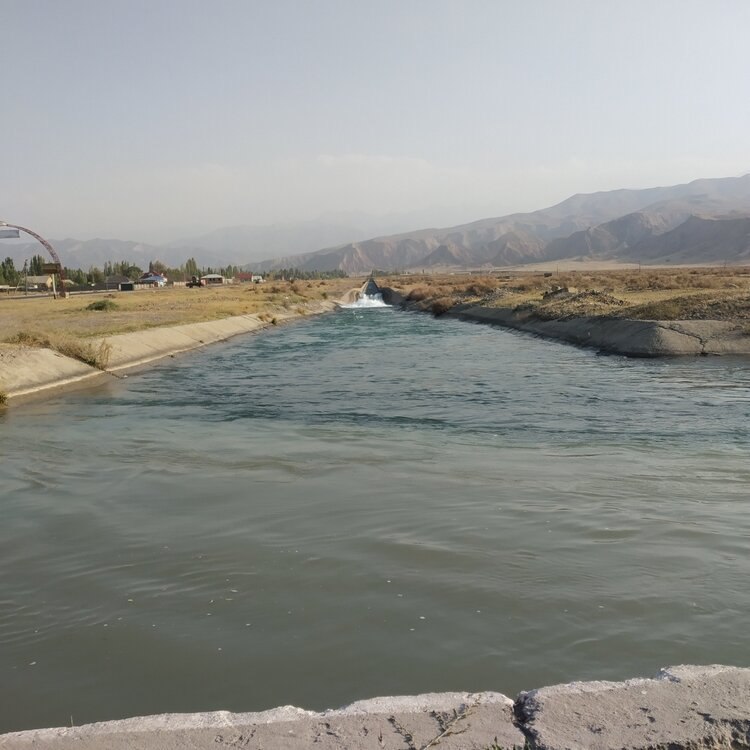
The agreement covers data exchange on the Kirov, Orto-Tokoy, and Toktogul reservoirs, all located in Kyrgyzstan but directly influencing downstream water supply in Kazakhstan.

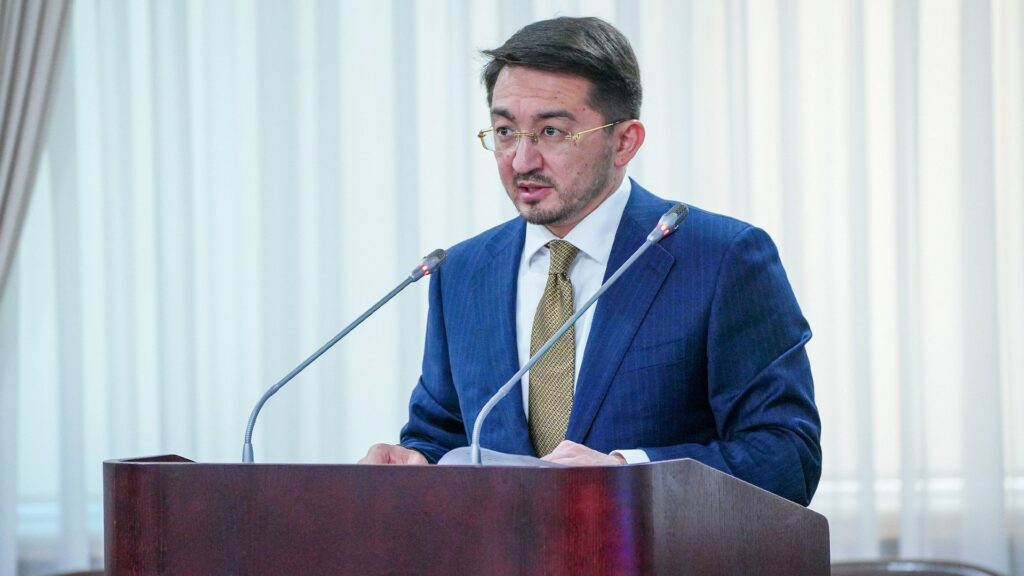
The signing took place on February 9 in Astana, where Kyrgyzstan’s First Deputy Minister of Emergency Situations Mambetov Muratovich and Kazakhstan’s First Deputy Minister of Water Resources and Irrigation Nurlan Aldamzharov endorsed a 2026-2028 cooperation program between Kazhydromet and the Kyrgyz Hydrometeorological Service.

Key Components of the Agreement

The three-year program includes:

  • Regular exchange of hydrological data on shared rivers and reservoirs
  • Joint forecasting of basin runoff and water accumulation
  • Mutual hazard and storm warnings
  • Scientific and technical collaboration
  • Professional exchange between agencies

Describing the agreement as an achievement of “water diplomacy,” Aldamzharov emphasized that timely data is critical to protecting populations and infrastructure downstream, especially during peak water flow and flood risk periods.

Strategic Role of Kyrgyz Water Infrastructure

Kyrgyzstan plays a pivotal upstream role in Central Asia’s water system, delivering seasonal irrigation flows to southern Kazakhstan’s Turkistan, Kyzylorda, and Zhambyl regions via the Chu, Talas, and Syr Darya rivers.

Each of the reservoirs included in the data-sharing agreement serves a distinct strategic function:

  • Kirov Reservoir: Located in Kyrgyzstan’s Talas region, near the Kazakh border; vital for irrigating farmland on both sides.
  • Orto-Tokoy Reservoir: Situated on the Chu River, which flows into Kazakhstan, it regulates seasonal supply for downstream agriculture.
  • Toktogul Reservoir: Kyrgyzstan’s largest, located on the Naryn River, the principal tributary of the Syr Darya, one of Central Asia’s main water arteries feeding Kazakhstan and Uzbekistan.

According to Kazakhstan’s Ministry of Water Resources, during the 2025 growing season, Zhambyl region received 160 million cubic meters of water via the Chu River and 427.5 million cubic meters via the Talas River under existing water allocation frameworks.

Water Stress Ahead of Growing Season

Authorities warn that the Syr Darya basin continues to experience low-flow conditions. Reduced inflows to the Naryn-Syr Darya system are threatening irrigation reliability for the upcoming agricultural season. The Toktogul Reservoir may reach near-record low levels, heightening risks for downstream farmers.

In response, agricultural authorities in southern Kazakhstan have urged the adoption of water-saving irrigation technologies, a shift away from water-intensive crops, and greater reliance on drought-resistant varieties-steps that make access to reliable hydrological forecasts increasingly urgent.

Uzbekistan Bets on Digital Schools to Turn Demographic Growth into Human Capital

With one of Central Asia’s youngest populations and a rapidly changing economy, Uzbekistan is betting that education – particularly digital and inclusive schooling – can determine whether demographic growth becomes an economic asset or a long-term challenge.

Officials from Uzbekistan’s Ministry of Preschool and School Education say the country’s education system is being reshaped to support a development model centered on human capital, equal opportunity, and modern skills. The reforms are anchored in the national Uzbekistan 2030 Strategy, which identifies education and human capital development as central pillars of long-term economic and social transformation.

Around 6.8 million students are enrolled in almost 11,000 general education schools across Uzbekistan, while the preschool system now includes over 38,000 institutions serving children nationwide. While access has expanded significantly over the past decade, disparities in quality – particularly between urban centers and rural regions – remain a persistent challenge.

Digital Education as a Strategic Lever

To address these gaps, the Ministry is increasingly turning to online and blended learning. Digital platforms are being used to deliver standardized educational content nationwide, offering students in remote areas access to lessons and teaching materials that were previously unavailable.

An official from the Ministry described online education as “a complementary tool rather than a replacement for traditional schooling,” emphasizing its role in supporting both students and teachers.

Pilot projects supported by UNICEF have tested inclusive digital school models that combine classroom instruction with online resources in underserved regions.

Beyond student learning, digitalization is also reshaping how the education system is managed.

Electronic education management systems now allow authorities to track attendance, learning outcomes, and regional disparities more systematically, supporting data-driven policymaking and resource allocation.

Teachers at the Center of Reform

Teacher capacity remains one of the most critical variables in the success of digital reform.

Online professional development programs, including short-format training under initiatives such as ISHONCH 2030, are being used to help teachers and school leaders adopt modern practices. Officials argue that digital tools can reduce teacher workload and support independent learning.

However, they also acknowledge that technology alone cannot solve systemic challenges without sustained investment in training, infrastructure, and long-term support.

Aligning with Global Development Priorities

Uzbekistan’s education reforms broadly align with findings from World Bank analytical work on human capital and growth, which highlights education quality, digital skills, and reduced regional inequality as long-term priorities. The report highlights the importance of digital skills, reduced regional inequality, and closer alignment between education systems and labor market needs.

The Ministry says these priorities are increasingly embedded in national policy. Cooperation with international partners – including the World Bank, UNICEF, the Global Partnership for Education, and the European Union – supports curriculum reform, digital infrastructure expansion, and efforts to narrow regional gaps in learning outcomes.

Education and skills development were also highlighted as core priorities at the 2024 Country Platform meeting, reinforcing the sector’s strategic importance within the broader Uzbekistan 2030 agenda.

The Road to 2030

By the end of the decade, the Ministry of Preschool and School Education aims to introduce a nationwide “digital school” model. The vision includes stable internet access in all schools, electronic grading systems, and unified digital platforms connecting students, teachers, and administrators.

Future curricula are expected to place greater emphasis on critical thinking, digital literacy, environmental awareness, and skills relevant to a green and digital economy.

Reducing disparities between urban and rural schools – and ensuring full access for vulnerable and disabled children – remains a central objective.

While implementation challenges persist, particularly in infrastructure and teacher capacity, officials stress that education reform is a long-term investment rather than a quick policy win.

As Uzbekistan navigates economic transition and demographic pressure, the effectiveness of its preschool and school education reforms may prove decisive – not only for individual students, but for the country’s development trajectory over the next decade.

Uzbekistan and Islamic Development Bank Sign $164 Million Agreements for Roads and Schools

Uzbekistan and the Islamic Development Bank (IsDB) have signed new financing agreements totaling $164 million to support major infrastructure and education initiatives, further deepening a partnership that plays a key role in the country’s long-term development strategy.

The agreements were formalized on February 8 in AlUla, Saudi Arabia, during the Second AlUla Conference for Emerging Market Economies.

Prior to the signing, both sides held bilateral talks focused on scaling up cooperation across transport, education, and other high-priority sectors. The discussions emphasized the importance of projects that strengthen regional connectivity and human capital.

Road Infrastructure: 4R40 Project

One agreement allocates $70 million under the IsDB’s broader $192 million commitment for the 4R40 road project. The funds will support the reconstruction of 143 kilometers of the Dashtabad-Zaamin-Bakhmal-Galyaaral highway, as well as the rehabilitation of 30 kilometers of local and rural roads in the Jizzakh region.

The road upgrades are expected to ease transit bottlenecks, enhance safety, and improve access to markets and public services for approximately 200,000 residents. The project will also strengthen regional links to the M39 international transport corridor.

Education Reform: SmartEd Project

The second agreement covers $94.06 million, part of a total contribution of $160.25 million for the SmartEd project, a national initiative aimed at transforming Uzbekistan’s education system.

Funds will be used to build and equip 58 new schools and expand existing institutions with an additional 2,431 classrooms. The initiative targets nearly 73,000 students annually, with provisions for specialized training for over 36,000 teachers and administrators. The project is designed to promote a competency-based, inclusive education system.

A Broader Partnership

These new agreements build on earlier commitments. At the first AlUla conference in February 2023, Uzbekistan and the IsDB signed $299 million in financing deals, laying the foundation for the infrastructure and education reforms now entering the implementation phase.

Kyrgyzstan Launches e-Permit System for Freight Transport to China and Turkic States

Kyrgyzstan has launched a new digital system for international freight transport, replacing paper permits with an electronic platform for cross-border trucking to China and several Turkic states.

The Ministry of Transport and Communications introduced the e-Permit system in January 2026, allowing domestic carriers to obtain permits online for shipments to China, Uzbekistan, Azerbaijan, and Turkey.

Previously, Kyrgyzstan and China operated under a fixed annual quota of paper permits exchanged on a parity basis; 130,000 permits were issued in 2025 alone. The digital platform eliminates in-person applications, significantly reducing queues and administrative burden.

According to the ministry, the new system has cut processing times from up to 24 hours to just 10 minutes. Officials say it enhances transparency, improves administrative efficiency, and helps reduce the risk of corruption.

Regional Logistics Strategy

The launch of e-Permit is part of Kyrgyzstan’s broader effort to position itself as a regional logistics hub. Authorities view streamlined cross-border transport procedures as essential to boosting trade, especially as the country expands its economic ties with neighboring and Turkic states.

Integration with TRACECA

The e-Permit rollout follows Kyrgyzstan’s December 2025 accession to the multilateral permit system of the Transport Corridor Europe-Caucasus-Asia (TRACECA).

Membership in TRACECA allows Kyrgyz carriers to conduct bilateral and transit shipments using a single multilateral permit across participating countries, including Armenia, Georgia, Moldova, Romania, Turkey, and Ukraine.

Officials say the integration will lower transport costs, reduce delivery times, and facilitate broader access for Kyrgyz exports to European, Turkish, and Black Sea markets.

Kazakhstan to Establish International Computing Hub in Pavlodar Region

Kazakhstan plans to develop an international computing hub centered in the Pavlodar region, based on the emerging “data center valley” in Ekibastuz, one of the country’s key energy production zones. The announcement was made by Deputy Prime Minister and Minister of Artificial Intelligence and Digital Development Zhaslan Madiev during an expanded government meeting.

The government had earlier unveiled plans to establish a cluster of high-performance data centers in Ekibastuz, a city that hosts extensive coal-fired power generation and robust energy infrastructure. Madiev now says the project will evolve beyond a national cluster into a full-fledged international computing hub.

According to Madiev, two critical enablers for the project are affordable electricity and cross-border telecommunications infrastructure. A land plot has already been designated for development, and 300 megawatts of power capacity have been reserved at Ekibastuz GRES-1. Negotiations are ongoing with international investors.

AI Center to Anchor Digital Expansion

The hub’s anchor facility will be a 50 MW AI-focused data processing center currently under construction by national telecom provider Kazakhtelecom. Scheduled for commissioning in mid-2027, the new facility is expected to be ten times more powerful than Kazakhstan’s recently launched state supercomputer facility.

Astana is already home to Central Asia’s most powerful supercomputer, unveiled earlier this year, marking a significant step in the country’s digital infrastructure ambitions. Officials envision this computing expansion as the foundation for a new economic model driven by artificial intelligence and big data.

Concerns Over Domestic AI Model Usage

At the same government session, President Kassym-Jomart Tokayev expressed dissatisfaction with the uptake of the national large language model, KazLLM. He noted that public interest remains limited, with many users favoring international platforms such as ChatGPT.

Madiev acknowledged that while KazLLM is used by approximately 600,000 people, about 3% of the population, foreign AI tools enjoy far broader adoption. He emphasized the importance of ongoing training and updates to local AI models, aligning with global best practices.

In addition to KazLLM, a second model, Alem LLM, is also under development. Both systems have already been integrated into numerous digital platforms, including search engines and services targeted at students and IT enterprises.

Ukrainian Ambassador to Kazakhstan: “The War Will End This Year. I Truly Believe In That.”

As the war between Russia and Ukraine approaches its fifth year, diplomatic efforts to reshape trade routes, energy flows, and regional partnerships are intensifying far beyond the battlefield. For Ukraine, Central Asia has emerged as an increasingly important economic and logistical partner, particularly as Kyiv seeks alternatives to disrupted transport corridors and supply chains.

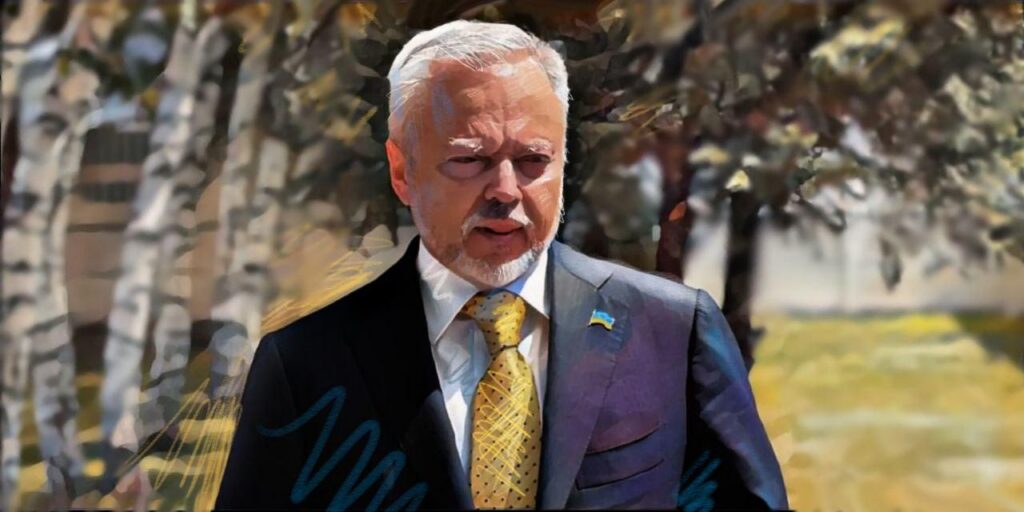
The Times of Central Asia spoke with Viсtor Mayko, Ukraine’s Ambassador to Kazakhstan, about the prospects for deeper economic cooperation with Central Asia, the role of the Middle Corridor, energy transit challenges in the Caspian region, Kyiv’s expectations for international support, and a possible path toward ending the war.

Trade and Economic Prospects in Central Asia

TCA: Mr. Ambassador, what are the prospects for deepening trade and economic partnerships between Ukraine, Kazakhstan, and wider Central Asia? Which sectors offer the greatest potential for cooperation?

Ambassador Mayko: Deepening trade and economic ties between Ukraine, Kazakhstan, and other Central Asian countries is not merely a prospect; it is a necessity dictated by global economic trends.

Kazakhstan leads the region economically, with a GDP exceeding $300 billion. It is on a trajectory to join the G20 within 5 to 10 years. The United States, recognizing this potential, has invited Kazakhstan to the upcoming G20 meeting in the U.S., demonstrating Kazakhstan’s rising global significance.

Ukraine and Kazakhstan’s economies are complementary. Ukraine brings experience in agricultural technology, mechanical engineering, IT, and processing, while Kazakhstan contributes resource strength, industrial capacity, and logistics. Promising areas for cooperation include agro-industrial development, from crop production to digitalized processing; industrial cooperation through equipment supply and joint production; logistics and infrastructure aimed at strengthening transport corridors; and energy and IT projects focused on efficiency and network modernization.

We are already transitioning from theory to action. A major business delegation from Ukraine will visit Kazakhstan this year. We also anticipate another meeting of the Joint Ukrainian-Kazakh Intergovernmental Commission on Economic Cooperation, which is crucial for removing barriers and initiating new projects.

Ukraine’s presence in Kazakhstan’s economy has historically been significant. If not for the war and resulting transport disruptions, I believe our mutual trade could have reached $10 billion. Ukrainian machinery still accounts for a substantial portion of Kazakhstan’s industrial base, especially in regions such as Karaganda, Aktau, and Pavlodar, though much of this equipment now requires modernization.

Another promising area is mineral resource development. Ukraine has the scientific and practical base to contribute meaningfully to this sector.

Turkmenistan’s earlier collaboration with Ukrainian firms in revitalizing depleted wells illustrates our potential. Wells deemed exhausted by older technologies yielded hundreds of thousands of tons of oil under Ukrainian management. This successful model can be applied in Kazakhstan, one of the EU’s top three oil suppliers.

Transport Infrastructure and the Middle Corridor

TCA: How is cooperation in the transport sector developing, especially regarding the Middle Corridor? Are there any potential plans for joint infrastructure projects?

Ambassador Mayko: Russia’s full-scale aggression disrupted Ukraine’s previous logistics routes. Today, we prioritize alternatives like the Trans-Caspian International Transport Route, the “Middle Corridor”, as a strategic interest.

Our current multimodal route passes through Romania, Bulgaria, Turkey, Georgia, and Azerbaijan before crossing the Caspian Sea. However, delivery remains costly and time-consuming. A 20-ton shipment to Almaty, for example, costs $11,000-$15,000 and takes around a month, largely due to ferry bottlenecks across the Caspian.

We see strong potential in joint Ukrainian-Kazakh railway and maritime projects to reduce costs and improve reliability. A key goal is to integrate Ukraine’s Black Sea ports into the Middle Corridor. Recent port-level agreements, including those involving the Belgorod-Dnestrovsky Sea Trade Port, aim to establish formal cooperation with Kazakh counterparts.

Ukrzaliznytsia JSC is actively engaging with railway administrations in Central Asia and the South Caucasus to implement a bilateral agreement focused on practical logistics solutions. Additionally, we support establishing a container hub in Aktau’s SEZ to enhance the corridor’s overall capacity.

The Middle Corridor is a vital instrument for boosting trade and reinforcing Kazakhstan’s role as a regional transit leader.

Energy Sector Cooperation and Route Diversification

TCA: How does Ukraine view its energy cooperation with Kazakhstan and other Central Asian countries? Are there plans to diversify supply routes?

Ambassador Mayko: Kazakhstan and Turkmenistan are vital energy partners for Ukraine, both for oil and gas. Our cooperation continues at an enterprise level, with Ukrainian manufacturers providing equipment for Kazakh energy companies.

Despite wartime challenges, Ukrainian companies have resumed direct engagement with partners in the Mangystau region. Ukrainian expertise is helping modernize critical systems without reliance on intermediaries or counterfeit parts.

Energy exports are another area of focus. Kazakhstan has emerged as a top-three oil supplier to the EU, accounting for 11.5% of EU imports in 2024, and demand is growing. Ukraine also seeks Kazakh oil, provided transportation avoids the Russian Federation.

Practical steps are underway in Aktau and Kuryk to improve tanker capacity and rail links. Promising routes include Aktau-Baku-Tbilisi-Ceyhan and Baku-Supsa, as well as the Trans-Adriatic Pipeline.

We invite Kazakh participation in rebuilding and constructing oil refineries in Ukraine, with the goal of refining Kazakh oil domestically for local use and EU export.

Deep drilling is a shared priority. Ukraine has drilled 24 wells beyond 6 km depth in the Poltava region, a model that may interest Kazakhstan. We are open to partnerships between JSC NC KazMunayGas and JSC Ukrgazvydobuvannya to jointly explore and develop hydrocarbon reserves.

Ukraine also offers strong potential in shipbuilding. Collaboration between Kazmortransflot and Ukrainian firms like the Nikolaev Shipyard and Smart Maritime Group could boost fleet repair and construction capacity. Ukrainian companies such as NPIK Neftegazstroizolyatsiya and Neftegazhim Service LLC can also assist in oil pipeline modernization across the Caspian region.

On Security and Attacks on Oil Infrastructure

TCA: How do you respond to reports of attacks on tankers transporting Kazakh oil and oil linked to Western companies, including U.S. firms? Have these events impacted bilateral relations?

Ambassador Mayko: Ukraine has never targeted Kazakhstan’s economy or infrastructure. We value Kazakhstan’s consistent support for our sovereignty and territorial integrity and aim to ensure secure energy supplies via the Black Sea.

Ukrainian strikes are strictly directed at Russian military-linked targets. For example, we target refineries supplying fuel to the Russian military, not civilian infrastructure. Ukraine never considered Kazakh facilities as legitimate targets.

The recent incident involving Greek tankers chartered by KazMunayGas illustrates this. These vessels, with active transponders and transparent routes, were not damaged. Simultaneously, two Russian “shadow fleet” tankers near Novorossiysk were severely hit by long-range Ukrainian drones. In contrast, the Greek tankers were reportedly attacked by short-range FPV drones, suggesting the launch did not originate from Ukraine but from waters near Novorossiysk.

Following discussions with Ukrainian military officials, I can confirm: Kazakhstan is not, and will not be, a target for Ukrainian strikes. This is the unified position of Ukraine’s political and military leadership.

International Support and the Path to Peace

TCA: How do you assess current relations with the U.S. and the EU? How are internal political dynamics affecting support for Ukraine?

Ambassador Mayko: Ukraine continues to receive strong support from the United States, the European Union, the United Kingdom, Canada, Japan, Turkey, and others. This support, military, financial, and humanitarian, is essential to our resistance.

During this winter’s attacks on our energy infrastructure, assistance has remained steady. We are receiving equipment, satellite communications, intelligence, and humanitarian aid. Starlink disconnections for Russian forces are a notable development.

New sanctions, including the EU’s 20th package, target Russia’s shadow fleet and financial system. Given these developments, concerns about waning support are unfounded.

The U.S. and Europe have been steadfast allies throughout the war. Without their backing, Ukraine’s situation would be significantly worse. We remain engaged in negotiations with Russia, supported by our European partners.

President Volodymyr Zelenskyy has signaled a willingness to make compromises, but not unilaterally. Security guarantees must be reciprocal. Russia continues shifting its terms, especially around post-war military presence.

Ukraine will not voluntarily cede its territory. These lands are home to citizens who do not wish to live under occupation. They include key industrial assets and mineral resources.

While Russian civil society remains largely passive, even the Kremlin must recognize its domestic limits. I believe those limits are fast approaching. That’s why I remain convinced: the war will end this year. I truly believe in that.