• KGS/USD = 0.01144 0%
  • KZT/USD = 0.00209 0%
  • TJS/USD = 0.10438 0%
  • UZS/USD = 0.00008 0%
  • TMT/USD = 0.28490 0%
  • KGS/USD = 0.01144 0%
  • KZT/USD = 0.00209 0%
  • TJS/USD = 0.10438 0%
  • UZS/USD = 0.00008 0%
  • TMT/USD = 0.28490 0%
  • KGS/USD = 0.01144 0%
  • KZT/USD = 0.00209 0%
  • TJS/USD = 0.10438 0%
  • UZS/USD = 0.00008 0%
  • TMT/USD = 0.28490 0%
  • KGS/USD = 0.01144 0%
  • KZT/USD = 0.00209 0%
  • TJS/USD = 0.10438 0%
  • UZS/USD = 0.00008 0%
  • TMT/USD = 0.28490 0%
  • KGS/USD = 0.01144 0%
  • KZT/USD = 0.00209 0%
  • TJS/USD = 0.10438 0%
  • UZS/USD = 0.00008 0%
  • TMT/USD = 0.28490 0%
  • KGS/USD = 0.01144 0%
  • KZT/USD = 0.00209 0%
  • TJS/USD = 0.10438 0%
  • UZS/USD = 0.00008 0%
  • TMT/USD = 0.28490 0%
  • KGS/USD = 0.01144 0%
  • KZT/USD = 0.00209 0%
  • TJS/USD = 0.10438 0%
  • UZS/USD = 0.00008 0%
  • TMT/USD = 0.28490 0%
  • KGS/USD = 0.01144 0%
  • KZT/USD = 0.00209 0%
  • TJS/USD = 0.10438 0%
  • UZS/USD = 0.00008 0%
  • TMT/USD = 0.28490 0%

Attempting to Build a Litter-Free Kazakhstan: An Interview with Ecologist Kamila Akimbekova

Ten years ago, waste recycling in Almaty was largely the domain of individual enthusiasts. Today, environmental campaigns draw thousands, and conversations about responsible consumption have become part of daily life for many city residents.

One of the pioneers of this movement is Kamila Akimbekova, an eco-influencer and co-organizer of environmental initiatives. In an interview with The Times of Central Asia, she reflects on the evolution of Almaty’s eco-community, the principles behind the zero waste concept, and how small, consistent changes can reshape a city.

TCA: Kamila, you had a successful career in banking. What prompted your transition to environmental activism? 

Kamila: I think my interests evolved. People often think recycling is a new trend, but it actually existed in the USSR: students collected waste paper, and people returned glass for reuse. It was an effective circular economy. When I became a mother for the second time, I began thinking more deeply about my impact on the world. I started researching whether Almaty had recycling facilities. At the time, information was scarce, and it wasn’t easy to locate collection points, but I didn’t give up.

TCA: Was access to information more limited 10-15 years ago?

Kamila: Absolutely. Social media was less developed, and online information was often outdated or unreliable. I started looking for people who shared my values and eventually connected with Almaty’s early eco-activists. They were scattered individuals with a shared desire for change. Over time, we formed a real community, launched joint projects, and I began sharing what I learned on my blog. That’s how I transitioned to eco-influencing. Today, I have around 30,000 Instagram followers, an engaged audience concerned about the environment.

TCA: Is the eco-community large now?

Kamila: It’s grown significantly, especially in Almaty, though we’re also connected with activists across Kazakhstan. Participation has multiplied. Our early events drew 20-50 people. Now we see around 2,000. There’s strong interest from students and school-children, I lecture regularly and see growing volunteerism. At our last campaign, electronic sensors showed that 1,900 people attended.

TCA: Is it true that women form the core of the eco-community?

Kamila: Yes, that’s backed by studies. Women tend to be more environmentally conscious, likely due to traditional roles as caretakers of the home and future generations.

TCA: Today, people can recycle much more than just paper, glass, and plastic. How did that expansion come about?

Kamila: I wanted a convenient way to dispose of multiple waste types, old medicines, unused items, plastics, metals, e-waste, etc. In 2019, we invited companies like Rocket Plastic and an e-waste recycler to set up at our events. We also partnered with the Almaty Pop-Up Store and expanded through collaborations with the Darmarka project and the Recycle Birge team.

TCA: I was surprised to learn you accept unusual items, used cooking oil, expired candy, even food scraps for farmers.

Kamila: We follow the zero waste concept, which aims to reduce waste to zero. Many newcomers think sorting is the most important part, but recycling is actually the last step. The process begins with refusing disposable items, reusing, reducing consumption, repairing, and only then recycling.

TCA: So the goal is not to recycle more, but to produce less waste?

Kamila: Exactly. Don’t collect bags of bags buy one reusable shopping bag and use it. Repair what you can. Upcycle where possible. Recycling is a last resort. Companies track “eco-hero” stats, but you’ll rarely see our activists at the top, we’re creating less waste, not recycling more. That’s why I value the Darmarka program, where people exchange clothing and accessories to give them a second life.
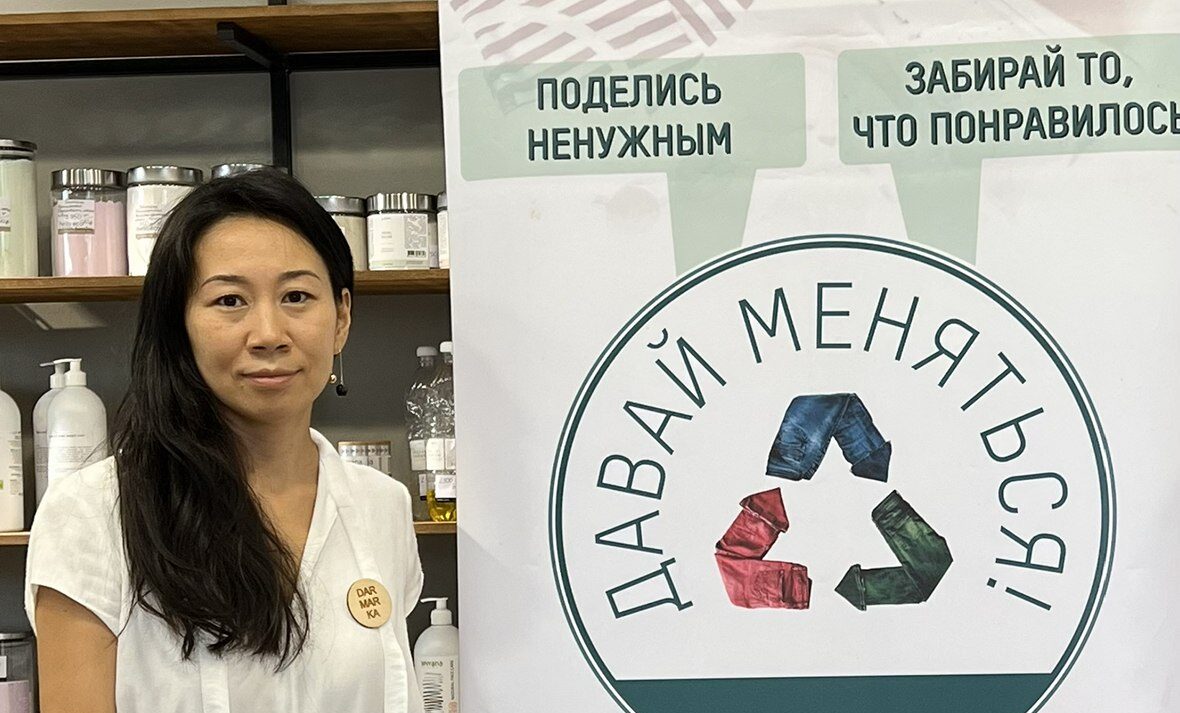
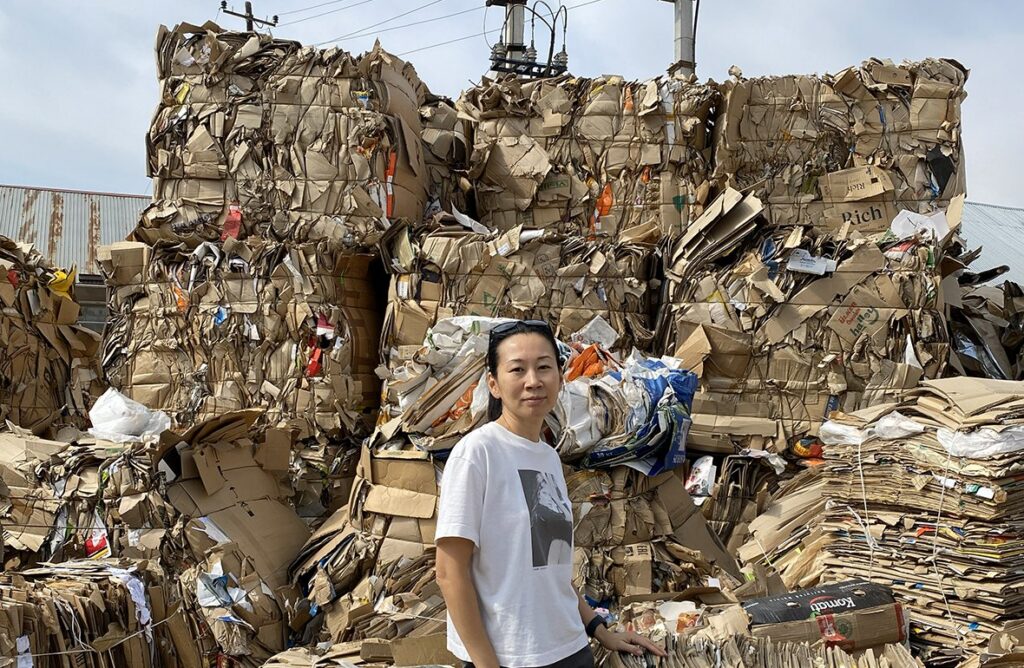
Image: Kamila Akimbekova

TCA: Was Darmarka your idea?

Kamila: No, it came from Roman Sablin, a Russian ecologist and founder of an environmental education school. Many of us, including myself, studied there, I now teach a course on organizing eco-events. At first, Darmarka was held every three to six months; now it’s monthly and just one part of our work. Last year, we collected and recycled more than 33 tons of material.

TCA: What’s the most unexpected item you accept?

Kamila: Probably vegetable peelings. You can dry them at home and bring them in. One of our partner farmers feeds them to her goats; she even sends us pictures. Food waste is a major issue. It’s mentioned in Kazakhstan’s Environmental Code, but there’s still no systematic solution at either the city or national level.

TCA: Some people argue they simply don’t have time to sort and transport waste.

Kamila: People can deny the problem, but eventually, everyone will have to face it. Our natural resources are not infinite. We can’t keep cutting forests and pumping oil forever. Sooner or later, we’ll all have to change, some sooner, some later.

TCA: Is living an eco-friendly life difficult today?

Kamila: Being eco-friendly means changing habits, which takes time. If you try to adopt everything at once, it may seem overwhelming. But if you go step by step, it becomes second nature. I always tell people: go at your own pace. Today, stop using plastic bags. Tomorrow, bring your own cup for coffee. Small steps make a big difference.

TCA: How many recycling facilities and collection points are there in Almaty?

Kamila: There’s no single “waste processing plant”, each material is processed separately. There are major recycling plants near Almaty for paper, glass, tires, and aluminum. But the number of collection points has dropped to about 10, down from 17 operated by KWR alone. Many depended on state subsidies, which have largely dried up. While subsidies still exist, they’re difficult to access. In Karaganda, some entrepreneurs manage the entire cycle themselves.

There’s talk of building a waste incineration plant in Almaty, which could devastate the recycling sector. If we start burning everything, no one will sort. I’m skeptical about whether it will truly be environmentally safe.

TCA: How would you assess Almaty’s cleanliness today?

Kamila: You might be surprised; Almaty is fairly clean. We now struggle to find sites for cleanup events. In the past, we’d find dozens of dirty spots instantly. Recently, we had to cancel a cleanup by the Ili River because activists had already cleared it.

TCA: What will it take to make our cities truly clean?

Kamila: A systematic approach and education. We must start in kindergartens and schools. A more responsible, conscious generation will ensure cleaner cities. But we can’t wait, each of us must act now. It’s not the government’s job to stop people littering in the mountains. That’s our personal responsibility.

Kazakhstan to Increase Grain Processing Nearly Tenfold by 2028

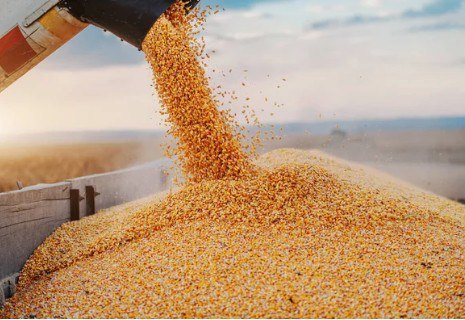
Kazakhstan plans to increase its deep grain processing capacity nearly tenfold by 2028, as part of a broader strategy to shift from raw material exports to the production of high value-added agricultural products. The initiative includes five major investment projects for wheat and corn processing, with a combined annual capacity of 4.8 million tons of grain.

According to the Ministry of Agriculture, the projects will be located across the northern, southern, and central regions of the country and are expected to become a cornerstone of Kazakhstan’s agro-industrial transformation.

These priorities were outlined during the fourth meeting of the National Kurultai in March 2024, where President Kassym-Jomart Tokayev emphasized the need for industrial diversification and greater economic resilience.

Currently, Kazakhstan processes just over 510,000 tons of grain annually in the deep processing segment. The country has three specialized enterprises that produce starch, gluten, molasses, bioethanol, and other high value-added products.

The five new projects are expected to attract $2.6 billion in investment and create approximately 3,300 jobs.

Key developments include a wheat processing plant with a capacity of 415,000 tons per year in the Kostanay region; corn processing enterprises in the Turkestan and Zhambyl regions; and new production facilities in Astana and Akmola region focusing on starch, gluten, bioethanol, and amino acids.

A significant share of these products will be exported to the U.S., Europe, China, India, the Eurasian Economic Union member states, the Middle East, and Africa.

As previously reported by The Times of Central Asia, Kazakhstan harvested a record crop of grains and oilseeds in 2024, providing the raw material base for this upcoming industrial expansion.

The Potential and Problems of Tourism in Kazakhstan

Kazakhstan boasts unique natural landscapes that could attract international visitors, and significantly enrich the country’s economy. Each year, the government allocates increasing funds to support tourism. However, services and infrastructure in many tourist destinations still remain well below international standards.

Undeniable Improvements

According to Talgat Gazizov, Chairman of the Board of the national company Kazakh Tourism, more than 1,100 tours to Kazakhstan are currently available on 18 major online platforms across Europe and Asia – a threefold increase compared to 2023. This reflects growing interest among international tour operators. As previously reported by The Times of Central Asia, authorities are also weighing up the possibility of opening casinos in designated tourist zones, accessible exclusively to foreign citizens.

In 2025, Kazakhstan invested nearly $2.5 billion in the development of its tourism sector, a 32% year-on-year increase. The number of tourists staying in accommodation facilities rose by 12%, surpassing 10 million. Kazakhstan also improved its position in the World Economic Forum’s global tourism index, climbing from 66th to 52nd place. The stated goal is to break into the top 50.

Currently, 328 tourism investment projects are underway. Notable among them are the Oi-Karagai mountain resort, Hilton and Mandarin Oriental hotel complexes, the Zhibek Zholy entertainment complex, and the Keruen Inn roadside service chain.

These projects are expected to create around 10,000 permanent jobs. A Comprehensive Development Plan for the Almaty Mountain Cluster includes expanding ski resorts and integrating them into a unified system. The celebrated Shymbulak ski base and Medeu high-altitude skating rink, both located near Almaty, are among the country’s most distinctive attractions.

The plan envisions 30 new cable cars and 161 kilometers of ski slopes, aiming to boost annual tourist numbers from 1.8 million to 5 million. Authorities note that, globally, ski tourists spend seven times more than beach tourists.

The Shchuchinsk-Borovskaya (Burabai) resort area is also a development priority. Infrastructure expansion around Lakes Katarkol, Maloye and Bolshoye Chebachye, and Zhukei is intended to ease pressure on Lakes Shchuchye and Borovoye. The number of inbound tourists to Burabai is projected to reach 94,000 by the end of 2029, with 32,500 people employed in the local tourism industry.

In western Kazakhstan, development is planned along the Mangistau Peninsula, including Teply beach and Kendirli resorts on the Caspian Sea. Efforts are also underway to improve access to the striking rock formations of Bozhyr and Tamsha, which rival world-famous geological landmarks.

Services and Infrastructure Lag Behind

Despite progress, serious shortcomings persist, chief among them underdeveloped services. The lack of public toilets in tourist zones and along highways has been repeatedly highlighted.

Government data shows that many resort areas in the Akmola, Karaganda, and Pavlodar regions, as well as in the Abai and Zhetysu regions, lack reliable water supply and central sewage systems. The use of well water remains a pressing concern. In the Abai region, some recreation centers are situated dangerously close to water sources.

Lake Alakol, a popular summer destination, requires urgent shoreline reinforcement. Similar dredging work is also necessary in Caspian Sea beach zones.

Many resorts are struggling to accommodate the rising influx of visitors. During peak season, Burabai faces severe traffic congestion. Travel to Lake Balkhash is hampered by a lack of roadside services, fuel shortages, and long queues at gas stations. Solid waste disposal infrastructure is virtually non-existent in most areas.

The “toilet issue” continues to receive high-level attention. Regional governments are being urged to address this basic yet critical need. Many locations still lack not only toilets but also trash bins, clear zoning, and proper beach equipment.

Although regional administrations report having installed over 60 public toilets, follow-up inspections found many were closed or not connected to utilities. There is also a shortage of water rescue personnel.

Kazakhstan undoubtedly has enormous tourism potential and is making substantial investments to realize it. Yet significant challenges remain, particularly in ensuring that basic infrastructure and services match the country’s ambitions.

“We Are Contenders”: Uzbekistan’s Chess Talents Aim High

“Uzbekistan, the new chess superpower?” says the website of Europe Échecs, a French chess publication.

The lead article in the January 2026 edition of the monthly magazine focuses on the extraordinary rise of Uzbek chess and shows photos of Nodirbek Abdusattorov and Javokhir Sindarov, two grandmasters from the Central Asian country who were atop the standings early this week in the Tata Steel Chess Tournament in the Netherlands.

Abdusattorov and Sindarov faced each other in the ninth round on Tuesday, playing to a draw that kept both of them in the lead of the elite contest that ends on February 1 after 13 rounds. Abdusattorov was first with six points, while Sindarov was second with five and a half points. However, the race is tightening — Sindarov now shares second place with 14-year-old Turkish prodigy Yağız Kaan Erdoğmuş and Dutch player Jorden van Foreest.

Sometimes called the “Wimbledon of chess,” the Tata Steel event in the seaside town of Wijk aan Zee has attracted the game’s greats over many years. They have included Garry Kasparov, Anatoly Karpov and Magnus Carlsen. The presence of two Uzbek players in the 14-participant Masters competition this year is a testament to the depth of top-tier talent in Uzbekistan, which is challenging India and other top chess nations in the world.

Born in Tashkent, 21-year-old Abdusattorov became a grandmaster at the age of 13 and is ranked twelth in the world with a rating of 2751. He has previously competed in the Tata Steel event, finishing in the top three in the last three years, according to the tournament. He won the FIDE World Rapid Chess Championship in 2021 and was part of the team from Uzbekistan that won gold at the 2022 Chess Olympiad in Chennai, India. FIDE is the international governing body of chess.

“It made us realize that we aren’t just ‘participants´ anymore; we are contenders,” Rayhona O’ktamova of Uzbekistan wrote in a Chess.com blog titled: “Why Everyone is Suddenly Talking About Uzbekistan.”

“What I love most isn’t just the trophies, it’s how the atmosphere in our country changed,” O´ktamova said. “Before, if a kid said ‘I want to be a professional chess player,´ parents might say, ‘Maybe study something more serious?´ But now? You see kids in every park with a board. Chess has become our ‘national sport.´ It’s our art, our marathon, and our pride.”

Sindarov, who was also born in Tashkent, is another high performer. The 20-year-old was 12 when he became a grandmaster and now has a world ranking of 21 and a rating of 2726. He won the FIDE World Cup in 2025, qualifying for this year’s Candidates Tournament, which determines who can challenge the world champion. The current champion is India’s Gukesh Dommaraju.

“I hope this is just the beginning — the victories of Uzbek chess will only grow from here,” Sindarov said after winning the FIDE World Cup.

Alongside Abdusattorov, Sindarov was also in Uzbekistan’s winning team at the 2022 Chess Olympiad. The city of Samarkand in Uzbekistan will host the next Chess Olympiad in September. Uzbekistan is currently 12th in the FIDE national rankings.

Uzbekistan’s Sarvinoz Begmuratova, 13, recently secured the the title of FIDE Woman Master, a sign of similar promise on the women’s side.

Chess commentators attribute Uzbekistan’s success to its focus on chess programs in schools and at the grassroots level, building on a strong tradition of the game that developed when it was a Soviet republic. Rustam Kasimdzhanov, the first Uzbek to become FIDE world champion (2004), said the collapse of the Soviet Union in 1991 helped his career because he “suddenly” became champion of his newly independent country, giving him more access to international competitions.

In contrast to the chaos of the immediate post-Soviet period, Uzbekistan today has a well-developed infrastructure and state funding for chess that has propelled top players from an early age, Kasimdzhanov said in a 2024 interview with Millennium Chess, a German maker of electronic chessboards and computers.

“They had grandmaster training at an age where – at a corresponding age – I didn’t even know what a grandmaster was,” he said. Late last year, Kasimdzhanov was appointed head coach of the men’s national chess team of Uzbekistan.

The next generation of chess talent is getting an early start. This month, Tashkent hosted a national championship for boys and girls under six years old.


Uzbekistan’s Central Bank Reaffirms Commitment to Reforms and Free Exchange Rate

Uzbekistan’s central bank has reiterated that the som’s exchange rate will be left to market forces, arguing that a ‘free float’ is key to its inflation-targeting framework.

In a statement released this month, the Central Bank of Uzbekistan said the exchange rate should be treated as an indicator, not a policy target. Attempts to hold the currency at a chosen point, it warned, can build pressure that later unwinds in sharper moves. 

Any foreign exchange operations, it added, would be aimed at smoothing excessive, short-term volatility, rather than steering the market.

The stance continues a shift that began with the 2017 liberalisation of the currency market, which gave more access to foreign exchange, and narrowed the gap between official and black market rates.

Recent fluctuations in the som have been closely watched. An earlier report on why the som has held up at times pointed to remittance inflows, export earnings and a tighter domestic monetary stance.

Uzbekistan adopted inflation targeting in 2020, using the policy rate as its main lever. The central bank has kept the key rate at 14% since December 2025. It is due to review it again on January 28.

In its monetary policy guidelines for 2026–2028, the bank projects headline inflation easing to about 7% by the end of 2026 and returning to a 5% medium-term target in 2027, assuming monetary conditions remain restrictive, and external price pressures fade.

A floating rate can cushion swings in commodity prices, remittances and trading partner demand. But it also passes currency shifts more directly into the cost of dollar-priced imports, from consumer goods to industrial inputs. That risk is heightened when energy shortages and higher fuel costs feed broader price pressures, as described in coverage of the region’s growing energy deficit.

International lenders have broadly backed Uzbekistan’s direction, while urging deeper reforms. In late 2025, the IMF welcomed greater exchange-rate flexibility and called for continued structural changes, according to its latest review.

Shell and Eni Face Up to $4 Billion Payout to Kazakhstan After Arbitration Ruling

Oil and gas majors Shell and Eni, key stakeholders in Kazakhstan’s Karachaganak field, have lost a key stage in an international arbitration case in London and may be required to pay the Kazakh government between $2 billion and $4 billion in compensation. The decision was first reported by Bloomberg.

According to the ruling, the arbitration panel upheld Kazakhstan’s argument that the project operators had charged the state under a production sharing agreement (PSA) for unapproved cost overruns and other ineligible expenses. The tribunal found that a significant share of the disputed costs should not have been recovered from the state, siding with Kazakhstan on the central legal question.

The arbitration proceedings were conducted behind closed doors, in line with standard practice for PSA disputes. The final compensation amount has yet to be determined, and the ruling remains subject to appeal. However, Bloomberg reported that the tribunal concluded the consortium must return a substantial portion of the contested funds, a decision that could require changes to the PSA’s oil and gas distribution formula.

Karachaganak is one of Kazakhstan’s largest oil and gas projects and a cornerstone of the country’s energy sector. The field is operated by the Karachaganak Petroleum Operating consortium, which includes Shell, Eni, Chevron, Kazakhstan’s national oil and gas company KazMunayGas, and Russia’s Lukoil.

The Kazakh government initially sought more than $6 billion in compensation, arguing that improper cost recovery had reduced state revenues over several years. The dispute was formally launched in 2023 and followed a broader effort by Kazakhstan to assert stricter oversight over major hydrocarbon projects governed by PSAs.

In 2024, international partners reportedly proposed resolving the dispute by constructing a long-delayed gas processing plant at Karachaganak to supply the domestic market, an offer seen as an attempt to reach a negotiated settlement. The plant has long been a point of contention, with Kazakhstan pushing for increased gas processing capacity inside the country rather than exporting raw gas.

Kazakhstan’s Ministry of Energy has declined to provide further details on the arbitration, citing confidentiality provisions.

In response to an inquiry from BAQ.KZ, the ministry said: “All arbitration materials are subject to the confidentiality of the production sharing agreement and the arbitration agreement between the parties. Until the restrictions are lifted, it is not possible to provide any information.”

The ruling marks one of the most significant recent legal setbacks for foreign oil companies operating in Kazakhstan in recent years and could have broader implications for how costs are approved and recovered under PSAs across the country’s energy sector.