Kazakhstan, a sprawling and culturally diverse nation nestled in Central Asia, has strategically embraced a multi-vector policy across its foreign relations, economic strategies, and governance. At the heart of this strategy lies Kazakhstan’s multi-vector policy in education, a forward-thinking initiative that underscores the nation’s commitment to diversification, international collaboration, and educational modernization.
International partnerships form a cornerstone of Kazakhstan’s educational framework, enriching its academic landscape and fostering innovation. The country has established strategic alliances with prestigious universities, research institutions, and governmental bodies worldwide. Through collaborative endeavors such as joint research ventures, student and faculty exchanges, the implementation of international educational programs, and the establishment of branches of foreign universities within Kazakhstan, the nation endeavors to harness global expertise and best practices to elevate the caliber of its education system.
Multi-Vector Policy in Education
Over the past year alone, Kazakhstan has witnessed the opening of eight foreign branches, bringing the total to twelve. The first foreign university established its branch is British De Montfort University. This university opened its doors for its students in 2021, offering educational programs for more than 500 students in such fields as finance, design and business. This branch attracted 16 million US dollars from foreign investors.
Noteworthy among these initiatives is Kazakhstan’s adoption of a strategic partnership model, which has yielded tangible outcomes. Kozybayev University’s collaboration with the University of Arizona in 2022 is a prime example. With 589 students enrolled across ten specialties – spanning pedagogical, biotechnological, and IT domains – this partnership, supported by 1200 full scholarships from the government, signifies a concerted effort to enhance educational opportunities and foster interdisciplinary learning.
Similarly, the formation of a consortium in 2022 with renowned German universities, operating under the auspices of the Caspian Engineering and Technology University named after Sh. Yesenov, underscores Kazakhstan’s commitment to excellence in engineering education and technological innovation. Offering a diverse array of programs encompassing engineering fields, data management, artificial intelligence, and beyond, this consortium exemplifies Kazakhstan’s proactive approach to equipping its citizens with cutting-edge skills and expertise.
Established in 2023 at Zhubanov university, the Heriot Watt University branch offers an array of programs in vital fields such as petroleum engineering, electrical power engineering, and computer engineering, boasting an impressive enrollment of 286 students from 13 Kazakhstan regions.
The Luban Workshop initiative at Serikbayev University exemplifies Kazakhstan’s commitment to advancing its automotive education and training capabilities. This initiative, supported by foreign partners, aims to establish state-of-the-art laboratories specializing in automotive transport. These facilities will serve as a platform for incorporating modern Chinese technological advancements into the curriculum, thereby enhancing the quality of education for future automotive specialists. The project also seeks to foster academic and research collaborations with esteemed Chinese educational institutions, paving the way for the development of dual-degree programs, joint research projects, and other collaborative efforts that will enrich the automotive sector’s expertise and innovation.
The advent of artificial intelligence (AI) has sparked discussions about its potential impact on the workforce and society at large. In response to this imperative, Kazakhstan has embarked on strategic collaborations with leading educational institutions and organizations to cultivate expertise in emerging technologies, particularly in the field of AI.
Kazakhstan’s collaboration with SeoulTech to establish a branch at Korkyt Ata University marks a pivotal advancement in AI education within the country. This partnership aims to develop AI specialists and enhance national competencies in this dynamic sector. The SeoulTech branch, equipped with advanced AI labs and technology, will become a hub for AI research and innovation in Kazakhstan. This initiative underscores Kazakhstan’s commitment to leveraging global expertise, promoting collaboration, and positioning itself as a regional frontrunner in AI.
In line with its multi-vector policy in higher education and science, Kazakhstan has expanded its initiatives by launching branches of prominent international universities. Among these developments are the establishment of branches of the Polish University of Economics at Shakarim University and the Polytechnic University of Marche (Italy) at Zhetysu University. These endeavors underscore Kazakhstan’s dedication to broadening its educational collaborations and strengthening its scientific capabilities.
Some branches are strategically aligned with Kazakhstan’s overarching objective of cultivating scientific and teaching personnel in higher education. Specifically, the branch of the Northwestern Polytechnical University (China) at Al-Farabi University is focused on training master’s degree students in the engineering field. Additionally, the branch of the University of Hong Kong at Satbayev University is dedicated to providing advanced training for PhD candidates in the field of artificial intelligence.
Another notable initiative is the establishment of Digital Huawei Academies in collaboration with 26 universities, with plans to expand to an additional 11 universities. These academies serve as hubs for digital skill development, equipping students with the necessary expertise in emerging technologies.
Furthermore, in partnership with Binance, Kazakhstan aims to train over 40,000 specialists in blockchain technology, recognizing its significance in the digital economy. Additionally, the translation of 4,000 Coursera courses into Kazakh and the provision of 30,000 Coursera licenses signify a concerted effort to enhance access to quality digital education resources.
Moreover, Kazakhstan is prioritizing the upskilling of faculty members to generate high-quality digital content, leveraging partnerships with platforms like Coursera to facilitate this process. This initiative not only benefits educators but also positions them to contribute to the global digital education market.
Partnerships with industry leaders such as Google are paving the way for cutting-edge educational courses in artificial intelligence across 14 universities. These initiatives underscore Kazakhstan’s commitment to preparing its workforce for success in the digital age.
Nazarbayev University
Nazarbayev University (NU) stands as a beacon of higher education in Kazakhstan in practically all of the domains mentioned above. Welcoming its inaugural cohort in September 2010, NU has since been committed to fostering excellence in education. Notably, all instruction at the university is delivered in English, reflecting its international orientation and commitment to global standards.
With more than 5,600 international publications, and an impressive 13.8% of NU’s publications ranked among the top 10% most cited globally, the university has established itself as a prominent player in the international academic community. However, amidst these accomplishments lie several pressing challenges that require urgent attention and strategic intervention.
The university’s strategic objectives aimed at transforming domestic higher education, science, and healthcare systems remain unfulfilled, signaling a misalignment between vision and execution. Moreover, the localization of personnel within NU’s faculty ranks has not been adequately addressed, with a disproportionate reliance on foreign staff, undermining efforts to nurture local talent and expertise.
Furthermore, NU’s perceived isolation and detachment from industry imperatives hinder its potential to address Kazakhstan’s economic and industrial challenges effectively. A heavy reliance on state funding, coupled with bureaucratic inefficiencies and management issues, exacerbates the university’s dependency and stifles innovation and autonomy.
In a significant shift in Kazakhstan’s education financing landscape, targeted contributions and transfers will no longer be part of the funding mechanism starting next year. Instead, funding will adhere to general rules with mandatory oversight by parliament, signaling a move towards greater transparency and accountability in the allocation of educational resources.
New Regulations and Financial Sustainability
Under the new regulations, educational institutions will be required to safeguard their budgets based on common grounds, ensuring transparency in financial management. This move comes as part of Kazakhstan’s broader efforts to enhance the efficiency and fairness of its education funding system.
A key strategy to bolster the financial stability of universities, including the prestigious Nazarbayev University, is the establishment of an endowment fund. The Ministry of Higher Education and Science plans to utilize this model to enable other universities across the country to accumulate funds, paving the way for long-term sustainability and independence in financing.
In Conclusion
Kazakhstan’s transition towards a more transparent and sustainable education financing model, as well as digital transformation agenda reflects its commitment to nurturing a vibrant, resilient higher education sector that is future-ready for technologically adept workforce poised to thrive in the digital economy.
Through strategic partnerships, innovative projects, and a forward-thinking approach, Kazakhstan is charting a course towards educational excellence in the digital age.
By harnessing the potential of endowment funds and embracing principles of accountability and transparency, Kazakhstan is poised to strengthen its position as a regional leader in education and innovation and further promotes educational diplomacy through higher education.
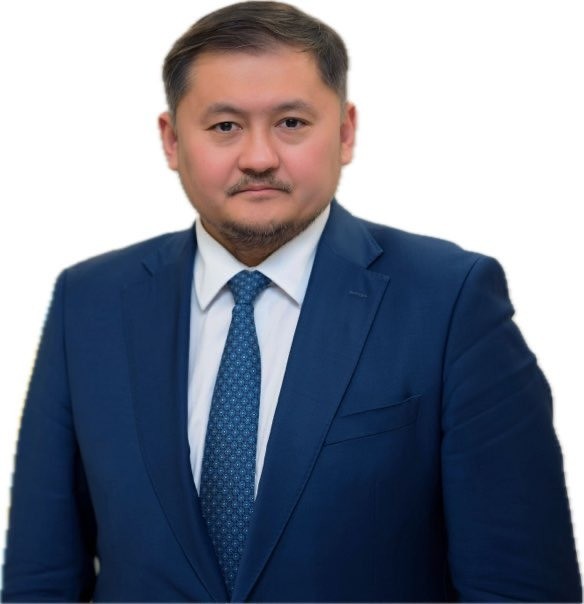
Sayasat Nurbek is the Minister of Science and Higher Education of the Republic of Kazakhstan. One of the most prominent National-level experts on education, education management, education program design, education and labor market analysis and policies, he is a multilingual public figure, speaker, lecturer and educator with over 1,000 public lectures and talks and 100,000+ general audience on social media.