• KGS/USD = 0.01144 0%
  • KZT/USD = 0.00196 -0%
  • TJS/USD = 0.10899 0%
  • UZS/USD = 0.00008 0%
  • TMT/USD = 0.28490 0%
  • KGS/USD = 0.01144 0%
  • KZT/USD = 0.00196 -0%
  • TJS/USD = 0.10899 0%
  • UZS/USD = 0.00008 0%
  • TMT/USD = 0.28490 0%
  • KGS/USD = 0.01144 0%
  • KZT/USD = 0.00196 -0%
  • TJS/USD = 0.10899 0%
  • UZS/USD = 0.00008 0%
  • TMT/USD = 0.28490 0%
  • KGS/USD = 0.01144 0%
  • KZT/USD = 0.00196 -0%
  • TJS/USD = 0.10899 0%
  • UZS/USD = 0.00008 0%
  • TMT/USD = 0.28490 0%
  • KGS/USD = 0.01144 0%
  • KZT/USD = 0.00196 -0%
  • TJS/USD = 0.10899 0%
  • UZS/USD = 0.00008 0%
  • TMT/USD = 0.28490 0%
  • KGS/USD = 0.01144 0%
  • KZT/USD = 0.00196 -0%
  • TJS/USD = 0.10899 0%
  • UZS/USD = 0.00008 0%
  • TMT/USD = 0.28490 0%
  • KGS/USD = 0.01144 0%
  • KZT/USD = 0.00196 -0%
  • TJS/USD = 0.10899 0%
  • UZS/USD = 0.00008 0%
  • TMT/USD = 0.28490 0%
  • KGS/USD = 0.01144 0%
  • KZT/USD = 0.00196 -0%
  • TJS/USD = 0.10899 0%
  • UZS/USD = 0.00008 0%
  • TMT/USD = 0.28490 0%
08 December 2025

Uzbekistan Airways Plane in Near Miss with Business Jet Over Moscow

An Uzbekistan Airways passenger jet and a private business aircraft came dangerously close to colliding in Russian airspace near Serpukhov, south of Moscow, due to a radio miscommunication, according to reports from the Telegram channel Aviatorshina.

The incident occurred shortly after midnight on September 29, as both planes were descending toward Moscow’s Vnukovo Airport. The aircraft involved were an Embraer Legacy 650 business jet flying from Bodrum (registration RA-02753) and an Uzbekistan Airways Airbus A320 inbound from Samarkand (registration UK-32018).

According to Aviatorshina, the Embraer was cruising at 9,000 feet when air traffic controllers instructed the Airbus to descend to 10,000 feet. However, the A320 crew mistakenly read back the clearance as 9,000 feet and the error went unnoticed by both of the controllers on duty, despite overseeing only six aircraft at the time.

As a result, the Uzbekistan Airways jet descended below its assigned altitude, breaching minimum separation standards. The two aircraft reportedly passed each other with a horizontal gap of about three kilometers, less than the required five and a vertical distance of only 700 feet instead of the mandated 1,000 feet.

Although the ground-based conflict alert system was triggered, there were no reports that the onboard Traffic Collision Avoidance System (TCAS) was activated. Both aircraft landed safely without further incident.

Russia’s Federal Air Transport Agency (Rosaviatsiya) has classified the occurrence as an aviation incident and launched an investigation. The event marks the eighth reported safety-related incident in Moscow’s airspace this year, with two occurring in the past week alone, including another near-collision at Sheremetyevo Airport.

In response, the State Corporation for Air Traffic Management (GK ORVD) has demoted the entire management team of the Moscow Air Traffic Control Center for the month of September. Officials have warned that continued lapses in safety performance could lead to a complete overhaul of the branch’s leadership.

Mirziyoyev Secures Spotlight During U.S. Visit

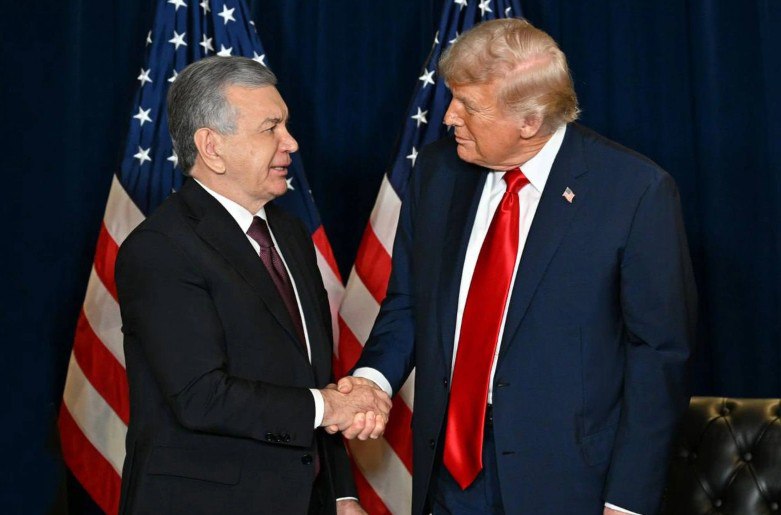
In a significant diplomatic breakthrough, Uzbekistan emerged as a standout player during this year’s United Nations General Assembly events in New York. President Shavkat Mirziyoyev not only secured a high-profile meeting with U.S. President Donald Trump, but also signed a landmark $8 billion deal with Boeing to purchase Dreamliner jets, a move that drew praise from Trump and captured the attention of the international business community.

Trump publicly endorsed the agreement on social media, calling Mirziyoyev “a man of his word” and noting the deal would create “over 35,000 jobs” in the United States.

Mirziyoyev’s visit included a high-level investment roundtable with executives from leading U.S. corporations and financial institutions. According to Forbes, trade between the two countries has quadrupled under Mirziyoyev’s leadership, with more than 300 American companies now active in Uzbekistan. Strategic sectors such as rare-earth metals and critical minerals took center stage during the discussions. Among the key meetings was one with the vice president of the Colorado School of Mines, who expressed support for establishing a research center in Uzbekistan.

Other topics included joint initiatives in banking, information technology, transportation, and energy infrastructure. The scale of the Boeing deal served as a symbolic anchor to broader efforts: positioning Uzbekistan as a key connector between Central Asia and the Western economy.

This aligns with a larger strategic pivot that analysts have long advocated. As U.S. engagement in Central Asia expands, countries like Uzbekistan are increasingly looking to diversify away from dependence on Russia and China.

Forbes noted that the Trump administration is building on foundations laid by its predecessor by promoting regional initiatives such as the Zangezur Corridor, referred to as the “Trump Corridor”, aimed at linking Central Asia to global markets without passing through Russian territory.

Mirziyoyev’s face-to-face meeting with Trump, followed by the public endorsement, also plays into shifting domestic narratives. It signals growing diplomatic credibility and a willingness to operate as an equal on the global stage. The convergence of political recognition and commercial investment may mark a turning point in Uzbekistan’s foreign policy, not just as a recipient of aid, but as a proactive economic actor.

With the Boeing order and growing support from U.S. business leaders, Uzbekistan is staking its future on deepening ties with the West. Coupled with ongoing domestic reforms, the country is making a strategic bet that modernization and diversified partnerships will yield long-term dividends.

Kazakhstanis Face Drug Shortages and Soaring Prices

Kazakhstanis are paying significantly more for medicines than residents of many other countries, and often struggle to find essential drugs at all. According to the Agency for Protection and Development of Competition (APDC), rising prices, supply disruptions, and an inefficient procurement system are driving a worsening healthcare crisis.

Price Hikes

Kazakhstan’s medicine procurement system is complex. In principle, essential drugs should be available to patients free of charge under the guaranteed volume of medical care and mandatory social health insurance. In practice, many face shortages or receive lower-quality substitutes. As a result, patients are often forced to buy medicines themselves, an increasingly unaffordable burden.

According to the APDC, inflated prices are caused by several factors. One is the lack of pricing transparency. Previously, drug prices were pegged to the highest prices in reference countries, figures submitted by suppliers without verification. As a result, generics sometimes cost nearly as much as original-brand drugs.

Another issue is procurement through intermediaries. Up to 45% of state-purchased medicines are bought not from manufacturers but from local distributors, who add their own markups.

Costs are also inflated by expensive inspections. To enter the market, companies must pay for production inspections, fees set independently by a state agency that can reach millions of tenge. These costs are passed on to consumers.

To address these problems, the APDC has recommended switching to average reference-country prices, limiting inspections on products from countries with stringent regulations, and transferring inspection services to a state monopoly with controlled rates. It also urges more direct procurement from manufacturers and better verification of supplier costs.

Tax Reforms Threaten Further Price Increases

Despite already high prices, medicines will soon be subject to new taxes. Under Kazakhstan’s revised Tax Code, beginning in 2026, medical services and the sale of medicines and medical products will be subject to value-added tax (VAT), initially at 5%, rising to 10% from January 1, 2027.

An exception will apply to medicines and services provided under the guaranteed medical care package and mandatory health insurance. However, as noted earlier, many patients struggle to access these programs in practice.

Pharmaceutical companies warn that these VAT changes will drive prices even higher and lead to fresh shortages. Industry leaders also point to the planned 16% VAT on pharmaceutical raw materials, equipment, and components, calling it a distortion of tax policy and a threat to the sector’s stability.

“The market is on the edge. Many drugs are already unprofitable and are being withdrawn. The introduction of VAT will accelerate the outflow. The number of registered medicines in Kazakhstan has already dropped from 12,000 to 6,900,” said Marina Durmanova, President of the Association for the Support and Development of Pharmaceutical Activity. “If no measures are taken, the country could face shortages of key drugs and further monopolization of the pharmacy sector,” she warned.

Kazakhstan produces few essential medicines domestically, meaning prices continue to rise month by month.

When Medicines Vanish, So Do Lives

Price increases are only part of the crisis. Vital medicines frequently disappear from the shelves entirely, including those guaranteed under state programs.

Kazakhstan imports around 14% of its medicines from Russia and about 15% from Germany. Since the start of the war in Ukraine, supply chains have been disrupted, leading to widespread shortages of insulin, Diprosalic, and essential cancer and epilepsy medications. The private sector, which handles roughly 70% of drug supplies, has been hit by high purchase prices, delayed imports, and limited stock.

In September, cancer patients in Almaty reported the disappearance of Tagrisso, a life-saving drug previously provided under a state benefits program. The Public Health Department attributed its absence to budget cuts. With a price tag of over 2 million tenge (more than $3,600), the drug remains far out of reach for most.

Following complaints, state distributor SK-Pharmacy said the drug would arrive in October, blaming the delay on documentation errors.

SK-Pharmacy has long faced criticism. In July 2025, the Prosecutor General’s Office launched a pre-trial investigation into the company over large-scale financial violations. A Supreme Audit Chamber report estimated the budgetary damage from medicine procurement at 35.8 billion tenge (over $63 million).

These failings have serious consequences. Delays in medicine delivery cost lives. Healthcare reform may no longer be optional, but an urgent priority for Kazakhstan’s government.

Kazakhstan’s Red Book to Include 11 New Animal Species

Kazakhstan will soon expand its Red Book of rare and endangered species to include 11 new animal species, Deputy Minister of Ecology and Natural Resources Nurken Sharbiev announced this week.

Speaking at a session of the Senate Committee on Agrarian Issues, Nature Management, and Rural Development, Sharbiev noted that the current list includes 227 species, 132 vertebrates and 96 invertebrates. Kazakhstan is home to approximately 835 vertebrate and 100,000 invertebrate species in total.

The updated Red Book list, compiled by the Institute of Zoology based on biological assessments aligned with International Union for Conservation of Nature (IUCN) criteria, will include six invertebrates, three species of scorpions and three insects and five vertebrates. These vertebrates include two bird species, the white-headed vulture and cinereous vulture, both of which inhabit the mountainous regions of southern and eastern Kazakhstan; two reptiles, the Dzungarian and Tien Shan lizards; and one mammal, the jungle cat, found in the Syr Darya and Chu river deltas and in southern marshlands. At the same time, 21 invertebrate species will be removed from the list.

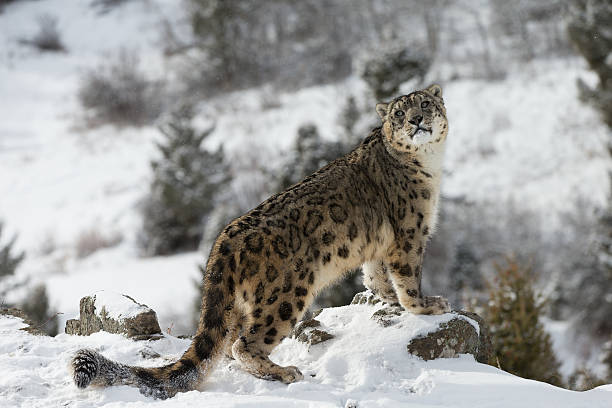
Sharbiev also highlighted encouraging progress in snow leopard conservation. The population of this endangered species has more than doubled from a critical low of 80 individuals in the late 1990s to 189 today.

“Thanks to conservation and monitoring efforts, we have managed to significantly increase the population from its critical level,” he said.

Once heavily hunted for its fur, the snow leopard remains listed by the IUCN as a rare species facing shrinking habitats and declining numbers. In Kazakhstan, it inhabits the southern and southeastern mountain systems, including the Western and Northern Tien Shan, the Dzungarian (Zhetysu) Alatau, as well as the Altai, Saur, and Tarbagatai ranges in the east. To support the species’ recovery, the government has established protected areas totaling 3.6 million hectares, about 70% of the snow leopard’s known habitat. Eleven leopards have been fitted with satellite collars to monitor their movements and guide conservation measures.

Sharbiev also spoke about Kazakhstan’s ongoing efforts to reintroduce the Turanian tiger. As previously reported by The Times of Central Asia, two tigers brought from the Netherlands successfully survived their first winter in the country in 2024. A 415,000-hectare nature reserve, Ile-Balkhash, has been established in Almaty region to support the reintroduction program.

Extinct in Kazakhstan since the mid-20th century due to poaching, agriculture, and habitat destruction, the Turanian tiger (Panthera tigris virgata) is being gradually reintroduced. Three to four additional tigers are expected to arrive from Russia in 2026.

To restore the predator’s natural prey base, authorities have released 205 Bukhara deer into the Ile-Balkhash reserve between 2018 and 2024, relocated more than 100 kulans, and increased populations of roe deer and wild boar.

As also previously reported by The Times of Central Asia, Kazakhstan is simultaneously working to restore populations of the Przewalski’s horse, alongside the Turanian tiger and snow leopard.

Turkmen Cotton Farmers Frustrated by Mechanized Harvesting Delays and Losses

In Turkmenistan’s Lebap region, tenant farmers are expressing growing frustration over delayed payments and crop losses linked to the government’s push for mechanized cotton harvesting. While the use of combine harvesters is intended to boost efficiency, many farmers say the reality on the ground is causing financial hardship and lower yields.

Delayed Payments Compound Financial Pressure

In the Chokhbetde village council of Halach district, farmers were told they would not be paid for cotton harvested by combine machines until the entire campaign is complete. All revenues first go to the State Association for Agricultural Technical Services, Turkmenobakhyzmat, which owns the harvesters. Because accounting is based on the season overall rather than by individual field or tenant, farmers are expected to wait for payment.

This delay is particularly painful for rural communities that rely on regular cash flow. A tenant farmer from Mashpaya village noted that pickers brought in from urban areas must be paid every ten days, and the payment postponement makes this increasingly difficult.

The core complaint, however, is with the quality of mechanized harvesting itself.

“Because the combines are poorly adjusted, 10-15% of the cotton ends up on the ground and must be collected by hand,” the Mashpaya farmer said. “Government employees are brought in for this, and they also need to be paid on time.”

Beyond the immediate spillage, poorly calibrated machinery damages the plants: drums crush unopened cotton bolls, preventing them from maturing and leading to permanent yield losses.

“Two Shifts” and Self-Funded Repairs

Concerns about machinery use and maintenance are longstanding. During preparations for the summer grain harvest in Lebap, each combine at local Obahyzmat units was assigned two operators to run in alternating shifts. However, operators were required to fund maintenance and repairs themselves, even for foreign-made equipment such as John Deere and Case combines.

The association only supplied tires, promising that repair costs would be reimbursed after the harvest as part of output-based wages and bonuses. In practice, combine crews absorbed heavy expenses. A machine operator from Bayramaly district described frequent technical failures: broken cutter bars, damaged threshing drum pulleys, faulty bearings, and worn connecting rods.

“My colleague and I have already borrowed and spent 15,000 manats each, $4,300 at the official exchange rate, or $769 on the black market, just on spare parts,” he said.

While some parts are now being produced locally, a repair facility in Turkmenabat has reportedly exceeded production targets for farm machinery components, these improvements have yet to reach most farmers. For now, the burden of keeping equipment running falls largely on the operators and tenant farmers themselves, with financial relief promised only at the end of the harvest season.

Mbappé Shines as Real Madrid Rout Kairat in Almaty

French forward Kylian Mbappé scored a hat-trick in Kazakhstan last night, as Real Madrid overwhelmed Almaty’s Kairat in a UEFA Champions’ League group-stage match. The game drew massive attention in Kazakhstan and beyond. Yet despite the 5-0 defeat, it was 18-year-old Kairat goalkeeper Sherkhan Kalmurza who earned plaudits for his valiant performance against the Spanish giants.

Held on September 30 at Almaty’s Central Stadium, the match became the most attended football event in Kazakhstan in recent years. With a stadium capacity of 23,800, organizers reported 99% attendance, including around 5,000 fans from abroad, not only from Spain, but also from Kyrgyzstan, Uzbekistan, and Russia. Several thousand more were left outside the gates, prompting police to intervene to prevent overcrowding. In a creative twist, a local mobile operator arranged an “extra-tribune” on a nearby apartment balcony, offering ten lucky subscribers an elevated view of the game.

The anticipation around the match spiked when Real Madrid coach Xabi Alonso opted to bring his full squad, contrary to expectations that reserves would be fielded. The decision proved decisive.

Kairat nearly stunned the visitors early on when forward Dastan Satpayev, on loan from Chelsea, forced Thibaut Courtois into a reflex save with a powerful header.

But Real quickly assumed control. After a string of early saves by Kalmurza, Mbappé opened the scoring from the penalty spot in the 24th minute. The young goalkeeper held firm through the rest of the first half, but the second period saw Real’s firepower overwhelm Kairat. Mbappé added two more goals to complete his hat-trick, while Eduardo Camavinga and Brahim Díaz also found the net both assisted by Rodrygo.

Kairat had a fleeting chance to pull one back in the 67th minute when Valery Gromyko earned a penalty. However, Italian referee Marco Guida overturned the decision after a VAR review.

Speaking after the match, Alonso praised Kairat’s opening effort: “This team deserves to play in the Champions League. The atmosphere was incredible. I wish Kairat all the best.”

Kairat head coach Rafael Urazbakhtin acknowledged the quality gap: “We are in different weight categories. But we gained invaluable experience playing at such speed. Real’s counterattacks were simply crazy.”

The evening produced three standout performers: Mbappé with a hat-trick, Rodrygo with three assists, and Kalmurza, whose string of saves against world-class opponents earned him praise across social media. His Instagram following more than doubled overnight, from 89,000 to 172,000.

As previously reported by The Times of Central Asia, Kairat’s journey to the group stage was largely secured by backup goalkeeper Temirlan Anarbekov, who stepped in for the injured Alexander Zarutsky during the August qualifiers.

However, ahead of the group stage, Anarbekov suffered a broken jaw in a domestic league match, while Zarutsky had only just returned to training. The responsibility fell to 18-year-old Kalmurza, who seized his moment on European football’s biggest stage.