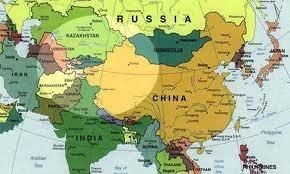
BISHKEK (TCA) — Russia and China are not competing for influence in Central Asia since their priorities in the region coincide, including maintaining political stability, promoting economic development and upholding secular statehood, says political analyst Alexander Lukin, head of the Department of International Relations at the Moscow-based Higher School of Economics, Sputnik news agency reported.
Lukin said that some in Russia have claimed that Moscow and Beijing are already engaged in a power struggle in Central Asia or risk getting locked in a standoff in a region which both countries view as significant for their political, economic and security initiatives.
“There is a group of people who claim that the power struggle between Russia and China is ongoing or about to start; they say that there will be chessboards and so on. We need to point out that this is not what is truly happening. I think that there are no particular tensions between the two nations in the region since their fundamental goals are the same. These include maintaining political stability, promoting economic development and upholding secular statehood,” the analyst said during a round-table conference “From Turkestan to Central Asia: Regional political future” held at Moscow State University in February.
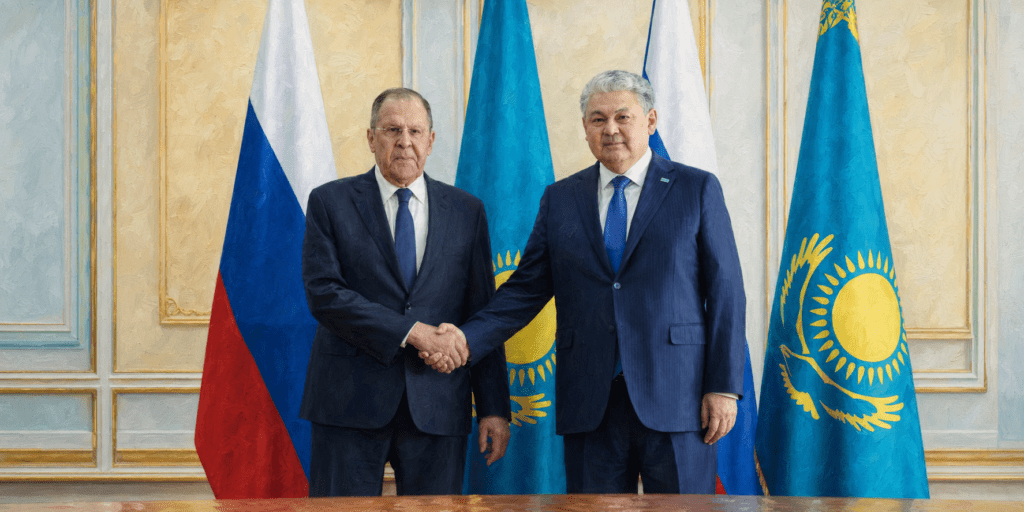
These concerns do not appear to be entirely groundless since China has increased its standing in Central Asia, replacing Russia as a key partner for some of regional countries. In addition, Russia and Beijing appear to be perceived as equal partners for Kazakhstan.
Lukin appears not to consider the trend to be a matter for concern at the moment.
“The Chinese factor is hard to overestimate when it comes to Central Asia. It will become increasingly significant,” the expert said. “Surely, there is certain competition among companies, but our fundamental cooperation is quite close.”
Nevertheless, China’s increasing clout in Central Asia presents a certain challenge for Russia.
“China’s influence is growing. This does not mean that this process is adverse to Russia’s national interests. On the other hand, this also does not mean that we need to lose our traditional standing in the region,” he said.