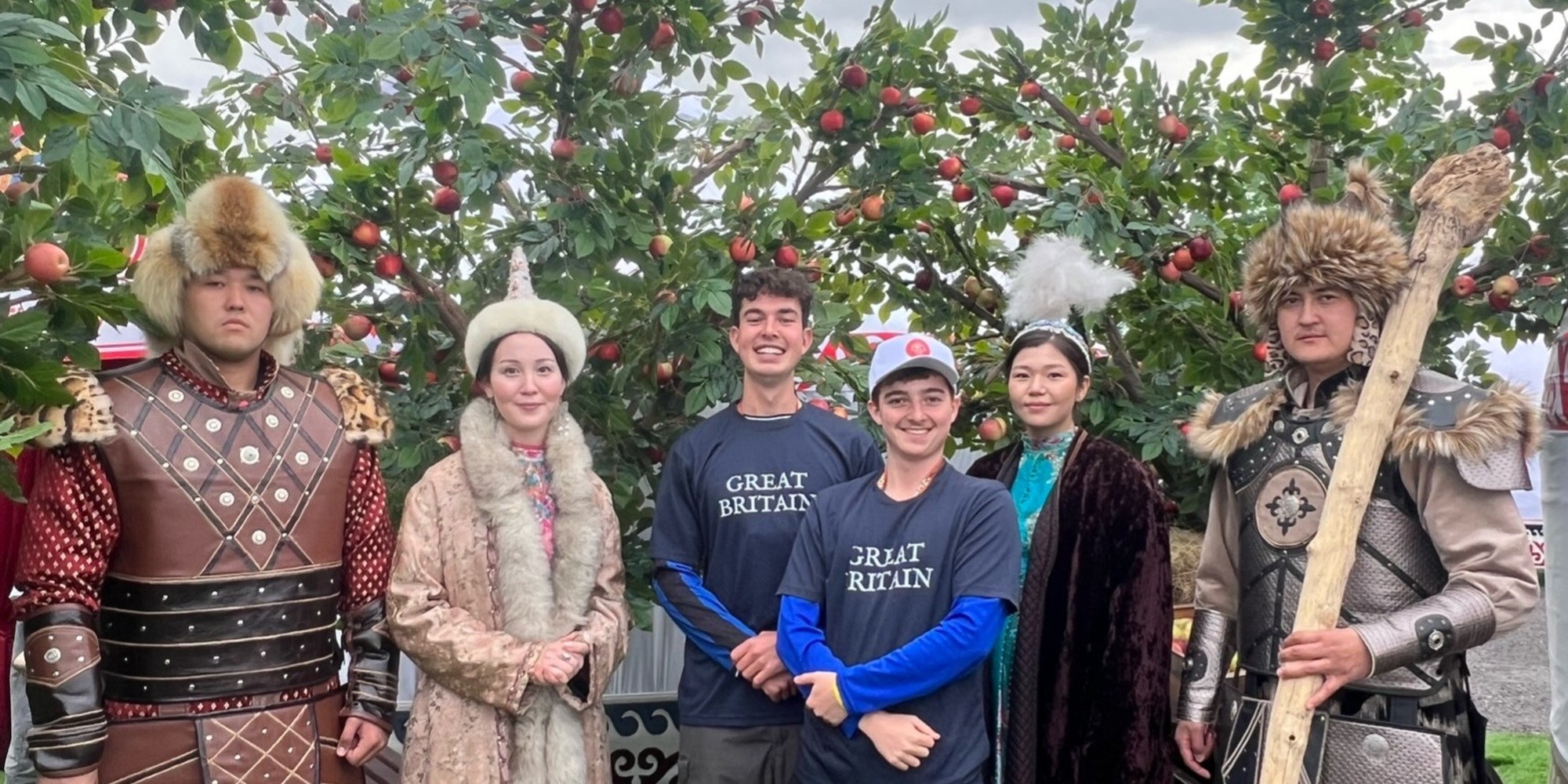
A British tug-of-war athlete preparing for a nomadic sports festival in Kyrgyzstan sounds like the start of a strange travel documentary. It is also part of the appeal of the World Nomad Games, which return to Kyrgyzstan from August 31 to September 6, 2026, with The Times of Central Asia once again reporting from the ground. Since their launch in 2014, the Games have grown far beyond their roots, turning traditional sports into an international meeting point for athletes, spectators, and cultures that rarely share the same arena.
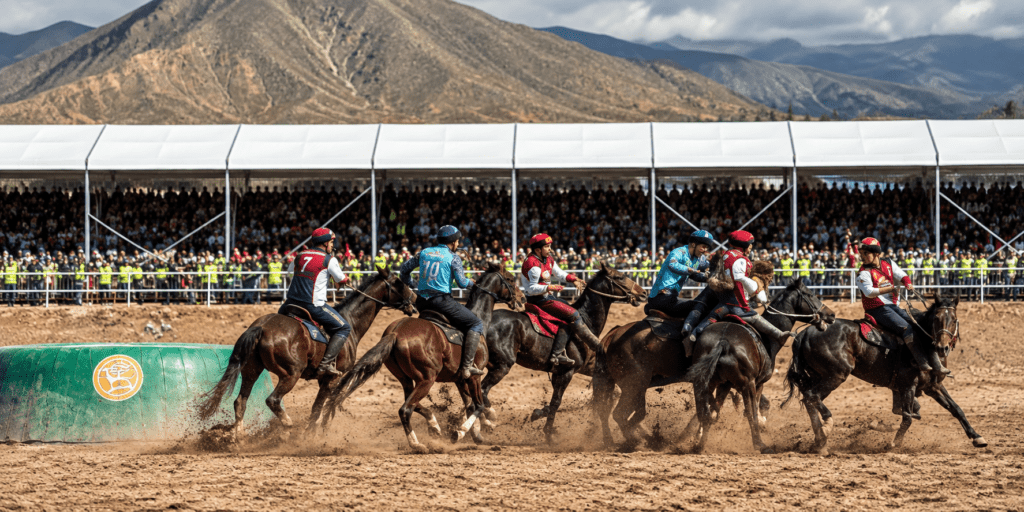
What began as a Kyrgyz initiative has become one of the world’s more unusual sporting gatherings, mixing horseback combat, archery, wrestling, eagle hunting, strength contests, board games, food, music, and craft traditions in a format closer to a living festival than a conventional tournament. For visiting teams, the challenge is not only athletic. It is cultural, physical, and occasionally bewildering in the best possible way, as The Times of Central Asia explored in an interview with Sam Pollard from Team Great Britain.
TCA: How did you first become involved with the World Nomad Games, and what drew you to competing there?
Sam Pollard: I read Sovietistan: A Journey Through Turkmenistan, Kazakhstan, Tajikistan, Kyrgyzstan, and Uzbekistan by Erika Fatland in my second year at university, in 2023. I already knew I wanted to travel to Central Asia after university because it was completely unknown to me. I like going to places where no one I know has been, and I was excited to experience it for myself and see whether it was a hidden gem. It absolutely turned out to be just that.
The book mentioned Kok Boru, or Kokpar, as one of Central Asia’s traditional games. I searched for it on YouTube and found a video of it being played at the World Nomad Games. I thought, what on earth are the World Nomad Games? I did more research, looked at some of the sports, and saw that the Games lined up perfectly with when I was hoping to travel to Central Asia.
Initially, we planned to go as spectators, but then I saw that you could apply to participate. Because my friends and I had a tug-of-war background at university, we thought we’d apply, see what happened, and hope for the best. What drew us to competing was the chance to learn about and embrace nomadic culture, which we didn’t really know much about. We are quite open-minded people, so we were excited to learn from different cultures and see what we could take from them.
Each “Stan” is completely different, which made the region even more attractive to us. Kyrgyzstan has its beautiful mountains, Uzbekistan has its amazing mosques, Kazakhstan has the great steppes – Mangistau is incredible – and Tajikistan has the Pamir Highway. There was a real draw for us in the unknown.
TCA: What was it like being the flagbearer for the UK team at the Kazakhstan Nomad Games in 2024?
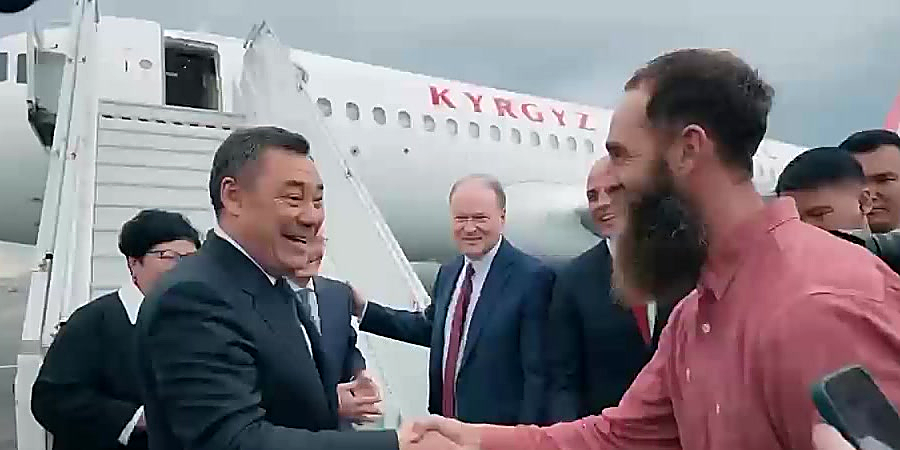
Sam Pollard: It was undoubtedly the proudest moment of my life, wielding the British flag in front of thousands of shouting people in the stadium. It was completely surreal and I was absolutely ecstatic, overwhelmed, just everything to be honest. The feeling that I most felt was honored that they’d accepted a country like Great Britain, which isn’t nomadic, being there. For the nomadic countries to embrace us and accept us was amazing. It was really the perfect start to the games. After seeing everyone in the stadium shouting and all the other countries and athletes, it really gave us that extra drive to really push ourselves and try our best in the competition.
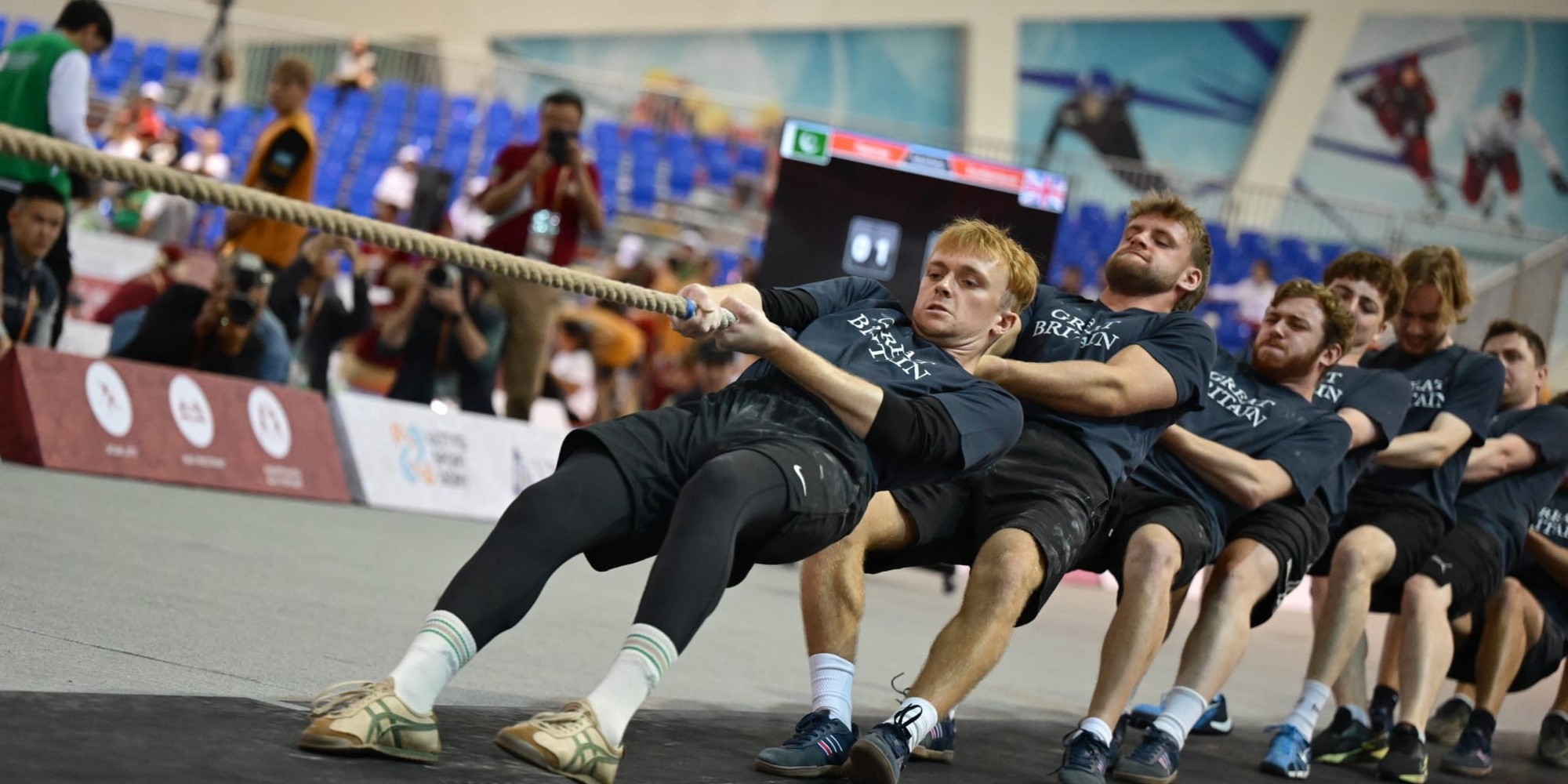
TCA: Tug-of-war is familiar in the UK, but the World Nomad Games place it in a very different cultural setting. How does it feel to compete in that context?
Sam Pollard: Most of us are used to competing against fellow Brits at our respective universities, whereas this is a much more international competition. Half the team is new, and half the team competed in Kazakhstan, so half of us now know what it feels like to compete at an international level. We know the pressure that comes with it, and the real butterflies in the stomach and nerves. This year, half of us will be used to it, and the other half will not, but we will be able to ease them in, tell them about it, and release some of that pressure.
We are also used to competing in grueling, muddy field conditions in the UK, and the fact that we did that last time as well means half of us are ready for whatever is thrown our way. In terms of the context of the World Nomad Games, last time in Kazakhstan we were taken such good care of by the organizers, volunteers, hotel staff, drivers, spectators, literally everything. We could not have asked for a more perfect setting to ease us into the World Nomad Games, and I am sure Kyrgyzstan this year will be the same.
TCA: What does the UK team’s presence at the World Nomad Games say about the growing international reach of nomadic sports?
Sam Pollard: The UK is not the first country people associate with nomadic culture, so the reaction from teams and spectators in Kazakhstan was incredible.
When we were training in the practice arena, other teams came up to us, helped with our technique, and did intermediate-level pulls against us so we could get a feel for what the competition would be like. It was mainly because none of us had competed on an international stage before, so I think we were all feeling the pressure. That really helped us settle down and improve our tug-of-war technique, which was vital for the competition. It was very kind of them, and I don’t think you would get that in many other sporting events. The way I describe it is that there was a real community feel.
That was true within the tug-of-war community, but also with athletes from Switzerland, the U.S., Kazakhstan, and many other countries. We met athletes from all over, and everyone was happy to talk about their sport and what they were doing. People were inviting each other to watch their events, such as horseback archery and Kok Boru, which were amazing because they are not sports we really see in the Western world. It would be lovely to see them in the Olympics one day, but that is also what makes the World Nomad Games so brilliant and unique: you can see all these sports together in one competition.
The spectators were incredible as well. I’ve been lucky enough to travel to a few countries, and the people of Kazakhstan are honestly some of the nicest I have met. They are so hospitable, kind, and generous with strangers. I would be on a train in Kazakhstan, and people would offer tea, bread, and food, even though they didn’t know I was an athlete. The spectators were very happy, very loud, and very excited, especially when the Kazakhstan national team was playing.
There was a genuine intrigue and excitement from the spectators. I think they appreciate more countries coming over to support the growth of the World Nomad Games, because it really does deserve to be on the main stage. We also had two incredible volunteers helping us, and a few British supporters in the crowd, along with the UK Embassy in Astana. They were brilliant throughout, and having British spectators all the way out in Astana was really quite surreal.

TCA: Looking ahead to 2026, what are you most excited about, both as a competitor and as someone representing the UK at an event rooted in Central Asian traditions?
Sam Pollard: As a competitor representing the UK, I think being able to compete in the country where the World Nomad Games began will be an amazing experience. Kazakhstan went big last year, both in hosting the event and supporting the competitors, as well as promoting the Games throughout the country. Given Kyrgyzstan’s friendly but fierce rivalry with Kazakhstan, I think this year will be even bigger. We’re all buzzing over the fact that Kyrgyzstan has built a 51,000-seat stadium for the opening ceremony. If last time was not big enough, this time feels like it will be an absolute dream.
We’re excited to come back. For the tug-of-war team, I think we have a stronger group this year, so we should be able to compete more than last time. Having it in a more nomadic location, around Issyk-Kul, with an expanded group of Brits, will make it a proper team-bonding experience. It should also help us embrace the nomadic culture more than being in a city did last time.
I’m also very excited because we’ve increased female participation and male participation, but we haven’t really had female participation in non-intellectual sports. We have people doing horseback archery and match wrestling, so I am really proud that we have been able to bring together a larger group of both men and women, particularly women, for the Nomad Games.
I am also excited about the Kyrgyz hat, the tall white traditional hat, and I’m looking forward to getting my hands on one. More broadly, because the event is in Central Asia, I think it is important for us to embrace Central Asian traditions and bring some of those lessons back to the UK. What struck me last time was the sense of community, and how kind, caring, and generous people were to strangers, offering tea and bread on trains. That is not really something we have in the UK. In London, for example, it is very head down, go, go, go. In Central Asia, the community feeling and willingness to help people are much more apparent. I think all countries could use more of that, and it is something I have tried to take back with me personally to the UK.
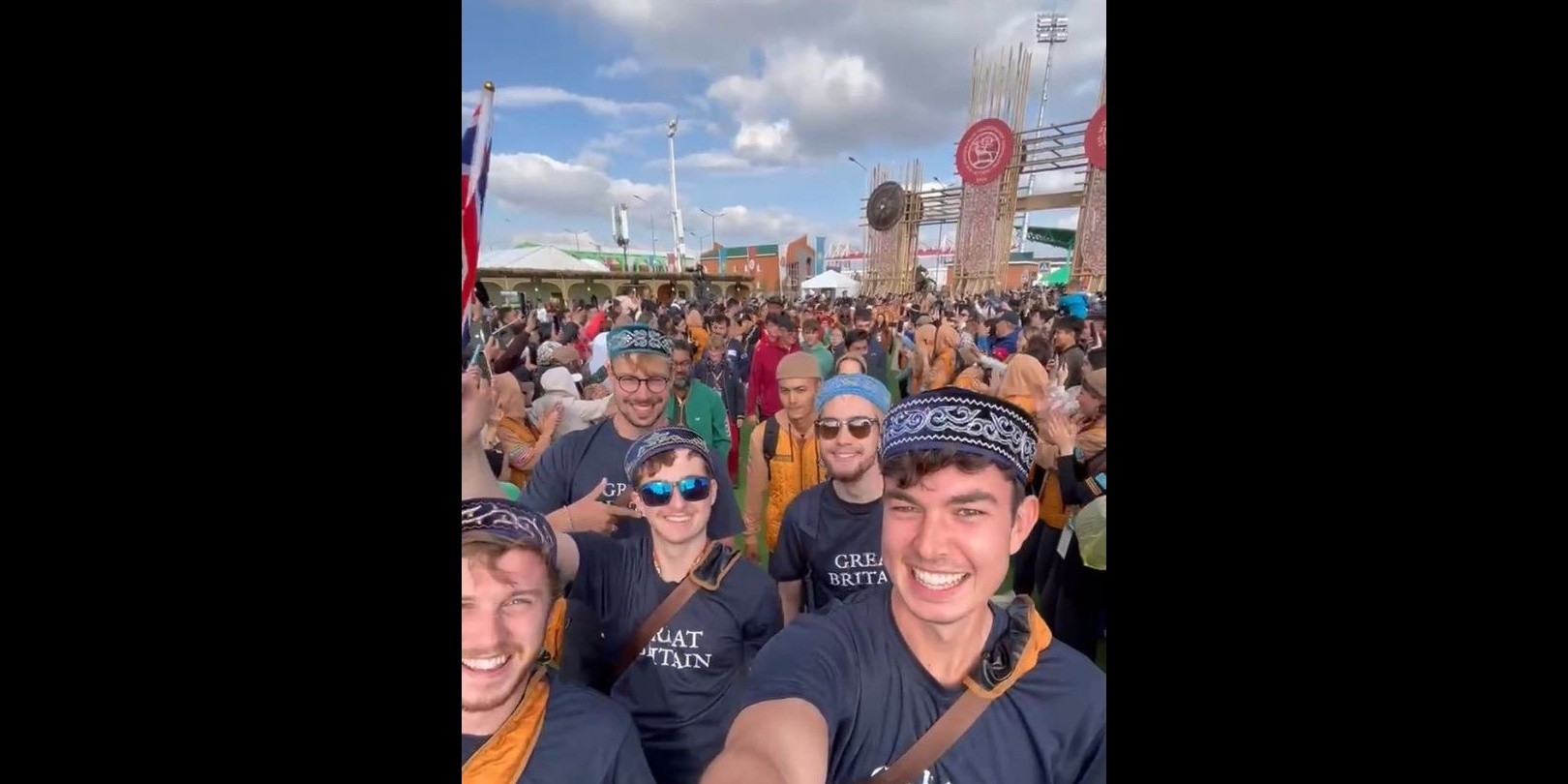
That may be the real pull of the World Nomad Games. A British team arrives for tug-of-war and finds itself among Kok Boru riders, eagle hunters, wrestlers, archers, and strangers offering tea on trains. The setting is unfamiliar, but the welcome is not. In Kyrgyzstan this year, Team Great Britain will not just be competing. It will be part of a festival that keeps proving how far nomadic traditions can travel.
For more from our World Nomad Games 2026 special coverage, click here.