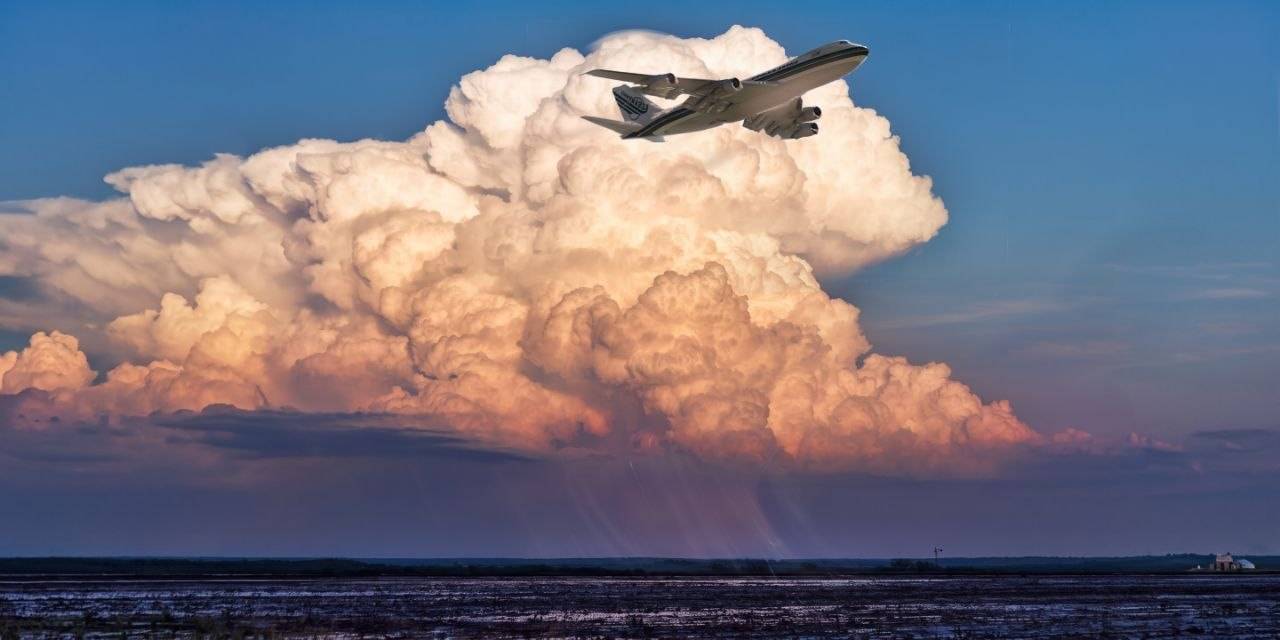
A small aircraft climbed out of Turkestan airport on July 10 with hygroscopic salt flares fixed beneath its wings. Operated by the United Arab Emirates’ National Center of Meteorology, it was searching for a cloud suitable for seeding. Pilot Ahmed Aljaberi described the aircraft as “specifically equipped with a cloud-seeding flare system.” But no suitable cloud appeared during the mission. Cloud seeding can try to draw more rain from an existing cloud, but it cannot make one from clear air.
Kazakhstan launched the project in Turkestan on May 16, targeting more than 911,000 hectares of arable land in the country’s leading cotton-belt. The government puts the potential economic benefit at up to 35 billion tenge, roughly $75 million a year.
The partnership gives Kazakhstan access to decades of Emirati experience in weather modification. The UAE program dates to the late 1980s, and Emirati specialists are training Kazakh meteorologists, pilots, engineers, and other staff. Kazakhstan’s government describes the Turkestan operation as the first project of its scale in the region, though weather modification in Central Asia has a longer history.
Kochkunbek Bakirov, a geographer at Kyrgyzstan’s National Academy of Sciences, has described Soviet-era research in the Karshi steppe, the Naryn basin, and over Issyk-Kul. Kazakhstan also trialed a different approach in Mangystau in 2021, using an ionization-based system promoted as a way to increase rainfall. Its developer claimed the equipment had begun to influence local moisture. The Mangystau system used ionization; the current program uses aircraft and hygroscopic salt flares.
Before operations began, Kazhydromet analyzed data from 39 meteorological stations covering 2020 through 2024, selecting the Turkestan Region after studying atmospheric conditions and terrain. Flights only proceed when naturally formed cumulonimbus clouds with sufficient vertical development are present, with Kazhydromet monitoring satellite imagery, synoptic data, and cloud development before operations.
The aircraft releases salt-based particles into suitable clouds. Kazakhstan’s Ecology Ministry lists sodium chloride, potassium chloride, and magnesium compounds among the reagents. In hygroscopic seeding, the particles encourage liquid droplets to collide and coalesce, which can improve precipitation efficiency in a suitable cloud. The cloud and its moisture must already exist.
By July 13, crews had completed eleven operational flights, mainly over the Otyrar and Sozak districts. Officials were still analyzing the results of each operation; the number of flights does not show how much extra rain the project has produced.
Kazakhstan’s launch materials cite a possible 10 to 20% increase in precipitation under favorable conditions. Results elsewhere vary widely. A 2024 review by the U.S. Government Accountability Office found estimates of 0 to 20% additional precipitation in the studies it examined. The GAO also found that effectiveness remains difficult to evaluate and that suitable clouds must be present.
The evidence is much stronger for some cloud-seeding methods than for others. The World Meteorological Organization (WMO) says the strongest recent causal evidence comes from wintertime glaciogenic seeding of orographic clouds, while Kazakhstan is using hygroscopic salts in convective clouds. Their large natural variability creates a weak signal-to-noise problem, making the added effect harder to isolate.
The WMO also sets clear limits on the technology. Weather systems contain too much energy for cloud seeding to create rain-bearing cloud systems or redirect winds to carry water vapor into a region. Operational weather-modification programs exist in more than 50 countries, but the WMO says their stated results are difficult to establish with confidence.
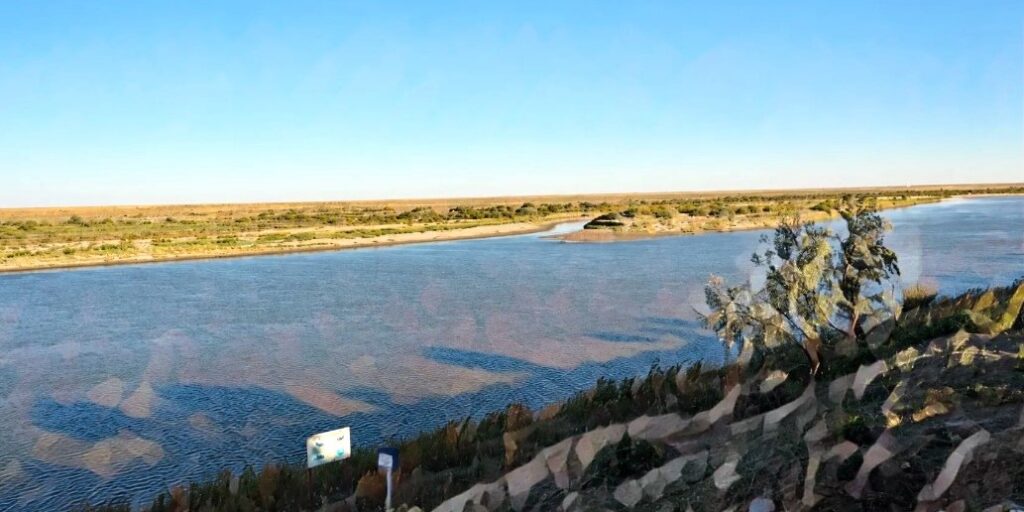
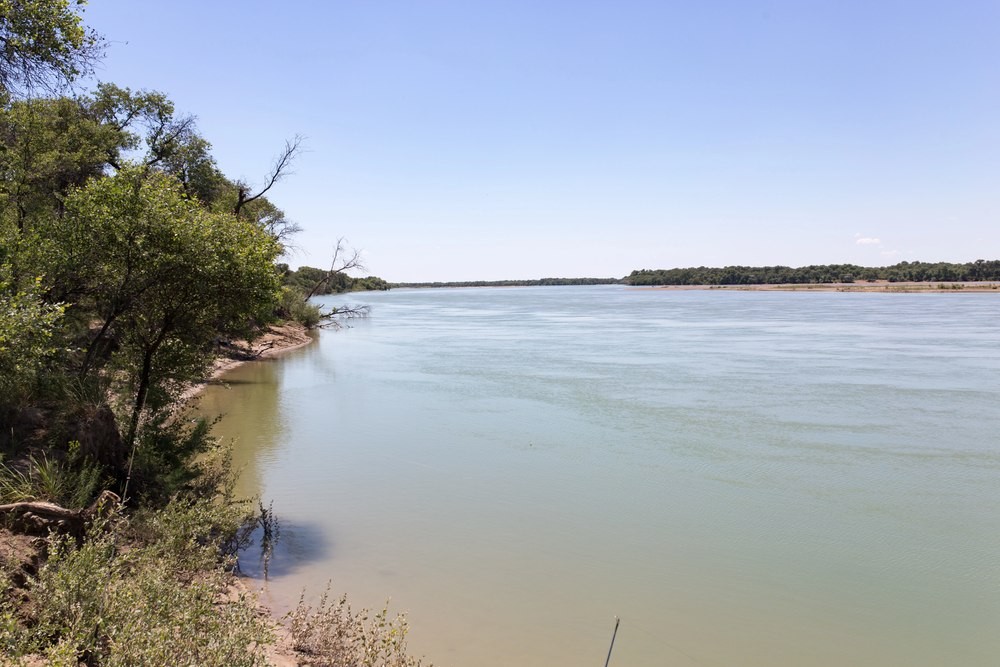
The project comes after a severe dry spell in Turkestan. Regional officials say parts of the region recorded periods of more than eight months without precipitation in 2025. The pressure also comes from irrigation. In January, The Times of Central Asia detailed falling water reserves across the Syr Darya system and warnings of a difficult year for southern Kazakhstan.
By May, the government had set a 3.8 billion cubic meter irrigation limit for Turkestan Region during the 2026 growing season. Southern Kazakhstan relies heavily on snowmelt and water arriving from upstream states, with farmers depending on weather and reservoir operations beyond the country’s borders.
Cloud seeding is one part of the response. Regional agricultural official Kazbek Bedebayev said the technology “will not meet all needs.” He pointed to drip irrigation and repairs to aging irrigation systems and canals. measures which can save water whether or not a seedable cloud appears.
The project has already become contentious among some farmers in Turkestan Region. In early June, melon growers in Zhetysay blamed a week of heavy rain for severe crop losses and said cloud seeding was responsible. Farmer Malik Shakhaliyev, who planted 10 hectares of melons, said 80% of his crop had been lost. “For an hour or two, the fields turned into lakes,” he told Orda.kz. Regional agricultural officials disputed the link, saying a bacterial disease may have caused the melons to rot and that specialists were investigating.
However, the program has stirred concern in Kyrgyzstan, with former Prime Minister Akylbek Japarov warning that large-scale atmospheric intervention could affect Central Asia’s water cycle. Atmospheric scientist Robert M. Rauber of the University of Illinois Urbana-Champaign rejected the idea that Kazakhstan could steal rain from its neighbors, saying “the effects are very local,” and that cloud seeding works within existing weather systems and does not redirect atmospheric moisture.
Uzbekistan is also moving toward weather modification. A government decision in April called for pilot artificial-rain and artificial-glacier projects in the upper Topalang River basin.
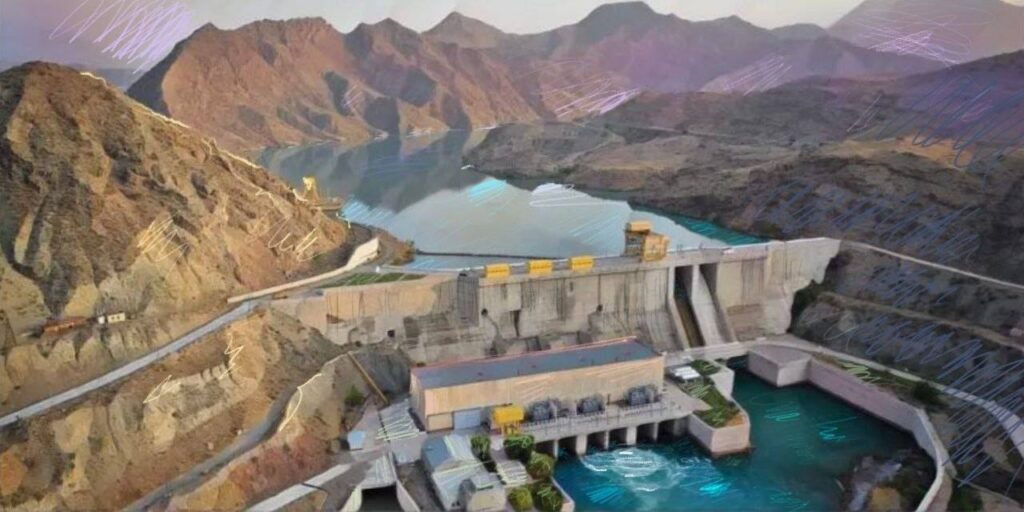
Water policy already crosses borders throughout the region. In May, Kazakhstan, Tajikistan, and Uzbekistan agreed on summer water releases from Tajikistan’s Bahri Tojik Reservoir to support farms in southern Kazakhstan. On August 7, Central Asian states agreed at a meeting of the Interstate Commission for Water Coordination in Turkistan to prepare a plan for automated water monitoring on the Syr Darya. The plan would give basin states more accurate data on water volumes and distribution.
The Turkestan project still has to establish how much additional precipitation seeding causes. The WMO says a credible statistical evaluation should randomize suitable events so only some are seeded, then compare seeded and unseeded cases with objective methods.
The July 10 flight captured the technology’s basic constraint. The crew and equipment were ready, yet no seedable cloud was found.