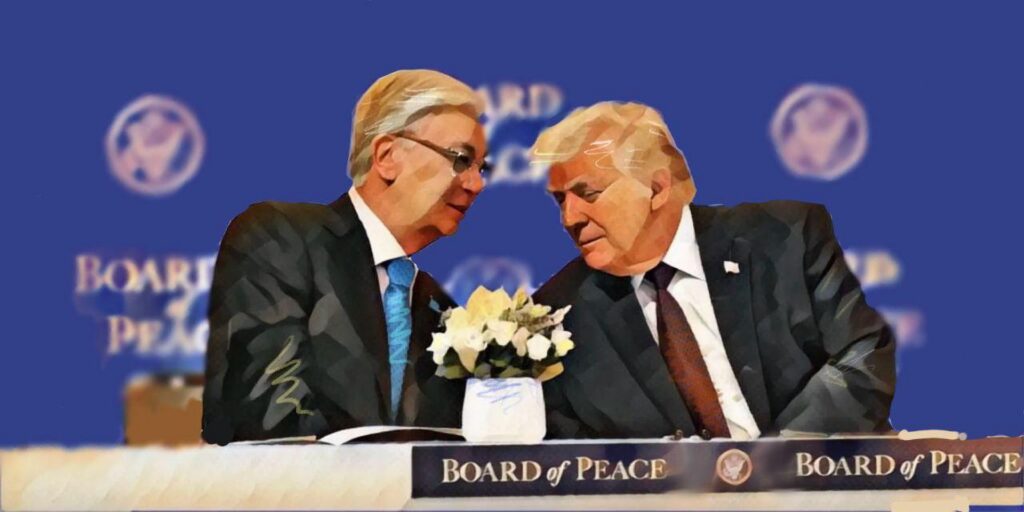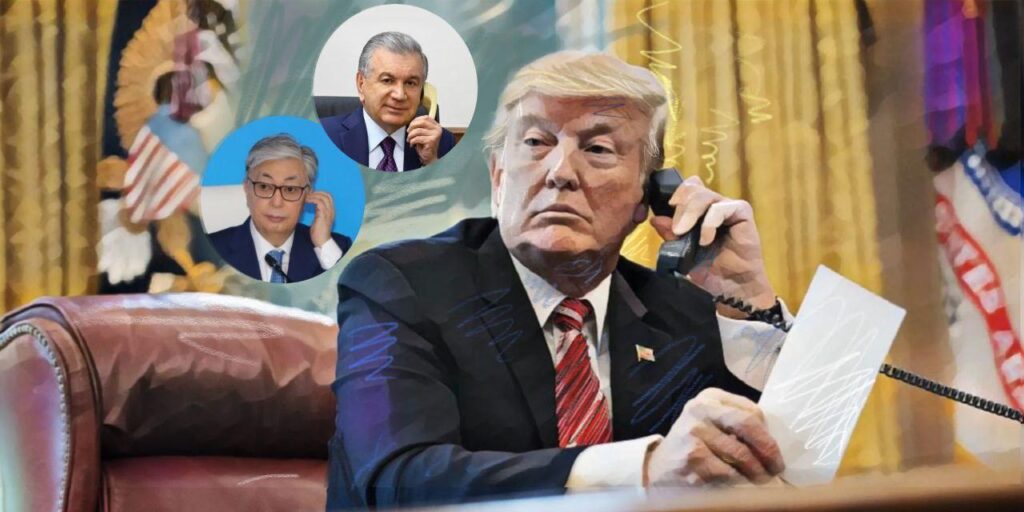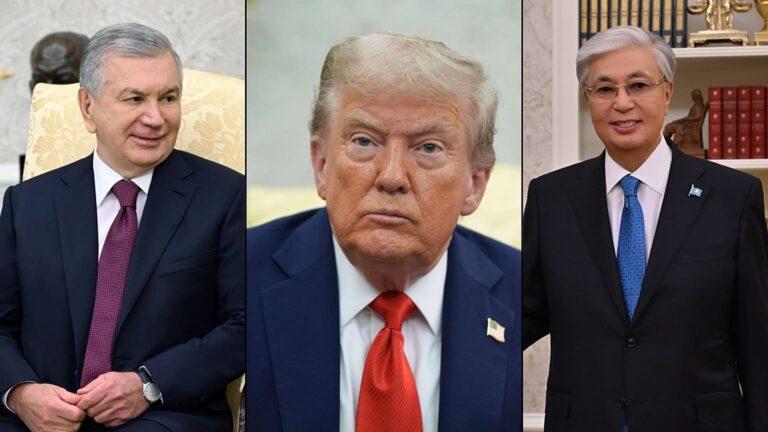
On December 23, President Donald Trump said he would invite Kazakhstan and Uzbekistan to attend the United States–hosted 2026 G20 summit in Miami. The meeting is planned at Trump National Doral. The announcement followed separate telephone calls with Kazakhstan’s President Kassym-Jomart Tokayev and Uzbekistan’s President Shavkat Mirziyoyev, which Trump described as focused on peace and expanded trade, and cooperation.
The G20 is a group of major economies, with membership based mainly on large nominal GDP and global economic importance, collectively representing about 85% of global GDP. Kazakhstan is ranked roughly 50th in the world by nominal GDP, at approximately $300 billion, while Uzbekistan is ranked around 62nd, with a nominal GDP of about $137–140 billion. According to Polish radio, the president of Poland stated that his country would also be on the guest list. Poland is the world’s 21st-largest economy.
The G20 is a forum, not a treaty body. Leaders’ summits include member governments and a limited number of host-selected guest countries. Invitations to Kazakhstan and Uzbekistan would place their leaders physically at the table with G20 heads of state, allowing them to be seen, heard, and recognized by other leaders, without conferring membership or a formal role in shaping the summit agenda. On average, the host invites six to seven guests. One official host-country explainer notes that guest invitations allow non-members to bring their own perspectives. For them, the significance of attending is access, not membership.
What Washington Wants and What Can Be Transacted
The host typically uses the guest invitations to signal which countries and regions they regard as priorities.
U.S. interest in Kazakhstan and Uzbekistan rests on an immediate material basis. The United States is rebuilding its nuclear-fuel supply chain away from Russian-origin material. Federal law now bans imports of certain Russian uranium products, with waivers terminating no later than January 1, 2028. U.S. agencies have been explicit that supply diversification is a policy objective. In 2024, Kazakhstan-origin material accounted for 24% of uranium delivered to U.S. owners and operators, while Uzbekistan-origin material accounted for about 9%.
Kazakhstan’s structural advantage is scale and reliability. It remains the world’s leading uranium producer, with 2024 output around 23,270 metric tons of uranium and the largest share of global mine production. Astana has also signaled an interest in moving beyond extraction toward higher value-added fuel-cycle activity. Uzbekistan’s advantage is growth potential and its fit with Western joint-venture structures. Its uranium sector has attracted major external entrants, including Orano’s South Djengeldi joint venture Nurlikum Mining with the state partner Navoiyuran to develop a new mine alongside an Itochu (Japan) minority stake.
The second instrument is the resource-focused diplomacy under the C5+1 umbrella. The State Department frames the C5+1 as organized around economy, energy, and security, within which framework it has elevated critical minerals to a dedicated track. The United States launched a C5+1 Critical Minerals Dialogue in early 2024, and subsequent U.S. statements have described it as a vehicle for geological exploration, mining, processing, and investment opportunities across the region. This framing creates a ready-made format for attaching commercial announcements to the G20 cycle, complementing both Astana’s and Tashkent’s preference to talk about projects, agreements, and investments, rather than alignments.
Thus, there is a specific practical bargaining space around a Miami summit. It is not, therefore, a question of whether Central Asia is noticed. An invitation to Miami can bring them into the room through bilateral meetings and visibility with investors and officials. It is a question of whether Kazakhstan and Uzbekistan can convert G20 access into specific outcomes, for example, in uranium supply assurance, critical minerals investment, and connectivity. These are initiatives already embedded in U.S. policy channels. The G20 provides a platform for using the summit cycle to advance their specific economic and diplomatic interests.
In practical terms, Trump’s public messaging is about peace and expanded trade, and cooperation. This political signal seems akin to an opening bid, as the formalities, including the precise modalities of participation and the summit’s calendar, get specified only later. Indeed, the location has been announced, but the final summit calendar is normally confirmed later. Astana and Tashkent will focus less on the invitation headline than on what can be attached to the G20 cycle in concrete meetings, announcements, and workstreams.
How the Central Asian Readouts Differ
Following the calls, President Trump publicly highlighted his conversations with the Central Asian leaders and the prospect of G20 guest invitations, a framing echoed in much Western reporting. Official readouts from Astana and Tashkent, however, emphasized other things. They kept any mention of a summit invitation out of the foreground, treating the telephone calls as bilateral and substantive.
In Kazakhstan’s case, reporting cited Akorda’s emphasis on a “thorough exchange of views” on the bilateral agenda and current world affairs, including the Ukrainian situation. Tokayev is quoted as stressing that the territorial issue is central and that a settlement requires compromises “in the field.” He said that Kazakhstan is ready to offer a neutral negotiation platform if needed, even though it might not formally act as a mediator. The same account notes Tokayev’s invitation for Trump to visit Kazakhstan. Astana’s narrative is policy-forward and conflict-aware. It does not treat a G20 invitation as the organizing fact of the conversation.
Uzbekistan similarly foregrounds substance rather than summit optics, highlighting a good number of bilateral prospects beyond intensified high-level contacts. These include joint multi-sector projects valued in the tens of billions of dollars, the establishment of a U.S.–Uzbekistan Business and Investment Council, work toward a joint investment fund, and a new mechanism of cooperation between Uzbekistan’s regions and U.S. states. Tashkent also explicitly points to multilateral cooperation, including the C5+1 format, and it records Mirziyoyev’s invitation for Trump to visit Uzbekistan. As with Kazakhstan, the G20 is not the headline.
This approach to the G20 meeting by Kazakhstan and Uzbekistan preserves room for maneuver. Emphasizing deliverables and ongoing channels of cooperation, it prevents the U.S. announcement from defining the two Central Asian states’ external posture. It keeps the focus on what the invitation can do for them in their own interests.
Both countries likely regard the G20 guest invitation as a meaningful opportunity to advance priority projects.
From Invitation to Outcomes
The G20 guest invitation from President Trump signals interest in commercial and strategic engagement with Kazakhstan and Uzbekistan, both of which are of growing importance to the United States. While the invitation is non-binding, it provides recognition and access that can facilitate future economic and policy cooperation.
At the summit, for Kazakhstan and Uzbekistan, the first test is whether Miami produces meetings, memoranda of understanding, or investment announcements that align with existing channels, including uranium supply diversification and the C5+1 critical-minerals track.
The second question is narrative discipline. Astana and Tashkent have avoided treating the invitation as the central fact of their calls with Trump, which suggests a preference for using the access while keeping their external posture stable. In that sense, the invitation matters most as leverage. Its value will be measured not by attendance in Miami, but by whether it produces bankable meetings, credible investment commitments, and follow-on work that persists well beyond the summit.