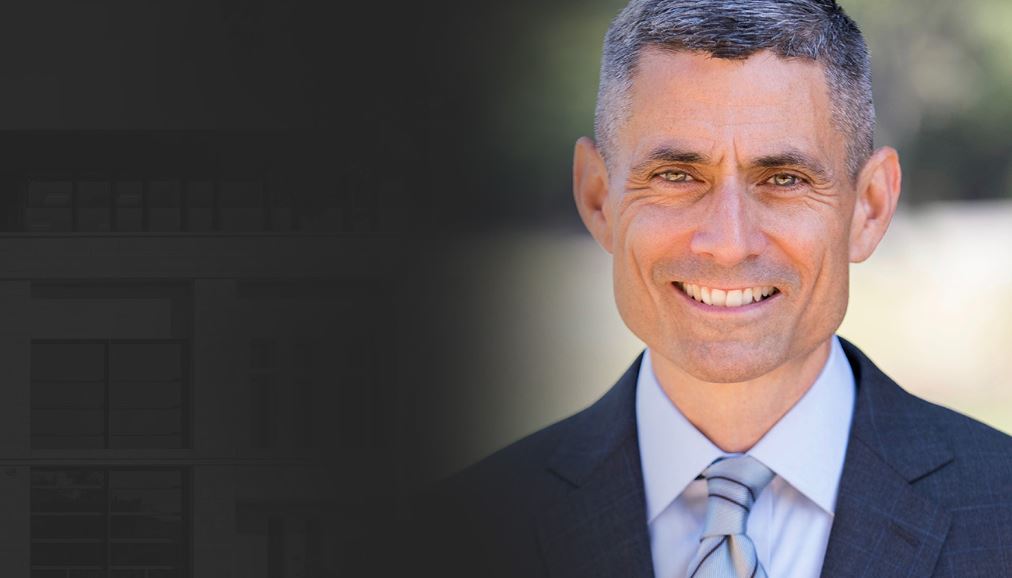
The U.S. Senate has confirmed political scientist S. Paul Kapur as Assistant Secretary of State for South and Central Asian Affairs to lead the State Department bureau that oversees relations with Afghanistan, Pakistan, India, Sri Lanka, Bangladesh, Nepal, Maldives, Bhutan, and the five Central Asian republics. The position carries responsibility for guiding U.S. diplomacy across the region, coordinating security and development strategy, and advising on policy toward regional powers such as China and Russia.
Kapur, 56, is an Indian American scholar known for his work on nuclear deterrence and South Asian security. He was born in New Delhi to an Indian father and an American mother, but grew up in the United States. After studying the region in graduate school, he pursued an academic career, earning a doctorate in political science from the University of Chicago and a bachelor’s degree from Amherst College. Kapur taught at Claremont McKenna College and Stanford University before joining the U.S. Naval Postgraduate School, where he is a professor of national security affairs and runs U.S.–India strategic dialogues for the Department of Defense.
Paul Kapur, a seasoned academic and security specialist, now takes a post that places him at the center of Washington’s engagement with Kazakhstan, Kyrgyzstan, Tajikistan, Turkmenistan, and Uzbekistan. His confirmation fills a key regional portfolio in the Trump administration, which may shape how the United States approaches Central Asia within its broader regional strategy.
Kapur’s portfolio covers both South and Central Asia, but his confirmation has been closely watched in the five republics that straddle the heart of Eurasia. Central Asian governments and business leaders are eager to see whether the new Assistant Secretary will continue Washington’s traditional emphasis on security partnerships or shift toward deeper economic and investment ties.
Kapur brings a distinguished scholarly pedigree and deep expertise in international security. He has written extensively on nuclear deterrence, South Asian security, and great-power competition. While much of his work focuses on India, Pakistan, and U.S. grand strategy, he has also examined how India manages its relationships with larger powers such as the United States and China – an enduring middle-power dynamic. That perspective is particularly relevant to Kazakhstan, an emerging middle power, and to Central Asia acting collectively, which is seeking to balance Russian and Chinese influence.
During his confirmation hearing, Kapur emphasized that U.S. engagement in Central Asia will focus on advancing the sovereignty and territorial integrity of the regional states. He noted that, if confirmed, he would leverage the C5+1 framework and bilateral partnerships to pursue cooperation in areas such as energy, critical minerals, counterterrorism, combating transnational crime, and developing physical and digital infrastructure. His remarks reflected a commitment to strengthening regional independence and stability while deepening practical cooperation with the United States.
For Central Asian governments, Kapur’s arrival comes at a time of shifting geopolitics. Russia’s war in Ukraine has unsettled long-standing assumptions, while China’s Belt and Road Initiative continues to expand Beijing’s economic influence. The United States has not always prioritized matching these dynamics. However, Kapur’s testimony underscored opportunities for cooperation in energy, critical minerals, and infrastructure – areas that suggest Washington could place renewed emphasis on practical economic engagement. Such efforts may also open the door for greater U.S. private-sector participation, aligning with Central Asian governments’ interest in diversifying their partnerships.
Energy security will likely remain a top priority. Kapur has written on the importance of diversifying energy routes, a theme that resonates in Central Asia, where leaders are pushing to expand pipelines and export channels through the Caspian and toward Europe. His confirmation may open the door to greater U.S. engagement in trans-Caspian projects and renewable energy cooperation.
Business leaders will be watching closely for signs of a more proactive U.S. economic presence. While American firms already operate in Kazakhstan’s oil and gas sector, broader trade and investment ties lag behind those of Europe, China, and Russia. Kapur has acknowledged in testimony that regulatory transparency and rule-of-law issues remain major obstacles. His bureau may prioritize programs that encourage legal reforms and foster investor confidence.
For regional governments, Kapur’s confirmation offers both reassurance and challenges. His arrival restores Senate-confirmed leadership to the State Department bureau responsible for South and Central Asia after a prolonged vacancy, ensuring clearer lines of authority and continuity in U.S. engagement. Central Asian observers are watching to see whether his stated priorities will translate into tangible initiatives.
Ultimately, Kapur’s tenure will test whether Washington can convert its political and security relationships in Central Asia into a more durable, business-oriented partnership grounded in trade, investment, and economic modernization. For Central Asia’s leaders and business community, his confirmation marks the possibility of expanded engagement with the United States – one that could open meaningful opportunities but will depend on building commercial ties that form the backbone of a stable, long-term relationship.