Kazakhstan’s port of Kuryk and Russia’s port of Makhachkala have signed an agreement to organize a vehicle ferry service across the Caspian Sea, according to Kazakhstan’s national railway operator, Kazakhstan Temir Zholy.
The collaboration aims to attract cargo flows currently moving from China through Central Asia and the port of Turkmenbashi in Turkmenistan to the Kuryk-Makhachkala route.
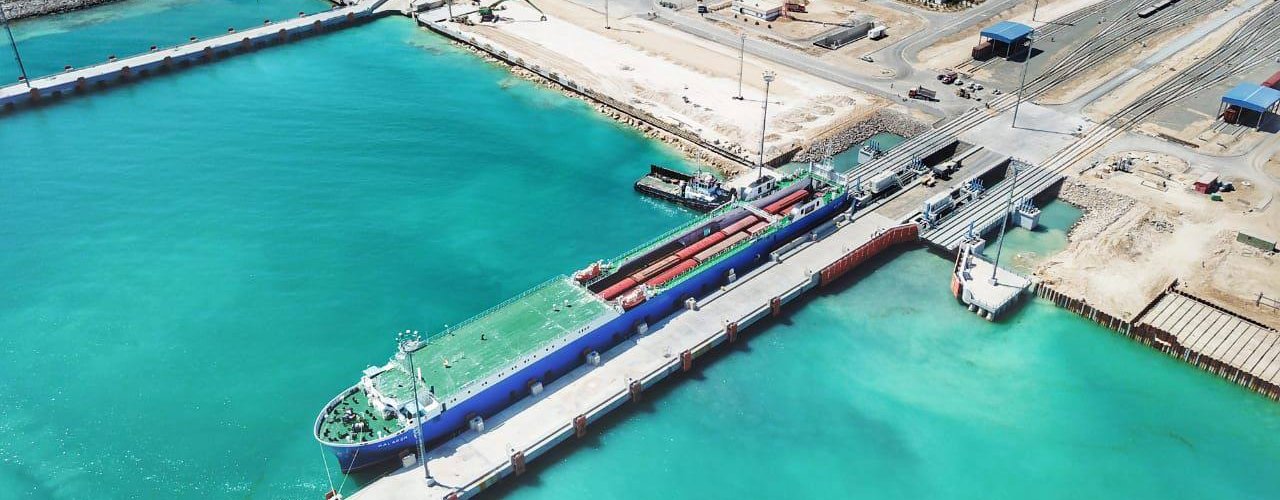
The port of Kuryk is located on the eastern coast of the Caspian Sea, south of the port of Aktau. Its ferry complex is focused on the transshipment of grain, petroleum products, fertilizers, chemicals, and other cargo.
The port of Makhachkala is Russia’s only ice-free deepwater port on the Caspian Sea, serving as a link in the transport system between southern Russia and the countries of Central Asia, the Caucasus, and Iran.
The Kuryk-Makhachkala route creates additional logistical options for cargo transportation across the Caspian region.
The route also adds another Caspian Sea connection to regional transport networks. Unlike the Trans-Caspian International Transport Route, or Middle Corridor, which links China and Europe through Central Asia and the South Caucasus while bypassing Russia, the Kuryk-Makhachkala route adds a Russian component to Caspian transit logistics.
To ensure year-round navigation and strengthen competitiveness, Kazakhstan is investing in infrastructure on the Caspian Sea coast. Dredging has been carried out at Kuryk Port, while similar work is planned at Aktau Port to increase depth and improve vessel access.
Construction is also underway at Kuryk on the Sarzha multifunctional terminal, a project being implemented in cooperation with Abu Dhabi Ports Group from the United Arab Emirates. The terminal is expected to have an annual capacity of five million tons.
Under Kazakhstan’s comprehensive maritime infrastructure development plan for 2024-2028, the country intends to establish a major transport and logistics cluster based on the ports of Aktau and Kuryk.
The plan includes expanding container handling capacity, developing cargo terminals and international shipping logistics, and reducing administrative barriers. By 2028, total cargo throughput at the ports is expected to increase by 50%, while container handling volumes are projected to triple.