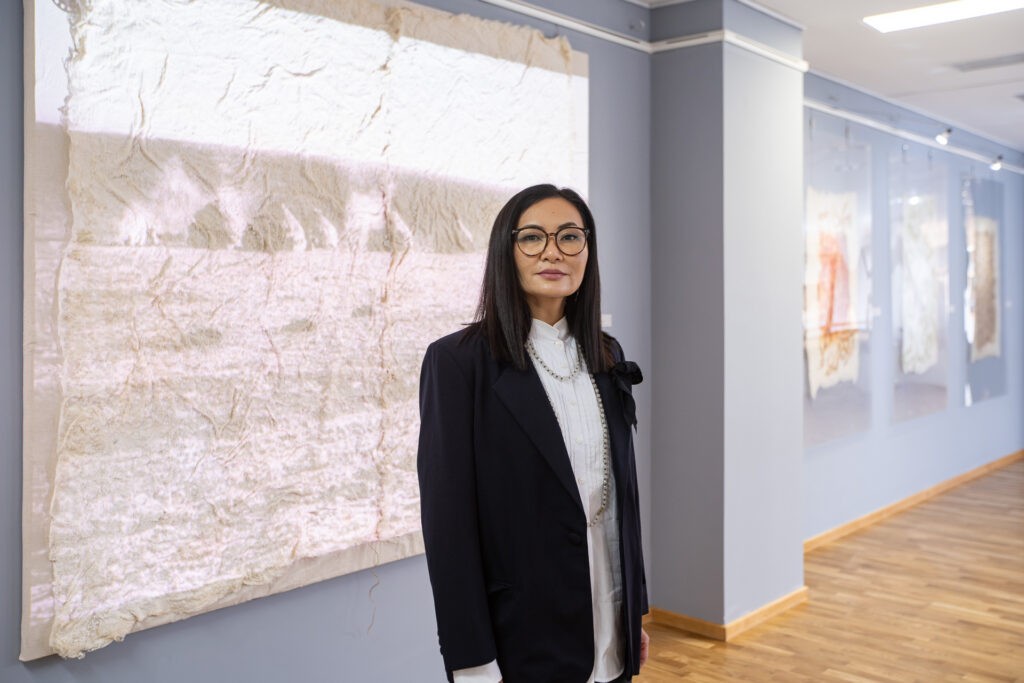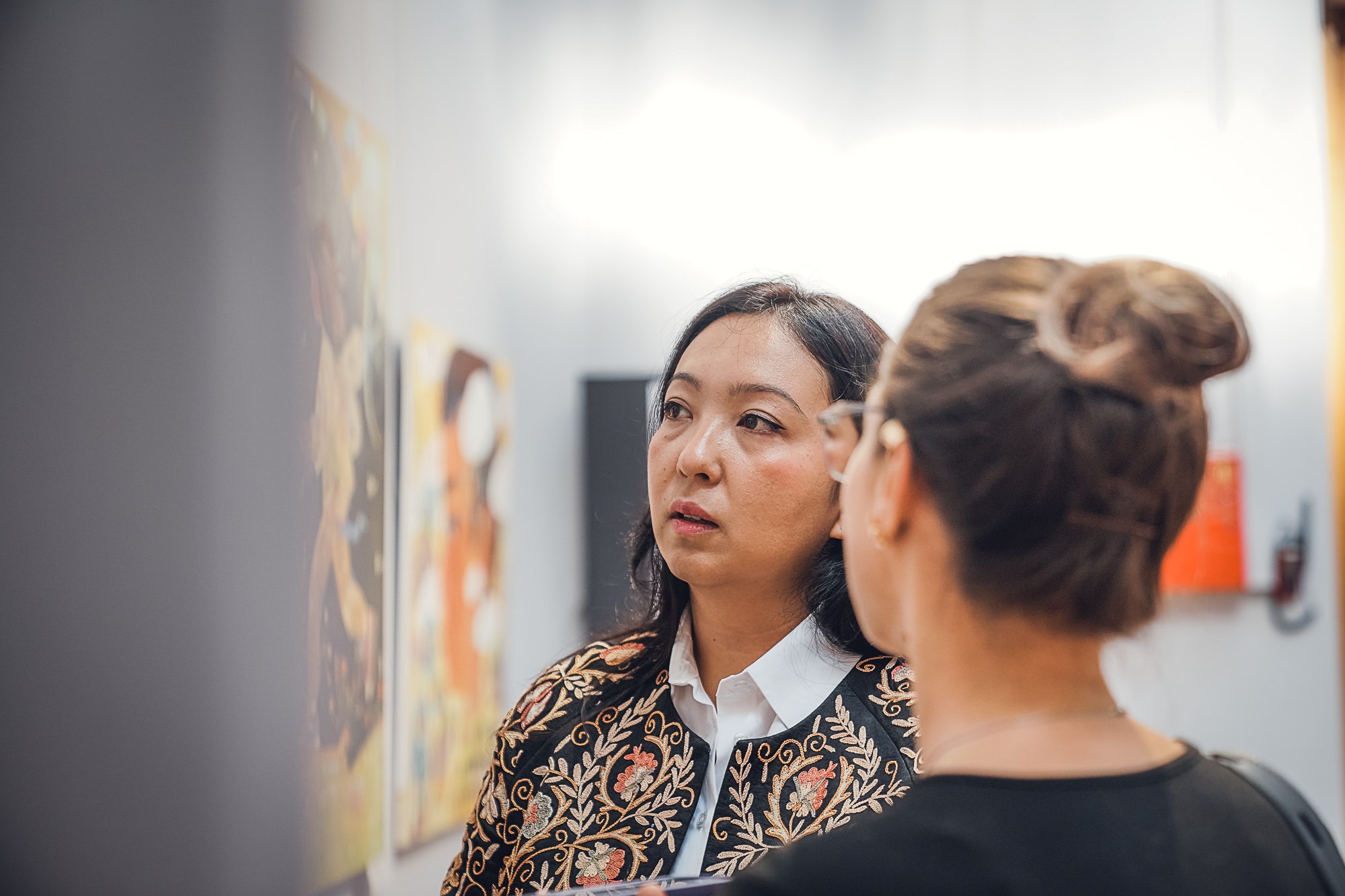
Kazakh artist Aigerim Karibayeva is part of a new visual wave that seeks to blend traditional culture and contemporary aesthetics. Her distinctive style – bright, airy, almost spring-like imagery infused with ethnic motifs and scenes from everyday life – has moved beyond social media into major exhibition spaces. Her works are currently on display at the Kasteyev State Museum of Arts, where her solo exhibition My Sky Above Me recently opened.
In an interview with The Times of Central Asia, she discusses how she coined the term “ethno-modernism,” why ethnic aesthetics is surging in popularity, and how Kazakhstan is searching for its own visual identity.
TCA: Aigerim, you describe your work as “ethno-modernism.” How did you arrive at that concept?
Aigerim Karibayeva: I started moving in this direction and sharing my work on Instagram several years ago. I quickly found my audience; there was strong interest from the media and many interviews. To talk about my work, I needed a term that would define it, something verbal. But I didn’t want to call it simply “contemporary art,” because that didn’t reflect the essence of what I do. I thought: why not call it “ethno-modernism”?
I consulted the well-known art historian Olga Baturina, and she approved. The term immediately caught on. I now see it used in the press, on social media, and even in the profiles of young designers. Today, “ethno-modernism” is used to describe an entire wave of artists and designers, the boom we’ve been seeing over the past five years.
TCA: Why do you think ethno-modernism has become so popular now?
Aigerim Karibayeva: I think it’s been building for a long time. I’m trained as a graphic designer, so I have a strong visual awareness. I saw how interest in national style and ethnic elements gradually emerged in the country.
First, businesses began using it in branding, then advertising picked it up, and eventually it spread into mass culture. Now, ethnic elements combined with modern aesthetics have become a visible part of everyday life.
From a personal photo archive
TCA: That was especially noticeable during recent Nauryz celebrations – everyone seemed to be wearing ethnic-inspired clothing.
Aigerim Karibayeva: Exactly. Everyone is searching for a new cultural code right now, artists, musicians, filmmakers, craftspeople. At first, you create something within your own circle, among fellow artists, and then it spreads outward.
You start seeing and hearing it everywhere, for example, in new interpretations of Kazakh music. You recognize that mix, and it becomes a kind of key. You try to translate that same cultural fusion into your own work.
I’ve had people tell me they were inspired by my work. One woman approached me and said that after seeing a traditional headpiece, a taqiya, in my illustration, she was inspired to start making them herself and launched a successful business. That’s how this wave works, there’s a ripple effect, and everyone picks it up.
TCA: There’s clearly strong demand for ethnic aesthetics right now.
Aigerim Karibayeva: I see it like this: imagine a vast expanse of gray asphalt, and suddenly a bright red flower grows in the middle. Your mind reacts instantly, it’s something striking, something that draws attention. That’s what contemporary ethnic aesthetics are like.
For a long time, there was a kind of vacuum, we didn’t know how to adapt our cultural code to modern realities in a way that felt authentic rather than kitsch. But there was a hunger for that authenticity. That’s why this boom happened.
TCA: Could it also be a response to globalization? Ethnic styles are trending worldwide.
Aigerim Karibayeva: Yes, but there are cultures whose visual identity we all instantly recognize, Japan, India, African countries. You hear the name and immediately picture colors, textures, symbols.
England brings to mind the monarchy, Tower Bridge, guards in bearskin hats. France, the Eiffel Tower and berets. Russia matryoshka dolls, winter. Even a Georgian khinkali dish has become a global symbol.
I realized that I could easily name symbols of other cultures, but struggled to identify recognizable symbols of Kazakhstan that could be just as portable and widely understood.
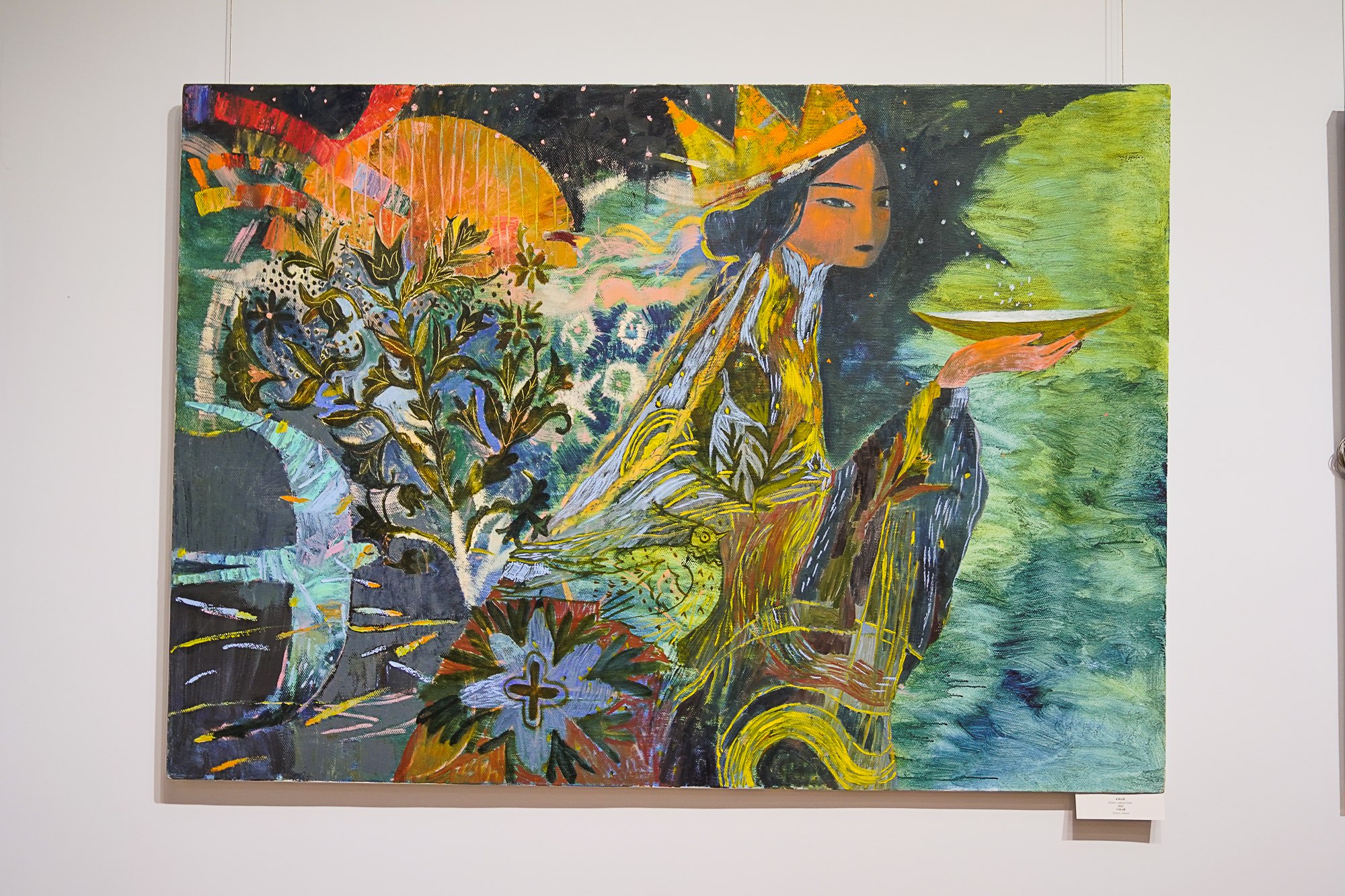
TCA: So you set out to create those symbols, your illustrations of Kazakh girls in traditional dress, flying on scooters, scattering stars, holding the sun?
Aigerim Karibayeva: Yes, my background as an illustrator played a big role. I only recently began focusing more on painting. I started with illustration, which is easier to consume as it’s more accessible.
Painting is harder to translate into digital formats. You can’t easily capture it on a phone or turn it into social media content. But digital illustration allowed me to create light, modern, visually appealing images. That’s how it all began.
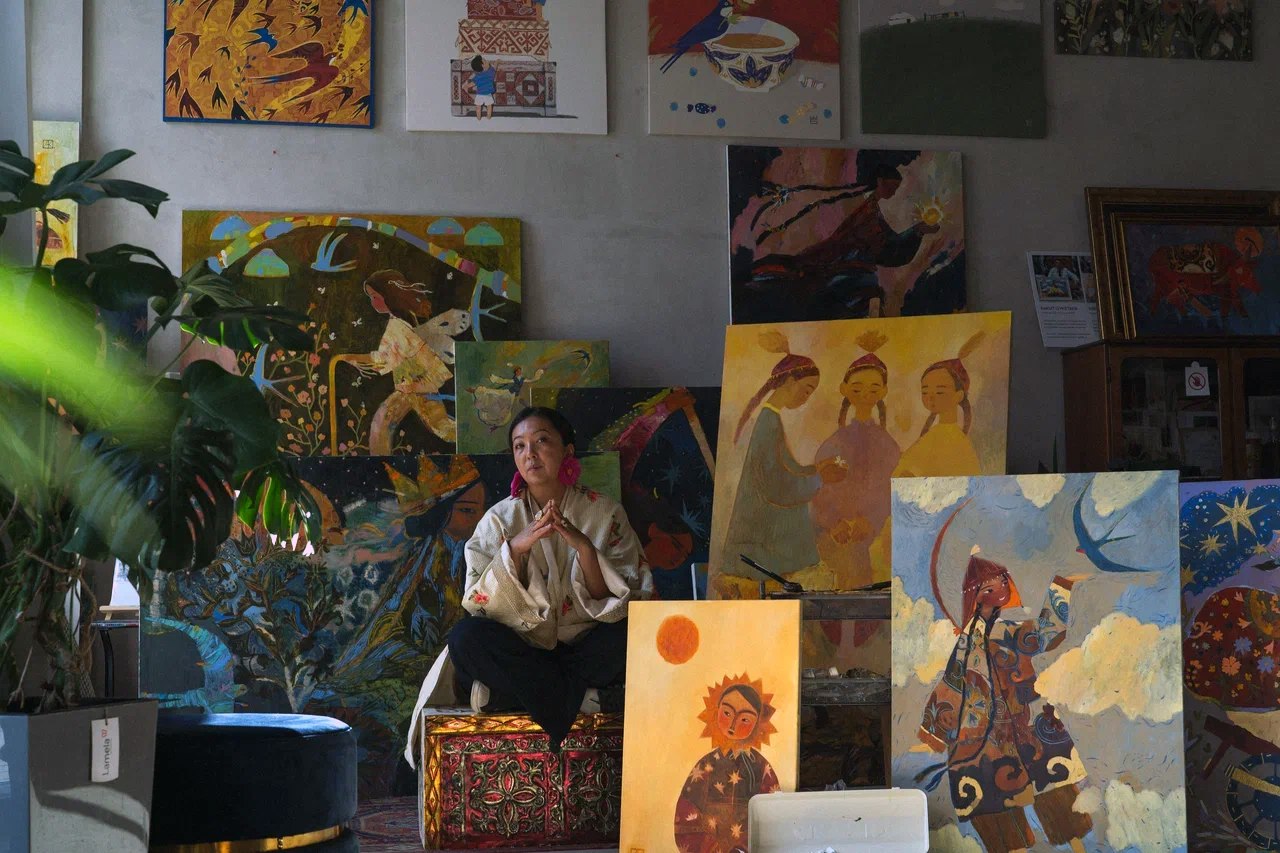
Image courtesy of Aigerim Karibayeva
TCA: Did your early works go viral?
Aigerim Karibayeva: Yes, but it was a combination of circumstances. I had just gone on maternity leave and was exhausted from my work as a designer. It can be very demanding. I still needed income, but I wanted something less intense.
I decided that during my second maternity leave, I wanted to be a “relaxed mom” with a small income and more rest. So I started drawing. I printed my illustrations on everything I could – postcards, mugs, posters. I even arranged with a café to display and sell them. That’s how it all started.
TCA: That was essentially merchandise with Kazakh motifs?
Aigerim Karibayeva: Yes, exactly. At first, it felt unfamiliar, even uncomfortable. There’s a stereotype that a “real” artist should stand at an easel, not sell postcards. But eventually, it became something I truly enjoyed.
I also had Instagram, and I thought it would be great, I could go to cafés with my child, have coffee, create content, invite followers to places where my work was sold and meet them in person.
TCA: Can Kazakh visual culture become as globally recognizable as, say, that of Japan?
Aigerim Karibayeva: Right now, we’re institutionally invisible. Our region isn’t fully integrated into the global art map. I see it not only in museums but also in fashion. Major designers often draw on deep cultural traditions, but I can’t recall Kazakh identity being widely used.
That said, I think it will happen soon. There are early signs, for example, a Louis Vuitton campaign in St. Moritz featured a structure resembling a traditional yurt. The first steps have been taken. The potential is huge.
TCA: Should this process be accelerated, or will it happen naturally?
Aigerim Karibayeva: It will happen naturally, because fashion and culture are always searching for something new and unique. Creative directors are constantly looking for inspiration.
Uzbek patterns and Russian styles have already been explored. Kazakh culture remains something of a mystery, and that’s its strength.
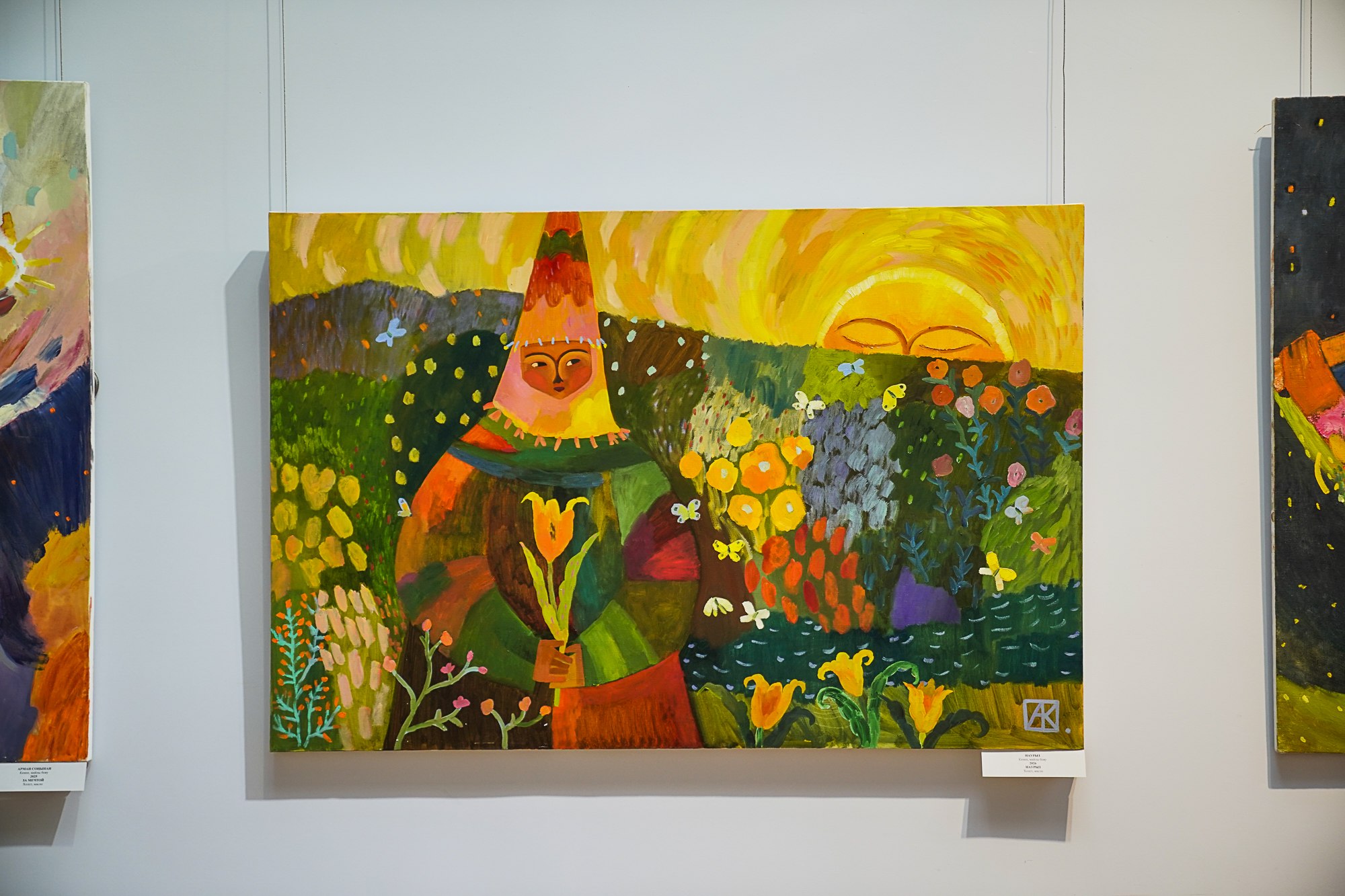
Image courtesy of Aigerim Karibayeva
TCA: So it’s a matter of time?
Aigerim Karibayeva: Yes, time, development, and our own awareness. Within the creative community, a lot is already happening: new fashion, jewelry, painting, applied arts. It’s all becoming more diverse, and that’s key.
Art shouldn’t exist only in museums. It should be everywhere. Graffiti, illustration, animation, installations – there should be space for all forms. When that diversity exists, people begin encountering art everywhere, in the streets, in stores, in everyday life.
TCA: Do you think art works best when it reaches a mass audience?
Aigerim Karibayeva: Yes, and I try to make my work accessible to everyone.
TCA: That explains your many collaborations from chocolate packaging to airline visuals?
Aigerim Karibayeva: Exactly. I came to this intuitively by observing how artists in Europe work. They create prints from their paintings, sign limited editions, and sell them alongside originals.
Some even open their own stores where their entire artistic world is present, on clothing, shoes, objects. I saw that model and wanted to do the same. It attracted brands, and we created memorable collaborations.
TCA: What about museums in Kazakhstan? Are they sufficient to nurture globally competitive artists?
Aigerim Karibayeva: Museums are important, but not always decisive. I sometimes wonder what shaped me: I grew up in Karaganda, surrounded by steppe, mines, and gray apartment blocks. My strongest childhood memory of art is painted walls in a clinic, scenes from a Russian fairy tale. They made a huge impression on me. Even small visual experiences can leave a lasting mark.
TCA: Your career seems to have developed against the odds, you grew up in a harsh environment, yet your art is light and colorful.
Aigerim Karibayeva: Yes, much of what’s happening now is “in spite of” circumstances. I had no formal art education when I moved to Almaty in 2005 to apply to the Zhurgenov Kazakh National Academy of Arts. I was 17 and didn’t have the ideal environment, but talent still found a way to grow.
TCA: Is Kazakhstan a supportive environment for creative development today?
Aigerim Karibayeva: Yes, because attitudes have changed. Parents now support their children’s talents more. Before, if a child liked drawing, it could seem unusual. Now, parents encourage it, enroll kids in classes, and help them develop.
There are also more opportunities – UNESCO clubs, for example. I think this new generation will produce strong artists.
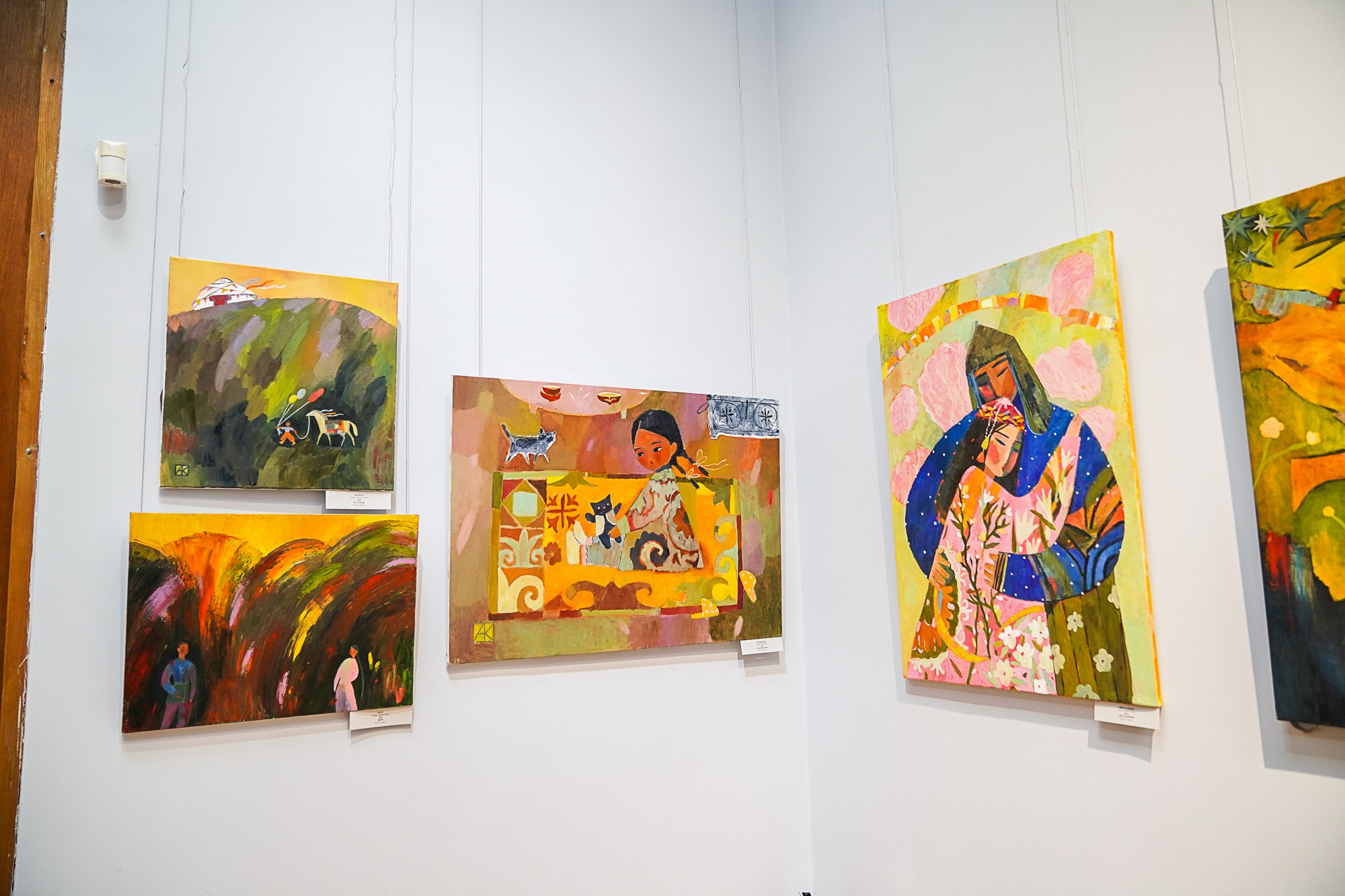
Image courtesy of Aigerim Karibayeva
TCA: You are now a UNESCO ambassador. What does that mean to you?
Aigerim Karibayeva: I’ve only just begun to engage with it, but I’m very excited. It’s a large and important initiative focused on development and unlocking potential. What inspires me most is its inclusivity; children from rural areas can participate as well.
I have a colleague, Sayan Baigaliyev, who came through this system and is now an internationally exhibiting artist. It shows what’s possible.
TCA: Are you invited to international projects?
Aigerim Karibayeva: Not often, but it does happen. Earlier this year, I was invited to Japan as the only representative of Kazakh art for a short program, but I couldn’t attend due to prior travel plans.
Next time, I won’t miss such an opportunity. I would be proud to represent my country internationally.