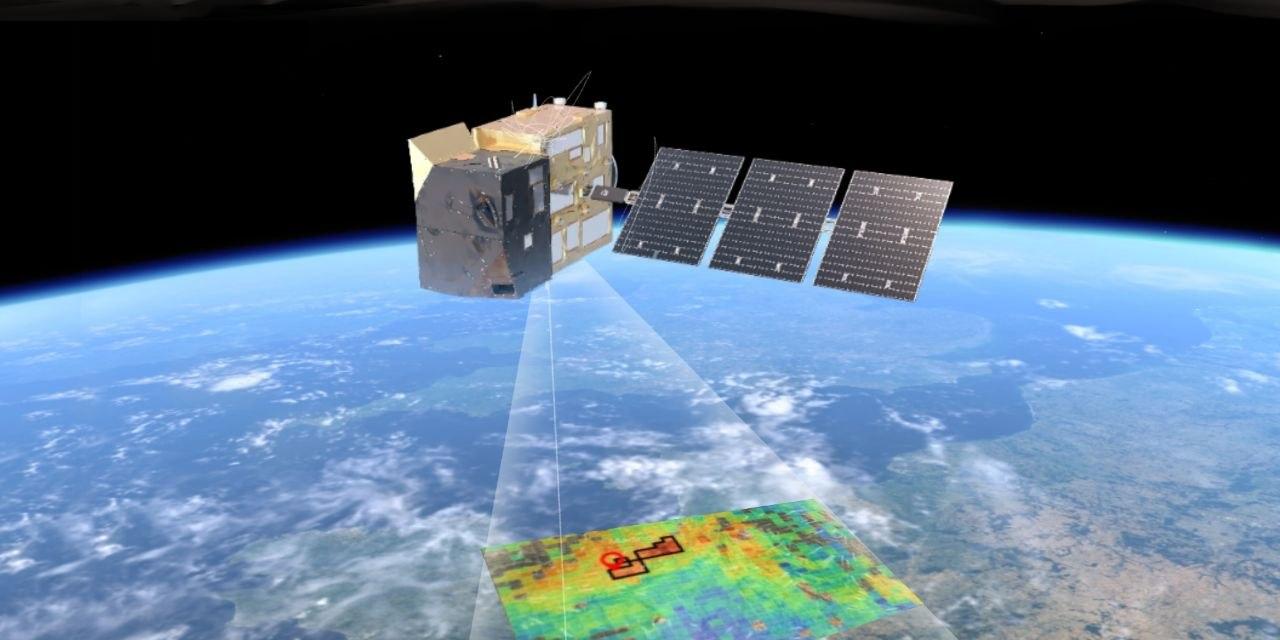
Satellites are changing the way the world sees methane. What was once an invisible leak from a well, flare, pipeline, landfill, or coal mine can now be detected from space, traced to a specific site, and sent to governments and companies for action.
A new analysis by the United Nations Environment Programme’s International Methane Emissions Observatory puts that system to the test. Its Methane Alert and Response System, known as MARS, uses 35 satellite instruments to identify major human-caused methane “super-emitters” and notify those responsible. UNEP says the system has already enabled 41 mitigation cases in 11 countries, covering sources estimated to have released 1.2 million tonnes of methane.
For Central Asia, the findings are especially relevant. UNEP’s new data includes a rolling list of the world’s 50 largest satellite-detected methane sources, covering oil and gas, coal, and waste, and shows where rapid action may be possible. Several of those sources are linked to Turkmenistan’s oil and gas sector, placing the region firmly inside a global debate over methane transparency, climate responsibility, and whether satellite alerts can lead to action on the ground.
Of the 50 sources featured in the latest UNEP/IMEO snapshot, China has the largest number, while Turkmenistan stands out sharply for Central Asia, with the second-largest individual source and four of the top ten.
Methane is shorter-lived than carbon dioxide, but far more powerful in the near term. That makes cutting large leaks one of the fastest ways to slow global warming. The harder question, as UNEP’s latest data makes clear, is no longer only where the leaks are, but who responds when they are found.
On April 30, UNEP/IMEO presented the new MARS findings, highlighting the growing role of satellite-based monitoring in identifying major methane sources and pressing governments and companies to act. The Times of Central Asia spoke with Meghan Demeter, MARS Programme Manager, International Methane Emissions Observatory, UNEP.
TCA: What does the new MARS data reveal about Central Asia specifically that may surprise readers?
Demeter: The latest MARS data products depict the region as one with growing engagement and significant mitigation potential. Responses to MARS notifications are increasing, supported in particular by designated national focal points who play a key role in coordinating follow-up with operators. Based on the published 2025 data alone, the response rate across Central Asia currently stands at 22%.
Managing a high volume of alerts requires more effort to achieve very high response rates compared to countries that receive only a handful of notifications. Encouragingly, the region has already recorded nearly 20 mitigation cases, underscoring the strong potential for emissions reductions when large methane sources are identified and addressed.
TCA: Why does Central Asia matter in the global methane debate, even if it is not the world’s largest methane-emitting region?
Demeter: Across Central Asia, looking at the 2025 data alone, UNEP’s International Methane Emissions Observatory, through the Methane Alert and Response System (MARS), detected and notified 298 emission sources from the oil and gas sector. While satellites detect only a fraction of global methane emissions, satellites are highly effective at identifying so-called “super-emitters,” methane emission events so large they can be detected from space. These represent opportunities where action can deliver the greatest and fastest climate wins, while also catalyzing broader change.
Regarding the “top 50” list of emission events, 11 of these sources are located in Central Asia, all from the oil and gas sector—the sector that also has the most potential for rapid, low-cost mitigation. This means that the region has high mitigation potential.
It is important to note that this is dynamic. We expect the “top 50” list to evolve over the coming months, as satellite detection capabilities vary with observation conditions, including seasonal weather patterns such as cloud cover.
Satellite detection is only one part of the solution. To address the broader methane challenge, we have to work system-wide. That means improving measurement and reporting to tackle smaller, more diffuse emissions in the oil and gas sector, which is what UNEP’s Oil and Gas Methane Partnership 2.0 (OGMP 2.0) is designed to do.
TCA: Beyond the broad oil and gas picture, what types of sites are most visible in the satellite data?
Demeter: In terms of sectors, oil and gas sector sources dominate in most countries, but we also see significant emissions from waste, for example, at a landfill near Tashkent in Uzbekistan, which is most visible during the summer months.
In terms of emission sources within the oil and gas sector, most emissions come from malfunctioning flares, gas disposal facilities, and, frequently, significant emissions from midstream facilities (pipelines), all with very high mitigation potential. Although aging infrastructure in the region remains a significant challenge, with some methane leaks requiring major infrastructure fixes or replacements, documented cases already signal tremendous potential for quick, high-impact action in this region.
TCA: Can you give a simple example of how a satellite detection becomes a confirmed mitigation case?
Demeter: MARS is designed to turn satellite observations into real-world action.
First, IMEO analyses satellite data to detect large methane plumes and attribute them to specific facilities and operators. Once attributed, UNEP notifies the relevant government authorities and, where applicable, the operating company. (We directly notify companies that are members of OGMP 2.0.)
Along with the notification, we ask stakeholders to provide feedback about the detected emission event, including the emission source, an explanation for the cause of emissions, and any mitigation actions taken or status updates on the emissions. That information requires operators to investigate the emissions on the ground.
Finally, IMEO continuously monitors the site to track progress and confirm when emissions are no longer observable by satellites.
A recent case in Kazakhstan illustrates how this works in practice. After a satellite detection, the operator located a methane leak using simple Audio‑Visual‑Olfactory (AVO) checks and soap‑foam testing. The team quickly identified a faulty valve, replaced it, and fully stopped the emissions. This case shows that, while some methane reductions require complex, long‑term solutions, others can be achieved rapidly with basic techniques and straightforward repairs, delivering immediate climate benefits.
TCA: What would measurable progress in Central Asia look like over the next year or two: fewer large plumes, faster responses, stronger reporting, or something else?
Demeter: Measurable progress would be reflected across several dimensions.
First, we would hope to see an increase in MARS response rates across all countries, which would signal stronger engagement and more effective follow-through. Responding to a MARS alert requires governments and operators to acknowledge alerts, investigate the source of emissions, and provide timely, substantive feedback on root causes and mitigation actions.
As countries increasingly investigate major emission sources and take action to address them, we would expect to detect fewer large methane plumes over time, reflecting effective mitigation of the biggest sources.
Lastly, but equally important, is progress on improved measurement and reporting to tackle smaller, more diffuse emissions in the oil and gas sector, which is what UNEP’s OGMP 2.0 is designed to do. That means seeing current Central Asian OGMP 2.0 members advance through OGMP 2.0’s reporting framework, as well as OGMP 2.0 membership growing in the region.