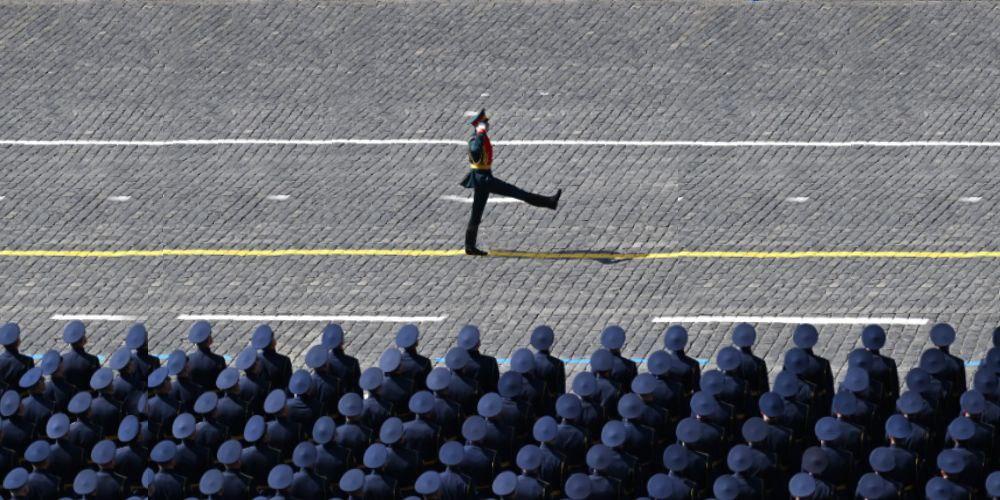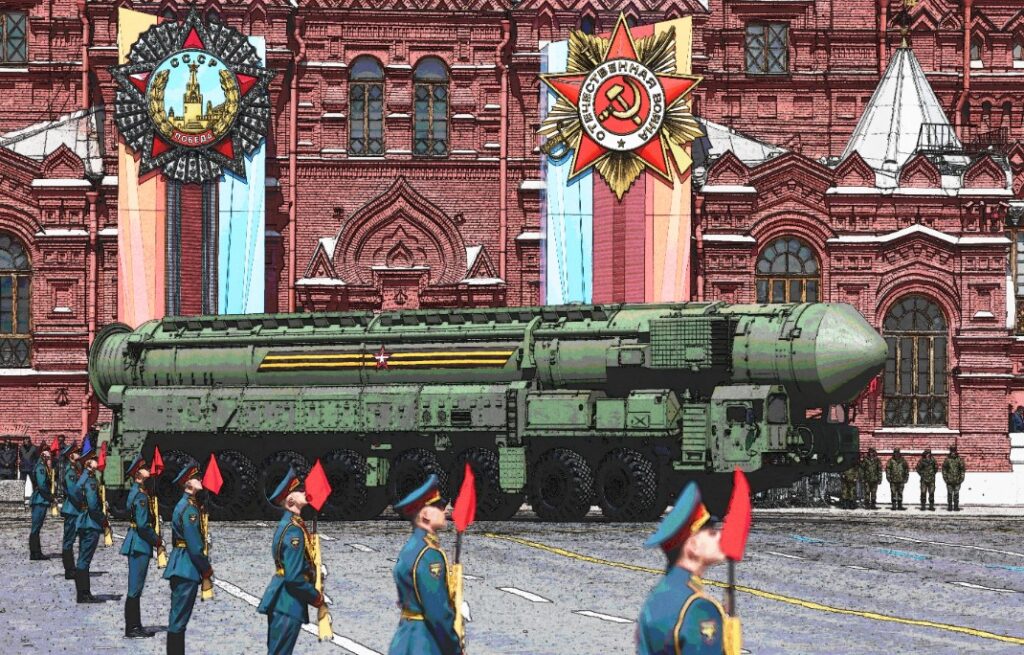
Russia’s Victory Day parade on May 9 is set to be more restrained this year, with tanks, armored vehicles, and missile systems absent from Red Square for the first time in nearly two decades. The Russian Defense Ministry cited the “current operational situation,” while the Kremlin blamed what it called Ukrainian “terrorist activity.” Russia also reported drone attacks aimed at Moscow in the days before the ceremony, and security around President Vladimir Putin has been tightened.
The reduced scale of the parade carries a resonance beyond Russia. Victory Day remains one of the most emotionally charged dates in the post-Soviet calendar, including in Central Asia, where families still remember relatives who fought, died, or labored during World War II. But across the region, the holiday has increasingly been placed inside national calendars rather than left as part of Russia’s political script.
The contrast with last year is sharp. In 2025, Moscow marked the 80th anniversary of Nazi Germany’s defeat with its largest Victory Day parade since the start of Russia’s full-scale invasion of Ukraine. Chinese troops marched on Red Square, Xi Jinping sat beside Putin, and foreign leaders attended from across Asia, Africa, Latin America, and the former Soviet space. Tanks, rocket launchers, missile systems, drones, and other military hardware rolled through the square.
This year’s guest list is more limited. The Kremlin’s initial list of foreign delegations included leaders and senior figures from Belarus, Laos, Malaysia, Slovakia, the breakaway republics of Abkhazia and South Ossetia, and representatives from Bosnia and Herzegovina’s Republika Srpska.
Attendance has also been hard to read. Earlier reports said Kazakhstan’s Kassym-Jomart Tokayev and Kyrgyzstan’s Sadyr Japarov were expected in Moscow, while the Kremlin’s initial published list of foreign guests did not include any Central Asian presidents. On May 8, however, Kazakh and Uzbek media reported that Tokayev and Uzbekistan’s Shavkat Mirziyoyev were traveling to Moscow for Victory Day events. The late confirmations complicate the picture, but they do not restore the full regional show of unity seen in the last two years, when all five Central Asian presidents were present at the Moscow parade. It does suggest, however, that Moscow’s political ownership of the date is less automatic than it once was.
Victory Day, which commemorates the Soviet defeat of Nazi Germany in what Russia calls the Great Patriotic War, has long been one of the main rituals of modern Russian power. It draws large television audiences, fills public space with military symbolism, and presents the Kremlin as the guardian of a sacred national memory. The holiday speaks of sacrifice and family loss, but also of nationalism and state control over history.
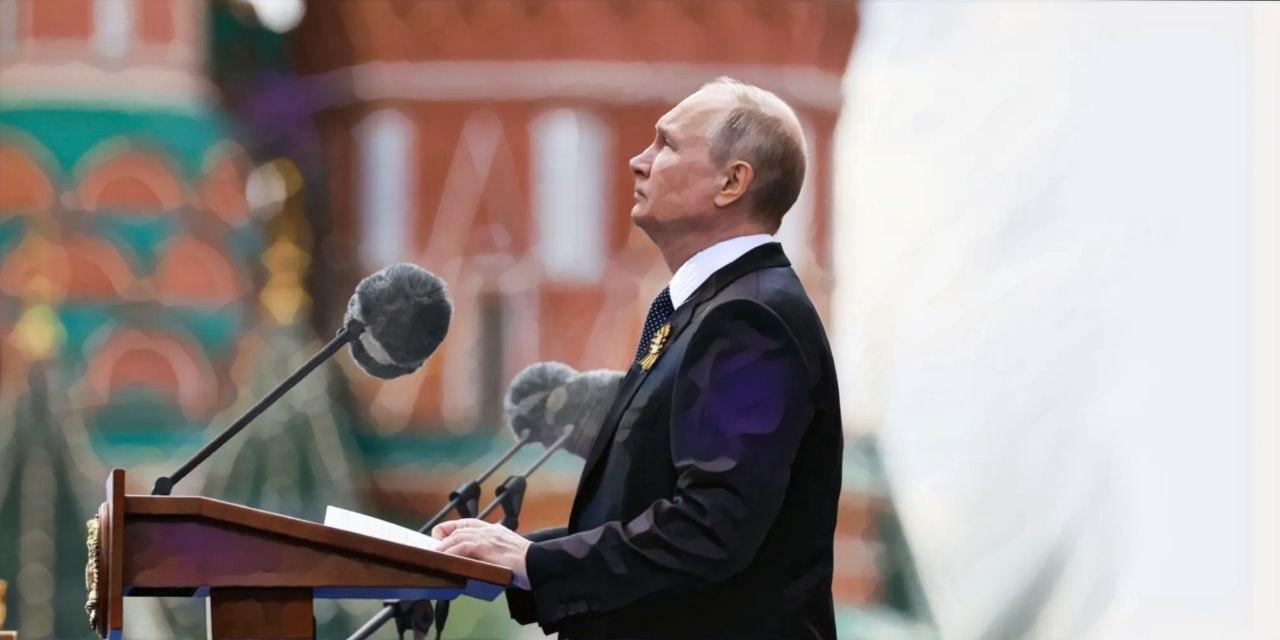
Putin has used that language repeatedly. On May 9, 2024, after appearing on Red Square in snowfall, he said Russia was going through a “difficult, milestone period,” and warned: “We will not allow anyone to threaten us. Our strategic forces are always in combat readiness.” In 2025, he used the 80th anniversary parade to link Soviet wartime memory to Russia’s current war, saying that “truth and justice” were on Moscow’s side.
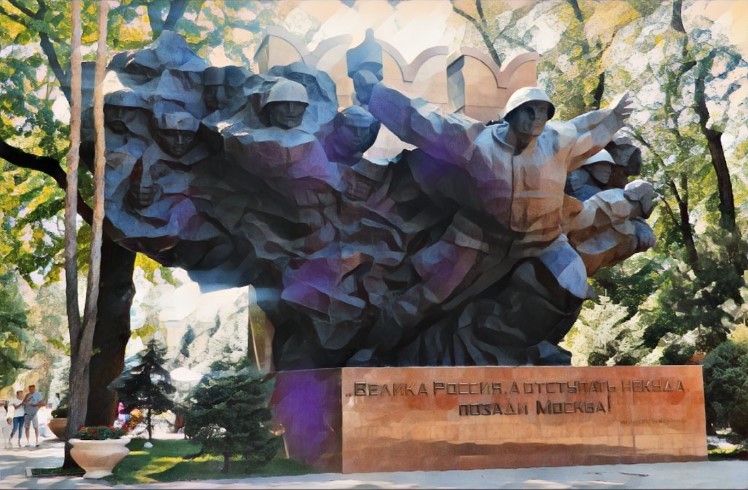
In Central Asia, the Soviet past has been handled more cautiously. Streets have been renamed, statues have been moved, and monuments to Soviet leaders have often lost their central place. In Kazakhstan, Lenin statues still exist, especially in regions with large ethnic Russian populations, but their number has fallen sharply since independence. The Times of Central Asia previously reported that, as of 2017, 159 Lenin statues remained in Kazakhstan, while 341 had been demolished since the fall of the Soviet Union. The debate has continued elsewhere in the region: in 2025, the removal of a 23-meter-tall Lenin monument in Osh, once the tallest in Central Asia, prompted public discussion in Kyrgyzstan and criticism from Russian media.
In Russia, the movement has often run in the opposite direction. In Volgograd, formerly Stalingrad, a new bust of Josef Stalin was unveiled in 2023 ahead of the 80th anniversary of the Soviet victory at Stalingrad. In Moscow, a recreated Stalin monument returned to the Taganskaya metro station in 2025. These gestures do not simply restore old symbols. They place Stalin back inside a state-approved story of wartime victory, strength, and sacrifice, while keeping the terror of his rule in the background.
The legal framework has moved in the same direction. Russia’s 2020 constitutional amendments state that the Russian Federation honors the memory of defenders of the Fatherland and protects historical truth. They also state that diminishing the significance of the people’s heroism in defending the Fatherland is not permitted, giving the state a constitutional basis for policing how World War II and Soviet victory are discussed.
That message depends on a selective version of the past. The clearest example is the Molotov-Ribbentrop Pact of August 1939. The public agreement was a nonaggression pact between Nazi Germany and the Soviet Union, while its secret protocol divided parts of Eastern Europe into German and Soviet spheres of influence and paved the way for the partition of Poland. The Soviet Union denied the secret protocol for decades and acknowledged it only during glasnost, when the Congress of People’s Deputies condemned the pact in 1989.
This history sits uneasily beside the official mythology of the Great Patriotic War. The Soviet Union suffered catastrophic losses after Hitler launched Operation Barbarossa in June 1941. Around 27 million Soviet citizens died in the war. The Red Army’s role in defeating Nazi Germany was immense. But the years between 1939 and 1941 complicate the clean story of victimhood and liberation that the Kremlin now prefers to tell.
Other chapters also disturb the narrative. Soviet repression did not pause for wartime memory. The NKVD enforced brutal discipline, deportations scarred entire peoples, and Soviet prisoners of war who survived German captivity often faced suspicion on return. Some Soviet citizens collaborated with Nazi Germany, while others fought in the Red Army, served in partisan units, or worked to exhaustion behind the front. The history was never as simple as the parade version suggests.
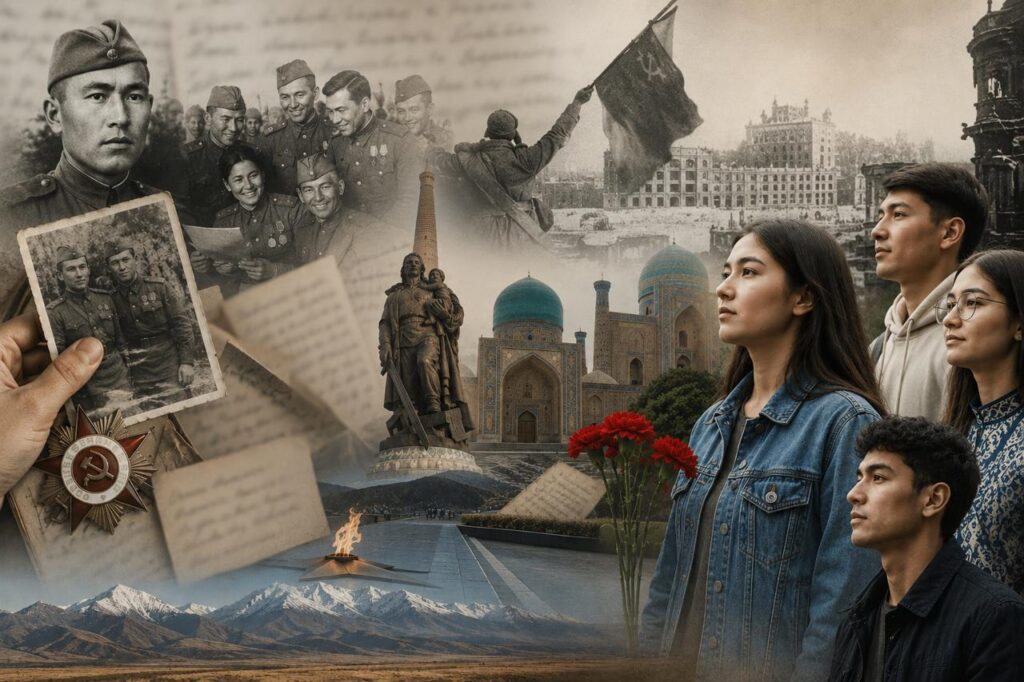
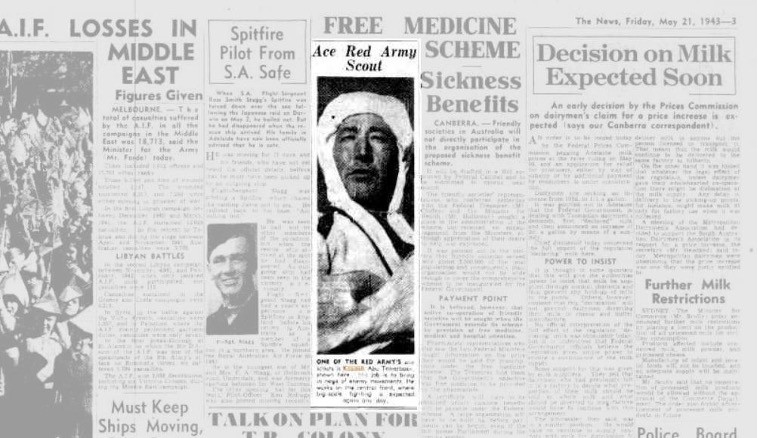
Central Asia knows this complexity well. Men from Kazakhstan, Uzbekistan, Kyrgyzstan, Tajikistan, and Turkmenistan fought and died in the Red Army. Families across the region still keep photographs, medals, and stories from the war. Victory Day, therefore, retains real emotional force. But these independent states have spent more than three decades placing that memory inside their own state narratives.
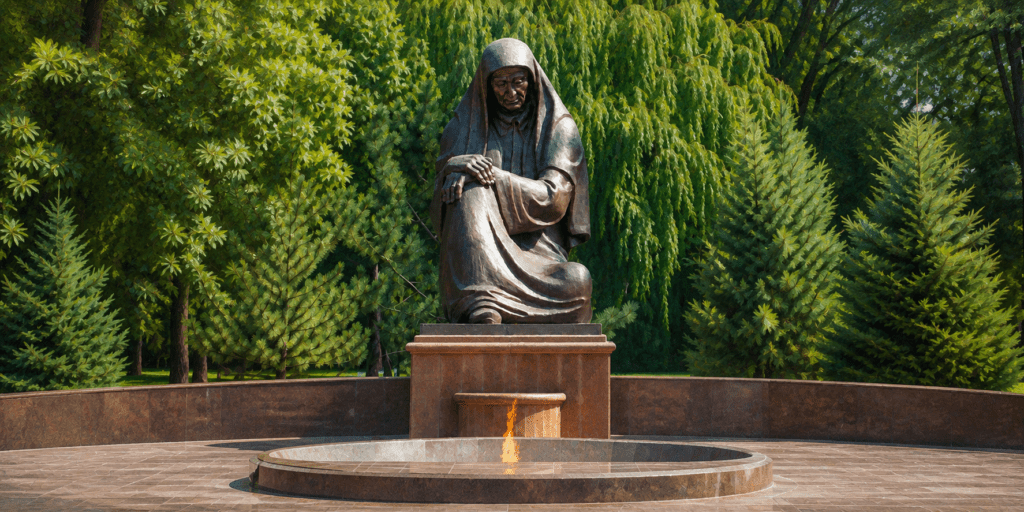
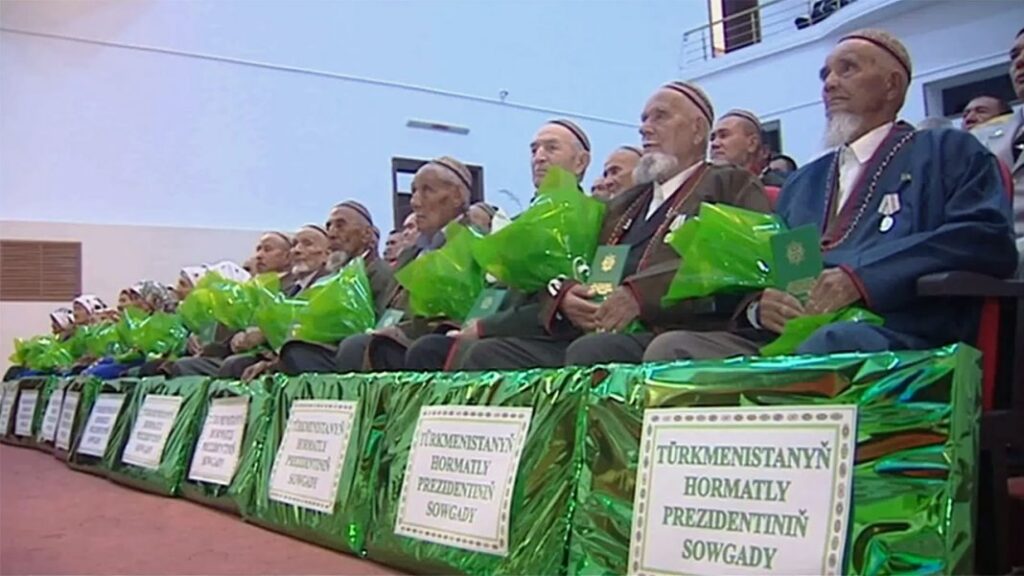
Kazakhstan still marks May 9 as Victory Day, but large military parades are not the center of the commemoration. Uzbekistan has recast the date as the Day of Remembrance and Honor. In Kyrgyzstan and Tajikistan, Victory Day remains visible, but it sits alongside post-Soviet state holidays and domestic memory. Turkmenistan observes the date within a calendar dominated by neutrality, independence, and national cultural symbols. Across the region, Soviet victory is preserved, but it is increasingly being separated from Moscow’s claim to speak for the whole post-Soviet past.
That is why this year’s Moscow parade carries more than ceremonial interest. For years, Red Square projected the idea of Russian strength, continuity, and command over the post-Soviet memory of World War II. In 2026, the absence of armored vehicles and missile systems will project caution. The Kremlin will still have flags, speeches, uniforms, and flyovers, but the missing hardware will be hard to ignore.
A parade without tanks does not end the ritual. It exposes its strain. Putin can still speak about victory, sacrifice, and historical truth, and he can still present Russia’s war in Ukraine as a continuation of an older struggle. But Victory Day will arrive this year with no victory in sight, and with some of the symbols of power that once filled Red Square kept away from the square itself.