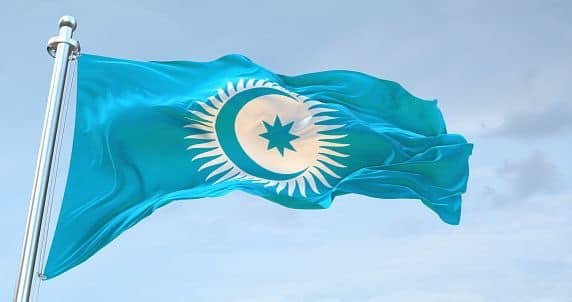
Last Friday, the Kazakh city of Turkistan, officially promoted as the “spiritual capital” of the Turkic world, hosted an informal summit of the Organization of Turkic States (OTS).
The official theme was artificial intelligence and digital development, but the meeting also highlighted older questions about the OTS’s political identity, its relationship with Russia, and Ankara’s influence within the Turkic world.
Because the gathering was informal, much of what took place remained behind closed doors. Yet public statements, official readouts, and subsequent commentary offered clues about the tensions and competing agendas within the organization.
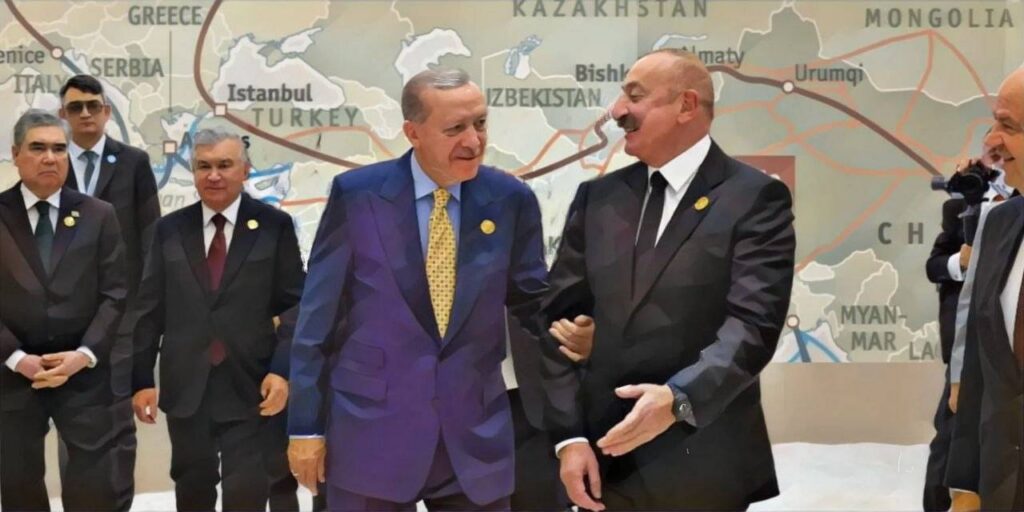
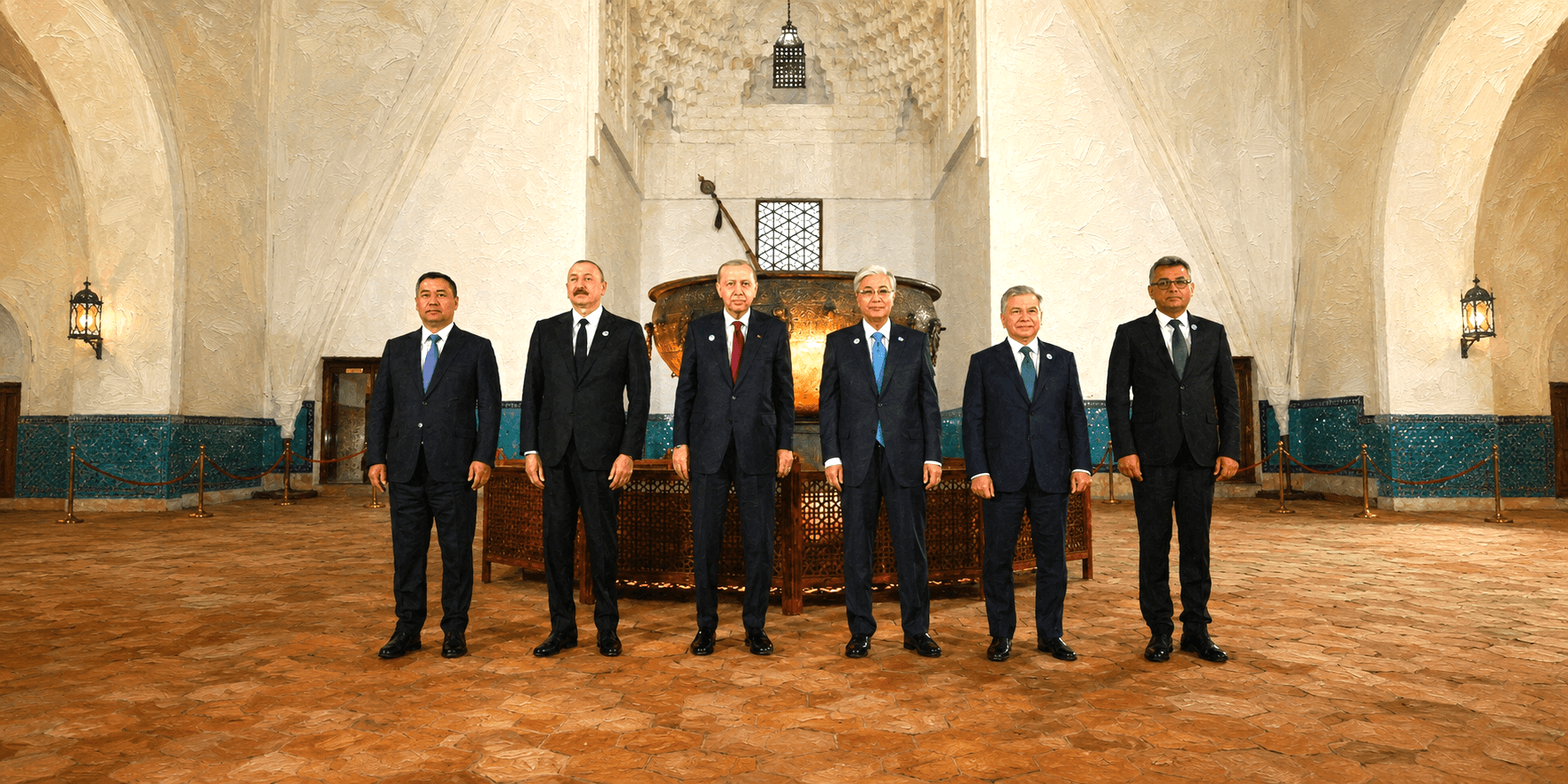
The summit brought together the presidents of Turkey, Azerbaijan, Kyrgyzstan, and Uzbekistan, as well as Tufan Erhurman, president of the Turkish Republic of Northern Cyprus, which is recognized only by Turkey.
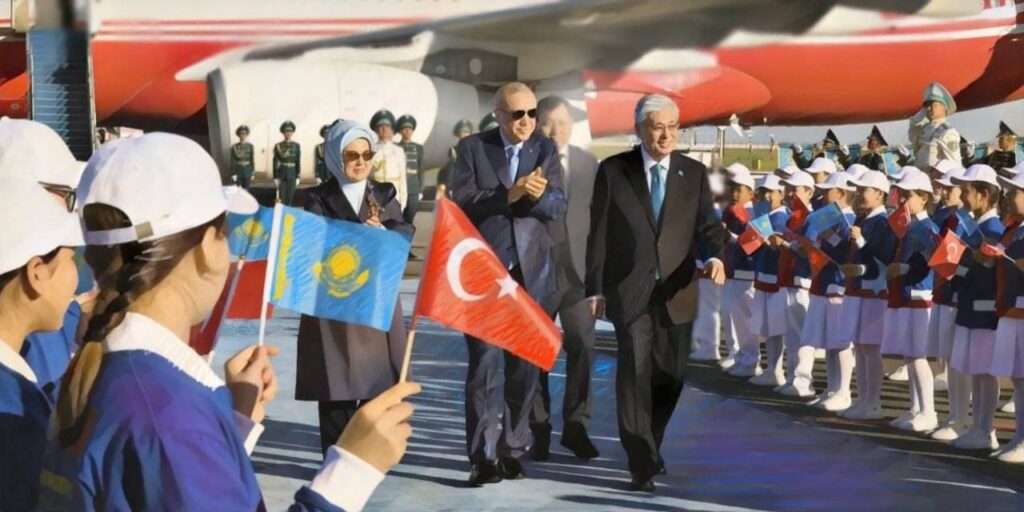
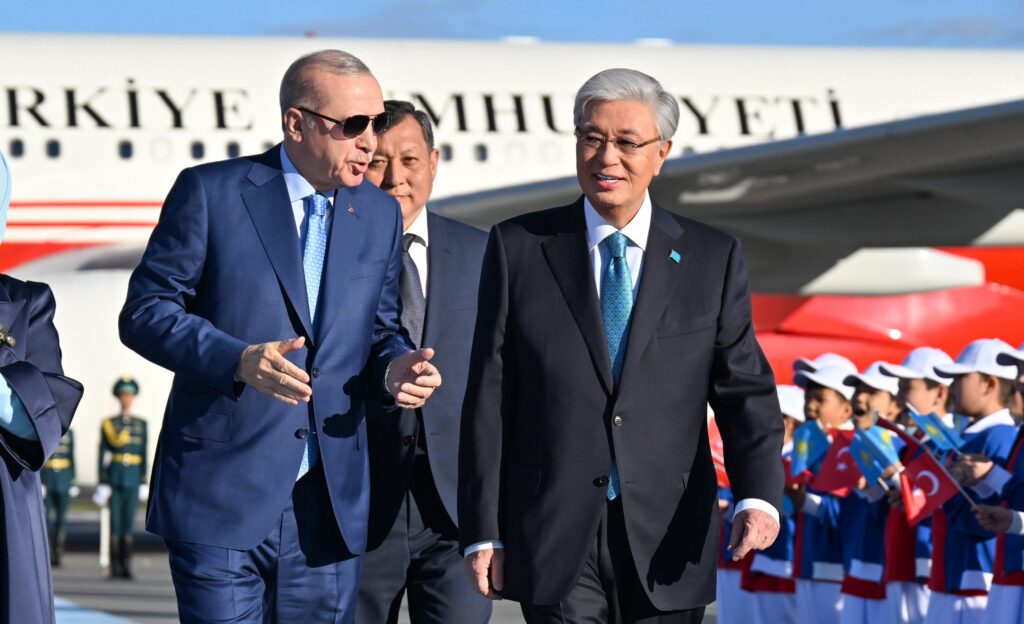
The meeting followed Turkish President Recep Tayyip Erdoğan’s state visit to Kazakhstan, during which the two countries signed 15 agreements, including a Declaration on Eternal Friendship and an Enhanced Strategic Partnership between Kazakhstan and Turkey.
In Turkistan, summit participants visited the mausoleum of Khoja Ahmed Yasawi, where Erdoğan donated a handwritten Quran manuscript to the historic site. Leaders also launched the construction of a Center for Turkic Civilization. The presidents of Kazakhstan and Uzbekistan separately visited a newly built mosque donated to Turkistan by Tashkent.
Despite the atmosphere of symbolism and fraternity, however, the summit also exposed clear differences between Ankara’s wide-ranging vision for the OTS and Astana’s insistence that the organization should remain a practical cooperation platform. Those differences became especially visible in President Kassym-Jomart Tokayev’s speech at the summit.
“Recently, opinions have been voiced portraying our organization as a military alliance. It is obvious that those spreading such speculation pursue malicious goals and seek to sow discord. Kazakhstan considers it necessary to reject such positions,” Tokayev said. “The Organization of Turkic States is neither a geopolitical project nor a military organization. It is a unique platform aimed at strengthening trade, economic, technological, digital, cultural, and humanitarian cooperation among brotherly nations.”
Kazakh political analyst Daniyar Ashimbayev argued that Tokayev’s remarks reflected a growing internal debate within the OTS.
“On the one hand, some media interpreted his words as a response to foreign experts warning about the emergence of a ‘Turanic NATO.’ On the other hand, it should be noted that some fellow presidents within the OTS persistently promote the development of military cooperation. Kazakhstan is equally persistent in defining which forms of interaction it considers acceptable within the organization,” Ashimbayev wrote.
Another analyst, Andrei Chebotarev, also argued that the core message of Tokayev’s speech was to frame the OTS primarily as a platform for economic, technological, digital, cultural, and humanitarian cooperation.
“In this context, he rejected the idea of transforming the organization into a military-political bloc. This sent a signal both to pan-Turkic political forces interested in such a transformation and to political elites in countries that view the organization’s activities with caution,” Chebotarev said.
Chebotarev also noted that Tokayev referenced the “OTS+” format launched at the organization’s previous summit in Azerbaijan and voiced support for the Russian-backed initiative, “Altai, the cradle of Turkic civilization.”
According to the analyst, this could be interpreted as a subtle invitation for Russia to potentially engage with the OTS+ framework.
“At the very least, another initiative proposed by the Kazakh president, the creation of the ‘Altai Dialogue Platform’ forum, could become a subject of discussion with Russian President Vladimir Putin during his upcoming state visit to Kazakhstan,” Chebotarev suggested.
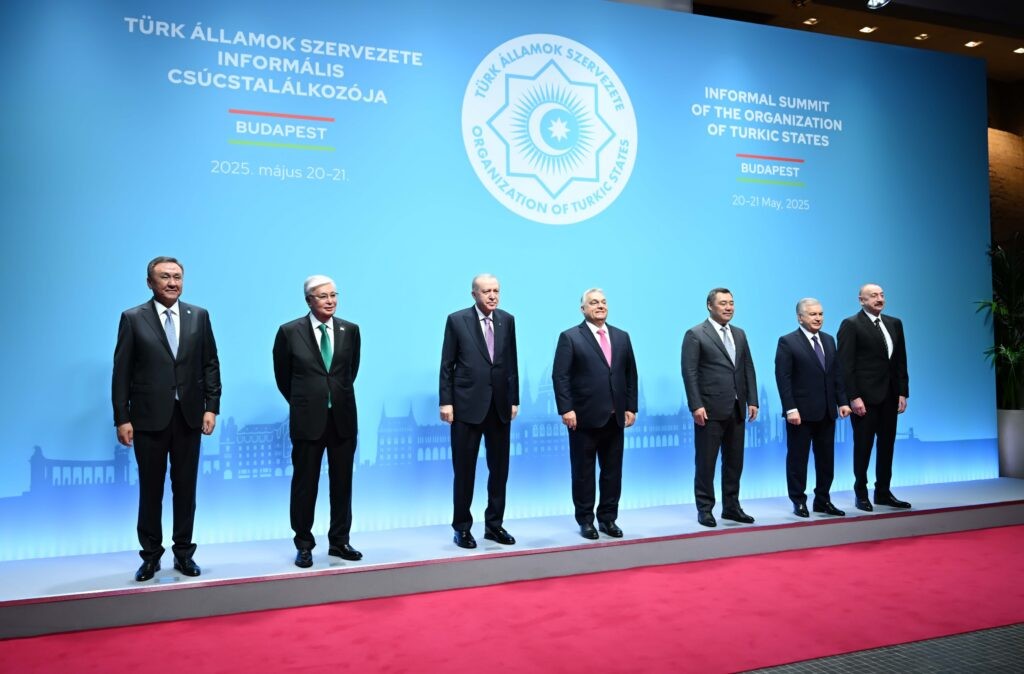
Another indirect sign of internal disagreements was the incomplete attendance at the summit itself.
“Delegations from Turkmenistan and Hungary, both OTS observers, were absent, while the Turks traditionally brought along the president of Northern Cyprus, something the other participants preferred not to mention in their official statements,” Ashimbayev observed.
According to Ashimbayev, Erdoğan expressed hope that “the Turkic world will continue strengthening its political, economic, and cultural ties with the Turkish Republic of Northern Cyprus.”
Language policy also emerged as a sensitive issue during the summit, with Erdoğan reiterating Turkey’s long-standing proposal to promote the widespread adoption of a common Turkic alphabet. In his words, “initiatives based on AI, such as the Turkish language model, should be supported to better showcase the richness of our common language in the digital world.”
Ashimbayev pointed out that Erdoğan specifically referred to a “Turkish” model rather than a broader “Turkic” one.
Tokayev responded by proposing the creation of a shared terminological database for Turkic languages and suggested establishing an Interstate Terminology Commission as a first step.
Chebotarev argued that Tokayev’s proposal could be viewed as a softer alternative to Ankara’s push for rapid implementation of a unified Turkic alphabet.
That interpretation carries additional weight given Kazakhstan’s own politically sensitive debate over transitioning the Kazakh language to the Latin alphabet, a process that has effectively been postponed indefinitely.
While Tokayev and Erdoğan’s remarks exposed the more sensitive political and cultural edges of the OTS agenda, other leaders used the summit to emphasize practical cooperation. That contrast was clearest on transport and technology, where the organization’s ambitions are easier to define and less diplomatically risky.
Uzbek President Shavkat Mirziyoyev, for example, spoke about the Middle Corridor in connection with another infrastructure initiative.
“Given the strategic role of the Middle Corridor, we are paying special attention to linking it with the China-Kyrgyzstan-Uzbekistan railway currently under construction,” Mirziyoyev said.
Notably, the railway project has previously been viewed by some analysts as a potential alternative to existing east-west routes through Kazakhstan, although it is now increasingly being discussed as a link to the Middle Corridor rather than a replacement for it.
Kazakh political analyst Marat Shibutov said one of the most significant developments at the summit was Kazakhstan’s effort to position artificial intelligence and digitalization as central themes within the OTS agenda.
“We should understand that we are not simply emphasizing this topic; we are actively developing the AI industry and digital technologies in general. We have many strong solutions, but few export markets because Russia and China already have powerful domestic sectors. That is why we are trying to promote these technologies through the OTS platform; perhaps someone there will buy something,” Shibutov wrote.
Taken together, the summit showed an organization trying to grow without agreeing fully on what it should become. For Ankara, the OTS remains a vehicle for deeper Turkic political, cultural, and linguistic alignment. For Astana, it is more useful as a practical platform for trade, transport, technology, and cultural exchange, but not as a bloc with military or geopolitical ambitions. The Turkistan meeting did not resolve that tension. It made it more visible.