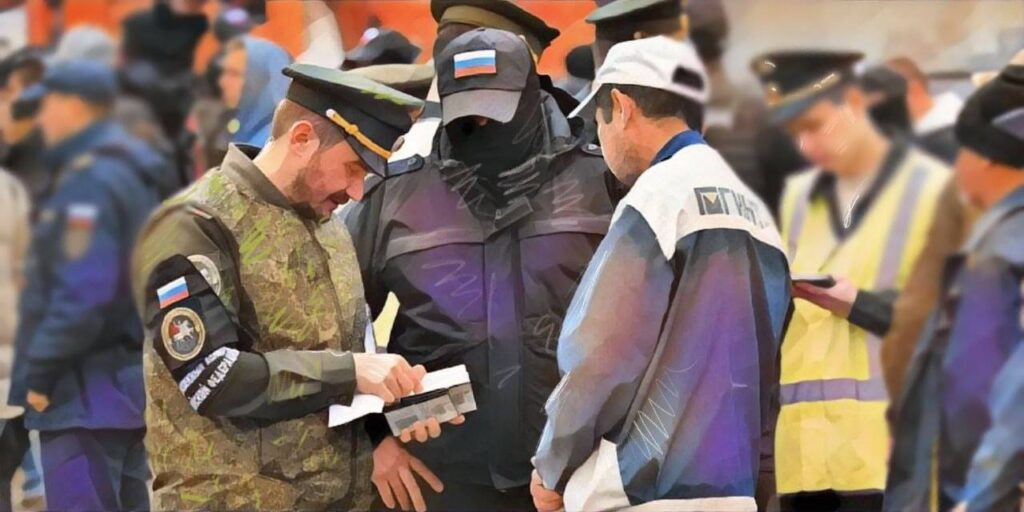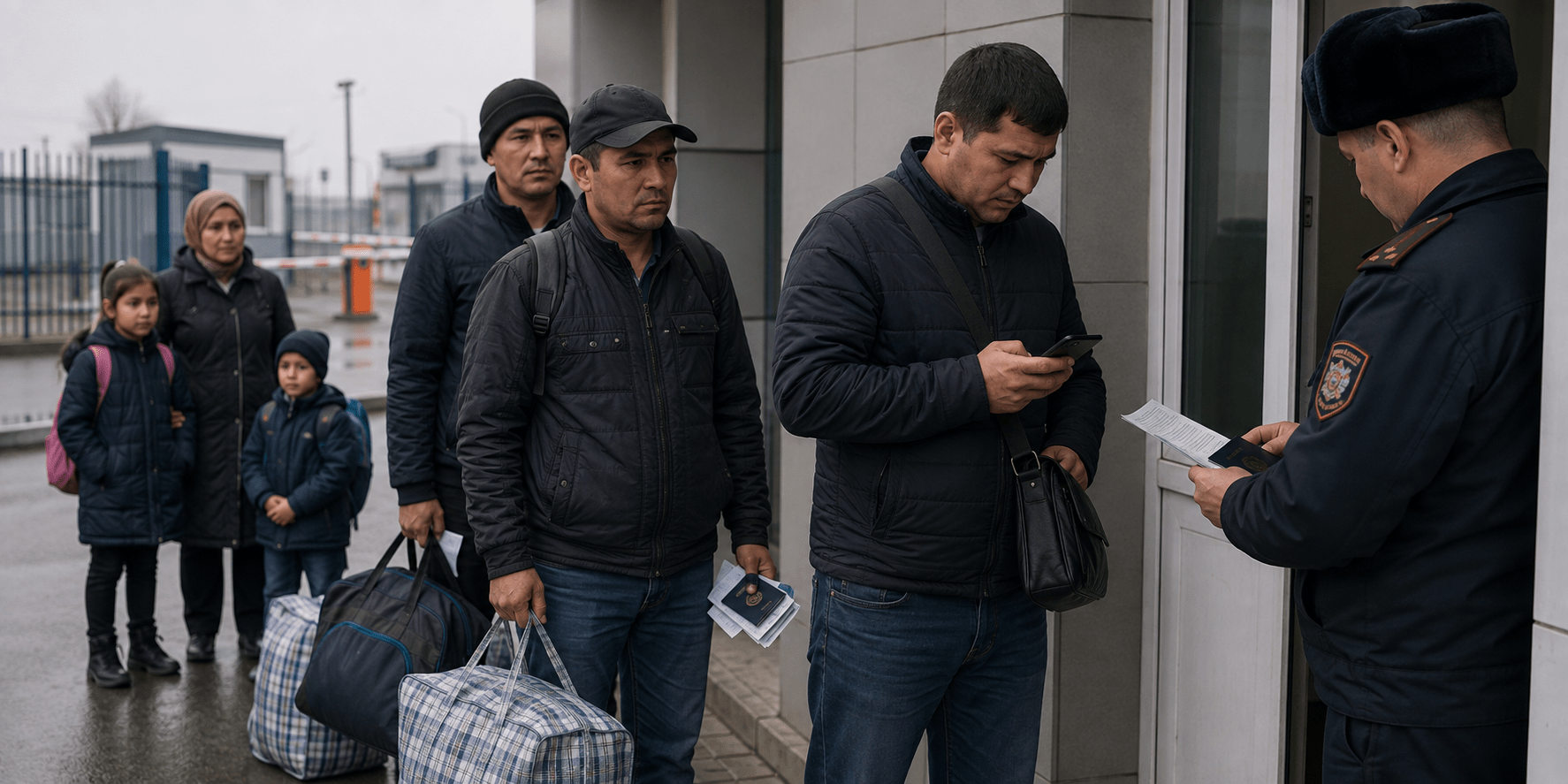
Entries to Russia for work by citizens of Uzbekistan, Tajikistan, and Kyrgyzstan fell by 15% in the first half of 2026 amid tighter migration rules and higher costs for workers.
The Border Service of Russia’s Federal Security Service recorded about 1.9 million work-related entries by citizens of the three countries between January and June, down from more than 2.3 million in the same period of 2025, according to data published through Russia’s Unified Interdepartmental Information and Statistical System.
The restrictions are also separating some migrant workers from their children. Since April 1, 2025, foreign children applying to Russian state schools have been required to prove that they are legally resident in the country and pass a Russian-language test. Those who fail cannot enroll and must wait at least three months before taking the test again.
Rakhmat, a Tajik migrant worker preparing to bring his children, aged seven and nine, to Russia, told Radio Free Europe/Radio Liberty that he might have to send them back to live with their grandparents if they fail. Tajikistan’s education minister has said that about 9,000 children have already returned from Russia after being denied school places.
Russian Education Ministry figures cited by Asia-Plus show that the number of foreign children attending Russian schools fell by about 44,000 during the 2025–26 academic year. Enrollment among children from Uzbekistan, Tajikistan, and Kyrgyzstan dropped by 27%, from 122,000 to 89,000.
For adult migrants, tighter oversight increasingly comes through their phones. Since September 1, 2025, visa-free foreign nationals working in Moscow and the surrounding region have been required to register through the Amina mobile application. Its central function is to report a migrant’s place of residence while automatically transmitting the phone’s geolocation to the Russian Interior Ministry.
Russian authorities present the system as a way to enforce migration rules and reduce corruption. Critics argue that continuous location tracking subjects foreign nationals to intrusive surveillance. Migrants who stop transmitting location data may be placed on Russia’s register of controlled persons, restricting their access to banking and other services and potentially leading to deportation.
On September 1, 2026, the Amina requirement will be extended to adults from visa-free countries who remain in Moscow or the Moscow region for more than 90 days for purposes other than work, including foreign students. The experimental system remains limited to the capital region and does not yet apply across Russia.
Kyrgyzstan’s Center for Employment of Citizens Abroad has published guidance explaining who must install Amina, what information it transmits, and how migrants can avoid breaching the new registration rules.
The Times of Central Asia previously reported that Russia’s tightening migration policy is prompting Central Asian countries to seek alternative labor markets while expanding employment opportunities at home.