For decades now, anyone driving through Uzbekistan, especially through agricultural areas, would likely at some point along the road have encountered a hill with rocks arranged near the top to spell out “Paxta – Bizning Oq Oltinimiz.”
It translates from Uzbek as “Cotton is our white gold” and it was a mantra in Uzbekistan going back to the days of the Soviet Union.
However, Uzbekistan’s current president, Shavkat Mirziyoyev, does not share this view of cotton’s value to his people and was recently cited as saying the crop turned many people in Uzbekistan into “slaves of cotton.”
A Black History of White Gold
Going back to the early years after the Russian Tsarist Empire seized what is now Uzbekistan in the 1860s, Moscow viewed the area as an ideal source of cotton and promoted giving over agricultural land for cotton growing.
Uzbekistan remained a major cotton producer as part of the Soviet Union and the emphasis on growing the crop increased.
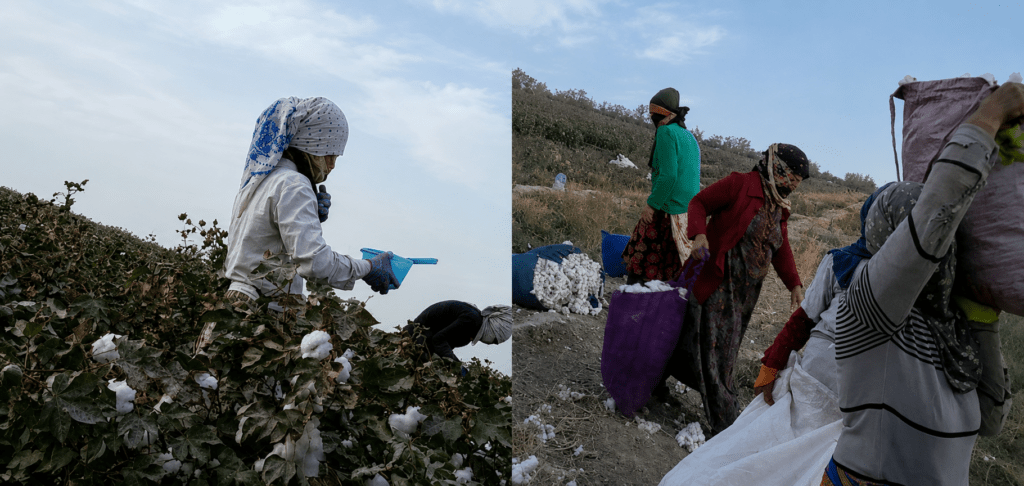
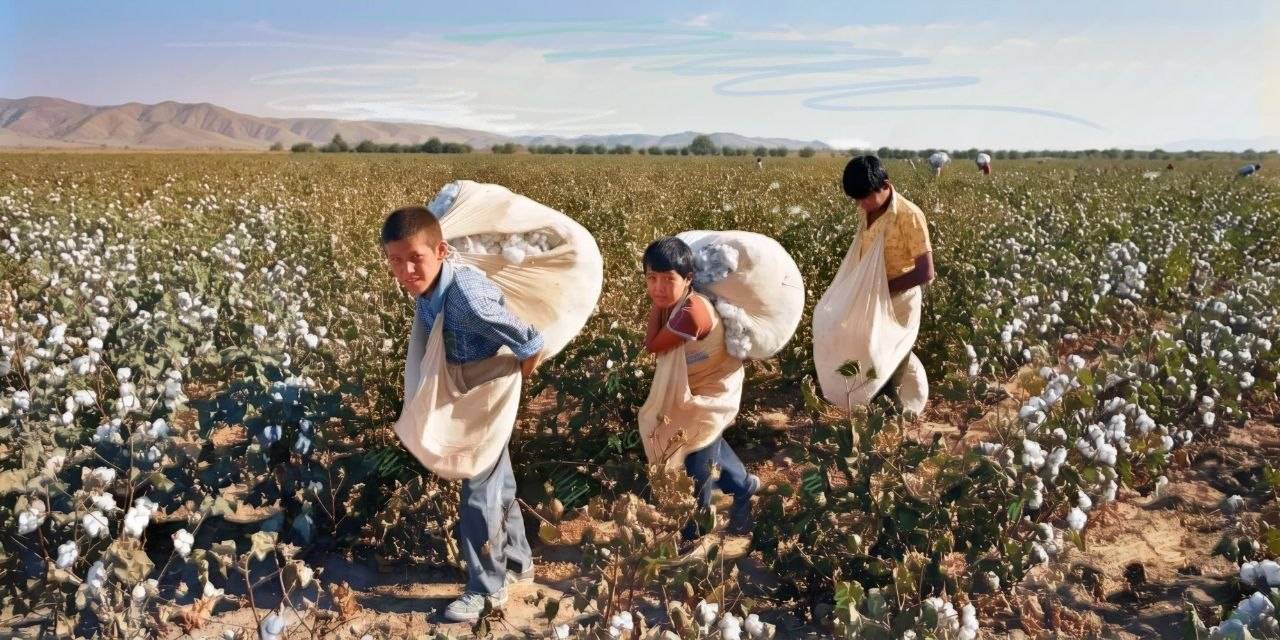
Soviet propaganda stressed production of cotton as a patriotic duty and every year, hundreds of thousands of people, including children, were forced into the cotton fields to work as “volunteers” at harvest time.
The practice and the propaganda carried over when Uzbekistan became independent in late 1991.
If anything, cotton gained a new importance in independent Uzbekistan. Uzbekistan did not have much to sell on international markets and cotton sales were an important means of earning hard currency. This was true for years.
In 1995, Uzbekistan’s cotton sales totaled some $1.6 billion and two years later totaled $1.4 billion. While the price of cotton fell on world markets, Uzbekistan’s cotton sales were still bringing in nearly $1 billion in 2008 and in 2013 cotton and textile sales amounted to just over $1 billion.
The continued use of forced labor, mainly women and children, drew international criticism and sparked calls to boycott Uzbek cotton. The Cotton Campaign launched efforts to persuade international brands to stop using cotton from Uzbekistan in 2009, with more than 330 brands eventually joining the boycott.
But countries such as China, Bangladesh, Vietnam, and Iran still bought Uzbek cotton and forced labor in Uzbekistan’s cotton fields continued. In 2014, a Human Rights Watch report said, “The Uzbek government forcibly mobilized nearly 2 million adults and children during the autumn cotton harvest to pick cotton in abusive conditions for little to no pay.”
Local officials, the heads of factories and other businesses had to meet quotas for the labor force in the fields. Imams used sermons to exhort worshippers to go pick cotton, saying it was a religious duty.
The Luster Wears Off
Even before he was president, Mirziyoyev indicated he took a different view of the use of forced labor in the cotton fields. In late July 2016, as international pressure was mounting, then-Prime Minister of Uzbekistan Mirziyoyev told all the provincial governors, “Each of you will be held personally accountable for the use of child labor” and added, “If I see even a single child in the fields, you will be severely punished.”
One month later, Uzbekistan’s first and hitherto only president, Islam Karimov, died and days later Mirziyoyev was appointed interim president. By the end of September 2016, Uzbekistan’s Trade Union Federation had established a call center for citizens to report the use of child labor.
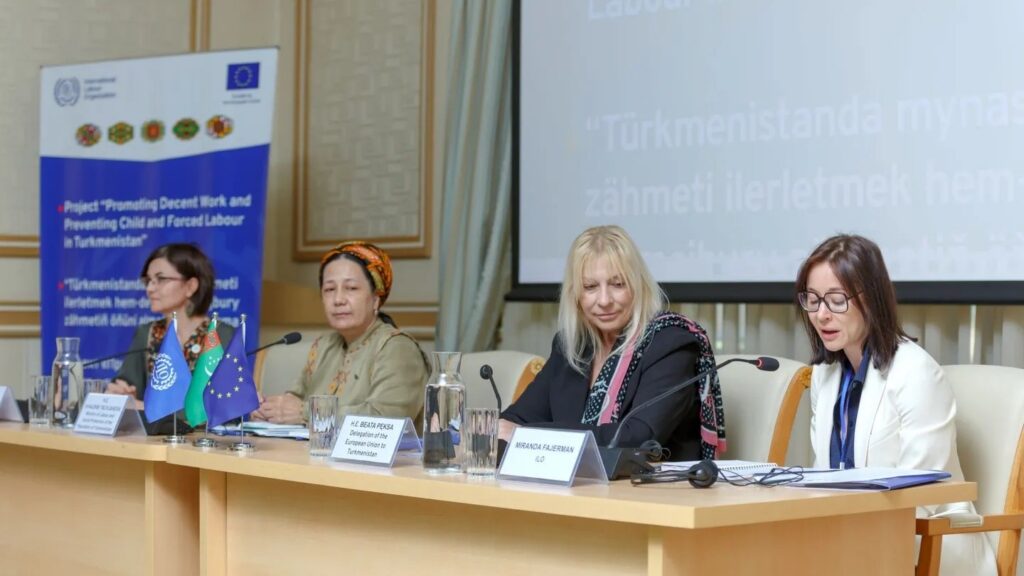
The practice continued but there was progress in reducing the number of children and others forced to pick cotton. The International Labor Organization (ILO) said in 2018 that the systematic use of child labor in the cotton fields had stopped in Uzbekistan. In 2020, the ILO said the number of other people forced to pick cotton, usually high school and college students and people in the education and medical sectors, had dropped from about 170,000 in 2018 to some 102,000 in 2019.
It helped that the government announced in October 2017 that people willing to go pick cotton would be paid.
Mirziyoyev did not lose his disdain for cotton. In a speech to parliament in December 2017, he complained, “I was responsible for cotton for 10 years and I was not paid a penny… I have never paid people a salary for the cotton they picked,” and added, “Nobody has the right to humiliate Uzbekistan in such a way.”
The New Reality
In July 2017, while touring areas in eastern Uzbekistan, Mirziyoyev said, “Instead of [cotton], we should grow fruit and vegetables, melons and marrows, which are more profitable.” Several months later, in western Uzbekistan, he recommended planting licorice rather than cotton.
With hindsight, Mirziyoyev’s calls for switching from growing cotton to growing something else, particularly fruit and vegetables, were almost prescient.
The effects of climate change are more obvious in Central Asia than in most other parts of the world. Since 2020, the region has been hit by drought, precipitation levels have declined, glaciers in the eastern mountains are melting, and every summer brings new records for high temperatures.
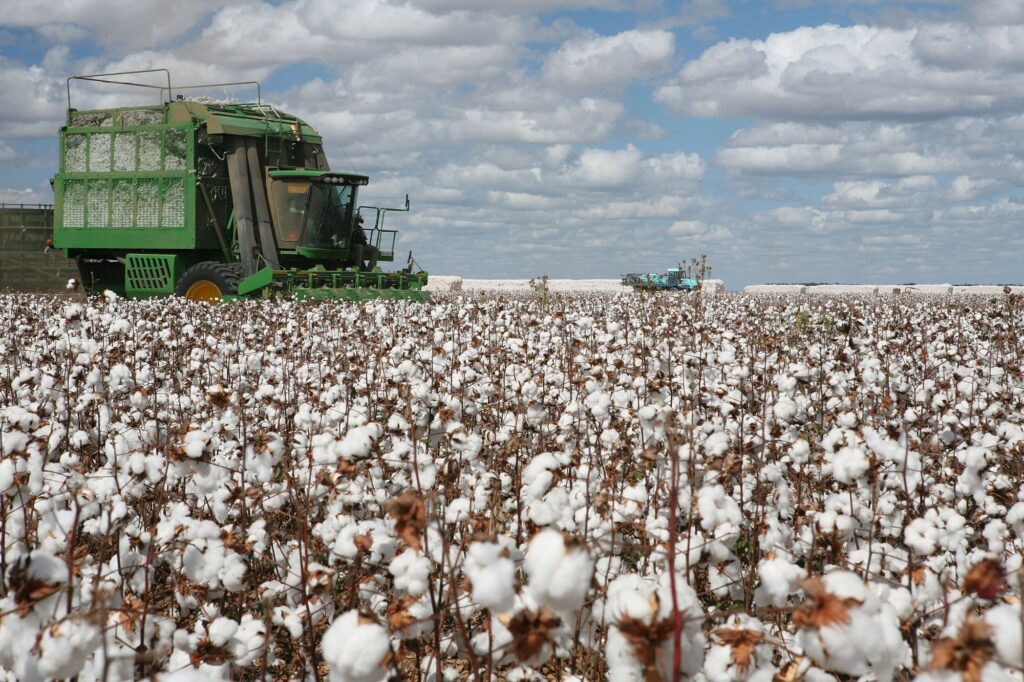
Uzbekistan’s total agricultural land covers some 26 million hectares. Cotton was planted on some 1 million hectares, but in 2018 Mirziyoyev ordered that this be reduced by 100,000 hectares. Currently, slightly less than 900,000 hectares are used for growing cotton and in April 2026, Mirziyoyev ordered an additional 50,000 hectares of low-yield cotton and grain fields in Fergana Province to be used for orchards and rice.
Uzbekistan has transitioned from selling almost exclusively cotton fiber to selling a combination of cotton fiber and finished textiles. Reports on 2025 cotton exports put the figure at less than $400 million. Uzbekistan’s Agency for Development of Light Industry reported that exports from the wider textile industry totaled some $2.6 billion in 2025.
In contrast to sales of white gold, Uzbekistan’s sales of actual gold have been far more lucrative. Uzbekistan’s gold exports for July alone amounted to some $1.3 billion, half the value of textile exports for the whole of the previous year.
So, the question is, why grow cotton at all? Or at least, is it still necessary to grow several million tons every year?
Uzbekistan’s population just topped 39 million in 2026, according to the country’s Statistics Committee, up from about 20 million when the country became independent in late 1991, based on historical population figures.
With climate change hitting the Central Asian region hard, feeding the people there is clearly the priority and cotton is a thirsty crop that does not benefit hungry people.
At the end of August, Mirziyoyev was in Syrdarya Province. He criticized the policies of the past that sent people to pick cotton. He said, “Due to a lack of political will, we were indeed all slaves to cotton.”
Hopefully, the Uzbek president’s words signal a further reduction in cotton cultivation and the use of that land to grow food.