Kazakhstan views the Trump Route for International Peace and Prosperity, or TRIPP, as a natural extension of the Middle Corridor that could shorten transport routes to European markets by around 1,000 kilometers, a senior representative of President Kassym-Jomart Tokayev said in New York.
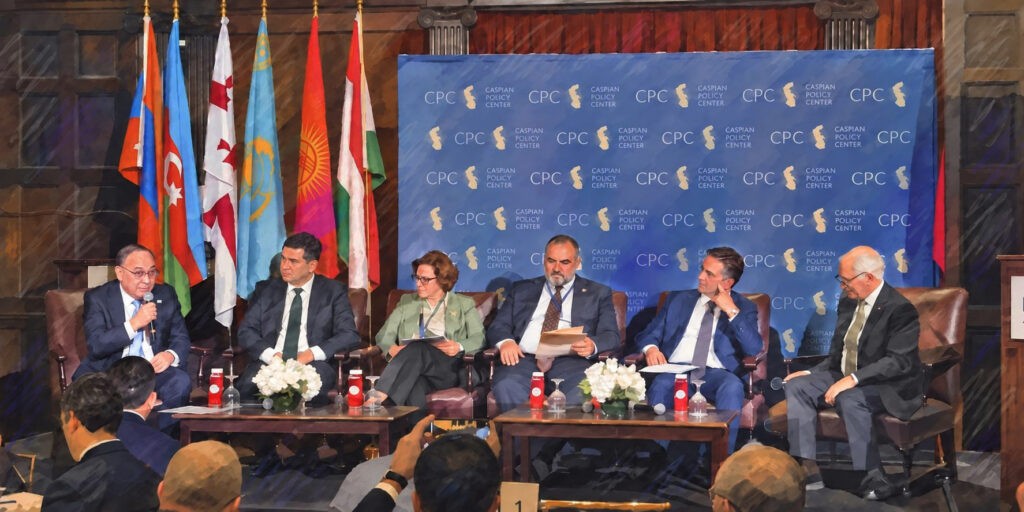
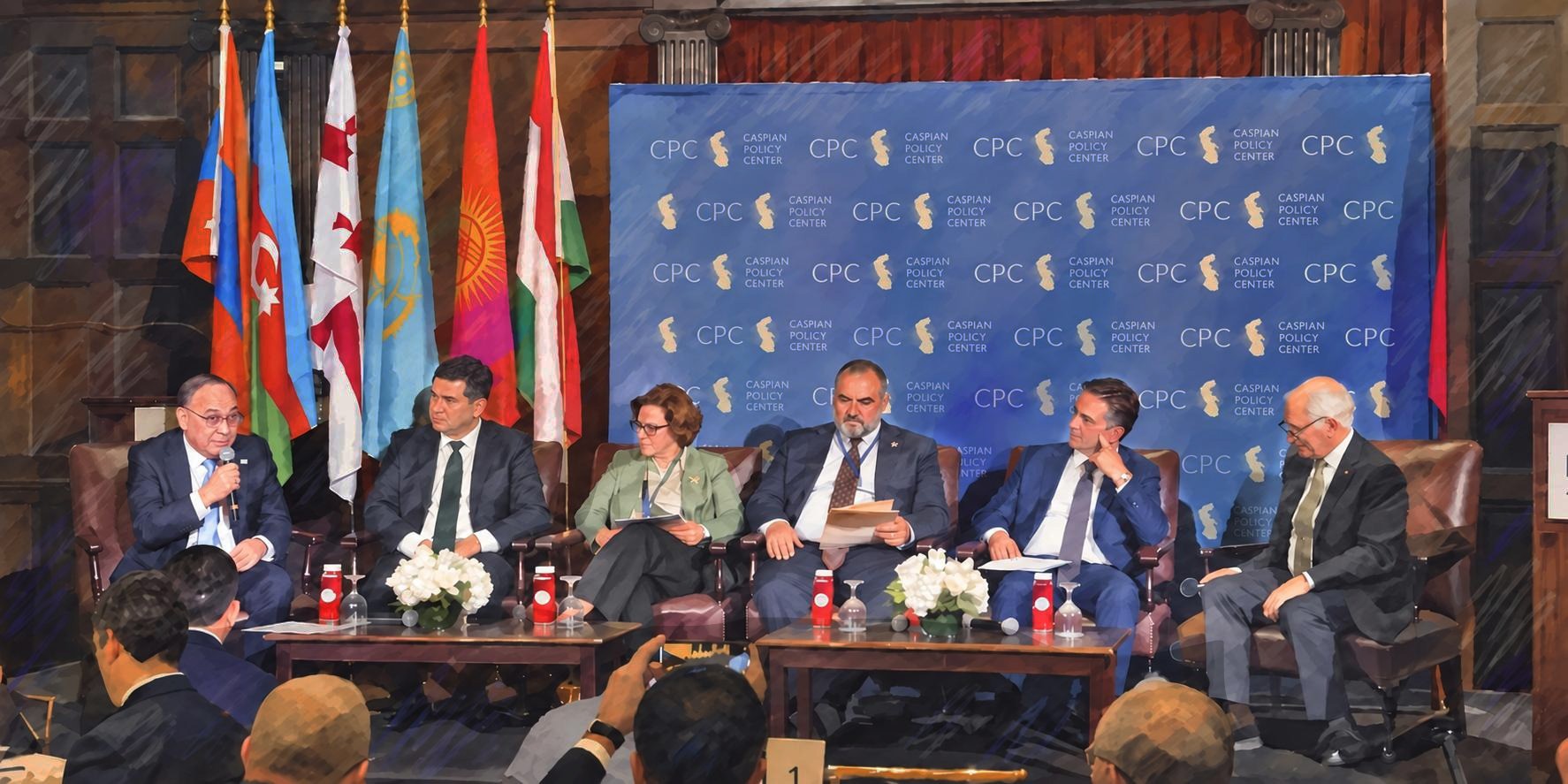
Erzhan Kazykhan, Representative of the President of Kazakhstan for Negotiations with the United States, made the remarks at the 7th Caspian Business Forum, organized by the Caspian Policy Center in New York on September 22.
“For Kazakhstan, it’s not simply a transport route. It’s a strategic investment into our future,” Kazykhan said of the Middle Corridor. “It is a platform for connectivity with the South Caucasus, Türkiye, and Europe.”
“Kazakhstan sees TRIPP as a logical extension of the Middle Corridor,” he said, explaining that the route would shorten Kazakhstan’s access to European markets by hundreds of kilometers.
TRIPP was announced at the White House summit between Armenia and Azerbaijan on August 8, 2025. The planned multimodal route would cross Armenian territory under Armenian sovereignty and jurisdiction, connecting mainland Azerbaijan with its Nakhchivan exclave and adding another link to the Trans-Caspian trade network.
Kazakhstan Examines Role in TRIPP
Kazykhan said Kazakhstan has sent a technical assessment team to examine what role the country could play and is considering participation in construction connected with TRIPP.
He placed that interest alongside Kazakhstan’s own investment in transport. Over the past 15 years, he said, the country has invested about $35 billion in the sector and built more than 2,500 kilometers of new mainline railway. The government plans another 5,000 kilometers over the next four years.
Kazykhan said the next challenge is making the infrastructure work as a single route, including smoother border crossings and enough long-term financing.
Kyrgyzstan’s Minister of Economy and Commerce, Bakyt Sydykov, also argued against treating new routes as competing national projects. He said TRIPP, the Trans-Caspian route, the China-Kyrgyzstan-Uzbekistan Railway and other corridors should operate as parts of the same regional logistics system.
“The Middle Corridor must become an economic corridor, not only a transit corridor,” Sydykov said.
He argued that countries such as Kyrgyzstan should capture more value from the trade moving through the region, pointing to logistics centers, warehouses, processing facilities, digital customs systems and industrial development around the routes.
Financing remains another issue. Sydykov said governments could not fund all of the required infrastructure themselves.
Mark Cameron, U.S. Deputy Assistant Secretary of State for South and Central Asian Affairs, said the newly operational Trans-Caspian Enterprise Fund is designed to use U.S. government grant resources to establish the commercial viability of projects and help attract additional private investment.
Connecting the Routes
Türkiye’s Deputy Foreign Minister Berris Ekinci described TRIPP as complementary to the Middle Corridor rather than a rival route.
“TRIPP shouldn’t be viewed as a separate or competing corridor,” she said.
Ekinci said its importance would depend on how it connects with existing railway, road and port infrastructure. She described the Middle Corridor as the main east-west backbone, with TRIPP potentially filling a longstanding connectivity gap through the South Caucasus.
She also stressed the need for efficient customs procedures, interoperable systems, digital logistics and predictable regulation alongside physical infrastructure.
Azerbaijan’s Deputy Foreign Minister Yalchin Rafiyev pointed to investments in the Port of Baku, the Alat Free Economic Zone and the Baku-Tbilisi-Kars railway. He said physical infrastructure needs to be matched by more efficient borders and digitalized customs, and argued that TRIPP could support both commercial ties and the Armenia-Azerbaijan peace process.
Georgia’s Deputy Foreign Minister Lasha Darsalia placed those connections in the wider route toward the Black Sea and European Union. He described the Middle Corridor as an important part of Eurasian connectivity and highlighted Georgia’s efforts to strengthen infrastructure and cooperation with neighboring countries, financial institutions and the private sector.
Beyond Rail
Kazykhan also pointed to Kazakhstan’s locomotive manufacturing capacity in Astana, where the Wabtec operation has produced around 700 locomotives.
He cited the Trans-Caspian fiber-optic connection between Kazakhstan and Azerbaijan, plans for green-energy links across the Caspian and Kazakhstan’s increasing use of Azerbaijan for westward oil exports.
Cameron also highlighted the Kazakhstan-Azerbaijan fiber-optic connection as an example of digital infrastructure developing alongside the transport network.
Kazakhstan has spent years building alternatives for reaching international markets. As the world’s largest landlocked country, it has invested heavily in routes across the Caspian and toward Europe.
The discussion then turned to financing.
Claire Kaiser of McLarty Associates said there was corporate interest in discussions around a “TRIPP Plus” or “greater TRIPP” concept. The question, she said, was whether that interest could be converted into bankable projects.
Jamshid Ehsani of Apollo Global Management said the obstacle was not necessarily a lack of capital, but finding financing structures suited to large, long-term infrastructure projects.
“The capital is there,” he said. “Get the structure right. Bring the right counterparty to the table.”