Central Asia’s contemporary security dilemma is partly rooted in Cold War strategies that transformed Muslim identity into a factor of geopolitical competition. Washington viewed Soviet Central Asia’s Muslim populations as a potential pressure point against Moscow. The Soviet Union itself mobilized Central Asian Muslim personnel during its intervention in Afghanistan. These policies did not alone create later radical movements, but they contributed to a regional environment where existing grievances, ideological narratives, and transnational networks could be redirected and intensified.
The origins of Washington’s interest in Soviet Muslim populations as a strategic factor emerged during the final years of the Cold War. In 1977, the Nationalities Working Group, an interagency task force within the National Security Council, was established to examine vulnerabilities among the Soviet Union’s non-Russian nationalities. Declassified U.S. records show that American officials studied ethnic, cultural, and religious identities as possible sources of pressure against Moscow.
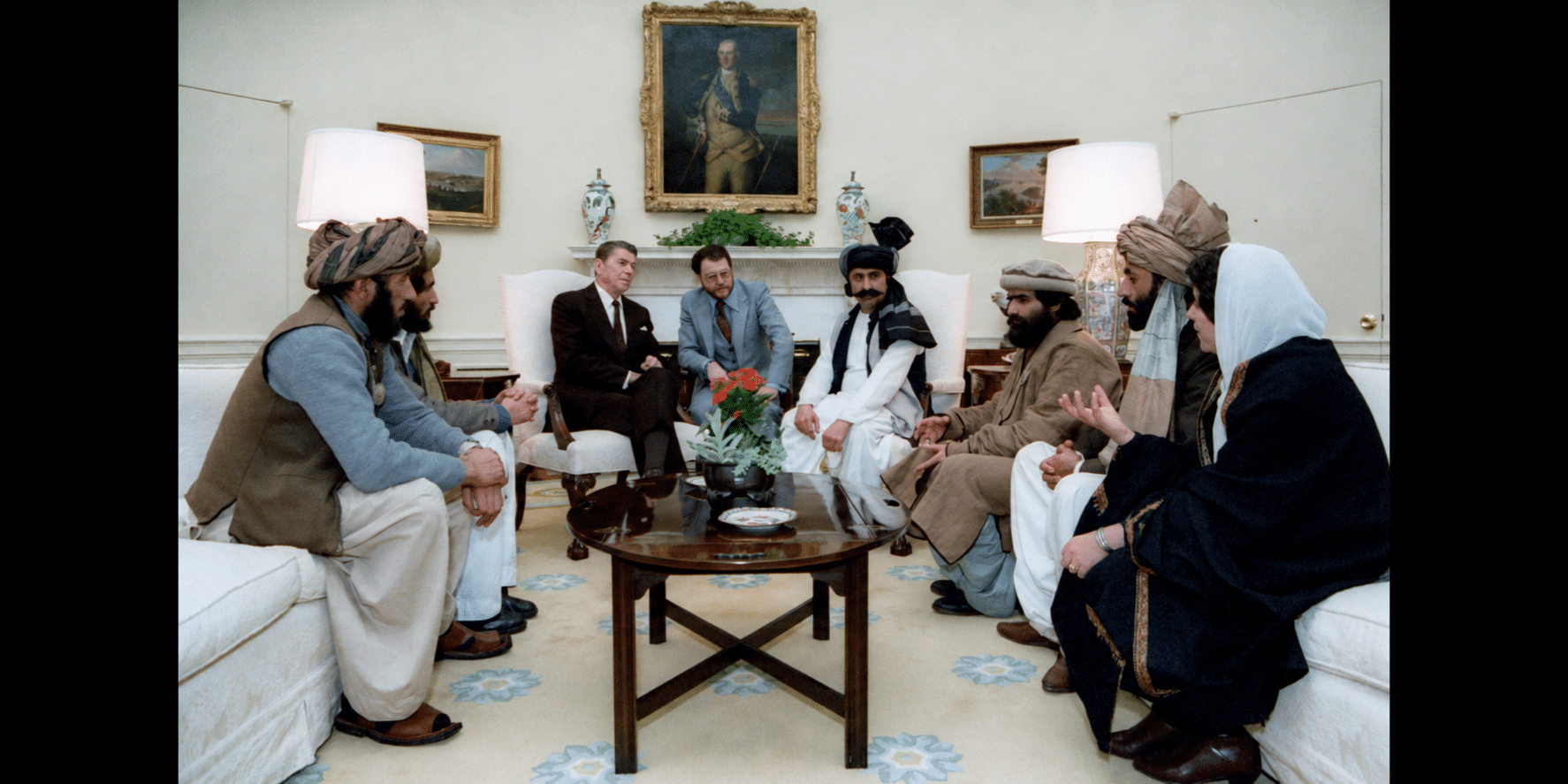
Following the Soviet invasion of Afghanistan in December 1979, this approach became part of Washington’s broader effort to weaken Soviet influence. Through Pakistan’s Inter-Services Intelligence (ISI), the United States provided assistance to Afghan resistance organizations, while Saudi Arabia contributed significant financial support. Pakistan’s military government under General Zia-ul-Haq favored Islamist factions among Afghan resistance groups, helping connect military assistance with religious mobilization against Soviet forces. During his visit to the Khyber Pass in early February 1980, U.S. National Security Adviser Zbigniew Brzezinski addressed Afghan resistance fighters, declaring: “That land over there is yours. You will go back to it one day because your cause is right and God is on your side.” The remarks reflected how the anti-Soviet struggle was framed not only in geopolitical terms but also through religious language and symbolism.
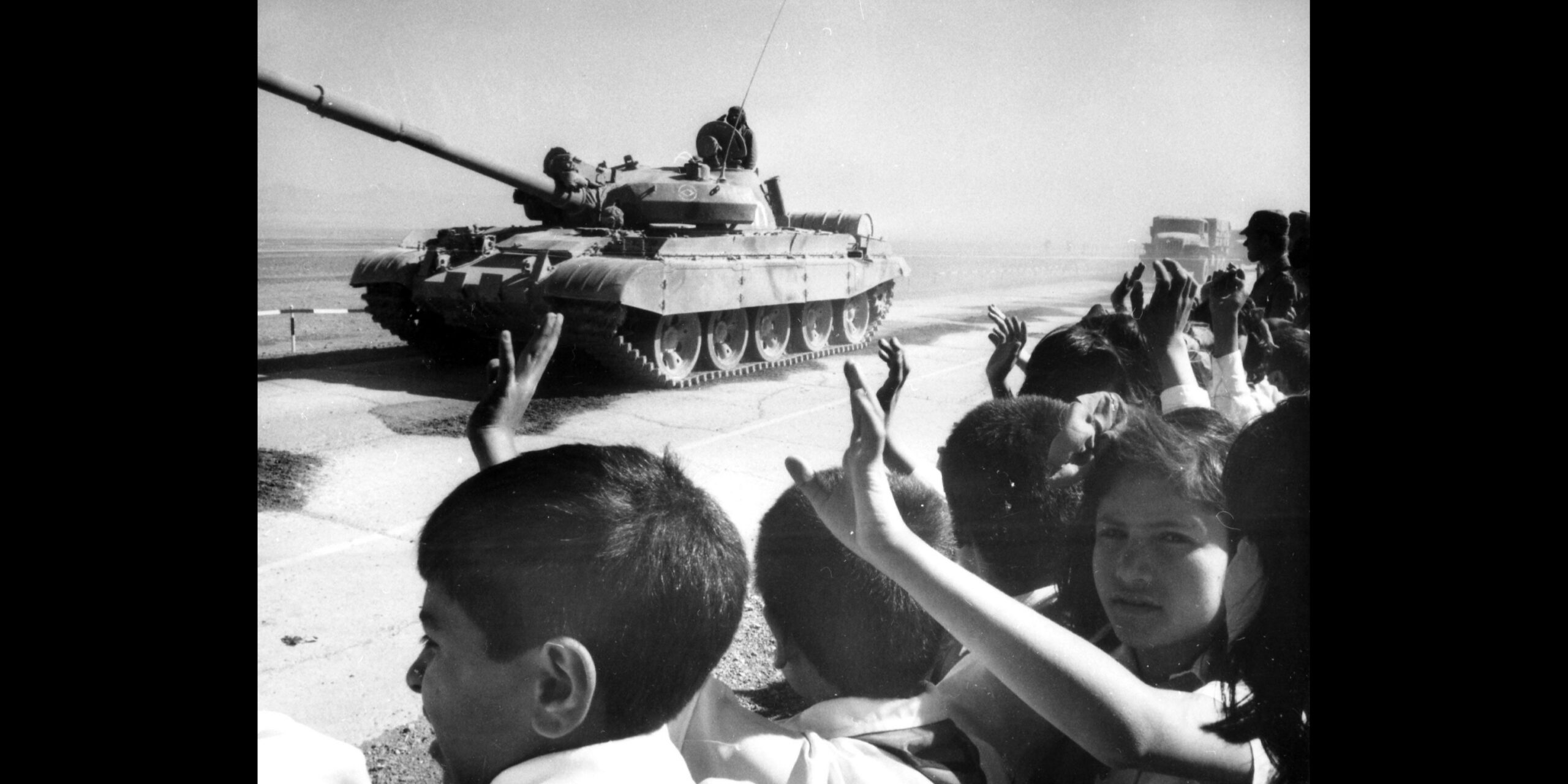
Soviet T-62 tank leaving Afghanistan; image: U.S. Department of Defense.
The Afghan conflict was also fought through education and information campaigns. Between 1986 and 1992, the U.S. Agency for International Development (USAID) funded an approximately $50 million educational program through the University of Nebraska–Omaha’s Center for Afghanistan Studies for Afghan refugees and schools. Research has shown that some textbooks incorporated violent imagery, references to weapons and combat, and themes glorifying holy war and the duty of martyrdom. Produced for wartime Afghanistan, these materials reflected, and arguably helped sustain, a militarized ideological environment. Islamic religious life in Central Asia had its own deeper roots. Despite Soviet restrictions, religious learning survived through underground hujra networks and unofficial scholarship. Figures such as Muhammadjon Hindustoniy-Rustamov, born in the Fergana Valley and later one of Soviet Central Asia’s most influential unofficial Islamic scholars, shaped generations of students even as Afghanistan became an arena of international rivalry during the 1980s.
Moscow also used Central Asian Muslim identity for strategic purposes. The 154th Separate Spetsnaz Detachment, known as the “Muslim Battalion,” was composed largely of Uzbek, Tajik, and Turkmen soldiers from the Soviet Turkestan Military District. The unit participated in Operation Storm-333 in December 1979, the Soviet operation that killed Afghan President Hafizullah Amin and installed Babrak Karmal. The selection of Central Asian Muslim personnel reflected Moscow’s belief that ethnic and linguistic familiarity could provide operational advantages in Afghanistan. Recruiting soldiers for their ethnic and linguistic familiarity differed from supporting religiously framed resistance. Nevertheless, both approaches show how the rival powers used Muslim identity for strategic purposes.
The Soviet collapse did not end the consequences of Cold War policies. Instead, the 1990s revealed how Afghan-related networks interacted with Central Asia’s political transitions. Newly independent states faced economic crises, weak institutions, political tensions, and the challenge of managing religious resurgence and emerging political-religious movements after decades of Soviet restrictions. Regional movements were shaped by local grievances, identity debates, and domestic political conditions, while the Afghan conflict expanded cross-border networks and security challenges.
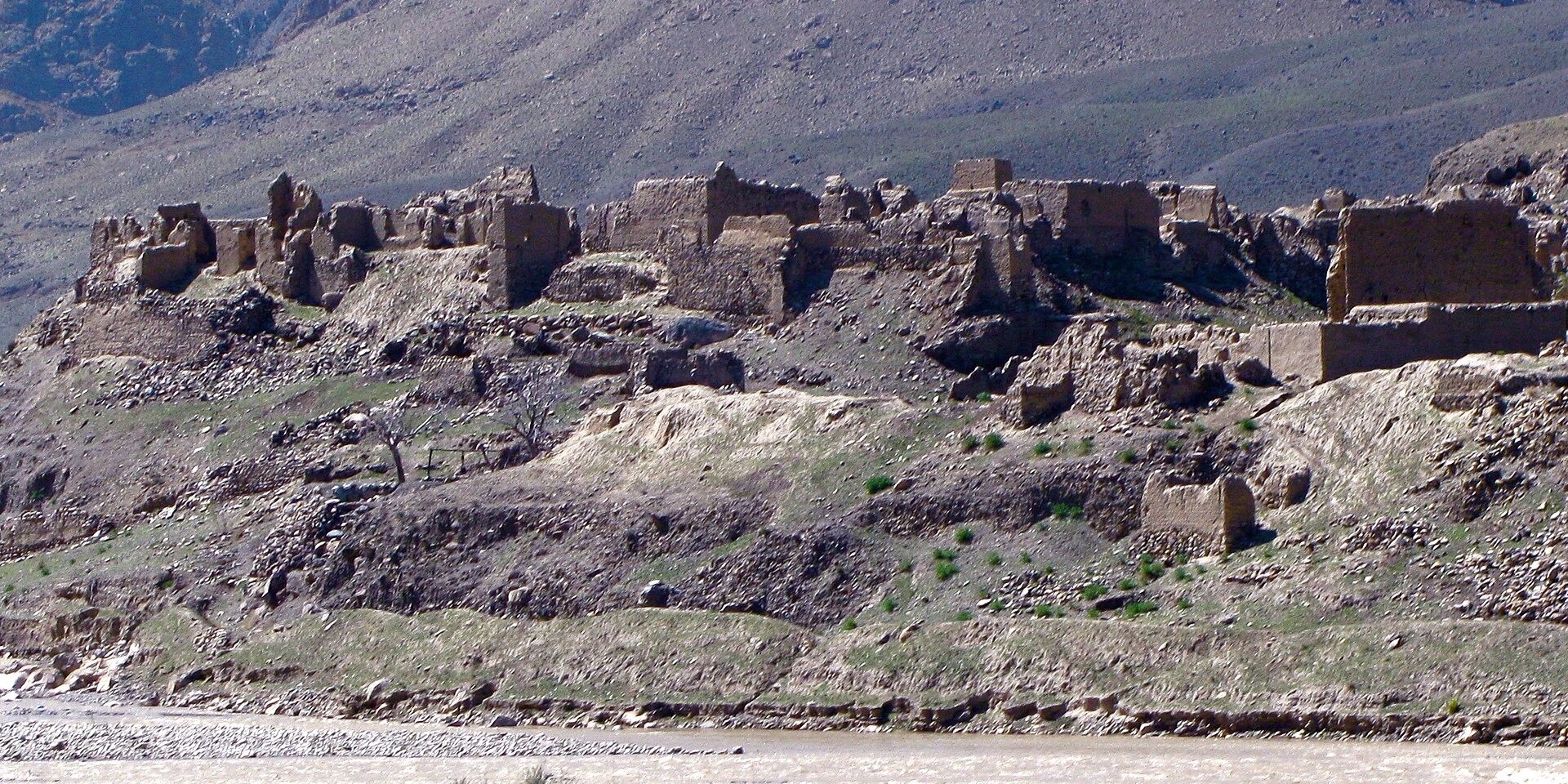
Destroyed Afghan village; image: Todd Huffman.
The Tajik civil war (1992–1997) demonstrated Central Asia’s vulnerability to instability linked with Afghanistan. The Tavildara region became a key area for armed groups, while the Islamic Movement of Uzbekistan (IMU) emerged from domestic opposition, regional instability, and access to Afghan-based networks. The IMU was therefore not simply an external phenomenon but a product of local and regional dynamics intensified by post-Soviet conditions. Journalist Ahmed Rashid reported in The New Yorker that Russian transport helicopters airlifted IMU leader Juma Namangani and 300 men from Tavildara to the Afghan border in January 2001. His account illustrated the complexity of regional security politics surrounding a group that Tashkent viewed as a serious threat.
The September 11 attacks produced another major reversal in Washington’s relationship with Central Asia. The United States returned to the region, this time not as a rival seeking to exploit Soviet vulnerabilities, but as a security partner working with newly independent Central Asian states against militant organizations connected to Afghanistan. Uzbekistan became a key partner because President Islam Karimov viewed the Islamic Movement of Uzbekistan (IMU) as a direct threat to state security. U.S. Secretary of Defense Donald Rumsfeld played a crucial role in developing Washington’s post-9/11 security partnerships in Central Asia. Uzbekistan granted the United States access to the Karshi-Khanabad (K2) air base, which became a major logistics hub for Operation Enduring Freedom, while Uzbek intelligence cooperation contributed to efforts against IMU networks operating from Afghanistan.
The partnership contained a fundamental contradiction. Washington cooperated with a government whose domestic policies toward political and religious groups attracted international criticism, while Tashkent viewed strict security measures as necessary to prevent militant threats. This history continues to shape regional policy, as Central Asian governments remain concerned about instability from Afghanistan while also remaining cautious about external powers pursuing security partnerships primarily for strategic objectives.
Muslim societies were not passive instruments of foreign powers. Many Muslims who opposed Soviet influence acted according to their own political, national, and religious convictions. The deeper problem was that great power competition redirected existing grievances and identities toward strategic objectives, creating networks, narratives, and security dilemmas whose consequences continued long after the original geopolitical struggle ended.
Central Asia’s later security challenges cannot be attributed to a single foreign policy, ideology, or historical event. They emerged from the interaction of external intervention, domestic political choices, institutional weaknesses, and unresolved regional conflicts. Sustainable stability therefore depends not on renewed identity-based competition, but on strengthening institutions capable of addressing social and political challenges without turning religion or identity into tools of rivalry. Uzbekistan’s post-2016 reforms under President Shavkat Mirziyoyev, including changes in religious policy and security practices, reflect an effort to move beyond the previous approach of treating religious activity primarily through a security framework.
The views expressed in this article are those of the author and do not necessarily reflect the official policy or position of the publication, its affiliates, or any other organizations mentioned.