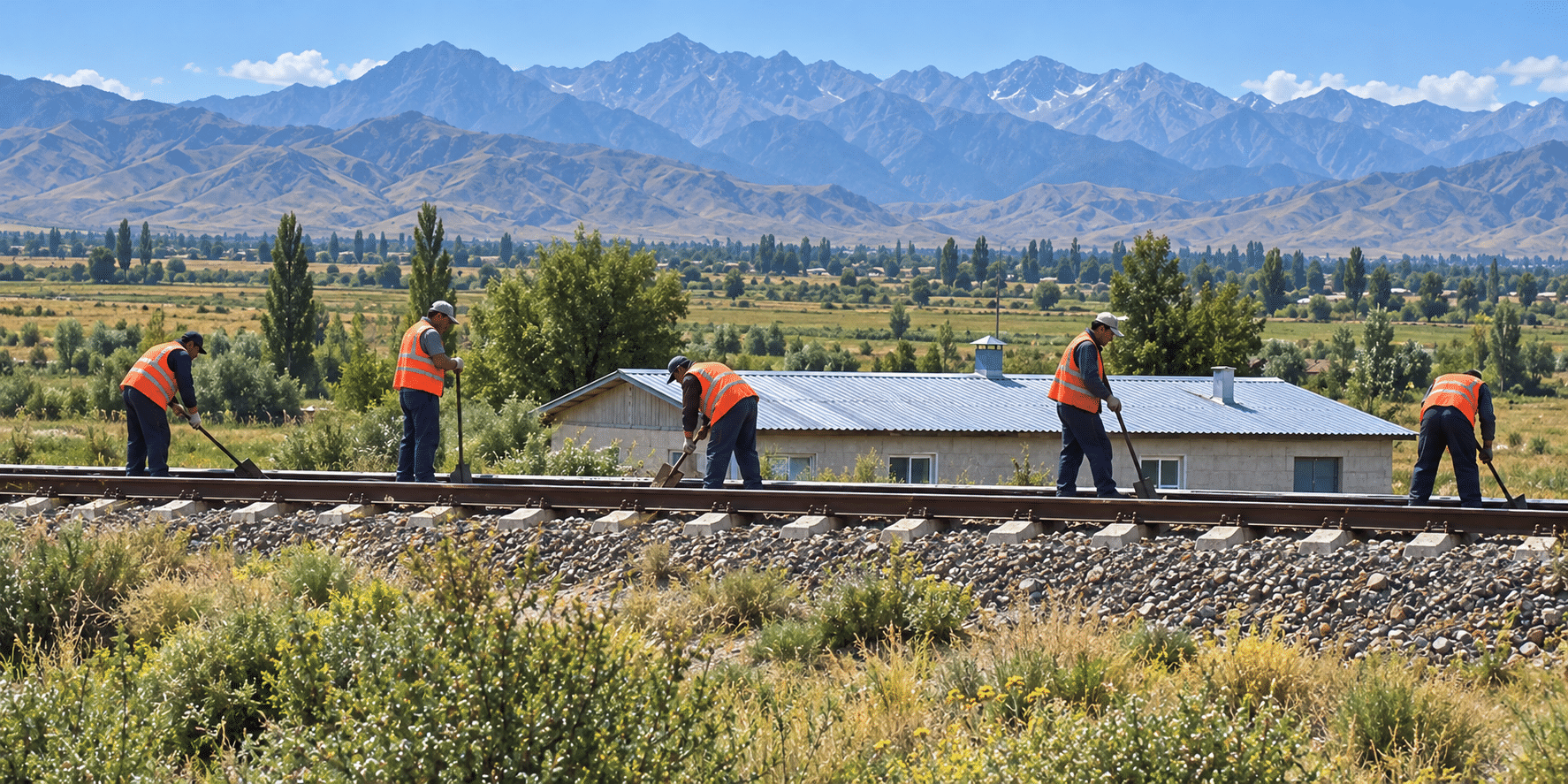
The China-Kyrgyzstan-Uzbekistan railway spent decades on the drawing board. Disagreements over its route and financing held it up long after the three governments endorsed the project. In 2024, a Kyrgyz parliamentarian asked railway officials a simple question: “Where will we find $1 billion?”
A financing agreement signed in Bishkek on December 16, 2025, cleared a major obstacle. The railway is estimated to cost $4.7 billion. Chinese banks will lend about $2.3 billion to the joint project company over 35 years. China holds 51% of the company, while Kyrgyzstan and Uzbekistan each hold 24.5%. The partners will provide the remaining funding as equity.
In June 2026, Kyrgyzstan’s parliament approved in the first reading a separate $304.5 million loan from China’s Export-Import Bank to help fund its own contribution. That loan has a 25-year term. The joint company’s debt and Kyrgyzstan’s borrowing for its stake are different obligations, but both affect how much value the country will need to earn from the line.
Kyrgyzstan wants business around the railway, including terminals and freight services; Uzbekistan gains a direct rail link toward China, while Beijing gains another route west. The governments agreed to build the line, but tariffs and terminal operations will help decide how the returns are shared.
The same division between shared goals and separate deals runs through China’s C+C5 relationship with the five Central Asian states.
At the second China-Central Asia summit in Astana in June 2025, the six countries signed a treaty on eternal good-neighborliness. The Chinese Foreign Ministry also published a list of 55 cooperation documents. The first 14 cover the regional China-Central Asia framework. The other 41 involve Chinese institutions and counterparts in individual Central Asian countries, including local authorities and companies.
The count reflects how the agreements are organized rather than their financial weight. The regional documents cover road permits, customs procedures and green minerals. The country-specific agreements extend into particular industries and investment relationships.
Customs cooperation shows how regional talks can lead to bilateral action. At a meeting on May 21–22, 2025, customs chiefs from China and Central Asia agreed to joint border inspections. The next day, Chinese and Kazakh officials conducted an inspection of Nur Zholy-Khorgos. They agreed to accept more trucks from Kazakhstan and recognize each other’s X-ray inspection images to reduce repeat checks.
Kazakhstan’s customs authority explicitly linked the inspection to the regional meeting. The agreement illustrates how governments can address a shared concern through negotiations at an individual crossing.
The Astana investment agreements reflected different national priorities. Kazakhstan pursued investment protection and applications for China’s BeiDou satellite navigation system, while Kyrgyzstan signed documents on an AI application center and processing industries. These were country-specific arrangements within the wider regional framework.
The railway illustrates why some projects require only a few governments to agree. After recurring disagreements over its route and funding, China, Kyrgyzstan, and Uzbekistan reached a financing settlement in 2025. They did not need all five Central Asian governments to negotiate a single position. Kazakhstan already has direct rail links with China; Kyrgyzstan and Uzbekistan stand to gain a new one. Their interests in future cargo flows may overlap without being identical.
Trade gives those choices greater weight. China’s Ministry of Commerce reported bilateral trade with Central Asia of $106.3 billion in 2025, up 12% on the previous year. China sold $71.2 billion in goods to the region and purchased $35.1 billion. Those totals conceal different trade patterns in each country. They also give governments a reason to seek more production and processing at home.
The Astana summit produced a regional memorandum on green-minerals investment. Actual mines and processing plants will still need contracts specifying who finances them and where the processing takes place. Customs technology raises a similar question. Shared electronic permits can speed freight, but countries must agree which systems can exchange data and who can access it.
Central Asian leaders already consult among themselves before many meetings with outside powers. Their own regional process has developed alongside the expanding C5+ diplomatic formats. Cooperation with China gives them further reason to coordinate where their commercial interests overlap.
The public record offers evidence of joint procedures and some action after regional meetings. It offers less detail on cases where all five governments secured shared financing conditions or common requirements for Chinese investment. Private negotiations may go further than the documents reveal.
Closer coordination need not mean adopting a single commercial policy. Governments could compare financing risks before committing to cross-border projects, giving each a fuller basis for negotiating its own terms.
The railway contracts and the Khorgos agreement show how China’s regional agenda takes shape through individual negotiations. For the countries hosting new connections, the terms will determine how much control they retain and how much income remains after the costs are paid.
The views expressed in this article are those of the author and do not necessarily reflect the official policy or position of the publication, its affiliates, or any other organizations mentioned.