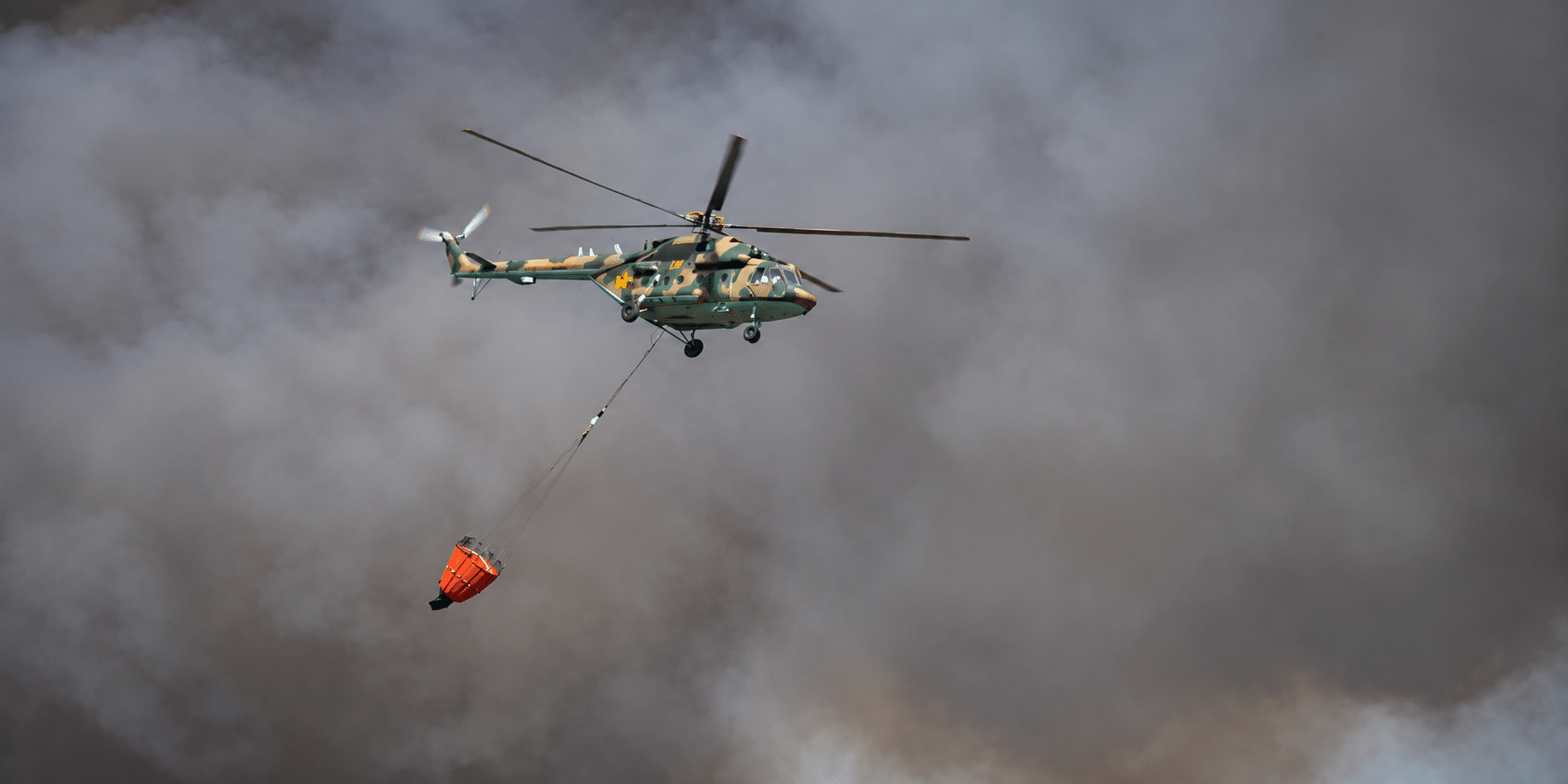
In late October, as firefighters battled forest fires in three regions of Kazakhstan, authorities announced a 300 million tenge (approximately $660,000) project, funded by state-owned Samruk-Kazyna, to restore pine forests in the Semey Ormany nature reserve in the country’s east. The project involves planting three million pine seedlings across 762 hectares.
Three years earlier, a wildfire swept through approximately 60,000 hectares of the reserve. Fourteen forestry workers died, while authorities also counted a local tractor driver who went to help fight the blaze as a 15th victim. Experts estimate that the wider ecosystem could take at least 70 years to recover.
Such losses are particularly severe for Kazakhstan, where forests cover only about 5% of the country’s territory. Kazakhstan is now in the sixth year of a program to plant two billion trees. By the end of 2025, authorities had reported approximately 1.6 billion plantings and seedings, although a later government report put the figure at 1.7 billion. In some years, most seedlings have failed to survive.
What Counts Toward Two Billion Trees?
The program was launched in 2020, with planting originally scheduled for completion by 2025. The deadline was subsequently extended to 2027. Ecology Minister Yerlan Nysanbayev attributed the delay to insufficient funding and a shortage of equipment and resources.
In July 2025, the Ministry of Ecology reported that approximately 743 million were seedlings and another 640 million were seeds sown directly into the ground. Government statistics therefore include both planting and seeding, although the success of the latter depends on germination rates.
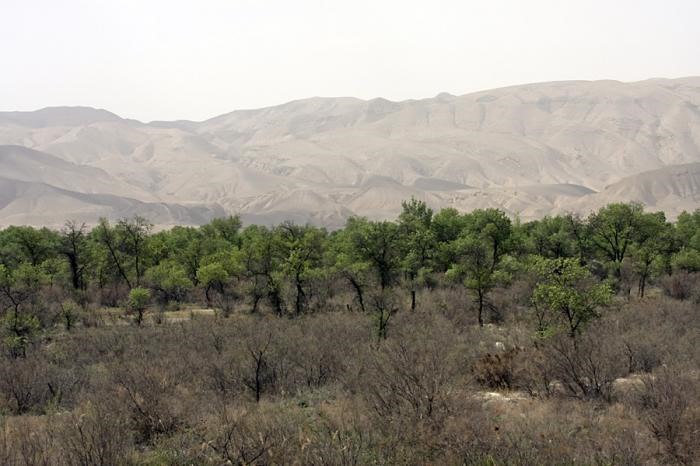
Much of the work is taking place on the dried seabed of the Aral Sea. Once one of the world’s largest lakes, the Aral Sea shrank dramatically after water was diverted from its feeder rivers for irrigation, causing an environmental disaster. Its exposed seabed became a source of salt-laden dust carried by winds far beyond the Aral Sea region, which spans parts of Kazakhstan and Uzbekistan.
To stabilize the sands, workers plant saxaul, a desert tree or shrub with an extensive root system. Between 2021 and 2025, forest reclamation work covered approximately 1.1 million hectares of the former seabed, using both seedlings and seeds.
Saxaul planting helps reduce dust storms, but it serves a different ecological purpose from restoring conventional forests. The two-billion-tree target therefore combines activities designed to address different environmental problems.
Why Seedlings Fail to Survive
According to the Ministry of Ecology, the survival rate of planted trees was 45.3% in 2021, 35.1% in 2022, and 31.2% in 2023. It rose to 50.5% in 2024. Before the program began, the rate had been approximately 54%.
In western and southern Kazakhstan, young plants suffer from drought and high temperatures. Conditions are more favorable in the north and east, where survival rates can reach 70%. At Semey Ormany, the target survival rate for planted pine seedlings is 70% to 90%.
Problems also arise from the way planting campaigns are organized. In October 2024, Prime Minister Olzhas Bektenov accused regional administrations of inflating greening figures and concealing actual results. In the Akmola and Zhetysu regions, no more than 60% of seedlings remained alive after three years.
In March 2026, the government ordered stricter monitoring of seedling survival rates. Until then, public reporting had focused primarily on the number of plants put into the ground.
Forest area also changes through natural regeneration. According to Kazakhstan’s Bureau of National Statistics, the country’s forest resources covered 13.9 million hectares at the end of 2024, approximately 201,600 hectares more than a year earlier. Natural processes, rather than artificial planting, accounted for most of the increase.
Forests That Will Take Decades to Restore
The 2023 fire in Semey Ormany was one of the largest forest disasters in Kazakhstan’s post-independence history. The flames spread through the ribbon pine forests of the Abai region, near the Russian border.
Ribbon pine forests are rare woodlands that extend in narrow strips across steppes and sandy landscapes. They protect soils from wind erosion and provide habitats for wildlife and plants. Similar forest systems are found in Kazakhstan and neighboring parts of Russia.
In 2023, wildfires damaged more than 116,000 hectares of state forest land across Kazakhstan, including approximately 61,100 hectares of forested land. In 2025, authorities recorded 609 fires affecting approximately 62,700 hectares.
Not every tree in a burned area dies: some survive, while certain sections regenerate naturally. But developing a mature pine forest takes decades.
The Semey Ormany project includes upgrading tree-planting equipment, renovating nursery greenhouses, and establishing two modular fire stations. The work is scheduled to continue through 2027, although Samruk-Kazyna said in October 2026 that the planting was already nearing completion.
To expand planting capacity, the government has also announced plans to build six forest nurseries capable of producing up to 36 million seedlings annually.
During the first seven months of 2026, authorities reported another 234 million seedlings planted, although inconsistent official totals make it difficult to establish precisely how close Kazakhstan is to its two-billion-tree target.
In Semey Ormany, the project covers 762 hectares, less than 2% of the area affected by the 2023 fire. Even if every seedling survives, restoring the devastated ribbon pine forests will continue long after the government planting program ends.