Just imagine: only 50 years ago, wildlife was far more abundant across many of the world’s forests, grasslands, rivers, and seas. According to the World Wide Fund for Nature’s Living Planet Report 2024, the average size of monitored vertebrate populations fell by 73% between 1970 and 2020, based on data from almost 35,000 populations worldwide. That extraordinary decline has taken place within a single human lifetime.
We are used to treating this as an environmental statistic, a sad fact trotted out in a nature documentary to which we have little emotional connection. Seen this way, we miss a vital truth: food, agriculture, construction, and forestry all depend immensely on natural systems. Pollination, water filtration, soil fertility, and flood control are among the functions that biodiversity provides for us.
When that infrastructure fails, the economy built on top of it becomes more expensive, then less reliable, and eventually, in some places, unworkable.
Emergency Room
Most of what passes for environmental action today is triage. A river floods a city that paved over its wetlands, and engineers are called in to build higher walls. A heat wave kills crops, and governments subsidize irrigation for farmland that used to be forest. A fishery collapses, and the response is a moratorium, arriving years after the fish are already gone. This is the pattern across almost every domain of environmental policy: we manage consequences with enormous expense, and we manage causes almost as an afterthought.
It is also the least efficient way to run a planet. Treating a symptom after it has metastasized costs orders of magnitude more than preventing it, financially as much as ecologically.
Some of this triage is now unavoidable. The carbon already in the atmosphere will continue influencing the climate for years regardless of what we do next, while a great deal of the damage caused by air pollution is already locked in and can only be managed, not undone. These are debts we are stuck repaying.
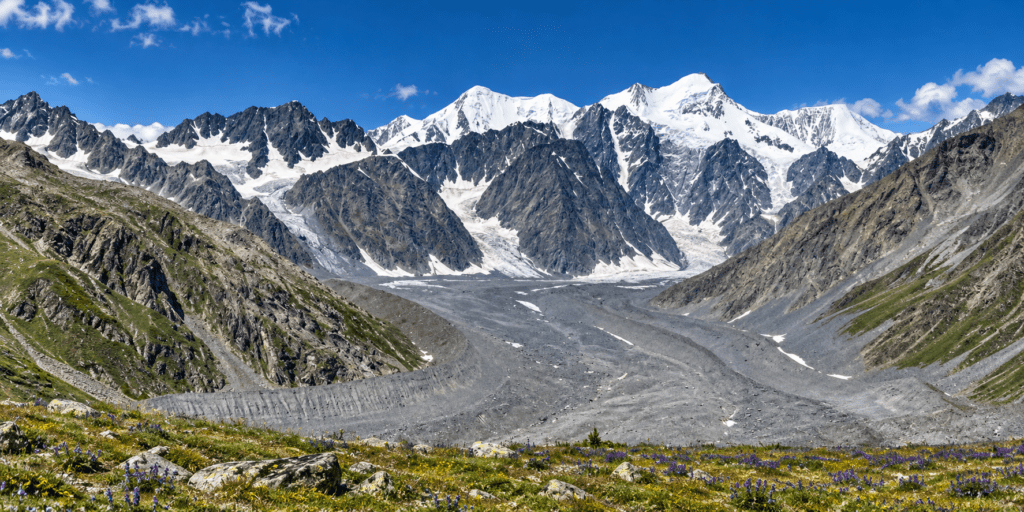
Biodiversity is often different because it is still substantially in our hands. A species pushed to the edge can, with sustained effort, be pulled back from it. A degraded watershed can, over a generation, recover its function. In Kazakhstan, recent estimates place the snow leopard population at between 152 and 189 animals, close to levels last recorded in the 1980s. The recovery has been associated with sustained monitoring and habitat protection. It demonstrates that when species and ecosystems are effectively managed and adequately protected, conservation measures can deliver tangible results by maintaining biodiversity and helping threatened species recover. That kind of recovery is rare in climate policy.
This disconnect risks creating dangerous trade-offs. We cannot decarbonize an economy while continuing to bulldoze the ecosystems around it. An electric vehicle removes tailpipe emissions from a city street, and that is real progress. But it also requires critical minerals such as lithium, copper, nickel, and cobalt, whose extraction can carry substantial environmental costs. None of this is a criticism of electric vehicles. It is a reminder that solving the climate problem does not automatically solve the biodiversity problem. Treating nature and climate as interdependent priorities is the only version of the green transition that actually adds up.
Biodiversity Finance Initiative
Central Asia offers a model for bridging this divide. In 2018, an assessment conducted under the Biodiversity Finance Initiative (BIOFIN) identified a substantial resource gap in Kazakhstan’s protected-area system. The reason was an institutional disconnect: environmental entities were communicating in ecological terms, while fiscal planners were evaluating traditional investment metrics.
BIOFIN helped turn protected-area management plans, which had always read as ecological documents, into prioritized budget instruments with clearly defined costs that a finance ministry could actually act on. The change shows up directly in the numbers. In 2024, government funding for Kazakhstan’s protected areas reached approximately $60 million a year, 2.6 times its 2020 level. Cumulative additional financing between 2020 and 2024 exceeded $130 million.
The parks have become better positioned to generate revenue through tourism and other paid services. That is the institutional half of the fix.
It is also, by Kazakhstan’s own accounting, only a partial fix. The country’s Concept for the Conservation and Sustainable Use of Biodiversity in the Republic of Kazakhstan for 2026–2035 puts the financing required for its action plan at roughly $3.9 billion. Public funding remains dominant: according to the strategy, it accounted for almost 75% of Kazakhstan’s biodiversity expenditure between 2015 and 2022, while the private sector supplied just over 3%.
Closing the remainder means pulling in businesses and sectors whose operations already depend on functioning ecosystems, among them agriculture, tourism, water utilities, and energy. BIOFIN has been helping to design instruments ranging from biodiversity and carbon offsets to payments for ecosystem services and ecotourism certification. Green bonds and blended finance could eventually reduce the risks of private investment in land restoration and sustainable grazing. None of this works without the pipeline of investable, well-measured projects that the earlier budgeting reform created.
Yet policy and financial mechanics alone are not enough. Institutional reforms rely on a deeper human foundation, what researchers sometimes call ecologism, or the practice of people caring for the specific piece of nature nearest to them. Climate advocates spend a great deal of effort trying to make a warming planet feel urgent and specific to people who mostly experience it as a headline. A forest with a name and a memory attached to it does that work automatically. It gives people a reason to defend a place before the place becomes a casualty statistic, and it is very hard to damage something you have already decided to love.
Biodiversity poses a rare environmental challenge because the mechanisms for recovery are proven and within reach. Economic planners and political leaders must now act on this evidence, investing in resilience today rather than paying for crisis management tomorrow.
The views expressed in this article are those of the author and do not necessarily reflect the official policy or position of the publication, its affiliates, or any other organizations mentioned.