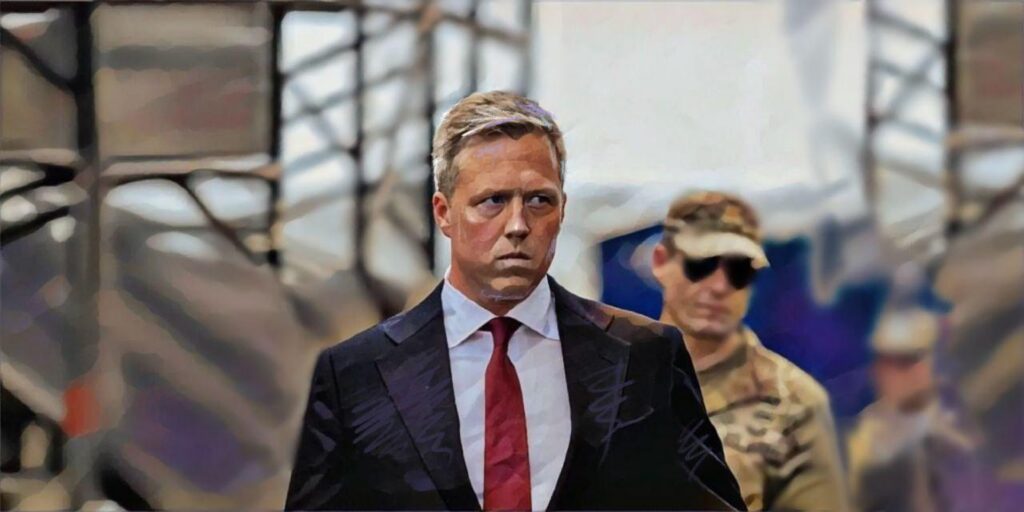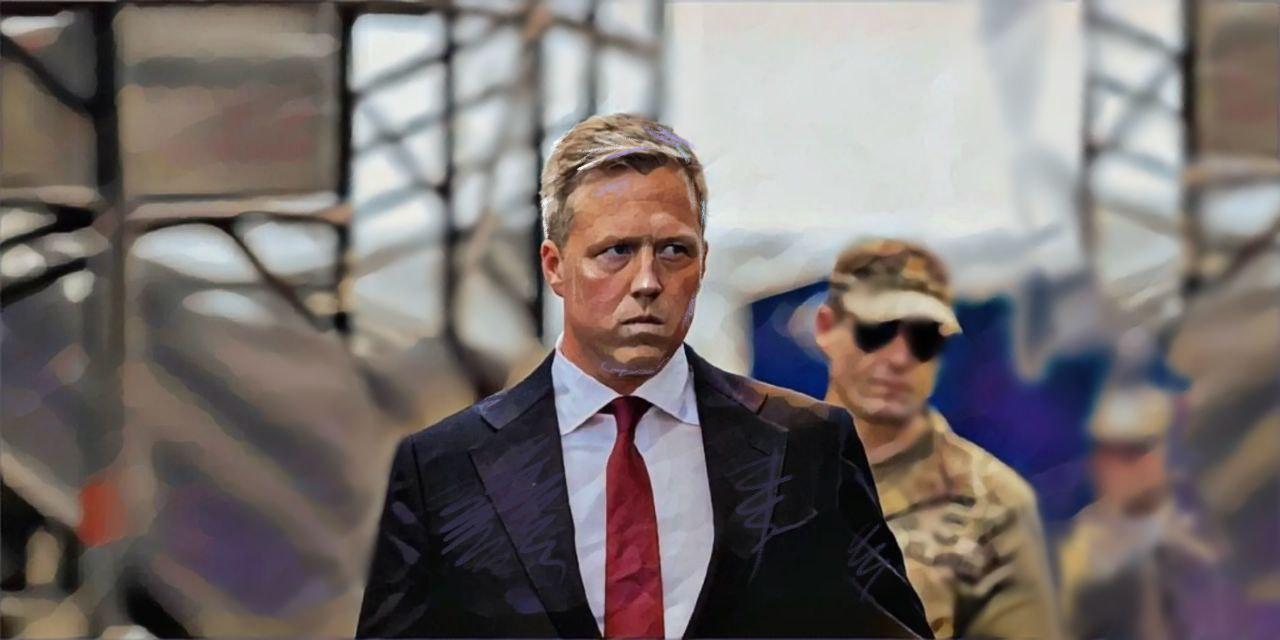
In late January, U.S. Special Envoy for South and Central Asia, Sergio Gor visited Turkmenistan. Accompanying Gor was U.S. Secretary of the Army Daniel Driscoll.
Driscoll’s presence in Turkmenistan, a country with a roughly 1,150-kilometer border with Iran, sparked some speculation that his visit was related to escalating tensions between Washington and Tehran. But while it is unusual for any top foreign military officials to visit Turkmenistan, U.S. military officials have stopped by Turkmenistan relatively often over the course of the last 30 years.
Neutral Turkmenistan
A good trivia question about Central Asia is, which country was the first to join NATO’s Partnership for Peace (PfP) program?
The answer is Turkmenistan, in May 1994, and NATO had just created the PfP program in January of that year.
However, in December 1995, the UN approved giving Turkmenistan official status as a neutral country. Turkmenistan’s president at the time, Saparmurat Niyazov, said as part of that neutral status, Turkmenistan would not join any military blocs or join in aggression against another country.
Then came the September 11, 2001, terrorist attacks on the United States and U.S. President George Bush Jr’s remark that “you’re either with us or against us.”
Central Asia, with its nearly 2,400-kilometer border with Afghanistan, suddenly became a frontline in Washington’s campaign against terrorist groups inside Afghanistan.
The other Central Asian countries, which had watched with dread as the Taliban advanced toward Central Asian borders, quickly expressed their support. Kyrgyzstan, Tajikistan, and Uzbekistan offered the use of military bases to the U.S. and NATO forces that were rapidly being assembled.
Turkmenistan took a different position on events in Afghanistan.
Remaining true to its UN-recognized neutrality status, Turkmenistan engaged with the Taliban and with the government of Burhanuddin Rabbani, whom the Taliban had ousted from power. A round of peace talks between the two Afghan parties was held in the Turkmen capital, Ashgabat, in March 1999.
After 9/11, Turkmenistan agreed to allow U.S. planes carrying non-lethal cargo to transit through Turkmen airspace and to refuel at Ashgabat airport. But officially, that was as far as the Turkmen government was willing to become involved.
The U.S. had already established a military connection with Turkmenistan.
The head of the U.S. Central Command, General Tommy Franks, visited Turkmenistan in September 2000 and again in May 2001. U.S. Secretary of State Donald Rumsfeld visited Turkmenistan in April 2002. General Franks followed in August that year, promising to help Turkmenistan fight the illegal narcotics trade.
The United States gave Turkmenistan two small naval patrol boats for use in the Caspian Sea in 2002, and in 2003, gave 40 Russian-made off-road vehicles to Turkmenistan’s border guards.
Reports started to appear stating that Turkmenistan’s military cooperation with the United States was quietly deepening. The Turkmen government had said when agreeing to allow overflights and refueling that no foreign troops would be stationed in Turkmenistan. But it turned out that a small U.S. Air Force team, only about seven servicemen, was stationed in Ashgabat to help refuel U.S. aircraft at the Ashgabat airport.
In 2004, Russia protested alleged U.S. and Arab construction work at an airfield in Mary, in western Turkmenistan. One report said the U.S. had “gained access to use almost all the military airfields of Turkmenistan, including the airport in Nebit-Dag near the Iranian border.”
Rumors of small, American-built or American-repaired airfields in the empty Turkmen desert continue to this day. Whenever it is discovered by foreign media that members of royal families from Arab countries have come to hunt in Turkmenistan, they are almost invariably said to be landing at remote desert airstrips built by Americans during the 20-year campaign in Afghanistan.
It is not possible to independently verify this information.
Certainly, the Turkmen government never mentioned U.S. servicemen at the Ashgabat airport or airfields being built or repaired by Americans.
It is not in the habit of the Turkmen authorities to admit to ties like these.
For example, in March 2015, U.S. Central Command chief Lloyd Austin mentioned Turkmenistan in testimony before the Senate Armed Services Committee. Austin said, “The Turkmens recently expressed a desire to acquire U.S. military equipment and technology to address threats to their security along their southern border with Afghanistan.”
The Turkmen authorities later rejected Austin’s claim, saying Turkmenistan was capable of securing its own borders.
However, prior to Austin’s comments, fighting in northern Afghanistan just across the Turkmen border was intensifying. There were clashes between Afghan government forces and the Taliban, with both sides also fighting militants from the Islamic State.
There were also two incidents in 2014, when groups from Afghanistan attacked Turkmen forces along the border, resulting in casualties among Turkmen troops, though the Turkmen government never confirmed this.
The same month the U.S. Central Command chief made his comments about Turkmenistan to the Senate committee, Turkmenistan called up its reservists, and in August 2015, it conducted a large-scale military exercise along the Afghan border.
Still a Warm Reception Waiting
U.S. Central Command chiefs continued to visit Turkmenistan after General Franks stepped down; John Abizaid, William Fallon, David Petraeus, James Mattis, and Michael Kurilla all made official trips.
By way of comparison, visits by top Russian military officials are less frequent.
In 2015, as the situation in northern Afghanistan deteriorated, the Turkmen authorities continually denied any problems along their border. Reports from Afghanistan, including video and photos of fighting right along the border, told a different story.
The Kremlin finally forced the Turkmen government to accept a visit from Russian Defense Minister Sergei Shoigu in June 2016 to discuss “CIS” border security. Shoigu’s visit was the first by a Russian defense minister since Turkmenistan became independent in late 1991.
Curiously, the brief statement released by the U.S. State Department ahead of Gor’s arrival in Turkmenistan only mentioned Gor and did not say Driscoll was also in the U.S. delegation.
Turkmen state media, which is tightly controlled by the government, seemed anxious to note Driscoll’s presence, however, reporting President Serdar Berdimuhamedov met with the “U.S. Secretary of the Army Daniel Driscoll and also with …. Gor.” A separate report noted that “Driscoll held substantive meetings with the leadership of the Ministry of Defense of Turkmenistan, with the participation of… Gor.”
Much about the U.S.-Turkmen military relationship remains unknown, save to a select few in those two countries, but it is clear these ties are enduring and important for Turkmenistan.