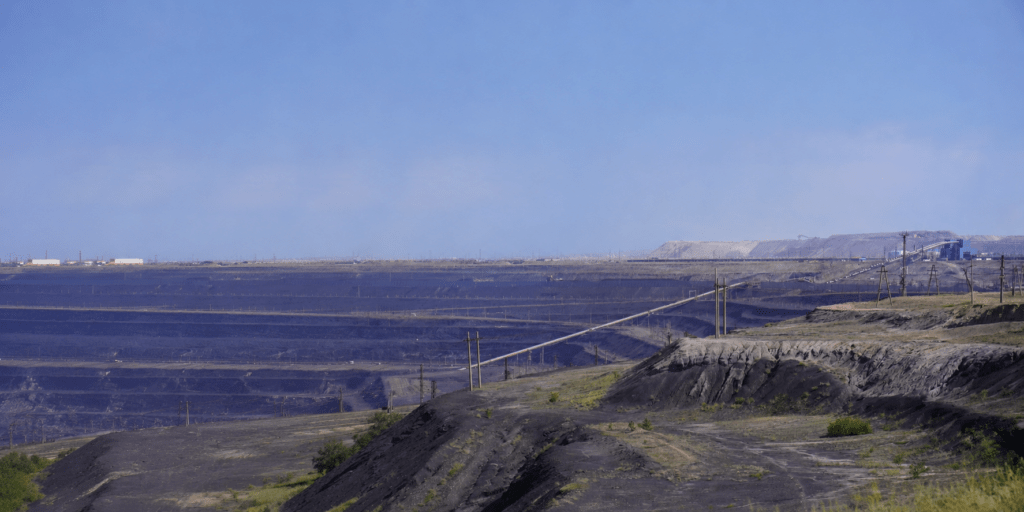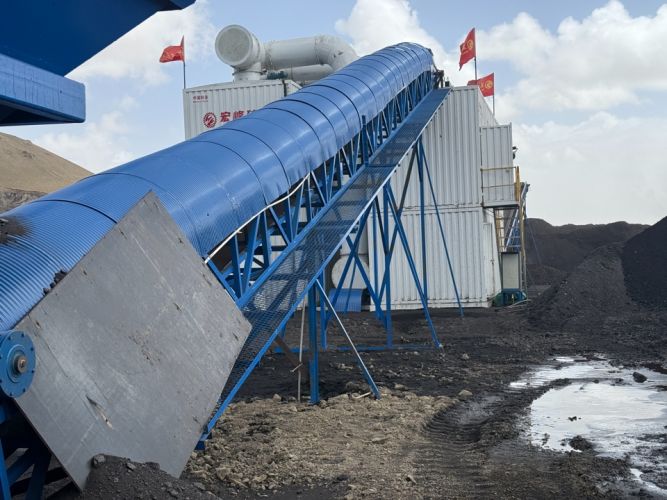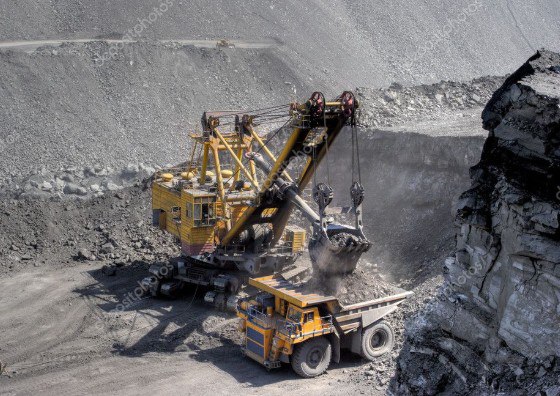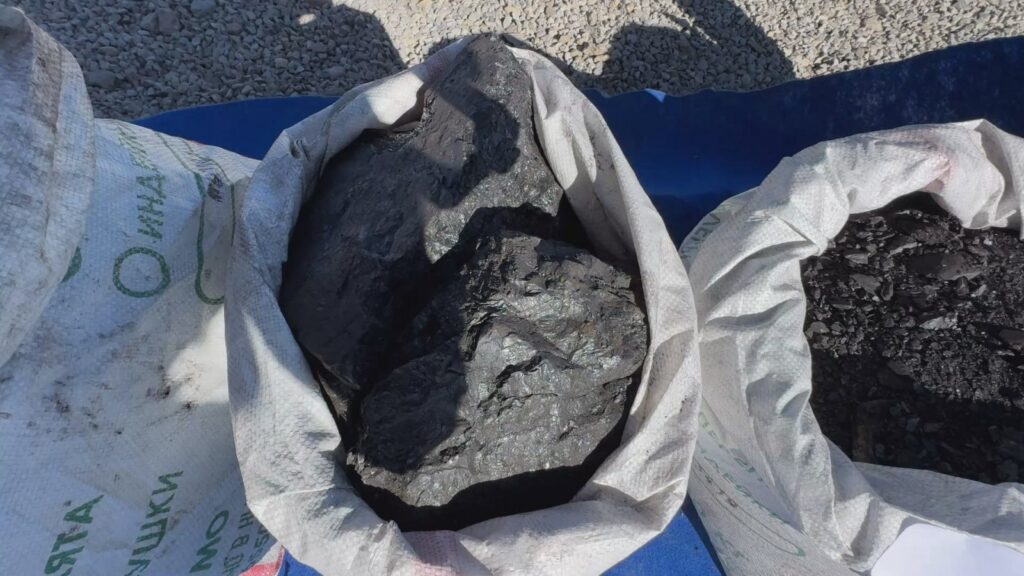
Kazakhstan coal exports reached 7.1 million tons in the first three months of 2026, while the domestic market remained the primary destination for the country’s coal producers, Nikolai Radostovets, executive director of the Republican Association of Mining and Metallurgical Enterprises, said at the VII Coal Industry Forum.
Energy Ministry figures have put Kazakhstan’s 2025 coal production at around 115.9 million tons. Of that amount, 85.9 million tons were supplied to the domestic market, including the housing and utilities sector and thermal power plants, while exports amounted to 30 million tons.
Kazakhstan’s main coal export destinations remain Russia, Poland, Uzbekistan, Turkey, India, and Malaysia, Radostovets told participants at the Coal Industry Forum, held as part of the Astana Mining & Metallurgy Congress, AMM 2026.
Coal output is expected to rise this year to 128.9 million tons. In January-March, nearly 29 million tons of coal were mined, while exports reached 7.1 million tons, according to industry association data.
“One of the key tasks for the industry remains ensuring stable supply to the domestic market, including thermal power plants and the housing and utilities sector,” Radostovets said, whilst also stressing that exports remain a crucial part of the sector’s sustainability.
“Exports ensure workload for enterprises, foreign currency earnings, tax revenues and stable production programs. Domestic needs are always prioritized, but exports help maintain overall production levels and the financial sustainability of enterprises,” he said.
He also warned that Kazakhstan’s coal exports face mounting transportation risks linked to geopolitical shifts across Eurasia, as well as insufficient capacity in regional logistics infrastructure.
To preserve export potential, Radostovets said Kazakhstan needs more predictable tariff-setting by transport operators, expanded alternative logistics routes, improved efficiency at the Caspian ports of Aktau and Kuryk, and stronger intergovernmental coordination on transit issues.
Meanwhile, Kazakhstan’s Energy Minister Yerlan Akkenzhenov sought to reassure coal producers that domestic demand for their products is likely to grow in the coming years as the government expands coal-fired power generation.
“Against the backdrop of rising electricity consumption, industrial growth and the development of the digital economy, reliable baseload generation is becoming increasingly important. In this regard, the government has approved the national project ‘Development of Coal Generation,’” Akkenzhenov said.
The program covers 2026-2030 and provides for the construction of new energy facilities, while expanding or modernizing existing installations. This is expected to create additional demand for around 20 million tons of thermal coal per year by 2030.
Kazakhstan’s renewed emphasis on coal reflects a wider tension in its energy policy. The government is seeking a route out of electricity shortages and provide reliable baseload generation for industry, data centers, and other energy-intensive sectors, while also maintaining its formal target of achieving carbon neutrality by 2060. Officials have argued that new coal capacity will be paired with cleaner technologies and modern emissions controls, but the scale of the planned expansion underlines how central coal remains to Kazakhstan’s power system.
The national project includes eight new coal-generation facilities, including major projects in Ekibastuz, Kurchatov, and Zhezkazgan, as well as new combined heat and power plants in Kokshetau, Semey, and Ust-Kamenogorsk. The Energy Ministry’s detailed project list also includes a thermal power plant in Karaganda.
“This will help cover growing electricity demand and improve the reliability of the unified power system,” the minister said.
At the same time, Akkenzhenov acknowledged that coal generation faces the challenge of balancing energy security, supply reliability, and environmental requirements.
The ministry understands that building new power plants alone will not be enough without a stable fuel base, he said, promising to synchronize power sector development with the expansion of coal mining capacity, transport infrastructure, and logistics.
A long-term fuel balance plan and predictable supply mechanisms are also being developed as part of a broader Coal Industry Development Plan, which will complement the national coal generation strategy.
As previously reported by The Times of Central Asia, Kazakhstan’s coal reserves are estimated to be sufficient for another 200 to 300 years, depending on production intensity.