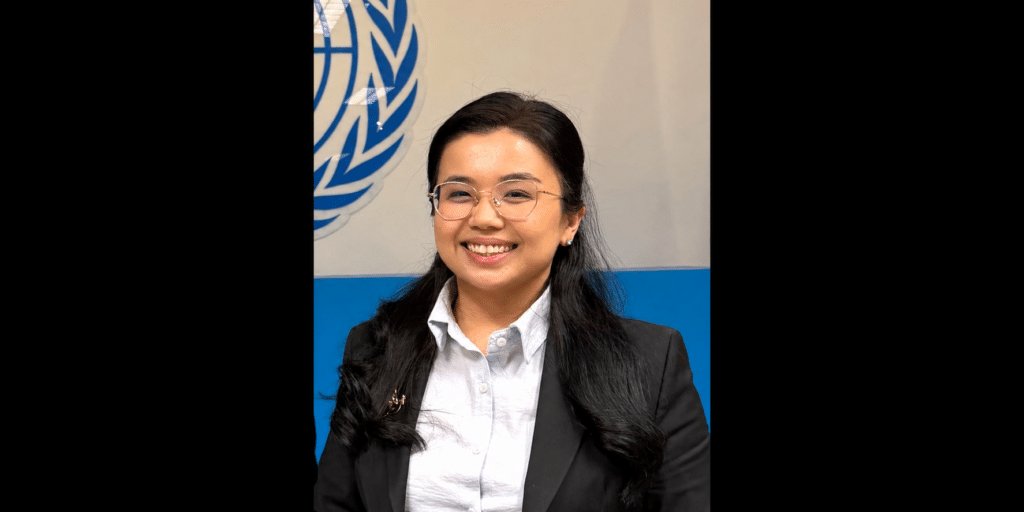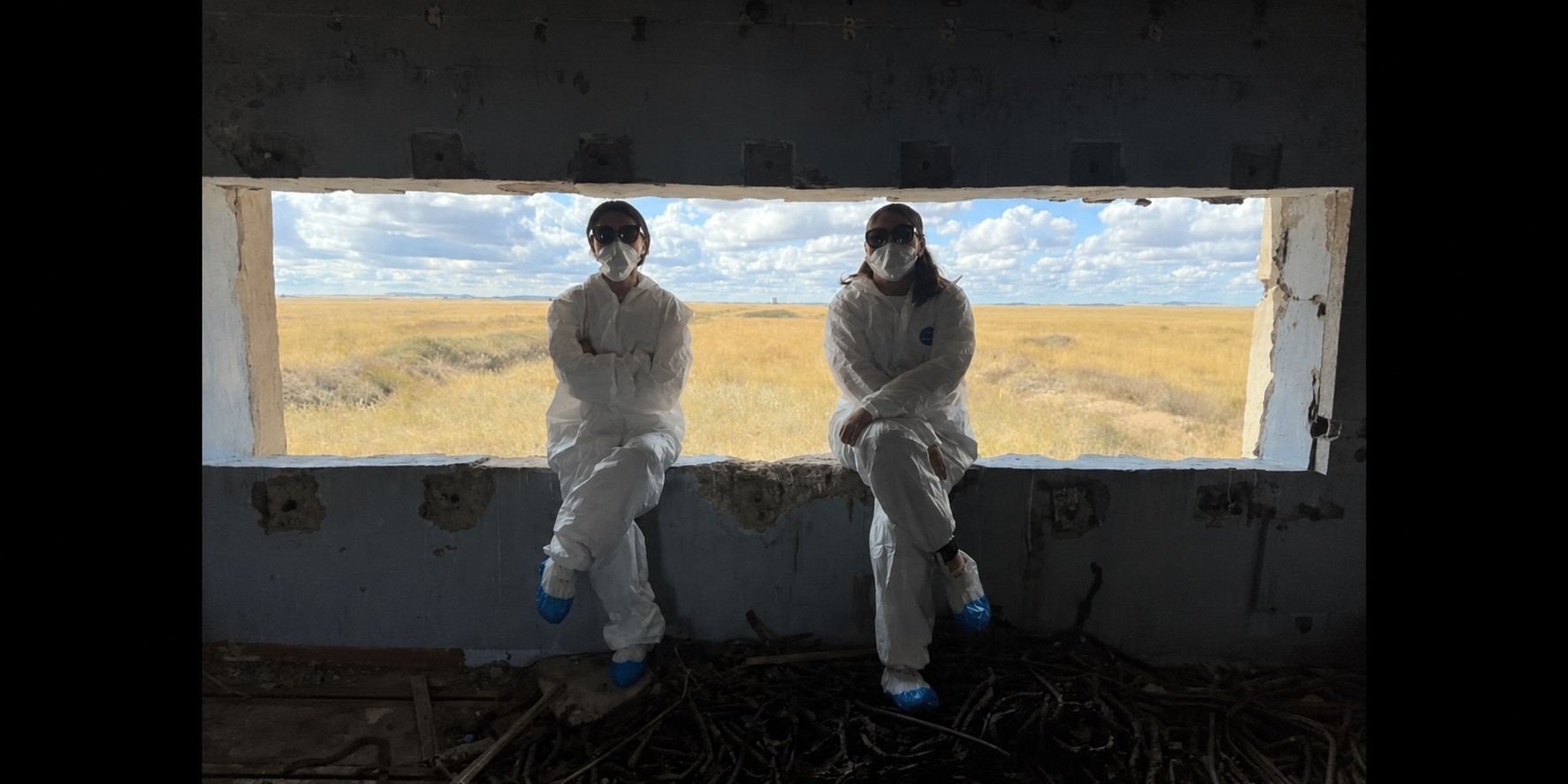
Zhanana Kurmasheva is a Kazakhstani documentary filmmaker and graduate of the T. K. Zhurgenov Kazakh National Academy of Arts, where she studied film directing. Her debut feature documentary, We Live Here, turns to the human legacy of the Semipalatinsk nuclear test site through the lives of people still living with its consequences.
The film became the first documentary from Kazakhstan selected for competition at CPH:DOX, one of the world’s leading documentary film festivals. Over the past year and a half, We Live Here has screened at international festivals and was nominated for Best Documentary Film at the 2025 Asia Pacific Screen Awards.
In an interview with The Times of Central Asia, Kurmasheva discusses why the story of the Semipalatinsk test site resonates with audiences around the world, what it was like filming on contaminated land, the growing interest in tours to the area, and why her next film will focus on consumerism.
TCA: Zhanana, We Live Here premiered at CPH:DOX in Copenhagen, one of the world’s leading documentary film festivals. What did that moment mean for you?
Zhanana: In the world of documentary cinema, CPH:DOX is one of the most prestigious festivals. Every filmmaker wants to be there because it showcases more than 200 of the strongest documentaries from around the world each year. Our film also became the first Kazakh project ever invited to compete in the festival. There were only 12 films in our section, and getting in was extremely difficult because the competition was intense. Being included in a program of that caliber came as a huge surprise to us.
TCA: Why was it such a surprise?
Zhanana: Honestly, when we were making this film, we never expected this level of success or invitations to so many festivals. By documentary standards, our project was produced on a very modest budget provided by Kazakhstan’s national film fund. The film was made largely through enthusiasm and dedication, without major international resources or influential foreign co-producers. We did everything ourselves. That is why I’m grateful for the opportunity CPH:DOX gave us. Participation there immediately brought international visibility to the film.
TCA: What role did producer Banu Ramazanova play in bringing the film to international audiences?
Zhanana: The fact that this film happened at all is largely thanks to our producer, Banu Ramazanova. She single-handedly promoted the film using her own resources. She believed in the project so strongly that she proved documentary cinema is worth investing in and that it can achieve a very high level. It’s wonderful that we have producers like her in Kazakhstan who genuinely care about the future of our documentary industry.
TCA: Why do you think the selection committees responded to the film?
Zhanana: It’s difficult for me to judge because we weren’t the ones making the selections. But if I had to guess, several factors played a role. First, Central Asia is still largely absent from the global documentary landscape. People know very little about our region, so any appearance of material from here naturally attracts attention.
Second, the threat of nuclear weapons is a global issue. It concerns people in every country and remains highly relevant, arguably becoming even more urgent with each passing year. It’s not a local problem; it’s something that affects all humanity.
And then there is the legacy of the Soviet Union. In the West, anything connected to the former USSR continues to generate significant interest. People are still trying to understand the phenomenon and the inner workings of that vast but closed system.
TCA: What kind of reaction did the film receive?
Zhanana: People cared deeply. We were surprised by how many wanted to see it. Kazakhstan has traditionally been represented internationally through fiction films, not documentaries. Most viewers are far less familiar with our region than they are with Europe, the United States, Southeast Asia, or Latin America. And suddenly there was a documentary from Kazakhstan.
In Copenhagen, a large number of Kazakhs attended the screening. The organizers reached out to the local community and diaspora, creating a very warm atmosphere. After the screening, people told us the film moved them so deeply that it felt like returning home, as if they had gone back to their native village. Everything resonated with them on a personal level.
What’s more, the impact went beyond emotion. One audience member helped the film’s protagonist, a victim of the test site who needed medical treatment, find a doctor in Kazakhstan. That doctor is now monitoring her health and conducting tests free of charge.
TCA: And how did international audiences react?
Zhanana: The dominant reaction was surprise. People were shocked that this had happened at all. It turned out that many viewers knew very little about how Kazakhstan had suffered because of the Semipalatinsk test site or the scale of the damage inflicted on our land. People asked many questions. Some shared stories about visiting Kazakhstan. Others said they had read about the country. Some even expressed a desire to visit the former test site themselves.
TCA: Your film has been screened internationally in many countries. Where was the response strongest?
Zhanana: I wasn’t able to attend every festival; it’s physically impossible, but among those I did attend, Canada stands out. Audiences there were surprisingly knowledgeable about the subject.
Australia was also memorable because our film became the first Kazakh documentary ever nominated for what is often called the “Asian Oscar,” the Asia Pacific Screen Awards. During the Q&A, there were many questions and requests for clarification, and my producer and I tried to answer everything as thoroughly as possible.
TCA: Looking at the films that competed alongside yours, could you identify any trends in documentary filmmaking? What are documentary filmmakers focusing on today?
Zhanana: I think it depends very much on the region. In the United States, there is a strong emphasis on storytelling and entertainment value. Films are often structured in ways that make them suitable for streaming platforms.
Europe tends to favor reflection, humanitarian themes, and a more philosophical perspective. We are also seeing more films coming out of conflict zones. Ukraine, for example, is receiving a great deal of attention right now. Documentary cinema is uniquely capable of capturing and preserving a historical moment as it unfolds.
TCA: Documentary films often respond quickly to the times. We are living through a digital era that is transforming culture and society. Have new ways of telling stories emerged?
Zhanana: Over the past year and a half, while traveling to festivals, I haven’t seen any fundamentally new cinematic language or radically experimental approaches. Most films are still built around similar dramatic structures and use many of the same tools and methods.
The diversity lies more in the themes than in the language of filmmaking. There are more documentaries with comedic elements, and more films about LGBTQ and queer communities that explore how people with different sexual orientations live within their societies.
But I wouldn’t say there has been a revolution. In the end, good films still win. At CPH:DOX, for example, the winning documentary was the remarkable Chinese film Always, which tells the coming-of-age story of a young poet.
TCA: Let’s return to We Live Here. How did the idea for the film first emerge?
Zhanana: The idea came from my own family history. My grandparents lived in the area affected by the Semipalatinsk nuclear test site. Like many people in eastern Kazakhstan, they experienced the consequences of nuclear testing firsthand.
As I grew older, I realized that while we often talk about the political and historical dimensions of the test site, we rarely hear the voices of the people who continue to live there today. I wanted to understand what daily life looks like for them now. How do they perceive the land they live on? Do they think about radiation every day? What are their hopes, fears, and routines? The film became an attempt to answer those questions.
TCA: How long did filming take?
Zhanana: The entire process took several years. Documentary filmmaking always requires patience because life does not unfold according to a script. You can plan, but reality often changes your plans completely. We made multiple trips to the region, spent long periods with the protagonists, and tried to gain their trust. That trust is absolutely essential in documentary cinema. People have to feel comfortable enough to allow a camera into their lives.
TCA: Was it difficult to find protagonists?
Zhanana: Very difficult. At first, many people were wary. Some simply did not understand why anyone would be interested in their lives. Others were tired of journalists who came for a day, collected dramatic stories, and then disappeared. We wanted something different. We wanted to build relationships and spend time with people. Eventually we found individuals who were willing to share their experiences honestly and openly.
TCA: Did filming in areas associated with radiation create any concerns?
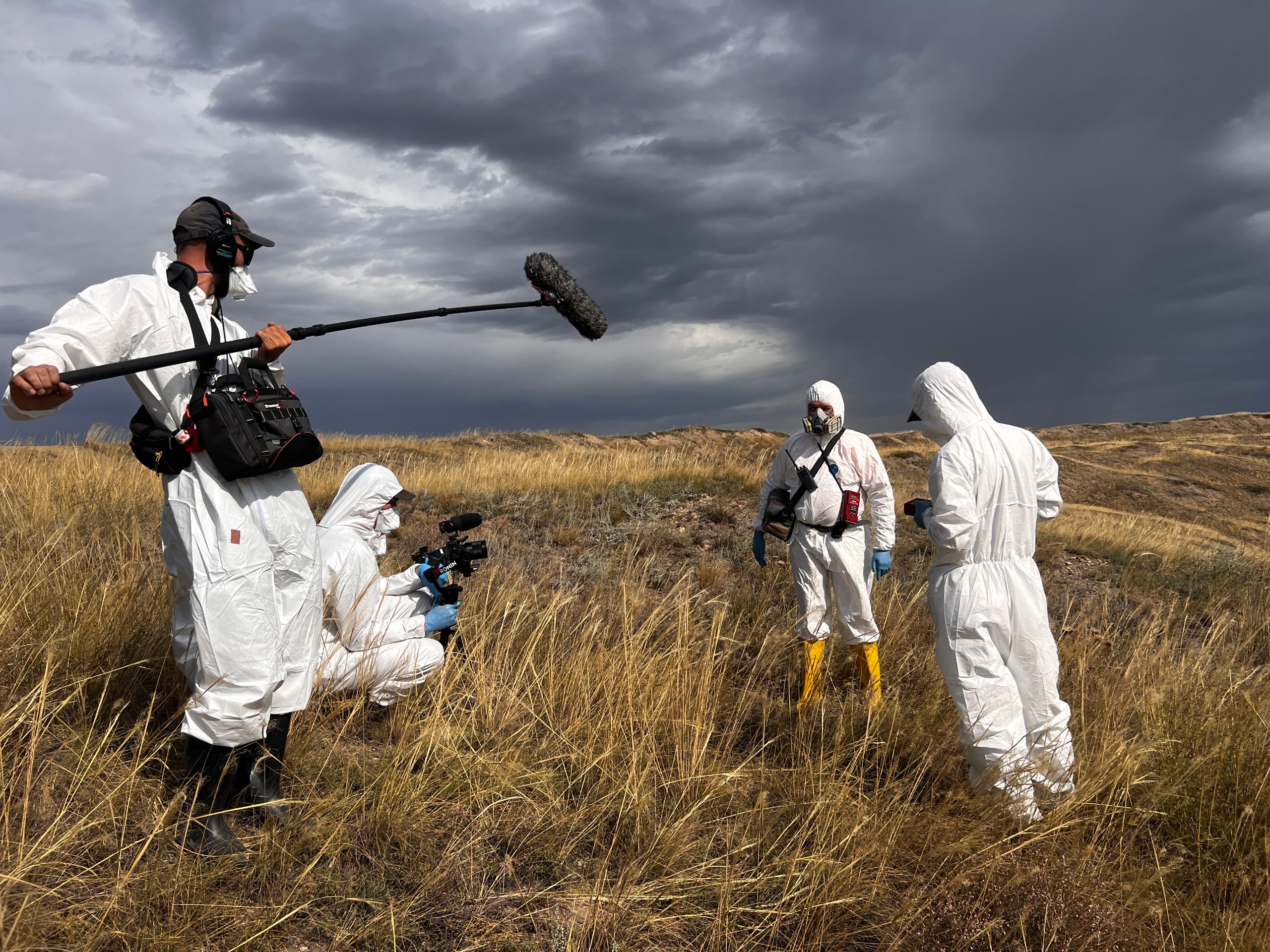
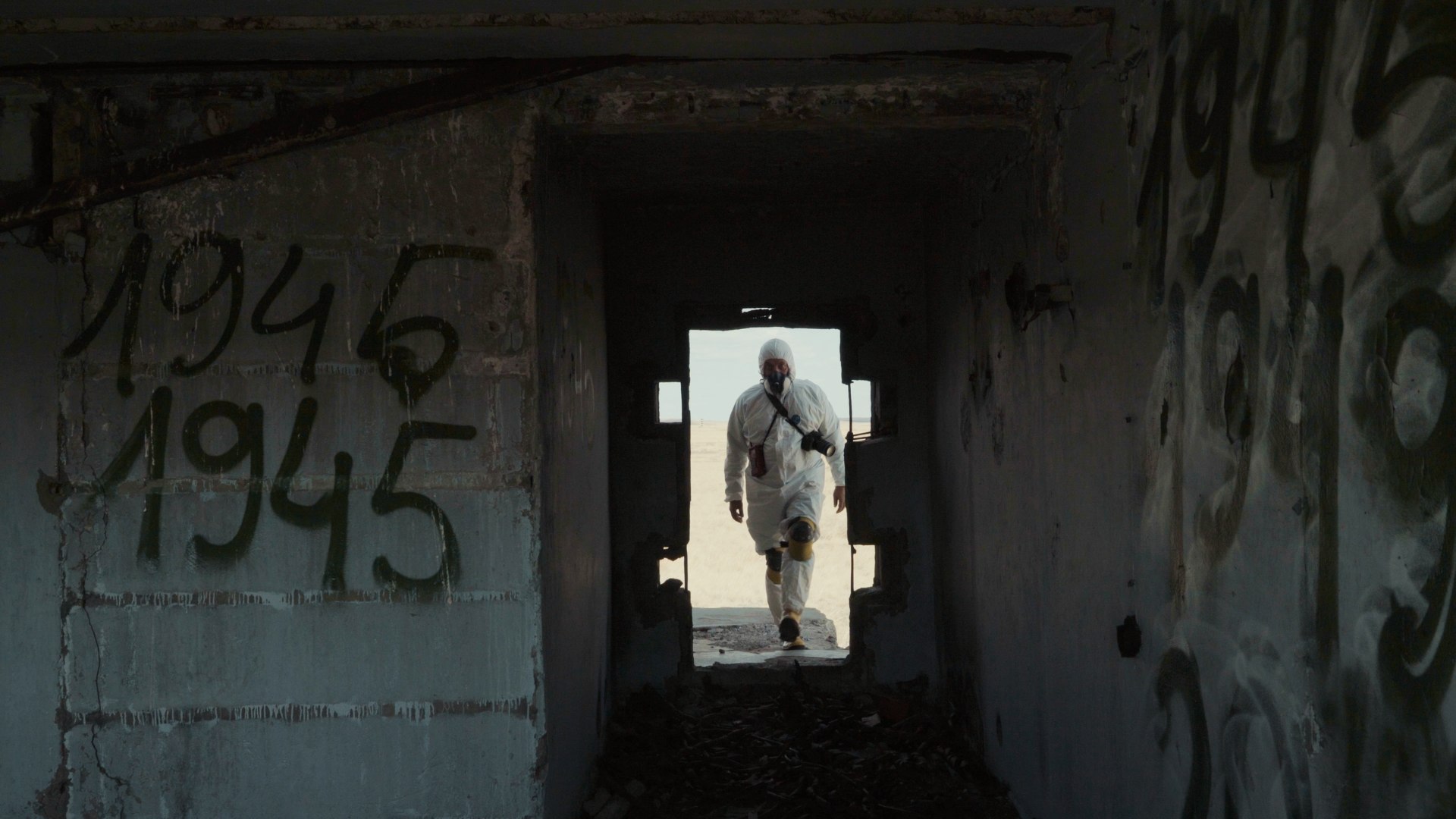
Zhanana: Of course. It would be strange not to think about it. Before filming, we consulted specialists and studied the safety requirements carefully. At the same time, one of the key messages of the film is that people have continued to live there for decades. Entire communities have adapted to these conditions. The issue is complex and cannot be reduced simply to fear. We followed all recommendations and tried to approach the subject responsibly.
TCA: In recent years, there has been growing interest in so-called “dark tourism.” Some travelers specifically want to visit places associated with disasters, tragedies, or historical trauma. Has the Semipalatinsk test site become part of that trend?
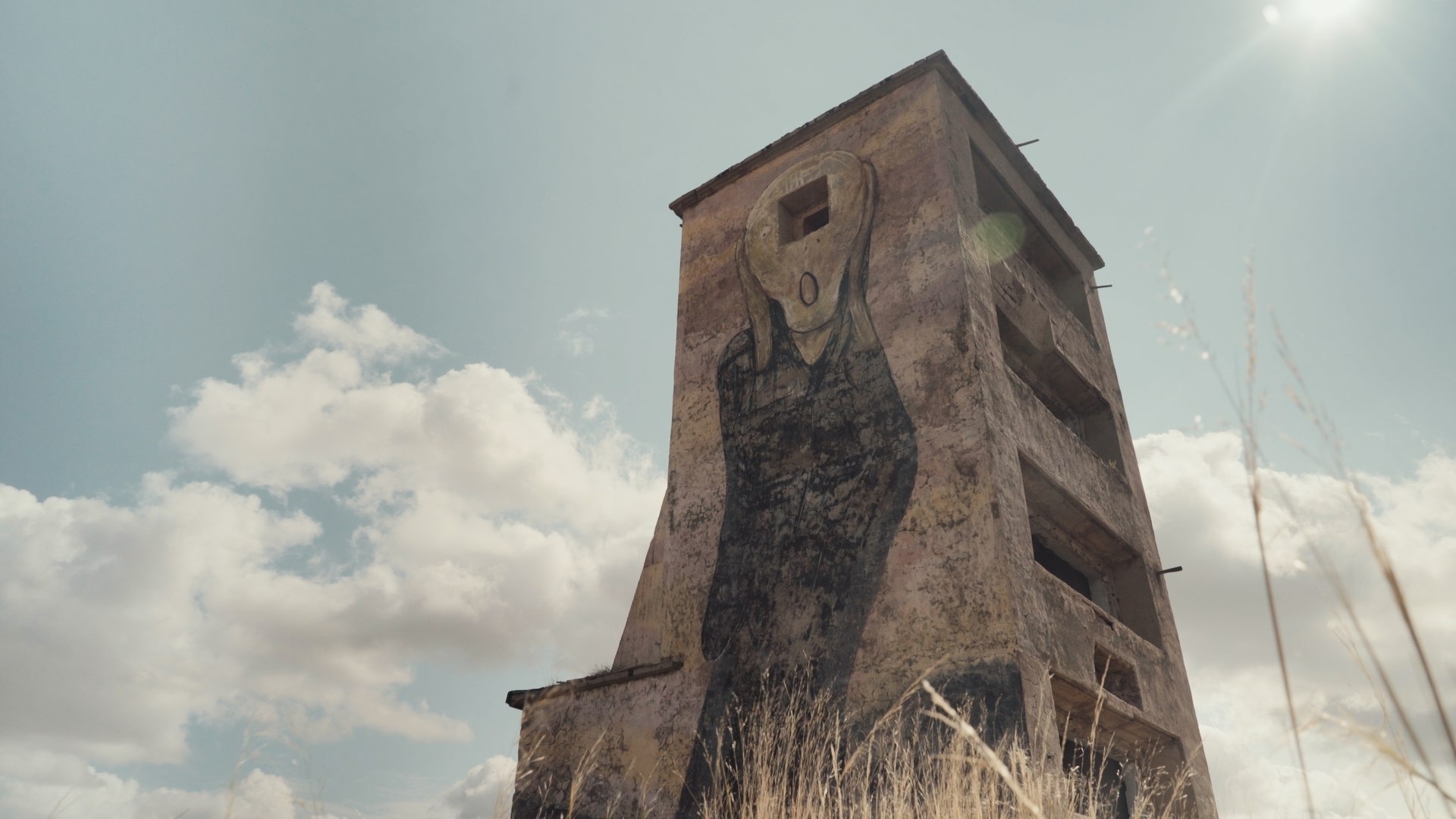
Zhanana: Yes, interest is definitely growing. During festival discussions, people often asked how they could visit the region. I have mixed feelings about that. On one hand, increased awareness is important. People should know what happened there and understand the consequences of nuclear testing. On the other hand, this is not an amusement park. It is a place connected to enormous human suffering. Any tourism there should be approached respectfully and thoughtfully.
TCA: Has making this film changed your own perception of the test site?
Zhanana: Absolutely. Before the project, I understood the issue mostly through historical facts, statistics, and family stories. But when you spend time with people who live with these consequences every day, the subject becomes deeply personal. You begin to understand that the legacy of nuclear testing is not confined to history books. It continues to affect real people, real families, and real communities. That realization stays with you.
TCA: Do you think younger generations in Kazakhstan know enough about this history?
Zhanana: Probably not. Many young people know that nuclear tests took place, but they often do not understand the scale of what happened or the long-term consequences. That is one reason documentary cinema matters. It can help preserve memory and connect historical events with contemporary reality.
TCA: Has the film been shown in Kazakhstan?
Zhanana: Yes, and that was very important to us. International recognition is wonderful, but ultimately this is a story about Kazakhstan and about people who live here. We wanted local audiences to see the film and engage with the discussion. The reactions were often emotional because many viewers have personal or family connections to the region.
TCA: What did the protagonists think after seeing the finished film?
Zhanana: They were nervous at first. That is natural. When people see themselves on screen, they often worry about how they will be perceived. But overall, they were happy. They felt their stories had been treated with dignity and respect. For me, that was one of the most important outcomes.

Zhanana Kurmasheva, from a personal photo archive
TCA: What are you working on now?
Zhanana: My next project is very different. If We Live Here was about the relationship between people and a damaged landscape, the new film explores consumerism and modern patterns of consumption. We live in a world where people buy more and more things, often without understanding why. Consumption has become deeply connected to identity, status, and even emotional well-being. I’m interested in examining that phenomenon through a documentary lens.
TCA: That sounds like a major shift in subject matter.
Zhanana: It does, but I actually see a connection. Both films are about the consequences of human choices. The first looks at the consequences of political and technological decisions made decades ago. The second examines how our everyday decisions as consumers shape the world around us. In both cases, I’m interested in the relationship between individuals and larger systems.
TCA: What do you hope audiences take away from your work?
Zhanana: I don’t like telling viewers what they should think. What I hope is that people leave with questions; questions about the world, about their own lives, and about the systems they live within. If a film encourages someone to reflect, to learn more, or to see a familiar issue from a different perspective, then I think it has accomplished something meaningful.