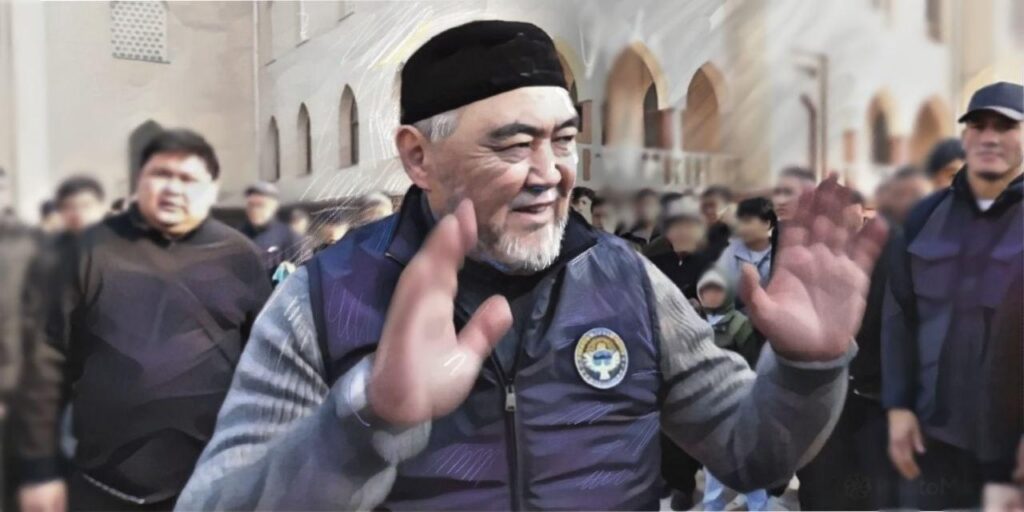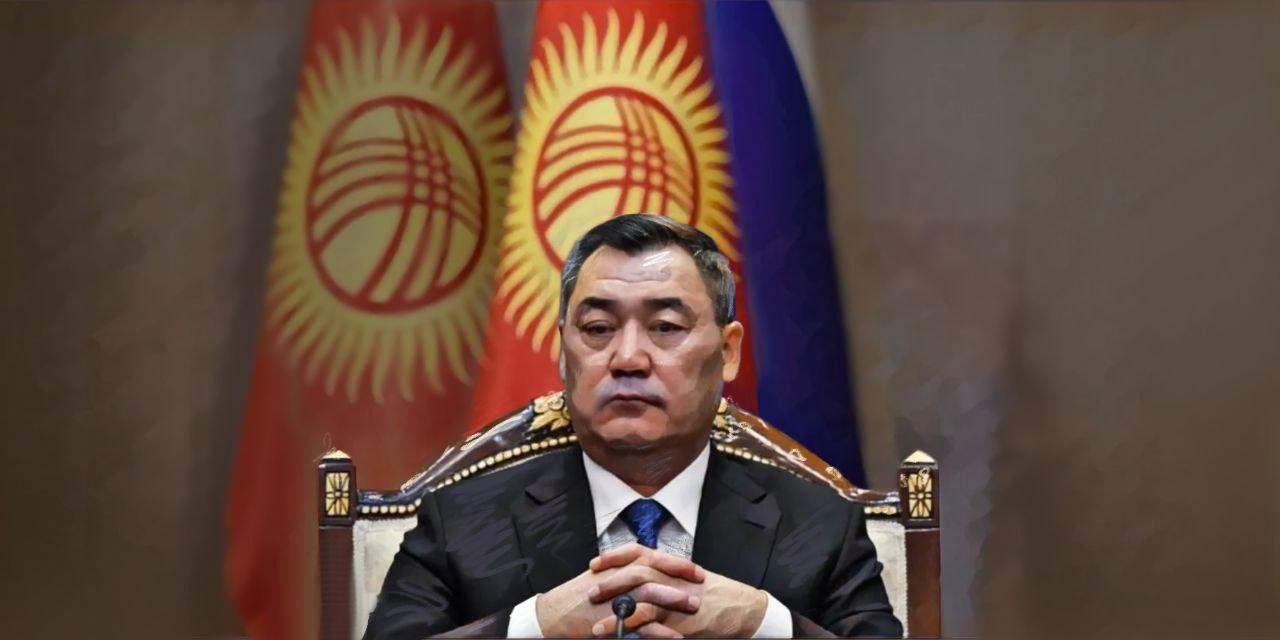
When Kamchybek Tashiyev returned to Bishkek from medical travel abroad after losing his post as Chairman of the State Committee for National Security (GKNB), as well as the deputy chairmanship of the Cabinet of Ministers, he returned to a system already being disassembled. Kyrgyzstan’s President Sadyr Japarov dismissed him on February 10, ending a five-year arrangement in which the presidency and the security apparatus were closely fused. The decision deliberately dismantled the governing tandem that had defined Kyrgyzstan’s power structure since 2020. The immediate question was whether this was a closing of an episode or the opening of a new one. The first wave of moves suggests the latter: a transition toward a more personalized presidency, with the internal-security bloc fractured and its succession logic unsettled.
Japarov publicly framed the decision as preempting an institutional split. He explicitly pointed to parliamentary groupings that began sorting deputies into “pro-president” versus “pro-general” camps. Russian-language coverage has tended to present the episode as an effort to end a dual-power configuration, not merely to remove one official. This narrative implies that the state’s operative center of gravity had already begun drifting away from predictable office-holding and toward informal allegiance tests. Once such a dynamic becomes evident, according to such a telling, the preservation of regime coherence often requires rapid, coercive re-centering.
Domestic Political Configurations
The first domestic signal was indeed speed. Along with Tashiyev, senior security officials were removed, and an acting head was installed pending parliamentary procedures. The point here was not just about personnel but about the timing: the presidency moved first, then moved again, so that no alternative pole could consolidate inside the security institutions. If the system had been built around a Japarov–Tashiyev tandem, then the immediate dismantling of Tashiyev’s proximate layers was also a message to the broader stakeholder society that the presidency would decide who inherits the southern security networks and clan linkages. Japarov was clearly conveying a signal of dominance that ruled out negotiation.
A second signal came through parliament. Speaker Nurlanbek Turgunbek uulu resigned shortly after the dismissal, amid reporting that he was politically close to Tashiyev and vulnerable once the security bloc shifted. Russian reporting treated the speaker’s resignation as part of the same chain reaction set off by the February 10 decree. This was part of a pattern whereby institutional actors in Kyrgyzstan’s domestic politics reorient quickly toward whoever appears to be winning in the short term. Loyalty is anticipatory because the penalty for backing the wrong camp can arrive through law enforcement, prosecutorial pressure, or reputational destruction.
A third signal emerged through the revived early-election debate. The open-letter campaign and talk about a “snap election” did not arise in a vacuum; it built on a preexisting argument about constitutional timing and mandate renewal. That development provided a political vocabulary for testing whether the tandem’s first stage had ended. The credible possibility of early elections has destabilized patronage, compelling every member of the political class at every level to recalculate expectations. Every political actor has been forced to reassess political loyalty, mobilization capacity, and regional leverage.
The fourth domestic signal was the continuity of coercive habit. Under Tashiyev, the GKNB repeatedly treated even low-grade political discussion as a potential precursor to “mass unrest,” including high-profile cases against opposition figures before elections. That background makes the present moment awkward: if the letter campaign and associated machinations were undertaken without Tashiyev’s knowledge, then it exposes a severe lapse of control inside the system he claimed to run; however, if he encouraged these maneuvers as a pressure mechanism, then the rift with Japarov is no longer an internal reshuffle but a failed attempt to accelerate succession politics. Both possible interpretations point toward structural fragility rather than orderly transition.
International Implications
These domestic dynamics spill outward because Kyrgyzstan is a regional bellwether precisely when it is least predictable. The country has a history of rapid political reversals, recurrent elite fragmentation, and street-linked legitimacy crises. These have repeatedly forced external powers to reassess how they manage influence and risk. For Russia and China, the problem is not ideological but operational. Both countries have treated Kyrgyzstan as a core territory for security management and regional connectivity. Both prefer dealing with stable domestic hierarchies, but the political risk produced by uncertainty increases transaction costs. A personalized presidency paired with a fractured security bloc degrades their ability to rely on any single channel.
Sanctions politics sharpen the external stakes. Kyrgyzstan has been under sustained Western scrutiny over re-export and sanctions-evasion pathways connected to Russia’s war against Ukraine. The timing of Tashiyev’s dismissal and the accompanying elite uncertainty raise the likelihood that sanctions compliance becomes inconsistent across agencies, private intermediaries, and political patrons, even if the presidency attempts to impose discipline. In other words, institutional fragility in Kyrgyzstan is not just a domestic governance problem but a transactional risk for foreign economic partners.
Russia’s immediate concern is whether the dismissal represents consolidation or instability. As noted above, Russian commentary has presented the move as ending a dual-power arrangement and reasserting presidential primacy, but it has also pointed to the uncertainty of the transition and the possibility that the “system” built under the security chief could unravel. Moscow has seen Bishkek swing rapidly between political centers in the past, and it has seen how intra-elite conflict can spill into broader mobilization. A more personalized presidency can look like consolidation; however, the increased centralization can also become a single point of failure if elite sabotage rises.
Authoritarian centralization in Kyrgyzstan is not inherently destabilizing from Moscow’s or Beijing’s perspective. Both powers are accustomed to dealing with dominant executives, but they prefer regimes in which coercive capacity is distributed across multiple loyal structures rather than concentrated in a single personalized node. Such a “pluralism” of security structures, even if they compete with one another, facilitates succession management, internal monitoring, and resilience during a crisis. A “unipolar” consolidated regime, by contrast, carries the risk of hardening into brittleness.
China’s calculus differs in form but not in substance. Beijing is less exposed to Kyrgyzstan’s domestic legitimacy narratives, but it is deeply exposed to the risk of administrative incoherence in the state structure. That is especially the case where Chinese firms, lenders, and contractors rely on predictable enforcement and protection. Tashiyev’s dismissal destabilizes the informal patron-client equilibrium upon which many large projects depend for perimeter control, problem-solving capacity, and administrative continuity. If regional networks begin testing the new boundaries or if political replacements are contested, then not even a strong presidency relying on authoritative rhetoric can substitute for a coherent security bloc.
Succession Without a Second Pole
Whether this episode settles or metastasizes will depend in part upon Tashiyev’s own posture. Reporting based on Kyrgyz media has described his dismissal as unexpected and emphasized his public acceptance of the presidential decision. If Japarov has offered a graceful exit, that offer holds only if Tashiyev’s networks do not interpret such restraint as weakness and begin freelancing to preserve their own positions.
The succession question inside the system of security institutions remains the central domestic variable. The entire architecture of recent years was built on the tandem of Japarov as the institutional face and Tashiyev as the coercive hardball player who was also influential across multiple policy domains. Removing the second pole leaves the presidency with a choice. Either it recreates a comparable enforcer, or it distributes security power across multiple actors, but the latter strategy increases coordination costs and the risk of intra-elite sabotage. The pressure on the sub-elites is heightened by changes already underway in electoral rules that are reshaping how regional patrons imagine their future bargaining power.
For external observers, events underscore Kyrgyzstan’s established significance as a bellwether for how Russia and China manage volatility at the core of their shared neighborhood. If Japarov succeeds in recentralizing coercive capacity without provoking regional backlash, then Moscow and Beijing can treat the episode as consolidation and resume routine transactional politics. But if the unraveling continues, both will adjust by hedging across domestic factions and by demanding tighter guarantees for any security-sensitive or capital-intensive engagement. Either way, Tashiyev’s dismissal marks the start of a new chapter in the Japarov era, not the resolution of the last one.