Almost as if responding to the pressures of a transforming international environment, the early twenty-first century has witnessed the emergence of Uzbekistan as a state seeking to redefine its strategic identity after decades of caution and relative isolation.
When Shavkat Mirziyoyev assumed the presidency of Uzbekistan in 2016, he inherited a state possessing considerable demographic weight, a pivotal geographic position, and untapped economic potential, yet constrained by regional mistrust and international isolation.
His policy has combined internal reform with a multi-vector diplomacy grounded in pragmatic calculations of national interest rather than ideological aspirations.
At the global level, Mirziyoyev has pursued a diplomacy of equilibrium. Rather than aligning unequivocally with any major power, Uzbekistan engaged simultaneously with Russia, China, the United States, and Europe, seeking economic modernization and strategic autonomy in equal measure. This multivectorism is tantamount to a classical calculation: that for a state situated at the crossroads of great-power interests, independence is preserved not by isolation but by balanced engagement.
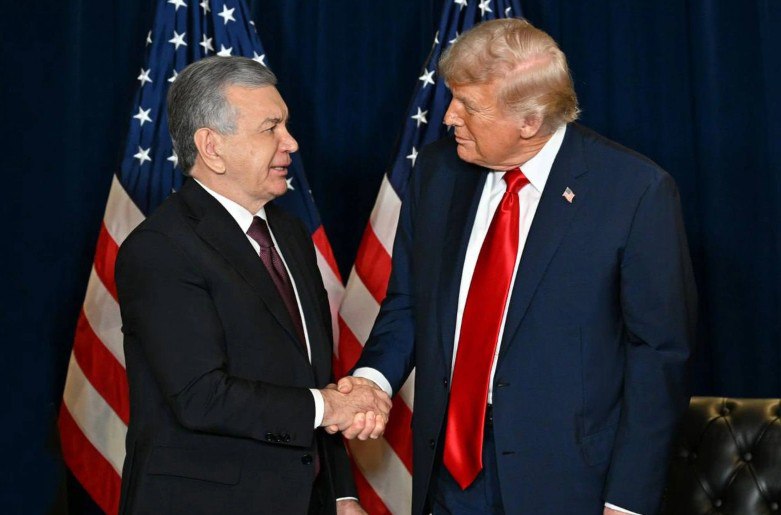
In that sense, Uzbekistan’s involvement in the Board of Peace established by U.S. President Donald Trump highlights Tashkent’s readiness to engage in emerging diplomatic frameworks beyond traditional multilateral institutions.
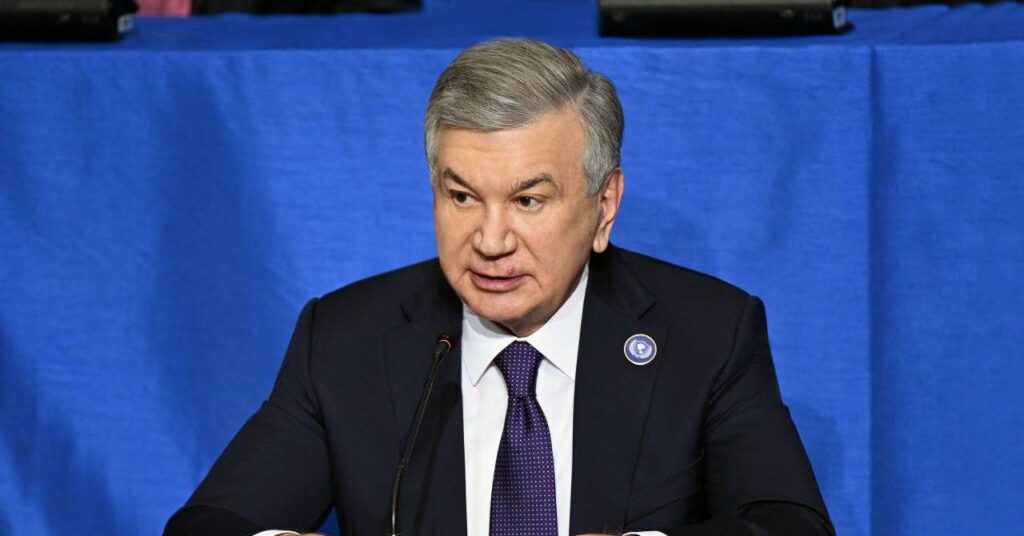
In his address during the first summit of the Board of Peace on February 19, Mirziyoyev stressed that “…Uzbekistan has supported the peacebuilding initiative of establishing the Board of Peace, and firmly declared its commitment to take a practical part in its successful implementation.” He added, “…Uzbekistan is ready to make a tangible contribution to the construction of residential buildings, kindergartens, schools, and hospitals.”
Uzbekistan is driven by several motivations in joining the new organization beyond its multi-vector diplomacy. First and foremost, Tashkent seeks to elevate U.S.–Uzbekistan relations to the level of a strategic partnership grounded in economic cooperation and selective collaboration on global security and peace initiatives.
In addition, Uzbekistan’s seat at the organization means its contribution to solving global crises, not just regional issues, which enhances its image as a ‘middle power’ in the foreseeable future. Secondly, this organization is aimed at maintaining international peace and stability through economic development.
In this regard, it creates an opportunity for Uzbek construction and engineering firms to gain access to Middle Eastern markets and form partnerships with major global contractors by being involved in construction, engineering, and infrastructure development.
This experience earns credibility for future projects. It should be noted that significant supply chains are needed for reconstruction, which presents Uzbekistan with opportunities to participate through its transport companies, air cargo services, transit routes, and railway logistics. Also, it is perfectly aligned with Uzbekistan’s vision of presenting itself as a regional connectivity hub.
From a political perspective, supporting U.S.-led initiatives can secure potential diplomatic backing from international financial institutions and open avenues for partnerships across multiple sectors, particularly in technology.
It sends a strong signal to Western investors that Uzbekistan is a reliable and responsible partner, which would potentially lead to increasing foreign direct investment. Political backing should be added to this list as the U.S. would assist Central Asia, including Uzbekistan, to address pressing regional issues.
Uzbekistan has consistently supported global peace and stability, as demonstrated by Mirziyoyev’s leadership in fostering cordial relations among Central Asian states and promoting the collective resolution of regional problems. The objectives of this newly established organization are consistent with Uzbekistan’s foreign policy goals of contributing to international peace and stability, thereby elevating the country’s role from a regional mediator to a more active contributor to international peace and security.
In the past, such a degree of partnership between the United States and Uzbekistan would have been almost unimaginable. However, the recent reorientation of Uzbekistan’s foreign policy, shaped by current geopolitical realities, reflects Mirziyoyev’s vision of a “New Uzbekistan” as a more open, modern, and citizen-oriented state.
The views expressed in this article are those of the author and do not necessarily reflect the official policy or position of the publication, its affiliates, or any other organizations mentioned.