• KGS/USD = 0.01144 0%
  • KZT/USD = 0.00196 -0%
  • TJS/USD = 0.10899 -0%
  • UZS/USD = 0.00008 -0%
  • TMT/USD = 0.28490 0%
  • KGS/USD = 0.01144 0%
  • KZT/USD = 0.00196 -0%
  • TJS/USD = 0.10899 -0%
  • UZS/USD = 0.00008 -0%
  • TMT/USD = 0.28490 0%
  • KGS/USD = 0.01144 0%
  • KZT/USD = 0.00196 -0%
  • TJS/USD = 0.10899 -0%
  • UZS/USD = 0.00008 -0%
  • TMT/USD = 0.28490 0%
  • KGS/USD = 0.01144 0%
  • KZT/USD = 0.00196 -0%
  • TJS/USD = 0.10899 -0%
  • UZS/USD = 0.00008 -0%
  • TMT/USD = 0.28490 0%
  • KGS/USD = 0.01144 0%
  • KZT/USD = 0.00196 -0%
  • TJS/USD = 0.10899 -0%
  • UZS/USD = 0.00008 -0%
  • TMT/USD = 0.28490 0%
  • KGS/USD = 0.01144 0%
  • KZT/USD = 0.00196 -0%
  • TJS/USD = 0.10899 -0%
  • UZS/USD = 0.00008 -0%
  • TMT/USD = 0.28490 0%
  • KGS/USD = 0.01144 0%
  • KZT/USD = 0.00196 -0%
  • TJS/USD = 0.10899 -0%
  • UZS/USD = 0.00008 -0%
  • TMT/USD = 0.28490 0%
  • KGS/USD = 0.01144 0%
  • KZT/USD = 0.00196 -0%
  • TJS/USD = 0.10899 -0%
  • UZS/USD = 0.00008 -0%
  • TMT/USD = 0.28490 0%
08 December 2025

Kazakhstan and China Expand Cooperation in Water Management

Kazakhstan’s Ministry of Water Resources and Irrigation has signed a memorandum of cooperation with Power China to strengthen bilateral collaboration in water management.

The agreement outlines plans for modernizing hydraulic infrastructure, reconstructing irrigation systems, and enhancing technical capacity through training programs and specialist exchanges. It also includes provisions for digitalization, investment in water conservation, and the efficient use of water resources. The cooperation extends to scientific research, hydrogeology, and the training of groundwater management specialists.

As part of the agreement, the fourth group of Kazakh water sector professionals is currently undergoing advanced training at Power China facilities. Since the beginning of 2025, 125 specialists from Kazakhstan have been trained in China, with another 200 expected to join the program in 2026. All training expenses are being covered by the Chinese side.

This follows the first-ever memorandum of understanding on water cooperation signed between the governments of Kazakhstan and China in March 2025. That agreement emphasized the rational and sustainable use of water resources, the adoption of modern technologies, alternative water sourcing, experience-sharing, and the joint training of water management personnel.

The collaboration is especially significant given the shared hydrological landscape: three of Kazakhstan’s major rivers, the Irtysh, Ili, and Emel, originate in China. In the first half of 2025, Kazakhstan received 10.2 billion cubic meters of water from China via these transboundary rivers, including 4.6 billion cubic meters from the Irtysh and 5.6 billion from the Ili.

Increased inflow from the Ili River enabled the Kapchagay Reservoir in the Almaty region to reach full capacity for the second consecutive year. Since the beginning of 2025, some 8.52 billion cubic meters of water have been directed downstream to Lake Balkhash, raising its water level by an average of 32 centimeters in the first half of the year.

The Ili River alone contributes nearly 70% of Lake Balkhash’s total inflow, making it a critical source for maintaining the ecological balance of the region.

After Berdimuhamedov Sr.’s Visit, Azerbaijan to Gift Oil Tanker to Turkmenistan

On the sidelines of an investment forum in the Turkmen resort of Awaza, Azerbaijan’s Deputy Minister of Economy, Sahib Alekperov, announced that Baku will gift an 8,000-ton oil tanker to Turkmenistan. The gesture is intended as a symbol of goodwill and a marker of deepening relations between the two Caspian neighbors.

From Symbolism to Infrastructure

According to Alekperov, the tanker project is expected to be completed by the end of this year or early next. He emphasized that bilateral ties are increasingly rooted in practical cooperation. In August, Azerbaijan and Turkmenistan signed a memorandum to expand international air services, aiming to establish a reliable “air bridge” across the Caspian Sea.

“This route will be in high demand among passengers,” said Alekperov, noting that better connectivity will benefit not only Azerbaijan and Turkmenistan but the broader Caspian region. Drawing a historical parallel, he added, “As it was once said that all roads lead to Rome, we can now claim that all roads lead through Turkmenistan, the shortest path between Europe and Asia.”

He also noted that growing transport cooperation will enhance the investment climate and produce tangible outcomes, especially in light of the warm political ties at the highest level.

Broadening Turkmen-Azerbaijani Cooperation

The goodwill gestures extend beyond the tanker handover. On September 12, Turkmenistan announced plans to construct a mosque in the Azerbaijani city of Fuzuli. The Ministry of Construction and Architecture has since opened a tender for the project.

Political dialogue has also intensified in recent months. In July, Gurbanguly Berdimuhamedov, Chairman of Turkmenistan’s Halk Maslahaty, paid an official visit to Azerbaijan, accompanied by his daughter Oguljahan Atabaeva, Vice President of the charitable foundation bearing his name.

During meetings with Azerbaijan’s President Ilham Aliyev, both sides discussed expanding transport and infrastructure cooperation, as well as boosting bilateral trade. Humanitarian collaboration was also a key topic. Atabaeva met with Leyla Aliyeva, Vice President of the Heydar Aliyev Foundation.

At the conclusion of the visit, Berdimuhamedov delivered an official invitation from his son, President Serdar Berdimuhamedov, for Aliyev to visit Turkmenistan. In a statement, Aliyev’s office reaffirmed the strategic nature of the partnership:

“Our nations are united by deep traditions of brotherhood, and these ties have grown even stronger during the years of independence. We are successfully cooperating in many areas,” said the Azerbaijani president.

Faith and Diplomacy: Kazakhstan Reconciles Religious Leaders

On September 17-18, 2025, Kazakhstan’s capital hosted the 8th Congress of Leaders of World and Traditional Religions. The event reinforced what has become increasingly evident: the Congress is evolving into a meaningful instrument of global dialogue, one President Kassym-Jomart Tokayev hopes to leverage in his broader efforts to reform the United Nations.

Three years ago, the 7th Congress was notable for the visit of the late Pope Francis, who held a mass in Astana for residents and guests of the capital. This year’s edition welcomed another high-profile religious figure: Patriarch Kirill of Moscow and All Russia, head of the Russian Orthodox Church, who echoed the growing view that the Congress now carries global influence.

“We have truly found a global interfaith platform, a group of people interested in working together for peace and prosperity,” Patriarch Kirill said. “Alongside other significant platforms, we can participate in solving, or at least studying, the problems confronting all of humanity. It is important that religious leaders of different faiths work hand in hand today as one family, which speaks to the closeness of our positions.”

In his opening remarks, President Tokayev described the global situation as one of rising tension and deepening instability. “Hybrid wars being waged across various regions have no clear front lines, yet they result in significant casualties, refugee crises, and massive damage to the world economy,” he said. “The risk of nuclear conflict is greater now than at any point in recent decades.”

In such a climate, Tokayev argued, the moral authority of religious leaders is more vital than ever. “We are placing our hopes on religious figures to help prevent global chaos, reminding politicians of common sense, goodwill, and moral responsibility.”

He proposed further development of his earlier idea, a global “Movement for Peace” under the umbrella of the Congress. “Religious hierarchies could become the moral backbone of such a movement, issuing a neutral and apolitical call to end violence and seek peaceful solutions. Grounded in universal values like the sanctity of life, compassion, and mercy, it could unite not only believers, but also political leaders, NGOs, experts, and youth,” Tokayev said.

Over the next two days, delegates from 60 countries, representing diverse cultures, civilizations, and faiths, gathered to discuss major global challenges. Their work culminated in the Declaration of the VIII Congress of Leaders of World and Traditional Religions, which was read at the closing session by George Jacob Kuttianickal, Prefect of the Dicastery for Interreligious Dialogue of the Holy See.

The Declaration endorsed Tokayev’s peace initiative and emphasized the need to intensify international dialogue. It proposed a series of global and regional events to advance a culture of peace, as well as active promotion of the Congress’s goals within the UN and other international forums.

“We call on the international community and the UN General Assembly to acknowledge the Congress’s 20-year contribution to dialogue and harmony among religions, and to strengthening peace and mutual understanding,” the Declaration stated.

Delegates also reaffirmed Kazakhstan’s growing role as a respected international center for intercultural and interfaith dialogue, agreeing to hold the 9th Congress in Astana in 2028. The Declaration will be circulated as an official document during the 80th session of the UN General Assembly.

The final document reflects not only the vision of the president but also the diplomatic groundwork laid by Kazakhstan’s foreign ministry. During the Congress, Tokayev held personal meetings with major religious leaders, including the Patriarchs of Moscow and Jerusalem; Israel’s Chief Ashkenazi Rabbi Kalman Ber and Chief Sephardic Rabbi David Yosef; and Malcolm Hoenlein, Executive Vice President of the Conference of Presidents of Major American Jewish Organizations.

He also met with representatives from the Islamic world, including delegations from the Caucasus and the Middle East.

As Kazakh political scientist Marat Shibutov stated, “It used to be hard enough just to get imams and rabbis from the Middle East to sit at the same table. This time, sparks were flying throughout the Congress. At the closing session, the Chief Sephardic Rabbi nearly got into a confrontation with an imam from Al-Azhar. It was tough for the organizers, but they pulled it off.”

With the UN General Assembly’s 80th session underway in New York, Kazakhstan’s interfaith diplomacy is expected to feature in the discussions.

Kyrgyzstan Faces Power Shortages Amid Record Low Water Levels at Toktogul Reservoir

Kyrgyz authorities have warned of potential rolling blackouts this winter due to critically low water levels at the country’s main hydropower facility, the Toktogul Hydroelectric Power Station.

At a press conference in Bishkek, Energy Minister Taalaibek Ibraev reported that as of mid-September, the Toktogul reservoir had accumulated just 10.8 billion cubic meters of water, 1.5 billion cubic meters less than at the same time last year. The shortfall significantly limits the country’s electricity generation capacity during peak winter demand.

“Kyrgyzstan is facing a persistent energy crisis, exacerbated by insufficient water reserves amid global warming and rising demand for electricity,” Ibraev stated.

Hydropower provides around 90 percent of Kyrgyzstan’s electricity. If water levels at Toktogul fall to 6.5 billion cubic meters, the turbines will be unable to function, increasing the risk of large-scale outages.

Officials clarified, however, that the current deficit does not necessarily mean the country will face a total blackout during the winter of 2025-26. On the eve of the announcement, energy ministers from Kyrgyzstan, Kazakhstan, and Uzbekistan met in the town of Cholpon-Ata, where they agreed to facilitate electricity transit from Russia and Turkmenistan through their respective territories.

“Through joint efforts, we will ensure an uninterrupted power supply to our cities and strengthen regional energy security. We expect our Kazakh and Uzbek colleagues to adhere to the delivery schedules set out in the signed protocols,” Ibraev added.

Kazakhstan to Invest $24 Billion in Energy Modernization

Kazakhstan has launched a National Project to modernize its energy and utility sectors for the period 2025-2029, with planned investments of 13 trillion tenge (over $24 billion). The initiative aims to upgrade existing infrastructure and construct new power generation, transmission, and water supply systems.

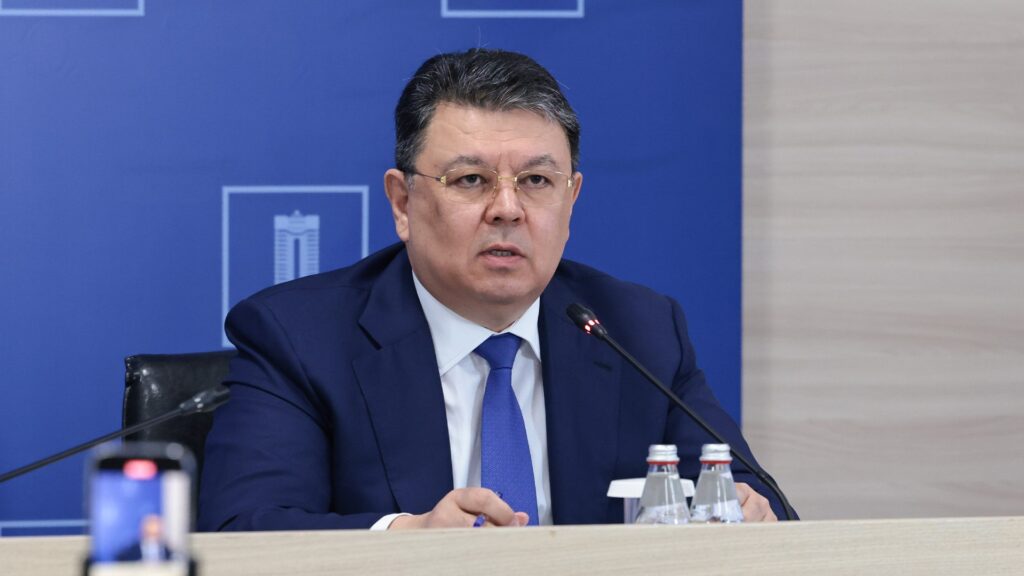
Deputy Prime Minister Kanat Bozumbayev announced the preliminary cost estimate during the “National Project for the Modernization of the Energy and Utility Sectors: Opportunities for Kazakh Business” conference. According to Bozumbayev, the funds will support the repair and construction of 86,000 kilometers of utility networks and add 7.3 GW in new generation capacity.

“Today, we have established the necessary regulatory framework to ensure long-term and affordable financing from financial institutions. We have now moved to the practical stage of the National Project. This year, pilot investments of around 144 billion tenge ($266 million) have been raised for 48 natural monopoly entities,” Bozumbayev stated.

Financing will be sourced both domestically and internationally. The Kazakhstan Housing Company has already purchased bonds worth 22.5 billion tenge ($41 million) from local administrations in the Karaganda, Pavlodar, West Kazakhstan, and North Kazakhstan regions. The Development Bank of Kazakhstan is also finalizing assessments for selected projects.

International partners are also involved. The European Bank for Reconstruction and Development is financing the construction of wastewater treatment facilities in the Aktobe region. Chinese companies are under consideration as potential partners for upgrading and building new coal-fired power plants. “There are certain restrictions on state-backed export financing from this country, but private companies have financial capabilities and experience operating in multiple countries,” Bozumbayev noted.

Authorities expect to finalize financing sources for 2026 by year-end, while procurement and design procedures are scheduled to begin. “Funding will be provided through the state budget and market instruments. The National Project will also apply new procurement mechanisms aligned with international practices, including EPC contracts and consortium-based construction,” Bozumbayev added.

Vice Minister of National Economy Assan Darbayev emphasized that reducing the wear and tear on heating, electricity, water supply, and wastewater networks to below 50% will require investments of 6.8 trillion tenge ($12.5 billion). The program includes 15 new generation projects worth 4.4 trillion tenge ($8 billion), along with 14 modernization projects for existing facilities valued at 1.8 trillion tenge ($3.3 billion). These measures are expected to reduce overall depreciation by 15%.

As previously reported by The Times of Central Asia, Kazakhstan has faced worsening electricity shortages in recent years. In 2024, the shortfall between supply and demand reached 2.4 billion kWh, up from 2.2 billion kWh in 2023.

Opinion: Bridging Histories, Building Futures – Central Asia, Pakistan, and the Dream of a Railway

On 5 September 2025, the Times of Central Asia published an article titled “Trans-Afghan Railway: Can Uzbekistan Build a Railway Through Afghanistan to Reach the Sea?” Reading it stirred something deep within me. The piece was not just about steel tracks or trade corridors – it was about dreams, history, and the future of a region I have long been passionate about: Central Asia.

I am not a political analyst; I am an engineer by training and a student of history by passion. Having worked in Afghanistan and witnessed the landscape of its geography and politics up close, I feel a personal connection to the idea of connectivity between Pakistan and Central Asia by rail. This is not just a policy debate for me – it is a lifelong vision tied to my family history, my professional journey, and my fascination with the region’s rich past.

When the Soviet Union withdrew its last troops from Afghanistan on 15 February 1989, ending its long and bloody war, the region entered a new and uncertain chapter. That very moment coincided with the beginning of my own career. Just two months earlier, I had started my first job as a Junior Engineer. For me, the Soviet withdrawal was not only a historical milestone; it was also a symbolic reminder of how deeply Afghanistan and its neighbors were tied to global currents of power, conflict, and change. Standing at the threshold of my professional life, I wondered how this region – so often defined by wars – might instead be remembered for bridges, trade, and railways.

My fascination with Central Asia is also deeply personal. From my mother’s side, my family traces its lineage back to Bukhara. This explains why many families in Pakistan carry the name Bukhari, as their ancestors once migrated southward from that historic Central Asian city. History was not abstract for me – it lived in the stories of my elders and in the books I devoured as a student. In my school years, I read the Baburnama twice. These memoirs of Zahīr ud-Dīn Muhammad Bābur, the founder of the Mughal Empire, fascinated me. Born in Andijan in the Ferghana Valley (modern-day Uzbekistan), Babur’s life was a reminder of how Central Asia and South Asia have always been linked – through migration, culture, politics, and ambition.

In 1992, I made my first trip to Tashkent. The journey was more than a visit; it was a pilgrimage to the heart of a region I had admired from afar. That first encounter left an indelible mark on me, and more than three decades later, my passion for Central Asia remains unending.

Long before modern projects and international agreements, history itself carved the routes of connectivity. The Khyber Pass, lying between present-day Pakistan and Afghanistan, has for centuries served as a gateway between Central and South Asia. Caravans laden with silk, spices, and stories once passed through its rugged cliffs. Empires – from the Mughals to the British – understood its importance. And in the 20th century, the British undertook one of their most ambitious engineering feats in the region: the Khyber Railway.

The Khyber Railway, opened in 1925, was not just a track; it was a statement. Built to connect Peshawar with Landi Kotal near the Afghan border, the railway required 34 tunnels, numerous bridges, and ingenious engineering to cut through the treacherous landscape. The line rose from 1,500 feet at Jamrud to 3,500 feet at Landi Kotal, using zigzag “W”-shaped turns where locomotives had to push and pull simultaneously. Among its tunnels, the Kafir Tangi tunnel was the longest, a marvel of its time. The project cost millions of rupees, but its true price lay in the politics of the Afridi tribes, whose cooperation was essential.

British officials like Colonel Gordon R. Hearn and Victor Bailey worked on the design, but equally important were the negotiations with local tribes. Initially resistant, fearing the railway would curtail their freedom, the Afridis eventually agreed after incentives such as tribal allowances, contracts, and employment opportunities were offered. The lesson was clear: railways could not be built by force alone; they required trust, incentives, and shared prosperity.

The Khyber Railway was inaugurated on 21 November 1925, with great ceremony. It was later extended to Landi Khana, just two miles short of the Afghan border, but closed in 1932 at the insistence of the Afghan government. Though trains no longer run through the Khyber Pass, the railway remains a symbol of what is possible when vision, engineering, and political will converge.

Fast forward to modern times. In 1997, the Asian Development Bank (ADB) launched the Central Asia Regional Economic Cooperation (CAREC) Program, aimed at encouraging economic cooperation and connectivity among Central and South Asian countries. The dream was ambitious: to revive the ancient Silk Road through modern transport corridors, linking landlocked Central Asian states to markets and ports. Among the envisioned routes were Corridor 5 and Corridor 6, which pass through Pakistan and Afghanistan, connecting Central Asia to the Arabian Sea.

Yet, more than two decades later, much of this vision remains on paper. Few recall that on 7 July 2010, a Memorandum of Understanding (MOU) was signed in Islamabad between the governments of Pakistan and Afghanistan to explore railway cooperation. The MOU was never fully implemented, a victim of shifting politics, conflict, and bureaucracy.

Despite geographical proximity and strong demand, trade between Pakistan and Central Asia remains minimal. Pakistan’s exports to the Central Asian Republics (CARs) accounted for less than 1% of their imports in 2016. Afghanistan, with which Pakistan’s trade had nearly doubled by 2015, saw a 30% drop in flows in just two years. While these figures are not current, they highlight the long-standing underperformance of regional trade despite repeated policy initiatives.

Pakistani products such as surgical instruments, textiles, fruits, rice, sugar, and cement are in demand, yet face barriers of logistics and connectivity. The road between Peshawar and Kabul, passing through the Khyber Pass, still serves as a crucial artery – part of CAREC Corridors 5 and 6 – but without rail integration, its potential remains underutilized.

Among the boldest modern projects is the Trans-Afghan Railway, designed to connect Mazar-i-Sharif in northern Afghanistan to Peshawar in Pakistan via Kabul. The project was first discussed during the visit of Uzbekistan’s Deputy Prime Minister Sardor Umurzakov to Pakistan in September 2020. On 27 December 2020, the heads of state of Uzbekistan, Afghanistan, and Pakistan signed a joint appeal to the World Bank for financing. In February 2021, Tashkent hosted the first trilateral joint working group, which produced a roadmap for cooperation. By 2022, Pakistan and Uzbekistan had agreed to expedite the project through the creation of a special purpose vehicle (SPV).

If completed, the Trans-Afghan Railway would provide the shortest route from Central Asia to Pakistan’s deep-water ports at Karachi and Gwadar, reduce transport costs for landlocked economies like Uzbekistan, Tajikistan, and Kyrgyzstan, and revitalize Afghanistan’s role as a bridge rather than a barrier.

Pakistan itself inherited a rich but underutilized railway network. The first line was built in 1861, connecting Karachi to Kotri. By 1947, Pakistan inherited 5,048 miles from the colonial North Western State Railway. Extensions were made in the 1950s and 70s, but since then, progress has stagnated. Today, road transport dominates, while the freight share of rail has steadily declined. Problems include deteriorated infrastructure, outdated rolling stock, inefficient pricing, and poor customer orientation.

The China–Pakistan Economic Corridor (CPEC) offers some hope. Plans to upgrade Main Line 1 (ML-1) and eventually Main Line 3 (ML-3) could modernize the backbone of Pakistan Railways. If linked with the Trans-Afghan Railway, these upgrades could position Pakistan as the natural gateway for Central Asian trade.

The story of the Khyber Railway offers timeless lessons. The British learned that infrastructure projects in tribal and contested regions succeed only when local communities are offered economic incentives, employment, and inclusion. Today, regional governments must heed the same lesson. Connectivity cannot be imposed; it must be built on trust and shared prosperity. For Afghanistan, that means involving local communities in construction and ensuring they benefit economically. For Pakistan and Central Asia, it means prioritizing mutual trade and people-to-people contact over short-term politics.

In a world increasingly defined by regional blocs and trade corridors, the fate of Central and South Asia depends on whether they choose connectivity or isolation. For Central Asia, access to Pakistan’s ports could dramatically reduce transport costs and boost competitiveness. For Pakistan, greater trade with Central Asia could diversify markets and reduce dependence on limited partners. For Afghanistan, railways could turn geography from a curse into a blessing, making it a crossroads of commerce rather than a battleground.

As I reflect on my own journey – from reading the Baburnama as a student, to working as a young engineer during the Soviet withdrawal, to traveling to Tashkent in 1992 – I see how deeply my life has been intertwined with the history and destiny of Central Asia. Almost 35 years after the independence of Central Asian states, much of the railway connectivity remains unrealized. Yet my dream endures: to one day see a train departing from Tashkent or Mazar-i-Sharif, crossing Kabul, passing through the Khyber, and arriving in Pakistan. That train would not just carry goods; it would carry hope, peace, and the promise of prosperity for millions.

The vision of railway connectivity between Central Asia and Pakistan is not a new dream. It is rooted in centuries of history, from Babur’s migrations to the Khyber caravans, from the British-built railways to the CAREC corridors of today. What makes this dream urgent now is that the region can no longer afford missed opportunities. Landlocked economies need access; Pakistan needs new markets; Afghanistan needs stability. Railways offer all three.

For me, this is not an abstract policy idea. It is a personal passion, a professional interest, and a historical calling. The Times of Central Asia article reminded me that the dream is alive. And as someone who has lived, worked, and dreamed in the shadow of this region’s history, I still believe: the future of Central Asia and Pakistan lies on the tracks of a railway yet to be built.


The views expressed in this article are those of the authors and do not necessarily reflect the official policy or position of the publication, its affiliates, or any other organizations mentioned.