• KGS/USD = 0.01144 0%
  • KZT/USD = 0.00216 0%
  • TJS/USD = 0.10456 0%
  • UZS/USD = 0.00008 0%
  • TMT/USD = 0.28490 0%
  • KGS/USD = 0.01144 0%
  • KZT/USD = 0.00216 0%
  • TJS/USD = 0.10456 0%
  • UZS/USD = 0.00008 0%
  • TMT/USD = 0.28490 0%
  • KGS/USD = 0.01144 0%
  • KZT/USD = 0.00216 0%
  • TJS/USD = 0.10456 0%
  • UZS/USD = 0.00008 0%
  • TMT/USD = 0.28490 0%
  • KGS/USD = 0.01144 0%
  • KZT/USD = 0.00216 0%
  • TJS/USD = 0.10456 0%
  • UZS/USD = 0.00008 0%
  • TMT/USD = 0.28490 0%
  • KGS/USD = 0.01144 0%
  • KZT/USD = 0.00216 0%
  • TJS/USD = 0.10456 0%
  • UZS/USD = 0.00008 0%
  • TMT/USD = 0.28490 0%
  • KGS/USD = 0.01144 0%
  • KZT/USD = 0.00216 0%
  • TJS/USD = 0.10456 0%
  • UZS/USD = 0.00008 0%
  • TMT/USD = 0.28490 0%
  • KGS/USD = 0.01144 0%
  • KZT/USD = 0.00216 0%
  • TJS/USD = 0.10456 0%
  • UZS/USD = 0.00008 0%
  • TMT/USD = 0.28490 0%
  • KGS/USD = 0.01144 0%
  • KZT/USD = 0.00216 0%
  • TJS/USD = 0.10456 0%
  • UZS/USD = 0.00008 0%
  • TMT/USD = 0.28490 0%

Tajikistan: Atlas and Adras Weaving Included in UNESCO List of Intangible Cultural Heritage

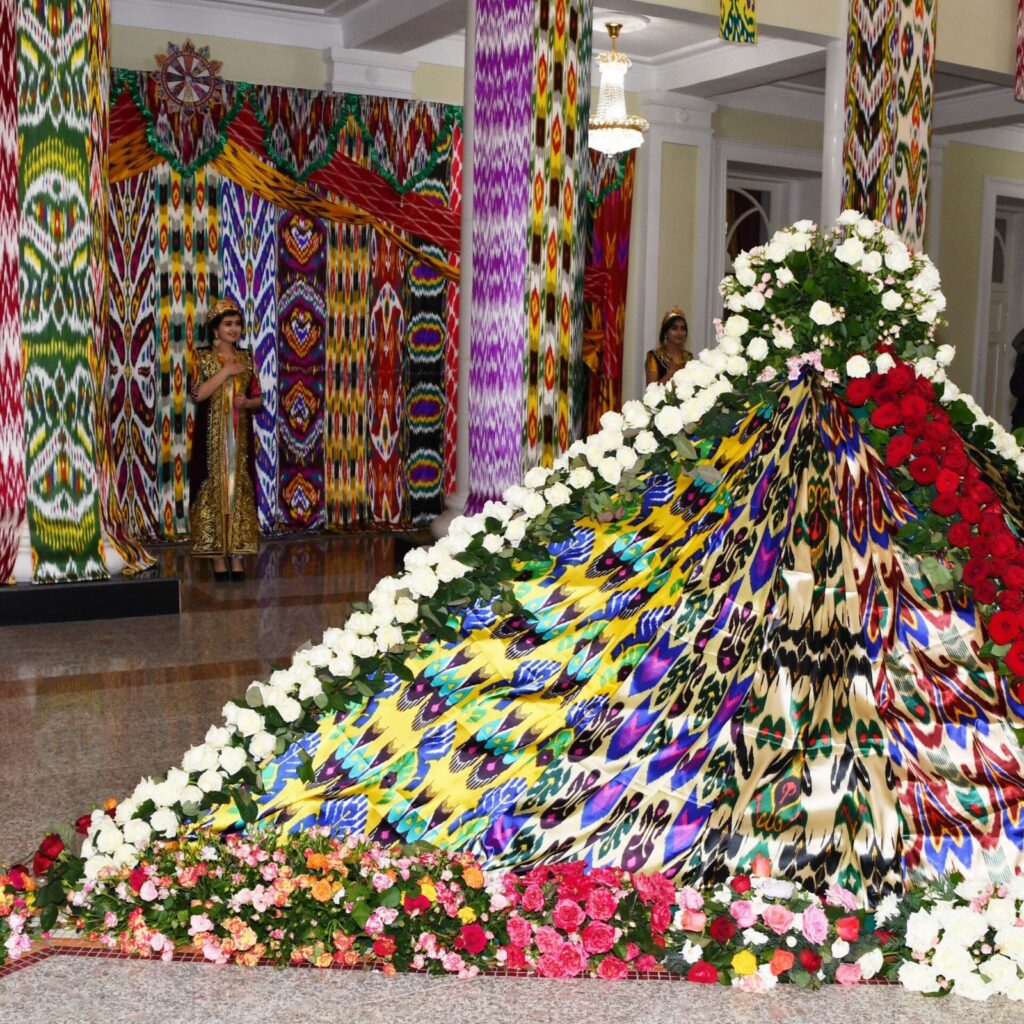
A nomination from Tajikistan for the art of atlas and adras weaving was included in the UNESCO list of Intangible Cultural Heritage, the press service of the Ministry of Foreign Affairs of Tajikistan reported. This decision was made within the framework of the 18th session of the Interstate Committee on the Intangible Cultural Heritage of UNESCO, which began on December 4th in the city of Kasane (Botswana), where representatives of the countries for the Convention for the Safeguarding of the Intangible Cultural Heritage are taking part. Meetings will continue until December 9th.

Tajikistan has a particularly proud history of national clothing culture, and the secrets of weavers are passed down from generation to generation. In the Sughd region, the Atlas Khujand enterprise operates and enjoys benefits and constant support from President Emomali Rahmon. The company’s silks, satin and adras – which combines both silk and cotton – are in great demand globally. Their production, which comprises many stages, requires special skills and training.

Traditionally, national costumes for performances and wedding dresses are made of satin. The republic annually celebrates the holiday, “Tajik Atlas and Adras.”

Turkmen-U.S. Business Forum Held in Ashgabat

On December 5th, the tenth Turkmen-American business forum was held in Ashgabat, which was attended by the heads and representatives of relevant government and business structures of Turkmenistan and the United States, Turkmenistan’s Government website stated. According to the post, the forum demonstrated the focus of Turkmenistan and the United States on the further progressive development of mutually beneficial cooperation which meets common interests, the Turkmen Foreign Ministry said.

The US delegation, headed by Executive Director of the Turkmenistan-US Business Council, Eric Stewart, included executives and representatives of well-known companies, including Case New Holland Industrial, Climate Compass LLC, Honeywell, John Deere, Palo Alto Networks, Visa, and Westport Trading Europe Ltd.

The participants noted that the foreign policy course implemented by Turkmenistan under the leadership of President Serdar Berdimuhamedov, based on the principles of positive neutrality, increases the attractiveness of the Turkmen market for foreign investors. The priority areas of the Turkmen-US partnership include the energy sector, transport and communications, the agro-industrial sector, high technology, and the investment sector. At the same time, approaches to realizing the potential of trade and economic partnership were reviewed and identified, and plans for joint work in key areas were outlined.

Special emphasis was placed on intensifying business ties. One of the results of the forum was the signing of a Memorandum of Understanding between Case New Holland Industrial and Turkmen entrepreneurs.

Kyrgyzstan’s Economy Grew Strongly in 2022 and So Far in 2023, Says IMF

Kyrgyzstan’s Economy Grew Strongly in 2022 and So Far in 2023, Says IMF

The economy of Kyrgyzstan performed strongly in 2022, expanding at 6.3% despite the headwinds from the difficult regional environment. Tax revenue improved sharply, and public debt declined to 49% of GDP. Headline inflation fell from 14.7% in December 2022 to 9.2% in October 2023, Nikoloz Gigineishvili, head of an International Monetary Fund (IMF) mission that held consultations with the Kyrgyz Republic during November in Bishkek said in a statement on December 4th.

The current account deficit widened significantly to 43.6% of GDP in 2022 as non-oil imports increased by 26% of GDP and gold exports were suspended, while re-exports to Russia were not captured in official statistics, the statement said. Growth is expected to remain at around 4% in the medium term, and inflation to decline to mid-single digits. However, further escalation of the war in Ukraine and secondary sanctions which could further weaken the Russian economy and result in the return to Kyrgyzstan of migrant workers could  reduce trade and growth, the IMF statement concludes.

Kazakhstan’s Road Freight Transportation Sees 22% Growth: A Boon for the Economy

In a recent government meeting chaired by Prime Minister Alikhan Smailov, it was reported that Kazakhstan has seen a significant surge in road freight transportation during the first three quarters of this year. The volume of goods transported by road reached 5.5 million tons, marking a 22% increase compared to the same period last year. This growth trend is also reflected in transit transportation, which has risen by a whopping 44%, climbing from 2.5 to 3.6 million tons.

The driving force behind this uptick is the marked increase in cargo transportation to China. Transport volumes have doubled, reaching 1.5 million tons. This surge illustrates the vast potential for further amplifying the volume of transit cargo moving from China to Europe. If the current dynamics persist, transit through Kazakhstan could multiply five-fold by 2029, providing a substantial boost to the country’s economic development.

Prime Minister Smailov underscored the vital role of developed road freight transportation in shaping the economy. It has direct impacts across all sectors, making it a key factor in the nation’s economic landscape. Currently, eight international highway corridors traverse the territory of Kazakhstan, spanning a total length of approximately 13,000 km. These include the Western Europe – Western China route.

This promising growth trajectory in road freight transportation positions Kazakhstan as a strategic player in the international logistics and transportation arena. It also underpins the country’s commitment to bolstering its economic infrastructure and enhancing its trade relationships, particularly with neighboring China. As we move into 2024, Kazakhstan’s transportation sector seems poised for further expansion and success.

Europe-Uzbekistan Association for Economic Cooperation Launched in Tashkent

The Tashkent based Europe-Uzbekistan Association for Economic Cooperation (EUROUZ) was officially launched on December 5th. Speaking at the inauguration event, Charlotte Adriaen, the EU Ambassador to Uzbekistan, said that the EU has been supporting the establishment of a Europe-Uzbekistan business association for years.

“We believe that the inclusion of EUROUZ in the worldwide European Business Organizations network will encourage more business exchanges between Europe and Uzbekistan, and in turn strengthen our partnership,” Adriaen said, noting that the EU supports the ambitious path of reforms Uzbekistan has embarked on, and will continue to assist the country with all tools, one of which is GSP+ (the EU’s Generalised Scheme of Preferences).

The ambassador also presented areas of opportunity for Uzbekistan’s exporters to improve their access to the EU market. “As we anticipate growth in the production of machinery, automotive, hi-tech goods and medical equipment, the demand will increase for various electronic sub-components and metal parts,” she said. “Moreover, as both the EU and Uzbekistan are transitioning to a greener economy, there is another sector of opportunity that could further boost exports from Uzbekistan to the EU, including supplies of critical raw materials.”

The EU ambassador added that 2024 will be a year marked by high-level visits, including the first ever EU-Central Asia Summit, which is planned to be hosted in Uzbekistan.

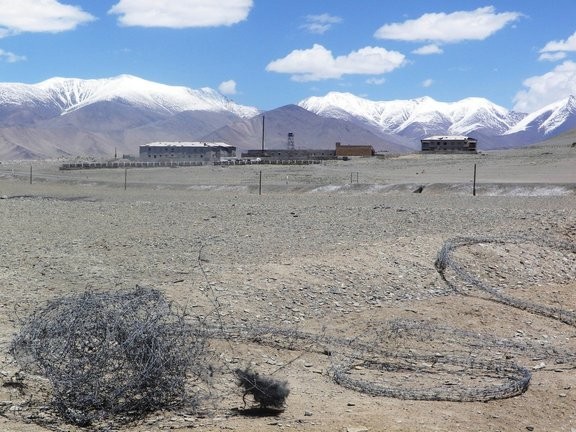
Kyrgyzstan, Tajikistan Agree on More Disputed Border Areas

As reported by RFE/RL, officials from Kyrgyzstan and Tajikistan say the two countries agreed on another 24 kilometers of the border between the two former Soviet republics after special talks on the issue were held over the past week, RFE/RL’s Kyrgyz Service reported. Tajikistan’s State Committee for National Security said on December 5th that the talks were held in the northern town of Buston, near the Kyrgyz border. According to the Kyrgyz government, the next round of talks regarding other parts of the border will be held on Kyrgyzstan’s territory on a day that is yet to be determined.

In a sign of thawing relations, back on November 9th 2023, the Cabinet of Ministers of the Kyrgyz Republic announced that a further 17.98 kilometres of its border with Tajikistan had been agreed upon, with another meeting of the of topographic working groups due to be held in Batken from November 11th to17th. A long-standing source of conflict between the two nations, it is emblematic of the problem that even the length of the border – sometimes cited as being 975-kilomtres long, and at others times 972-kilomteres – is rarely agreed upon. As of January 2023, Tajikistan’s President Rahmon stated that 614-kilometres have been agreed upon, backtracking on a previously stated figure of 664.

The delimitation and demarcation of the Kyrgyz-Tajik border has been an issue for decades, but turned into an extremely urgent problem in recent years after several deadly clashes took place along disputed segments of the frontier. With its scant natural resources and dwindling water supplies, the border has been the scene of numerous skirmishes for many years. In 2014, all borders between Kyrgyzstan and Tajikistan were closed indefinitely to Kyrgyz and Tajik citizens following clashes over a bypass road in disputed territory; mortars were fired and both armies suffered casualties. In the spring of 2021, trouble flared up again when an armed conflict along one segment of the border left 36 Kyrgyz nationals, including two children, dead, and 154 injured on the Kyrgyz side. The Tajik authorities officially said that 19 Tajik citizens were killed and 87 were injured during the clashes.

Many border areas in Central Asian former Soviet republics have been disputed since the collapse of the Soviet Union in 1991. The situation is particularly complicated around the numerous exclaves in the volatile Ferghana Valley, where the borders of Tajikistan, Uzbekistan, and Kyrgyzstan meet.