• KGS/USD = 0.01144 0%
  • KZT/USD = 0.00211 0%
  • TJS/USD = 0.10460 0.19%
  • UZS/USD = 0.00008 0%
  • TMT/USD = 0.28490 0%
  • KGS/USD = 0.01144 0%
  • KZT/USD = 0.00211 0%
  • TJS/USD = 0.10460 0.19%
  • UZS/USD = 0.00008 0%
  • TMT/USD = 0.28490 0%
  • KGS/USD = 0.01144 0%
  • KZT/USD = 0.00211 0%
  • TJS/USD = 0.10460 0.19%
  • UZS/USD = 0.00008 0%
  • TMT/USD = 0.28490 0%
  • KGS/USD = 0.01144 0%
  • KZT/USD = 0.00211 0%
  • TJS/USD = 0.10460 0.19%
  • UZS/USD = 0.00008 0%
  • TMT/USD = 0.28490 0%
  • KGS/USD = 0.01144 0%
  • KZT/USD = 0.00211 0%
  • TJS/USD = 0.10460 0.19%
  • UZS/USD = 0.00008 0%
  • TMT/USD = 0.28490 0%
  • KGS/USD = 0.01144 0%
  • KZT/USD = 0.00211 0%
  • TJS/USD = 0.10460 0.19%
  • UZS/USD = 0.00008 0%
  • TMT/USD = 0.28490 0%
  • KGS/USD = 0.01144 0%
  • KZT/USD = 0.00211 0%
  • TJS/USD = 0.10460 0.19%
  • UZS/USD = 0.00008 0%
  • TMT/USD = 0.28490 0%
  • KGS/USD = 0.01144 0%
  • KZT/USD = 0.00211 0%
  • TJS/USD = 0.10460 0.19%
  • UZS/USD = 0.00008 0%
  • TMT/USD = 0.28490 0%

Turkmenistan’s Mejlis Adopts Law on the State Budget for 2024

On November 24th, the Mejlis of Turkmenistan, during its fourth meeting of the seventh convocation, unanimously adopted the Law “On the State Budget of Turkmenistan for 2024”. The budget, which is based on comprehensive calculations backed by the state’s financial capacity, aims to serve the interests of the people and their well-being.

The session was chaired by President Serdar Berdimuhamedov, who addressed the priorities of the state policy. The meeting also considered several significant normative legal acts developed in line with the country’s comprehensive program for the modernization of the legal framework.

The main financial-legal document for local budgets in the forthcoming year was also discussed. The budget for 2024 is set to reach a total of 102,313.5 million Turkmen manat (US $ 29.23 billion), marking a significant increase from the previous year1.

In addition to the 2024 budget, the Mejlis also unanimously adopted the Resolution “On the Implementation of the State Budget of Turkmenistan for 2022”.

The meeting further deliberated on several draft laws such as the “International Convention on Civil Liability for Damage from Bunker Fuel Pollution”, “Amendments and Additions to Some Legislations of Turkmenistan”, and “Protection of Objects of National Historical and Cultural Heritage”. These legislative drafts were all unanimously approved and adopted.

The adoption of the state budget for 2024 and the discussion of various legislative drafts underscore the government’s commitment to modernizing the country’s legal framework and boosting economic growth.

Turkmenistan Honors Agrarians with State Awards “For Love of the Fatherland”

In a grand ceremony held in Ashgabat in mid-November, more than 20 agrarians were bestowed with state awards “For Love of the Fatherland” on behalf of President Serdar Berdimuhamedov. The event, which took place on the eve of the traditional harvest festival, recognized the significant contributions these agricultural workers have made towards the development of the industry.

The award ceremony was held at the Turkmen Agricultural University, which also organized an exhibition showcasing cotton, wheat, fruits, and vegetables as part of the celebratory proceedings. The exhibits served not only as a testament to the hard work and dedication of the country’s farmers but also highlighted the diversity and richness of Turkmenistan’s agricultural sector.

President Serdar Berdimuhamedov personally congratulated the awardees, emphasizing their crucial role in ensuring the country’s food security.

The harvest festival is an annual tradition in Turkmenistan, celebrated on the second Sunday of November. It is a day dedicated to honoring the country’s farmers and recognizing their efforts in maintaining the nation’s agricultural prosperity.

This event underscores the government’s commitment to appreciating and uplifting the agricultural sector, which plays a vital role in the country’s economy and food security.

Qairat Boranbaev Released from Prison After Returning Assets to Kazakhstan Treasury

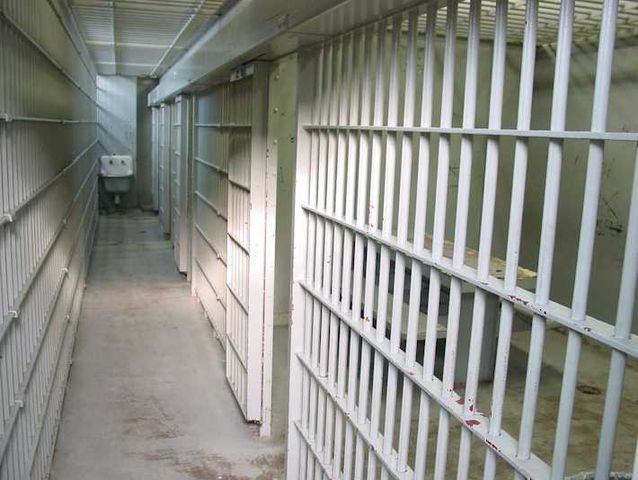
On November 6th, Qairat Boranbaev, a renowned Kazakh businessman with close connections to the family of former President Nursultan Nazarbayev, was released from custody as his prison term was converted into a parole sentence.

Boranbaev, once one of the wealthiest businessmen in Kazakhstan, had built his fortune on the country’s thriving oil and gas industry. His initial eight-year sentence on embezzlement charges, shared with two co-defendants, was reduced to six years following a retrial in Astana.

In a surprising turn of events during a new hearing on August 22nd, Boranbaev changed his plea. His lawyer, Daniyar Qanafin, announced that Boranbaev had admitted to embezzling 14.6 billion tenge (over $32 million) and had returned the stolen funds and properties to the State Treasury. Qanafin also revealed that Boranbaev was prepared to make a deal with investigators and prosecutors.

As part of this deal, Boranbaev voluntarily transferred state ownership of assets worth over 90 billion tenge, including the Comfort Hotel complex, a network of fitness centers, an oil-producing company, and an oil field in western Kazakhstan. Additionally, he made a significant contribution of 30 billion tenge to the Education Infrastructure Support Fund.

Boranbaev’s connection to the Nazarbayev family comes through his daughter, Alima Boranbaeva, who was married to Nazarbayev’s late grandson, Aisultan Nazarbayev.

The arrest of the 56-year-old tycoon followed unprecedented anti-government protests and coordinated attacks on government properties in early January 2022. Boranbaev, along with other associates of the Nazarbayev regime, faced charges of orchestrating a coup attempt.

Taraz and Ancient Olympia: A Union of Cultural Exchange and Growth

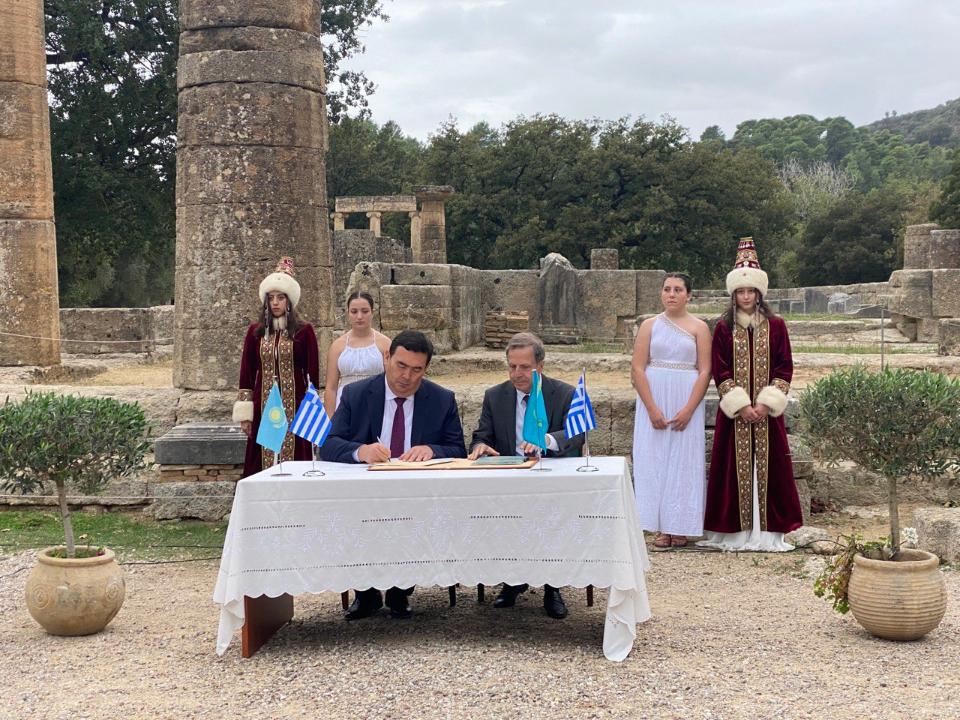
On November 4th, a historically significant twinning ceremony was held between the city of Taraz in Kazakhstan and Ancient Olympia in Greece. The agreement was signed at the Temple of Hera, an ancient site revered by the Greeks. It’s here that the rules of the original Olympic Games were kept, and where the Olympic Flame is ceremonially lit every two years, symbolizing the continuation of an ancient sporting tradition.

Bakhytzhan Orynbekov, the Akim (Mayor) of Taraz, views this partnership as an opportunity to foster mutual growth. He believes that it will enhance exchanges in various sectors, including culture, sports, tourism, science, and education. These fields are seen as key areas of development that can benefit from international cooperation.

Georgios Georgiopoulos, the Mayor of Ancient Olympia, echoed these sentiments. He expressed enthusiasm about forming bonds of friendship and brotherhood with Taraz. With a rich history stretching back 2000 years, Taraz has been a significant cultural crossroads between the East and West. This makes it an ideal partner for Ancient Olympia, which itself has a storied history dating back to antiquity.

In a meeting with representatives from Ilia’s business community, both parties agreed to strengthen economic ties and cultivate relations between their respective regions and business circles. This agreement underscores the importance of international collaboration in fostering economic growth and development.

Ancient Olympia is renowned for its UNESCO World Heritage Sites and also for hosting the International Olympic Academy. This institution is the primary educational and cultural arm of the International Olympic Committee and plays a vital role in promoting the values and ideals of the Olympic movement. The initiative to twin Taraz and Ancient Olympia was spearheaded by the Embassy of Kazakhstan in Greece and the Kazakh-Hellenic Business Council, demonstrating the importance of diplomatic and business relations in fostering cultural ties.

EDB Proposes Ten Steps to Preserve Irrigated Land Potential and Support Water Conservation in Central Asia

As outlined in a press release on the EDB website, in the summer of 2023, Central Asia was faced once again with water shortages, which have a significant impact on agriculture. The sector relies on irrigation, which consumes up to 80% of available water, and has a poor track record with regard to the efficient use of water resources. The irrigation infrastructure is over 50 years old. More than half of all irrigated land has become salinized, and 40% of water is lost through irrigation canals. A new Eurasian Development Bank (EDB) study entitled “Efficient Irrigation and Water Conservation in Central Asia” outlines ten practical steps for preserving irrigated land potential and promoting water conservation. The list includes four recommendations for adoption at a regional level and six at a national level. The measures are designed to save enough water each year to support sustainable development. Implementing the measures will require collaboration between governments, farmers and multilateral development institutions. The need for urgent action is intensified by the anticipated reduction in the flow of the Amu Darya River.

Water deficit is a key structural constraint to socio-economic development in Central Asia. This region is among the most vulnerable to climate change, with temperatures rising at a faster rate than the global average. Periods of drought and low water are becoming more frequent, and the hydrological patterns of rivers and groundwater supplies are undergoing change. Glacier areas have been diminishing rapidly, with a 30% decrease over the last 50 years. Climate change is leading to reduced river flows at a time when the region’s demand for water is growing rapidly.

The primary solution to the water deficit lies in improving irrigation practices. Agriculture in Central Asia is the largest consumer of water, with irrigation accounting for 100.4 km3 of the total 127.3 km3 (80%) of water used in the region in 2020. Historically, irrigation has played a vital role in developing agriculture and ensuring food security in the region. Central Asia boasts 10.1 million hectares of irrigated land, representing approximately 2.9% of the world’s total. This irrigated land generates nearly 66% of the region’s gross agricultural output in terms of value.

However, Central Asia’s irrigation infrastructure is highly degraded and technically inadequate. It lacks the equipment needed for metering and distributing water for irrigation and controlling its use in the field. The average age of the irrigation infrastructure is over 50 years. Up to half of irrigated land is salinized. Water use in agriculture is inefficient, with 40% of water lost in the irrigation canal system.

A commitment to conserving water appears to be the only solution to protecting the potential of irrigated land and food security in Central Asia. This shift in approach is imperative not only because of climate change and escalating water demand, but also to mitigate the anticipated decrease in the flow of the Amu Darya River from Afghanistan. By 2028, the combined effects of climate change, low-water periods and the commissioning of the Kosh-Tepa Canal in Afghanistan will result in an acute and chronic water shortage, estimated by EDB analysts to be between 5 and 12 km3.

The EDB is recommending ten practical steps to safeguard irrigated land potential and promote efficient water consumption in Central Asia. Implementing these measures will prepare the region for the significant changes in water flow expected in the Aral Sea basin by 2028 and help offset worsening water shortages.

A deserted ship in the man-made desert, former Aral Sea

  1. First and foremost, the region requires a consolidated regional approach. One of the most effective solutions would be to create an International Water and Energy Consortium for Central Asia (IWEC CA). This consortium would focus on irrigation and energy projects and facilitate interaction between multilateral development banks (MDBs) and their dialogue with the region’s countries.
  2. Consortia could also be established to implement significant investment projects, such as large water facilities. MDBs could collaborate to help overcome the challenge of attracting investment in irrigation. MDBs in the region could act as financial operators, jointly implementing complex projects, mobilising additional financial resources and providing effective financial support for complex initiatives.
  3. It would be highly beneficial to create a regional cluster to manufacture and maintain modern irrigation equipment. Together, the countries of Central Asia account for the fifth largest irrigated landmass globally after China, India, the U.S. and Pakistan, making it a sizeable irrigation equipment market worth U$140–320 million, or 4% to 8% of the global market.
  4. Central Asian countries should establish a position on greater cooperation with Afghanistan. A partnership scheme could be developed based on existing water management mechanisms in Central Asia, including organizations such as the IFAS and other regional bodies involved in transboundary water resource management. The transition to water conservation should be financially secure and requires institutional solutions.
  5. Developing water and irrigation systems in Central Asia requires significant investment, including through public-private partnerships (PPP). Global experience, set out in the report’s many PPP case studies, suggests that this is an effective form of financing. In addition to government funding, MDBs’ financial resources play a crucial role in financing such projects.
  6. Effective water accounting on inter-farm canals and farms, involving water user associations (WUAs), is crucial. Strengthening the institutional and legal status of WUAs would increase their accountability and obligations regarding water use, paving the way for a system of paid water supply services for farms.
  7. The gradual introduction of investment deductions in tariffs would help state-financed water companies to invest in the construction, upgrading and renovation of irrigation systems. The limited availability of water and the constraints of extensive irrigated farming in Central Asia increase the importance of adopting industrialized agricultural technologies.
  1. To counteract the widespread salinization of irrigated land, soil conditions can be improved by rearranging irrigation and drainage systems. For example, on-farm earth canals could be transformed into flume canals, and existing canals could be replaced with a system of pipelines to transport water to the fields. This would reduce filtration losses by a factor of three to four.
  2. Introducing digital technologies throughout the water sector would enable efficient water distribution and accurate water metering, and facilitate the transition to a system of paid water supply services for farms. Digital water metering technologies are estimated to reduce water losses by 12% to 15% annually. Remote satellite diagnostics are also recommended as a means of establishing a permanent system for monitoring irrigated land and soil salinization.
  3. Adopting state-of-the-art irrigation, laser levelling and crop cultivation technologies region-wide would be an important step forward. Quality levelling allows for the implementation of new mechanised and water-saving furrow irrigation technologies. Yields on a sloped field under furrow irrigation rise significantly, and a reduction in annual water consumption of between 20% and 30% can be achieved.

Tajikistan to Connect with China’s Telecommunications Network

According to RFE/RL’s report on November 17th, Tajikistan unveiled intentions to integrate with China’s telecommunications network as part of efforts to enhance internet accessibility in the country, which is ensconced in mountainous terrain and lacks direct access to the sea. This move aligns with the expanding influence of Beijing in Central Asia.

Despite recent progress, Tajikistan still grapples with one of the world’s slowest internet services, routing all traffic through a government-controlled center. As disclosed by the state news agency Khovar, the initiative coincides with the construction of a highway linking Dushanbe, the nation’s capital situated in the western region, to a town bordering China.