• KGS/USD = 0.01144 0%
  • KZT/USD = 0.00212 0%
  • TJS/USD = 0.10432 -0.29%
  • UZS/USD = 0.00008 0%
  • TMT/USD = 0.28571 0.28%
  • KGS/USD = 0.01144 0%
  • KZT/USD = 0.00212 0%
  • TJS/USD = 0.10432 -0.29%
  • UZS/USD = 0.00008 0%
  • TMT/USD = 0.28571 0.28%
  • KGS/USD = 0.01144 0%
  • KZT/USD = 0.00212 0%
  • TJS/USD = 0.10432 -0.29%
  • UZS/USD = 0.00008 0%
  • TMT/USD = 0.28571 0.28%
  • KGS/USD = 0.01144 0%
  • KZT/USD = 0.00212 0%
  • TJS/USD = 0.10432 -0.29%
  • UZS/USD = 0.00008 0%
  • TMT/USD = 0.28571 0.28%
  • KGS/USD = 0.01144 0%
  • KZT/USD = 0.00212 0%
  • TJS/USD = 0.10432 -0.29%
  • UZS/USD = 0.00008 0%
  • TMT/USD = 0.28571 0.28%
  • KGS/USD = 0.01144 0%
  • KZT/USD = 0.00212 0%
  • TJS/USD = 0.10432 -0.29%
  • UZS/USD = 0.00008 0%
  • TMT/USD = 0.28571 0.28%
  • KGS/USD = 0.01144 0%
  • KZT/USD = 0.00212 0%
  • TJS/USD = 0.10432 -0.29%
  • UZS/USD = 0.00008 0%
  • TMT/USD = 0.28571 0.28%
  • KGS/USD = 0.01144 0%
  • KZT/USD = 0.00212 0%
  • TJS/USD = 0.10432 -0.29%
  • UZS/USD = 0.00008 0%
  • TMT/USD = 0.28571 0.28%

Kyrgyzstan Expands Sales Markets for Agricultural Products

In 2025, Kyrgyzstan significantly broadened the scope of its agricultural exports, entering several new international markets for both raw and processed products.

According to the Ministry of Water Resources, Agriculture, and Processing Industry, efforts are actively underway to boost exports to China. To date, eight bilateral protocols have been signed with Chinese authorities, covering the export of Kyrgyz wool, cashmere, beans, poultry meat and by-products, as well as three protocols related to heat-treated meat and raw hides. Exports of dried fruits have already begun, with the first shipment of 23 tons of dried apricots delivered to China. Preparations are also in progress for the export of wine, vegetable oil, and vegetables.

Simultaneously, Kyrgyz authorities are working to secure approval for honey exports to the European Union. In a notable milestone, 298 kg of Kyrgyz honey was exported to the United Kingdom for the first time.

Export diversification is also extending into the Middle East. In 2025, 144 horses were shipped from Kyrgyzstan to Saudi Arabia.

Kyrgyz products have also entered the digital marketplace. Dried fruit, honey, and other processed goods are now available on Russia’s Wildberries online platform, creating new opportunities for e-commerce exports.

To support these efforts, 63 agricultural processing facilities were launched in 2025. These enterprises specialize in processing grain, fruit, berries, vegetables, milk, meat, fish, wool, and oilseeds, and many are integrated into trade and logistics centers.

Looking ahead, Kyrgyzstan plans to build 385 agricultural processing facilities by 2030. This expansion would enable the country to process up to 25% of its total agricultural output domestically, increasing the added value of exported goods.

On December 30, Chairman of the Cabinet of Ministers Adylbek Kasymaliev approved the Cabinet’s Action Plan through 2030. The plan includes initiatives such as the creation of full-cycle livestock farms using feedlot technology, the expansion of organic farming to 202,000 hectares by 2029, support for domestic producers in meeting international quality standards, and the construction of agro-logistics centers to streamline consolidation and export of agricultural products.

Independent Audit Raises Concerns Over Financial Reporting at Tajikistan’s Rogun Hydropower Plant

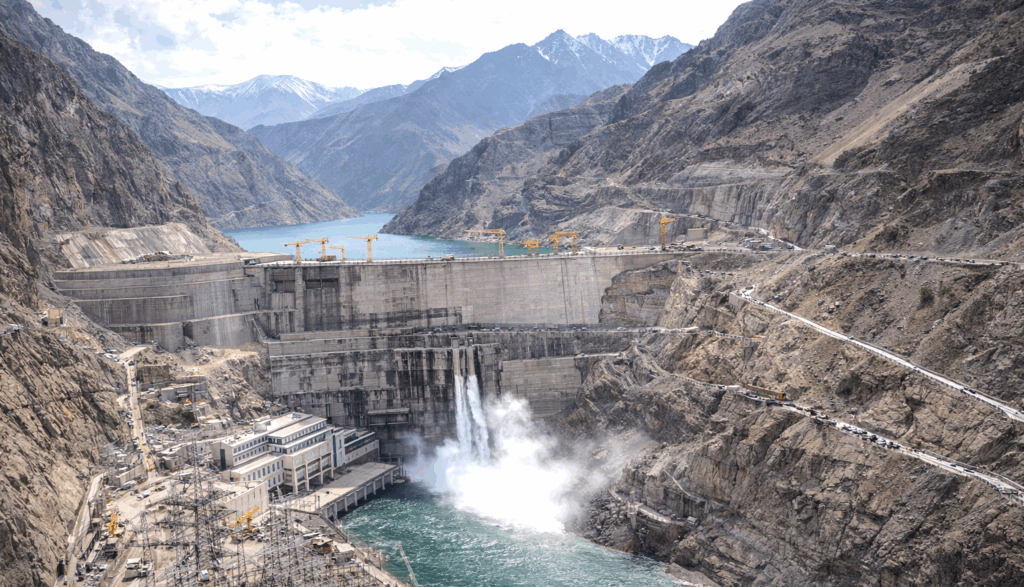
An independent audit of Tajikistan’s flagship Rogun Hydropower Plant (HPP) has flagged serious financial reporting concerns, including a possible understatement of the company’s share capital. The findings, cited by Asia-Plus from the auditor’s conclusion, point to broader risks in the management of one of Central Asia’s most ambitious infrastructure projects.

The audit, covering Rogun’s 2024 financial statements, was conducted by Baker Tilly Tajikistan, a registered member of the international Baker Tilly network. The auditors issued a qualified opinion, meaning they were unable to fully confirm the accuracy of the company’s accounts and highlighted several material issues. The audited report has been published on the official Rogun HPP website.

Among the key concerns, auditors stated they had not been involved in scheduled or annual inventories of cash, fixed assets, or other inventories as of December 31, 2024. This limited their ability to verify the existence and condition of parts of the company’s assets through alternative procedures, raising the risk of potential misstatements in the financial records.

The audit also noted that Rogun’s fixed assets had not been revalued in recent years, despite signs that their book value may significantly differ from their fair market value. Under International Financial Reporting Standards (IFRS), such assets are required to be revalued periodically. The failure to do so may distort the company’s true financial position.

A particularly striking finding involved discrepancies in the company’s reported share capital. Rogun’s financial statements list share capital at 40.03 billion somoni, while the Unified State Register of Legal Entities records it at 45 billion somoni. The difference, 4.97 billion somoni, or approximately $540 million, may indicate that the company has understated its equity. According to the audit, Rogun’s management did not provide adequate documentation to support the lower figure.

As of the end of 2024, Rogun reported total assets of 49.48 billion somoni, up from the previous year. The bulk, 35.33 billion somoni, was classified as construction in progress, reflecting the plant’s ongoing development phase. The book value of fixed assets stood at 9.28 billion somoni, with most 2024 expenditures directed toward equipment and construction work.

The company reported 2024 revenues of 258.4 million somoni, primarily from electricity sales. However, operating costs exceeded income, totaling 367.4 million somoni, resulting in a net loss of 277.3 million somoni. This marks a modest improvement over 2023, when the net loss was 332.8 million somoni. The auditors described these losses as systemic, emphasizing that the plant has not yet reached full operational capacity.

Despite the loss, Rogun HPP generated a positive operating cash flow of more than 3.2 billion somoni in 2024. This was largely attributed to increased liabilities from founders and settlements with state institutions. Baker Tilly stressed that the company’s continued operation depends heavily on sustained government support, which is regularly allocated through Tajikistan’s state budget.

The auditors also issued a warning over material uncertainty regarding the company’s ability to continue as a going concern. However, Rogun’s management maintains that the project is a strategic national asset, vital to Tajikistan’s long-term energy security and plans for future electricity exports.

With an installed capacity of 3,780 megawatts, Rogun is expected to become the largest hydropower plant in Central Asia. Once fully operational, it is projected to generate over 14.5 billion kilowatt-hours of electricity annually. The final turbine is scheduled for commissioning in 2029.

Orthodox Christmas in Central Asia Highlights Faith, Tradition, and Tolerance

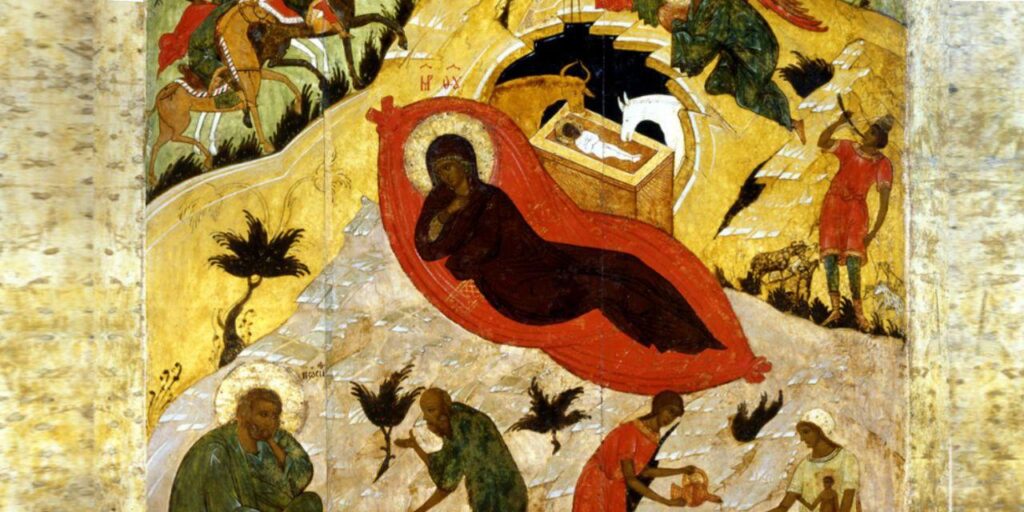
On January 7, Orthodox Christians in Central Asia and around the world celebrate Christmas. In the region, the holiday has become a symbol of religious and ethnic tolerance. Christmas is one of the most significant holidays for believers and is also cherished by many who are not religious. It is celebrated by billions globally. However, the majority of Orthodox Christians and Catholics do not observe Christmas on the same day.

While Christmas falls on January 7 for millions of Orthodox Christians in Central Asia, the holiday is marked not only by church services but also by official recognition, public celebrations, and interfaith messages—underscoring the region’s emphasis on religious coexistence.

In the early centuries of the Christian era, the Julian calendar was used universally, but, over time, astronomers found that the Julian calendar miscalculated the solar year’s length. As a result, it was replaced by the more accurate Gregorian calendar, which is now followed in most of the secular world. However, many Orthodox churches did not adopt the Gregorian reform. Consequently, many Orthodox Christians celebrate Christmas not on December 25, but 13 days later, on January 7.

Some interpreters of church law argue that the Julian calendar is sanctified by centuries of tradition. The Russian Orthodox Church, in particular, maintains that transitioning to the Gregorian calendar would violate canonical norms.

A Bright Holiday in Kazakhstan

In Kazakhstan, the Ascension Cathedral in Almaty is filled with worshippers on Christmas Eve. The cathedral is a spiritual, historical, and cultural landmark of the country.

The Zenkov (Ascension) Cathedral, Almaty; image: TCA, Stephen M. Bland

This year, Metropolitan Alexander, head of the Orthodox Church in Kazakhstan, conducted the divine liturgy at the cathedral, urging people to mark the holiday through acts of kindness.

“It would be wrong to celebrate Christmas if we do not share this joy with our neighbors, especially those in need of comfort and support. Let us strive to make this festive season truly bright and solemn for all of us, through good deeds, words of comfort and encouragement, compassion, and mercy. Let us extend a helping hand to those who mourn, encourage those who are discouraged, visit those who are sick, and remember those who are lonely,” said Metropolitan Alexander of Astana and Kazakhstan.

In Astana, Bishop Gennady of Kaskelen, administrator of the Metropolitan District, offered Christmas greetings and led a service at Uspensky Cathedral. Orthodox Christmas is a public holiday in Kazakhstan. Representatives of various faiths have emphasized that the day symbolizes peaceful coexistence among people of different nationalities and religions.

Christmas Carols and Religious Freedom

In Uzbekistan, Metropolitan Vikenty of Tashkent and Uzbekistan, head of the Central Asian Metropolitan District, led the Divine Liturgy at the Cathedral of the Assumption of the Blessed Virgin Mary in Tashkent. The Orthodox community in Uzbekistan is estimated to number between 600,000 and a million. Religious observers note that the public celebration of Orthodox Christmas across Central Asia increasingly reflects a broader emphasis on social stability, interfaith dialogue, and state support for religious expression.
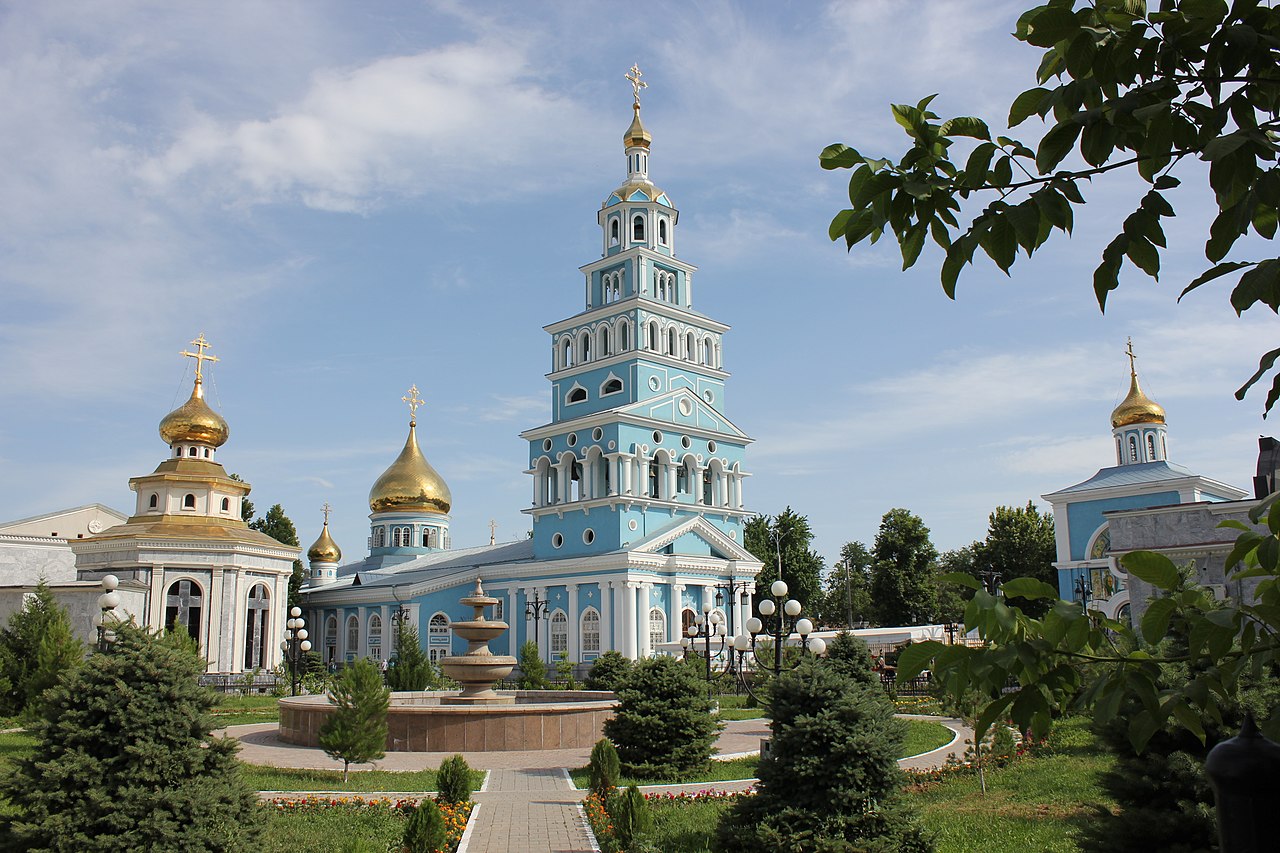
Cathedral of the Assumption of the Blessed Virgin Mary in Tashkent

For believers, the ability to freely celebrate Christmas is seen as a sign of social stability. In February 2025, Uzbekistan adopted a new policy framework for ensuring freedom of conscience and guiding state policy in the religious sphere. The Bible Society of Uzbekistan welcomed the initiative, describing it as vital for fostering interfaith dialogue and upholding the principles of a secular state.

In Kyrgyzstan, a festive service was held at the Holy Resurrection Cathedral and the Church of St. Vladimir, Equal to the Apostles, in Bishkek.

Throughout Central Asia, Orthodox Christmas is traditionally celebrated with a festive meal. At the center of the holiday table is kutya (or sochivo), a dish made from wheat grains, nuts, honey, dried fruit, and poppy seeds. It symbolizes prosperity, family unity, and eternal life.

Kutya

Like Catholic and Protestant Christmas, Orthodox Christmas is viewed as a time of miracles. Christmas trees remain decorated in homes after New Year’s, and the celebratory mood continues. On Christmas Eve, Orthodox Christians often go caroling. After the church service, young people dress in costumes and visit neighbors, singing songs that offer wishes of health and happiness. Hosts typically offer them food and drink. Today, this custom is often performed theatrically and can even be seen in public places such as supermarkets.

Many folk beliefs and superstitions are also tied to the holiday. For example, families observe who first crosses the threshold of the home on the morning of January 7. If it is a man, the household is believed to be blessed with good luck and prosperity for the year. Christmas also typically marks the onset of a cold snap in Central Asia, which continues until the holiday of Epiphany.

Observed across borders and traditions, Orthodox Christmas in Central Asia blends faith, folklore, and public life, serving both as a sacred celebration and a reflection of the region’s diverse religious fabric.

The Dental Mafia in Kazakhstan: How Pension Funds Were Siphoned Off

Kazakhstan’s Financial Monitoring Agency (FMA) is continuing its investigation into one of the country’s most high-profile financial crimes in recent years: the large-scale embezzlement of pension savings through fictitious dental services. Authorities allege that millions of dollars were siphoned from the Unified Accumulative Pension Fund (UAPF) via a sprawling criminal scheme involving dozens of dental clinics.

According to the FMA, the investigation is ongoing and centers on clinic managers and their accomplices. The alleged scheme involved the withdrawal of pension savings from the UAPF through formal contracts for dental procedures, backed by forged medical documents.

“For such ‘assistance,’ the organizers of the scheme received illegal remuneration amounting to 10% to 20% of the withdrawn funds,” the agency said.

In total, 42 dental clinics are implicated. Investigators estimate that more than $390 million was illicitly funneled through these entities. The funds were reportedly used to acquire luxury real estate and other high-value assets, as well as to open new dental clinics registered under front persons to obscure the identities of the real beneficiaries.

Some of the fabricated diagnoses were blatantly implausible. In one instance, a 21-year-old was diagnosed with “complete edentulism” (total tooth loss) and simultaneously prescribed both teeth cleaning and braces.

In response to the violations uncovered, Kazakhstan suspended the use of pension savings to pay for dental services as of September 15, 2025. The measure, though temporary, signals a tightening of regulatory oversight amid public outcry.

The program allowing partial use of pension savings for medical services was first introduced in 2021. It enabled citizens to access funds exceeding the so-called “sufficiency threshold” to pay for treatments, including expensive dental procedures such as prosthetics and implants.

Nestlé Recalls Batches of Infant Formula in Uzbekistan and Kazakhstan

Nestlé has initiated a voluntary recall of limited batches of infant formula in Uzbekistan due to a potential contamination risk involving one of the product’s ingredients supplied by an external vendor. The decision, described as precautionary, was announced by Nestlé Food LLC, the company’s local subsidiary.

The recall affects select batches of dry instant milk and fermented milk-based formulas, as well as certain amino acid-based products intended for infants on specialized medical diets. The affected items include NAN 1 OPTIPRO, NAN 2 OPTIPRO, NAN Kislomolochniy (for infants up to 12 months), NAN Supreme (same age group), and ALFARÉ Amino. Nestlé Food LLC clarified that the recall applies only to the specified batches and does not impact other infant nutrition products sold in Uzbekistan.

The company said the action follows a global recall initiated after a potential contamination with cereulide toxin was identified in arachidonic acid sourced from an external supplier. Although the quantity of this ingredient is minimal and Uzbekistan does not impose regulatory limits for cereulide in food products, Nestlé opted for a voluntary recall to mitigate any possible risk. The recall process began in Uzbekistan on January 5, 2026.

Nestlé Food LLC confirmed it has informed local regulators and is prepared to provide comprehensive information to authorities, consumers, and retail partners. Consumers who purchased products from the affected batches can return them according to company-issued procedures. Customer support services are available to assist with the process.

Similar precautionary measures have been announced in Kazakhstan. There, Nestlé is also recalling a limited number of infant food products, including dry and sour-milk formulas, as well as amino acid-based dietary items. The company explained that cereulide is a toxin produced by the bacterium Bacillus cereus. It is particularly hazardous because it cannot be destroyed by boiling or reheating. Exposure to cereulide can cause acute food poisoning, with symptoms including nausea, vomiting, and abdominal pain.

The issue is not confined to Central Asia. Reuters reported that Nestlé has also recalled certain batches of its SMA, BEBA, and NAN infant formulas across parts of Europe due to the same contamination risk.

Nestlé emphasized that consumer health and safety remain its highest priority. The company stated that the recall is a precautionary step aligned with its global quality and safety standards, and that no confirmed cases of harm have been reported to date.

Recent Stories From Tajikistan That You May Have Missed

Hydropower strain returns as rationing tightens

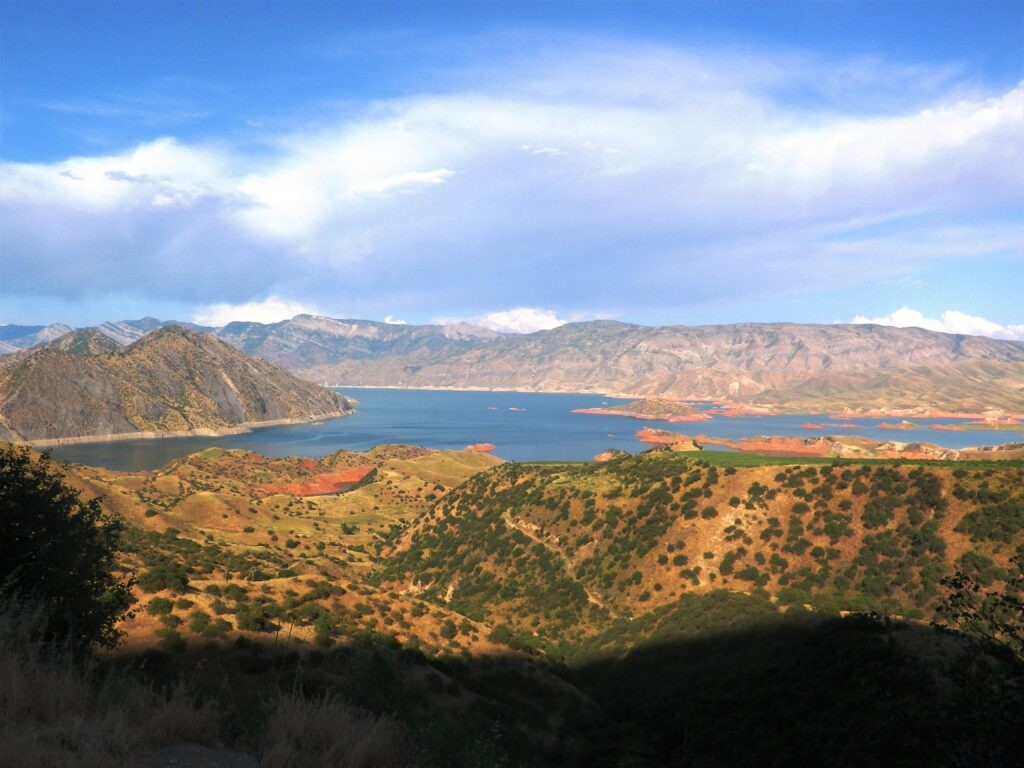
A dry autumn has translated into a difficult start to winter for Tajikistan’s electricity system, with renewed restrictions tied to low reservoir levels. A recent Reuters report on rationing described a drop in water levels feeding the country’s hydropower fleet, with the reservoir at Nurek, the backbone of generation, reported to be substantially below the same point last year.

The measures announced go beyond household inconvenience: restrictions have been accompanied by reduced lighting and tighter electricity allocations for public institutions, while officials explore imports and balancing arrangements with neighbors. 

Rogun’s mitigation narrative hardens as oversight grows

The Rogun hydropower project remains the long-term answer Dushanbe puts forward for these seasonal crunches, and also the project that draws the most intense international scrutiny.

The Times of Central Asia’s coverage of Rogun’s environmental planning highlighted a shift in framing: a “no net loss” biodiversity approach, built around compensatory habitat restoration exceeding the estimated footprint of land losses.

That messaging is designed to reassure lenders and stakeholders that the dam’s scale will be matched by formal safeguards, and to keep financing pathways open at a time when environmental and social governance has become central to major infrastructure underwriting. 

But “no net loss” is also an invitation for closer measurement, and criticism has increasingly focused on whether offsets can meaningfully address river-system impacts, not only terrestrial habitat. 

Advocacy briefs circulating around Rogun argue that aquatic biodiversity mitigation and downstream ecological risk remain the hardest pieces to quantify and enforce, especially on long timelines where implementation phases stretch years beyond core construction.

In other words, Rogun’s external story is evolving: it is no longer only about generating electricity and exporting surplus. It is also about whether international standards can be applied credibly to a project of this size — and whether promised safeguards hold up under cross-border water politics and long-term monitoring.

A border-security story triggers a rare media confrontation

If energy is the long-term strategic theme, border security remains the most sensitive. That sensitivity spilled into public view after a Reuters dispatch on alleged Tajik–Russian border talks suggested Dushanbe was considering deeper cooperation with Moscow and the CSTO for monitoring the Afghan frontier.

Tajikistan’s response was unusually direct. In a sharply worded statement reported by Eurasianet’s account of the dispute, the Foreign Ministry said the report “does not correspond to reality” and insisted the border situation was under national control.

Shortly afterwards, The Times of Central Asia’s report on Reuters withdrawing the story underscored how rare it is for a major international outlet to retract a piece following an official denial in the region.

For Western governments, the episode illustrates how the Afghan border remains a geopolitical pressure valve, and how carefully Dushanbe manages the optics of any foreign military footprint, particularly at a time when Russia’s regional role is politically charged and China’s security profile is rising.

Land degradation moves from “environmental” to “economic risk”

Finally, an issue that has long sat in the “environment” column is now being described increasingly as a macroeconomic threat: land degradation and food security. The Times of Central Asia’s summary of FAO-linked findings drew attention to estimates that a very large share of arable land is already degraded, driven by erosion, salinization and nutrient loss.

International analysis has pushed the point further. In The Diplomat’s deep dive on Tajikistan’s food-security constraints, the argument is that fragmentation of farmland, limited mechanization and underinvestment in irrigation and soil management are combining with climate stress to reduce resilience, in a country where household economics, migration decisions and political stability are closely tied to rural livelihoods. Broader UN messaging, including FAO’s work on land and soils, frames the same dynamic globally: degraded land reduces yields and amplifies vulnerability to drought and extreme weather.

Together, these four developments capture Tajikistan’s current trajectory: hydropower remains both the country’s strength and its exposure; Rogun is increasingly a test case for international infrastructure standards; the Afghan border remains politically combustible; and land degradation is becoming an economic headline rather than a background environmental warning.