• KGS/USD = 0.01144 0%
  • KZT/USD = 0.00196 -0%
  • TJS/USD = 0.10899 0%
  • UZS/USD = 0.00008 0%
  • TMT/USD = 0.28490 0%
  • KGS/USD = 0.01144 0%
  • KZT/USD = 0.00196 -0%
  • TJS/USD = 0.10899 0%
  • UZS/USD = 0.00008 0%
  • TMT/USD = 0.28490 0%
  • KGS/USD = 0.01144 0%
  • KZT/USD = 0.00196 -0%
  • TJS/USD = 0.10899 0%
  • UZS/USD = 0.00008 0%
  • TMT/USD = 0.28490 0%
  • KGS/USD = 0.01144 0%
  • KZT/USD = 0.00196 -0%
  • TJS/USD = 0.10899 0%
  • UZS/USD = 0.00008 0%
  • TMT/USD = 0.28490 0%
  • KGS/USD = 0.01144 0%
  • KZT/USD = 0.00196 -0%
  • TJS/USD = 0.10899 0%
  • UZS/USD = 0.00008 0%
  • TMT/USD = 0.28490 0%
  • KGS/USD = 0.01144 0%
  • KZT/USD = 0.00196 -0%
  • TJS/USD = 0.10899 0%
  • UZS/USD = 0.00008 0%
  • TMT/USD = 0.28490 0%
  • KGS/USD = 0.01144 0%
  • KZT/USD = 0.00196 -0%
  • TJS/USD = 0.10899 0%
  • UZS/USD = 0.00008 0%
  • TMT/USD = 0.28490 0%
  • KGS/USD = 0.01144 0%
  • KZT/USD = 0.00196 -0%
  • TJS/USD = 0.10899 0%
  • UZS/USD = 0.00008 0%
  • TMT/USD = 0.28490 0%
08 December 2025

Behind the Scenes in Hollywood: Kyrgyz Screenwriter Guljan Toktogul on the Industry Without the Glamour

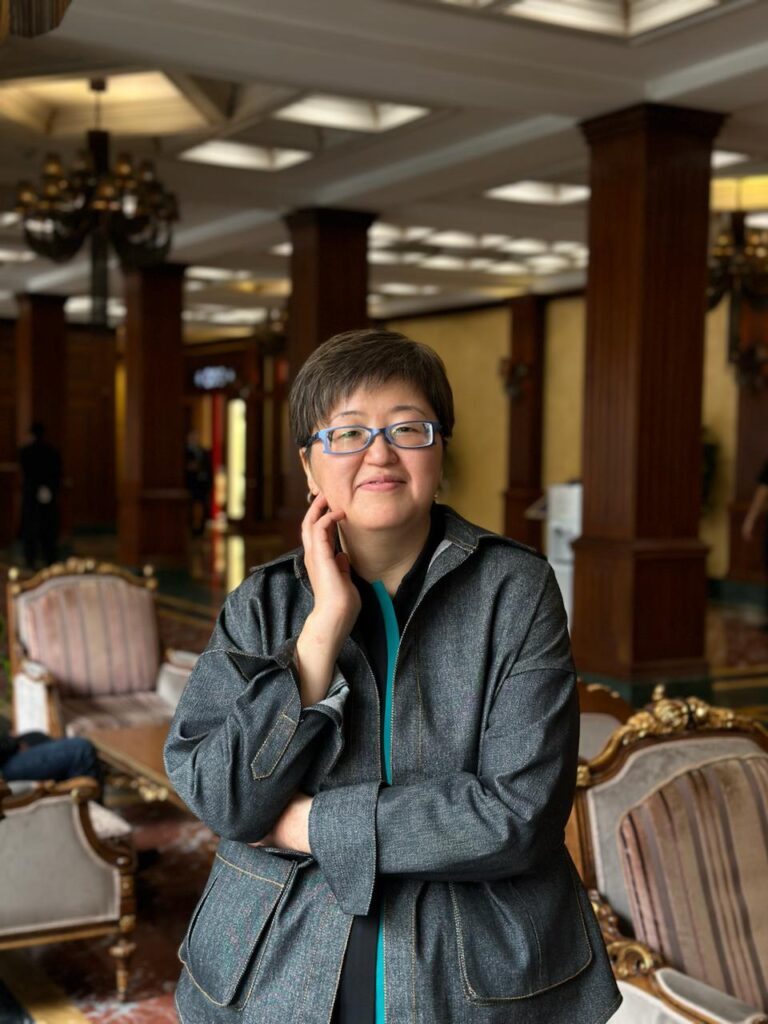
Screenwriter Guljan Toktogul spent nearly a decade in Hollywood. She wrote the script for the movie Salam, New York, about a Kyrgyz man adapting to life in America, and also has writing credits for the short films I’ll Be A Star and Alexandra. A graduate of the American Film Institute (AFI), she now plans to continue her screenwriting career in her native Kyrgyzstan, having recently returned to Bishkek.

The Times of Central Asia spoke with Toktogul about how screenwriters sell scripts in the U.S., how much they earn, what the bidding process entails, and whether it’s all worth it.

TCA: What was it like living in Hollywood? Did it ever feel like home?

Toktogul: It became comfortable, but not immediately, only after I built some connections. I first arrived in the U.S. in 2016 with my brother, who was there for work. We lived in Washington, D.C. for two years. When he left, I suddenly felt anxious. The thought of being alone so far from family, literally a day’s flight away, was overwhelming. I cried. But when I moved to L.A., completed a semester, and made friends, things improved quickly. I was lucky to be studying screenwriting at film school.

TCA: Did the school feel like a second family?

Toktogul: Exactly. Writing and working together means sharing deeply personal memories and thoughts, so people bond much faster than in everyday life. The school created a very supportive environment, full of people just as obsessed with film as I was. You live and breathe cinema, nothing else seems to matter.

TCA: How are screenwriters treated in the U.S. compared to Central Asia?

Toktogul: In the U.S., screenwriters are respected, but still often in the background. Producers and directors are the main creative forces. That’s why many screenwriters eventually try directing, to retain more control. You hand over your script, but what happens next is out of your hands. We don’t just write randomly, there’s meaning in every scene. When a script is mishandled on set, it’s painful. Many screenwriters avoid being on set for that reason.

TCA: Are screenwriters usually present during filming?

Toktogul: Yes, and rightly so. Unexpected problems always arise, maybe an actor drops out or a location falls through, so changes must be made on the spot. This is especially true for low-budget projects. I once worked on an indie film in Chicago and realized just how crucial a screenwriter’s presence can be.

TCA: But aren’t things in the U.S. locked down by contracts before filming begins?

Toktogul: Only if you’re someone like Aaron Sorkin. He insists on filming scripts exactly as written. He’s known for demanding that actors deliver 10 pages of dialogue in nine minutes with no cuts. And it works, his dialogue has a musical quality. But most writers aren’t in that position. Ideally, scripts would be treated with more care. We’re not trying to take over, we just want the best version of the story to be told.

TCA: Were you a member of the Writers Guild of America (WGA)?

Toktogul: I was, briefly. Before the strikes and restructuring, graduates of top film schools could apply for associate membership. It wasn’t full membership, but it lasted three years and offered perks, meetings with top writers like James Cameron, free screenings during awards season, and discounted tickets to premieres. If you proved yourself, you could apply for full membership.

TCA: What are the costs and benefits of membership?

Toktogul: It costs about $3,000 annually. The biggest benefit is top-tier health insurance, priceless given how expensive healthcare is in the U.S. But you can’t just pay your way in. You need to earn a certain number of credits, 24 for working in a writers’ room, more for selling scripts. The Guild also keeps a blacklist of production companies.

WGA membership offers both protection and limitations. You can’t work for less than the minimum rate or with non-American studios unless they have Guild-approved contracts. Some members remain unemployed because they’re restricted from working on web series, animation, or independent projects unless they meet WGA rules.

TCA: Does the Guild protect against plagiarism?

Toktogul: Not really. You can register your script, but if it’s stolen, the Guild only verifies the registration date. You’d still need to sue independently. Most people use the U.S. Copyright Office, which only confirms authorship, it doesn’t offer real protection.

TCA: So there’s no foolproof way to protect your work?

Toktogul: Unfortunately, no. The best defense is to write personal stories, they’re harder to steal and easier to defend. That’s also why studios don’t accept unsolicited scripts. Everything goes through agents to avoid legal issues. Still, studios often find it cheaper to buy an idea than face a lawsuit. For instance, HBO bought the rights to Svetlana Alexievich’s Voices from Chernobyl to avoid any potential plagiarism claims, even though Chernobyl creator Craig Mazin was only loosely inspired by it.

TCA: How much does a Hollywood screenplay cost?

Toktogul: It varies. For Writers Guild members, the starting rate is around $100,000, and it can go up to several million depending on experience and reputation.

TCA: Robert Rodriguez wrote that studios fought over his script when he arrived in Hollywood. How does that work?

Toktogul: That’s the agent system. If your script is strong, the agent sends it to multiple studios, which can trigger a bidding war. These days, agents often shape the project from the start, matching ideas to studio demands. Once a deal is made, the agent takes a percentage.

TCA: What’s the biggest amount you’ve heard a newcomer earn?

Toktogul: I don’t remember the project, but the number stuck $7 million. After taxes, agent fees, and legal costs, the writer kept around $3 million.

TCA: Would you return to Hollywood?

Toktogul: Definitely but on my own terms. Hollywood is unlike any other place. It has the highest concentration of people just like you, driven by the same passion for film, eager to support your success. Because if you make it, they believe they might too.


Uzbekistan to Transition to 12-Year School System

Uzbekistan is preparing to transition to a 12-year general education system, Deputy Minister of Preschool and School Education Sardor Radjabov announced in an interview with Uzbekistan-24. The change will incorporate preparatory classes into formal education, extending schooling from the current 11 years to 12.

The revised structure will include three stages:

  • One year of school preparation
  • Four years of primary education (grades 1-4)
  • Five years of general secondary education (grades 5-9)
  • Two years of full secondary education (grades 10-11), which may be completed at general schools, academic lyceums, military schools, or technical colleges

According to Radjabov, the reform aims to enhance educational quality and eliminate obstacles faced by Uzbek students applying to foreign universities. Currently, graduates are often required to complete a one-year foundation program abroad before qualifying for undergraduate studies.

“This means our children lose a year,” he said. “If we implement the 12-year education system, students will no longer need to study foundation courses in several countries and will be able to enter undergraduate programs directly.”

He added that aligning Uzbekistan’s education system with international standards would expand opportunities for graduates and narrow the gap between local and global academic systems.

The reform builds on earlier changes to Uzbekistan’s school structure. In 2017, President Shavkat Mirziyoyev proposed the reinstatement of an 11-year general education framework, emphasizing its role in improving the connection between schools and colleges. Since then, most schools have operated under the 11-year model.

Underwater Secrets of the Steppe: Archaeologists Unearth Ancient Artifacts in Kazakhstan’s Bogen Reservoir

A team of archaeologists from the Zhanibekov University Research Center has uncovered a trove of ancient artifacts at the Bogen Reservoir in the Ordabasy district of Kazakhstan’s Turkestan region. An unusually dry season significantly lowered the water level, revealing archaeological remains hidden for centuries.

Paleolithic Tools and Bronze Age Burials

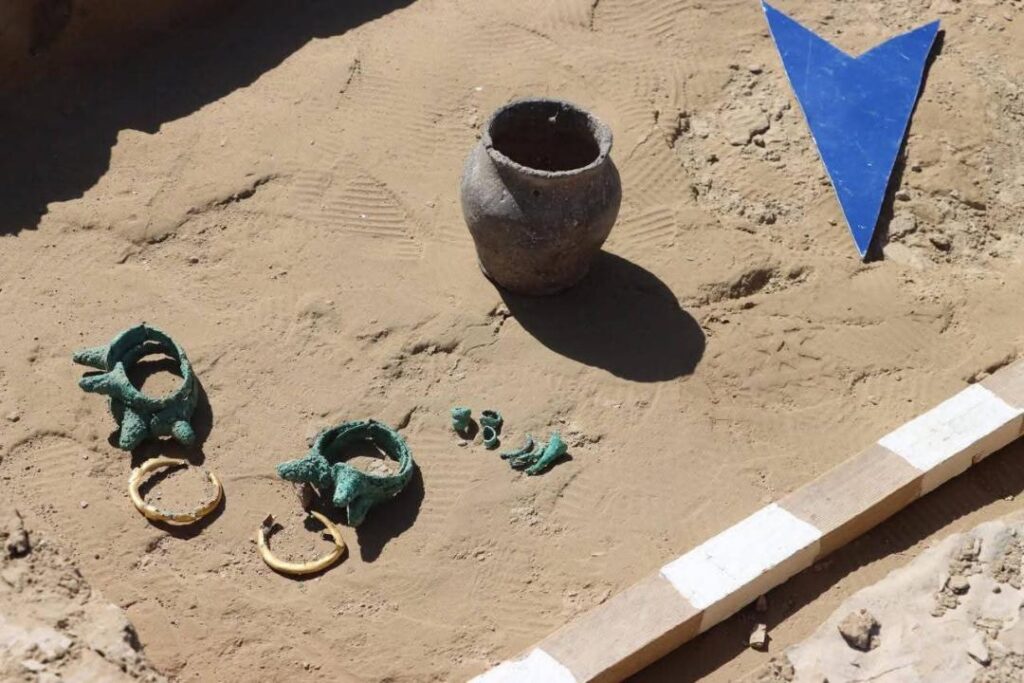
Within just one week of surveying, researchers recovered dozens of Late Paleolithic and Mesolithic stone tools, including chalcedony flakes, cores, and cutting plates. Several Bronze Age burial sites were also excavated. While skeletal remains were poorly preserved, the grave goods were remarkable: decorated ceramics, a gold-plated bronze temple ornament, rings, bracelets, earrings, and hundreds of tiny beads likely used in headdresses.

A particularly notable discovery was a burial dated to the 1st century BC-1st century AD. It contained three socketed arrowheads, a utility knife, a belt buckle, and a ceramic jug. Experts say such finds affirm the continuous human settlement of the region over millennia. After analysis, the artifacts will be transferred to a local museum.

Bronze Knives, a Saka Ring, and a Lost Medieval City

Earlier this year, The Times of Central Asia reported that archaeologists from Margulan University had unearthed two bronze knives near Lake Toraygyr. While attributed to the early Saka period, their design reflects stylistic elements of the Early Iron Age, evidence of both advanced metallurgy and cultural connectivity across Central Asia.

At another site, researchers from Al-Farabi Kazakh National University discovered a gold ring from the Scythian era, weighing nearly 8 grams and featuring a lion motif. Experts interpret the human-animal hybrid symbolism as representative of the spiritual worldview of Saka elites in the 4th-3rd centuries BC. The burial also contained the remains of a man and a woman, alongside stone, iron, and gold artifacts.

In Zhetysu, archaeologists revealed the ruins of a medieval city likely destroyed during the Mongol invasions. Excavations uncovered preserved brickwork, a defensive tower, and evidence of intense fire damage. Experts have drawn comparisons with other UNESCO-listed sites such as Talgar (Talhiz) and Koilyk.

Meanwhile, the Saryarka Archaeological Institute has identified 25 historical and cultural sites in the Shet district of central Kazakhstan. These range from the Bronze Age through the Iron Age and into the medieval period. Excavations are pending, awaiting official permits.

The “Golden Man” of East Kazakhstan and the Buddhist Crossroads

One of the country’s most celebrated discoveries in recent years remains the 2018 unearthing of the so-called “Golden Man of East Kazakhstan” by archaeologist Zeinolla Samashev. More than 3,000 gold artifacts, including earrings, necklaces, and horse harness ornaments, were recovered from a burial dating to the 7th-8th centuries BC.

Further south, in the Aiyrandy Gorge of the Merke district, archaeologists uncovered the remains of an ancient Buddhist temple, including a carved stone head of the Buddha. The find underscores the region’s historic role as a crossroads of religions and cultures along the Silk Road.

From Paleolithic tools and Saka-era treasures to lost medieval cities and Buddhist sanctuaries, Kazakhstan’s recent archaeological discoveries reveal an extraordinary continuity of settlement and cultural exchange across the steppe. Together, these finds reaffirm the country’s vast and layered historical legacy.

Kyrgyzstan Sees Growth in Mining Output Despite Fewer Licensed Operators

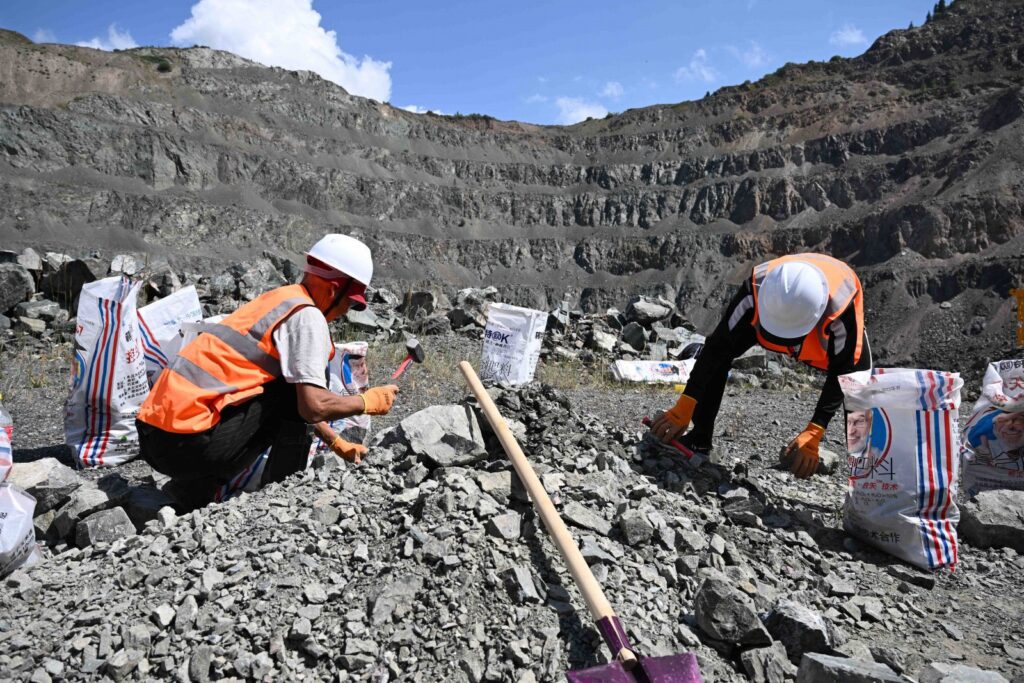
Kyrgyzstan recorded a notable increase in the extraction of gold, silver, coal, and natural gas in the first half of 2025, even as the number of companies operating in the sector declined, according to data from the Kyrgyz Geological Service.

Compared to the first six months of 2024, the country produced an additional 700 kg of gold and 1.1 million m³ more natural gas in 2025. Silver and coal production also rose significantly.

However, the sector is seeing a consolidation. A total of 199 production licenses were revoked in the first half of 2025, while only 15 new licenses were issued, down from 26 over the same period last year. Government officials noted that many license holders had not initiated development, and their permits were reallocated to other operators upon expiration.

Increased Output and Revenue

The state resource balance in the first half of 2025 was as follows:

  • Regular gold: 5.8 tons
  • Placer gold: up from 28.3 kg to 57 kg
  • Silver: up from 198 kg to 3.8 tons
  • Coal: up from 3.1 million to 4.4 million tons

Tax and non-tax revenues increased from 17.9 billion KGS ($205.2 million) to 27.8 billion KGS ($318.5 million). Industrial production reached 30.7 billion KGS ($352 million), marking a rise of nearly 3 billion KGS ($34.4 million).

Risks to Construction Resources

At the same time, reserves of marble, sand, and gravel have declined due to high demand from the construction sector. As previously reported by The Times of Central Asia, the ongoing construction boom is driving aggressive extraction of these materials, hastening depletion.

Balancing Growth and Sustainability

While the increase in mineral production and revenue contributes positively to Kyrgyzstan’s GDP and reflects the benefits of a streamlined licensing policy, the report emphasizes the importance of sustainable resource management. With continued pressure from the construction and energy sectors, experts caution that long-term planning is crucial to avoid overexploitation of finite resources.

Kazakhstan Weighs a Unicameral Future: Tokayev’s Call to Scrap the Senate

One of the most debated elements of President Kassym-Jomart Tokayev’s annual address to the nation was his proposal for sweeping parliamentary reform. Tokayev suggested a return to a unicameral legislature, mirroring the single-chamber Supreme Council of the early post-independence years.

“I personally had the honor of leading the Senate for ten years, and I have always regarded this work as a great privilege and responsibility,” Tokayev stated. “That’s why it is not easy for me to speak about parliamentary reform from this podium. Nevertheless, today I propose that in the foreseeable future, Kazakhstan consider creating a unicameral Parliament.”

Tokayev went on to propose holding a national referendum on the issue in 2027.

From Supreme Council to Bicameralism: Lessons of a Political Crisis

The Supreme Council of the 13th convocation, elected in March 1994, quickly fell into conflict with then-President Nursultan Nazarbayev. Citing a constitutional discrepancy, Nazarbayev dissolved the council in March 1995, leaving Kazakhstan without a legislative body until December of that year.

Kazakhstan’s current bicameral system, comprising the Mazhilis (lower house) and the Senate (upper house), emerged as a response to that political crisis. Initially, the Mazhilis included both party-list and independent candidates, though the system later shifted toward proportional representation. In 2022, the mixed system was reinstated, allowing for majority candidates once again.

The Senate, meanwhile, has historically served to counterbalance the more agile Mazhilis. Senators are chosen through regional maslikhat voting or appointed directly by the president, a practice introduced under Nazarbayev. Critics argue this has enabled the central government to neutralize local dissent or sideline bureaucrats by sending them to a largely ceremonial upper chamber.

The Senate’s inertia became especially problematic during past confrontations between the executive branch and parts of the Mazhilis. In 2001-2002, then Prime Minister Tokayev even threatened to resign unless Nazarbayev dismissed several cabinet members linked to the reformist Democratic Choice of Kazakhstan (QDT). Facing mounting political pressure, Nazarbayev promptly removed officials, including Deputy Prime Minister Oraz Jandosov and Deputy Defense Minister Jannat Ertlesova, among others. That political standoff, clearly not forgotten by Tokayev, may explain his desire to simplify the legislative structure and reduce expenses tied to maintaining the Senate.

Reform Proposal Met with Mixed Reactions

Kazakh media and political experts were quick to weigh in on the announcement. Most agreed on two points: the Senate has long been criticized, and Tokayev remains committed to opening up major reforms to public debate. Still, the initial wave of enthusiasm quickly gave way to more cautious analyses.

Political scientist Daniyar Ashimbayev expressed concerns on his Telegram channel about regional representation in a purely party-list system. He noted that bicameralism is not exclusive to federal states and pointed out that Kazakhstan’s diverse regions have varying interests requiring nuanced representation. According to Ashimbayev, the Senate has functioned as a “collective lobbyist” and as a “social elevator” for regional elites. Single-mandate deputies, he argued, have also served similar functions.

This critique highlights a less-discussed element of Tokayev’s reform: eliminating majority-elected deputies, a key feature of the 2022 democratic reforms. Political scientist Marat Shibutov echoed this concern. On his Telegram channel, he pointed out that while the return of single-mandate deputies in 2022 was initially popular, their performance has since been underwhelming.

Shibutov observed that prominent single-mandate deputies submitted two to three times fewer official requests than their party-list counterparts. “Where did their activity go?” he asked rhetorically, suggesting their energy was diverted into media grandstanding and populist attacks on businesses, behavior Tokayev is unlikely to endorse.

Indeed, many single-mandate deputies from the regions act as lobbyists for local elites and business interests. Tokayev’s reform appears aimed at closing these avenues of influence.

Who Will Lead the New Majority?

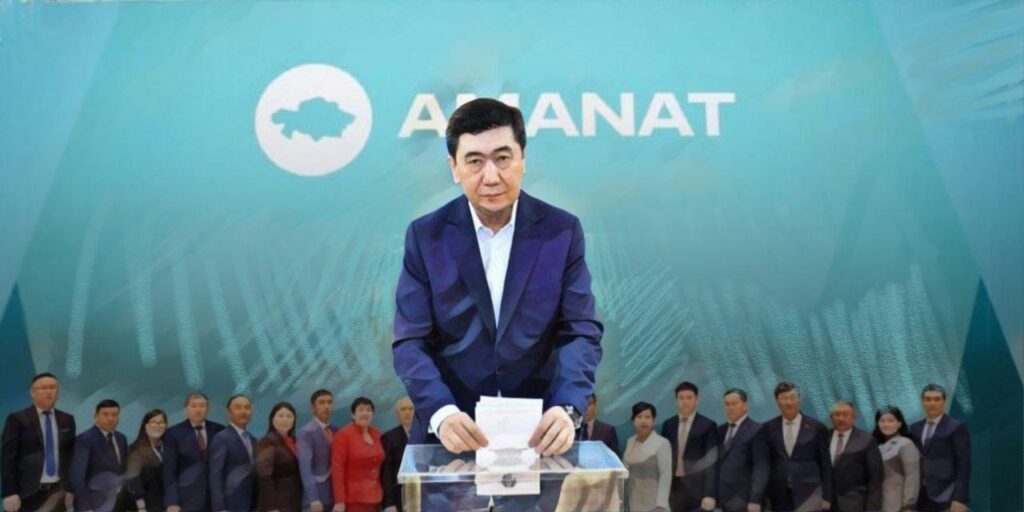
Were the abolition of the Senate and independent candidates to proceed, the leader of the majority party would likely become the most powerful figure within the legislature, centralizing legislative authority. The most obvious contender for this role is Yerlan Koshanov, leader of Amanat, Kazakhstan’s current ruling party.

Formerly known as Otan, and later Nur Otan, the party was long associated with Nazarbayev. Although Tokayev formally left the party in 2022, Amanat has remained dominant, adapting quickly to the new political reality. Koshanov, an experienced civil servant and current Chair of the Mazhilis, has built a reputation as a loyal ally of Tokayev. Before becoming speaker, he served as governor of the Karaganda region and as chief of the Presidential Administration. His leadership of Amanat positions him as the most likely figure to consolidate power in a future unicameral system.

Ak Zhol, led by veteran lawmaker Azat Peruashev, may offer some competition. The party enjoys popularity in business circles and industrial regions, and styles itself as the parliamentary opposition. However, it lacks broad appeal in Kazakhstan’s populous southern regions.

Other parties, such as the People’s Party of Kazakhstan, Auyl, the National Social Democratic Party (NSDP), and Respublica, remain marginal players. The People’s Party has lost its northern strongholds and lacks southern reach. Auyl, while active in rural areas during elections, has a tendency to fade quickly afterwards. NSDP and Respublica, though more visible in urban centers like Astana and Almaty, have yet to demonstrate significant electoral traction.

Continuity, Not Upheaval

Ultimately, Tokayev’s proposed reform is unlikely to alter the party balance significantly. Amanat remains dominant and, barring unexpected developments, will likely continue to shape the legislative agenda.

The true question is whether Yerlan Koshanov will remain at the helm of the new parliament, or whether Tokayev has a more strategically advantageous candidate in mind. With Tokayev’s mandate expiring in 2029 – and no possibility of reelection under the 2022 constitutional changes – the proposed reform takes on added significance, raising questions about succession planning and the political landscape of the post-Tokayev era.

Kazakhstan, Uzbekistan, Kyrgyzstan Condemn Israel for Attack on Hamas in Qatar

Several countries in Central Asia sharply criticized Israel’s airstrike on a Hamas meeting in Qatar on Tuesday, saying it was a violation of sovereignty and international law. 

“Whatever the objective, such actions must not be allowed,” President Kassym-Jomart Tokayev of Kazakhstan said. “This violates the sovereignty of the State of Qatar and contradicts the principles of international law.”

Uzbekistan´s Ministry of Foreign Affairs issued a similar statement about the attack, which escalated tensions in the Middle East and threatened to disrupt already fragile talks about a cease-fire in Gaza. 

The ministry noted that the attack happened in a residential area of the Qatari capital of Doha and described it as “an encroachment upon the inviolability of borders and security” of the Gulf state.

“Such actions are unacceptable and represent a serious disregard for the UN Charter, fundamental norms and principles of international law,” the ministry statement said. “Uzbekistan has consistently opposed any form of use of force in international relations that exacerbates the already complex situation in the Middle East.”

President Sadyr Japarov of Kyrgyzstan also condemned the Israeli attacks, according to presidential spokesman Askat Alagozov.

Hamas negotiators have a base in Qatar, which has served as a mediator in efforts to reach a cease-fire in Gaza. Israel said the strike in Doha was retaliation for a shooting attack that killed five people in Jerusalem on Monday. 

Kazakhstan and other Central Asian countries have been developing more investment projects with Qatar as they diversify their international trading partners.