• KGS/USD = 0.01144 0%
  • KZT/USD = 0.00210 0%
  • TJS/USD = 0.10438 0%
  • UZS/USD = 0.00008 0%
  • TMT/USD = 0.28490 0%
  • KGS/USD = 0.01144 0%
  • KZT/USD = 0.00210 0%
  • TJS/USD = 0.10438 0%
  • UZS/USD = 0.00008 0%
  • TMT/USD = 0.28490 0%
  • KGS/USD = 0.01144 0%
  • KZT/USD = 0.00210 0%
  • TJS/USD = 0.10438 0%
  • UZS/USD = 0.00008 0%
  • TMT/USD = 0.28490 0%
  • KGS/USD = 0.01144 0%
  • KZT/USD = 0.00210 0%
  • TJS/USD = 0.10438 0%
  • UZS/USD = 0.00008 0%
  • TMT/USD = 0.28490 0%
  • KGS/USD = 0.01144 0%
  • KZT/USD = 0.00210 0%
  • TJS/USD = 0.10438 0%
  • UZS/USD = 0.00008 0%
  • TMT/USD = 0.28490 0%
  • KGS/USD = 0.01144 0%
  • KZT/USD = 0.00210 0%
  • TJS/USD = 0.10438 0%
  • UZS/USD = 0.00008 0%
  • TMT/USD = 0.28490 0%
  • KGS/USD = 0.01144 0%
  • KZT/USD = 0.00210 0%
  • TJS/USD = 0.10438 0%
  • UZS/USD = 0.00008 0%
  • TMT/USD = 0.28490 0%
  • KGS/USD = 0.01144 0%
  • KZT/USD = 0.00210 0%
  • TJS/USD = 0.10438 0%
  • UZS/USD = 0.00008 0%
  • TMT/USD = 0.28490 0%

From the Central Asian Steppe to Manhattan: A Turkmen Bard in New York

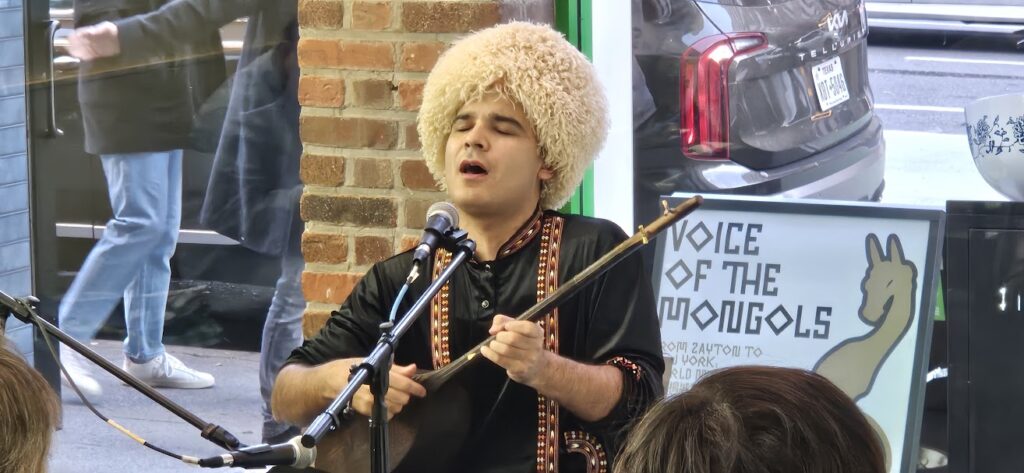
A halal Chinese Muslim restaurant in New York City is an unlikely setting for a concert by a highly acclaimed bard of the Turkmen tradition. Yet on a Saturday afternoon in Manhattan’s Kips Bay neighborhood, before an audience of attentive listeners and curious onlookers peering through the window, the multi-award-winning Mohammad Geldi Geldi Nejad filled Beef Up Noodle with sustained melodic phrases and guttural embellishments. At times, his dexterous strumming of the dutar, a two-stringed long-necked lute, deliberately mimicked the rhythm of galloping horse hooves central to the Turkmen bardic style.

Mohammad was raised in the Turkmen community of Gonbad-e Kavus in northeastern Iran. At age ten, he became only the second musician ever to receive the honorary title Oghlan Bakhshi, meaning Child Bard. His musical education in Turkmen bardic traditions began in early childhood, before more formal training in Turkmenistan’s capital, Ashgabat.

Turkmen culture, shaped by a nomadic heritage, extends across Turkmenistan, Iran, Afghanistan, Uzbekistan, and Kazakhstan, with smaller populations in Turkey, Iraq, and the North Caucasus. It draws on nomadic traditions where performance serves as a primary vehicle of cultural expression. Central Asian music and culture, carried by diasporic communities from these regions, has found a growing audience in the United States. Turkmen traditions, however, given the minuscule size of the Turkmen population in the U.S., remain largely unfamiliar to most audiences.

Even so, Mohammad has brought his music to audiences beyond Turkmenistan and Iran, performing in parts of Europe and the U.S., including recent concerts at the Lowell Folk Festival in Massachusetts and at Roulette in Brooklyn. At the latter, he offered Western listeners rare access to a musical lineage sustained within a family across generations. Performing under his honorific alias Oghlan Bakhshi, he appeared alongside his father, the gyjak, or spike fiddle, master Abdolghaffar Geldinejad, and his wife and regular musical collaborator, Zyyada Jumayeva, a dutar player who represents the female bardic tradition of Turkmenistan. His album Journey Across the Steppes is the first international release of Turkmen folk music in 30 years. His work has also been documented in a book series, The Music of Central Asia.

At Beef Up Noodle, Mohammad’s performance, titled Songs of the Bakhshi: Turkmen Bardic Heritage, formed part of a broader curatorial landscape shaped by ethnomusicologist Mu Qian, whose work spans scholarship, publishing, and community-based music making. From Zayton to New York is the concert series he curates, exploring how music travels through histories of migration and exchange. Mohammad’s appearance opened a Central Asian trilogy within the series, to be followed by programs devoted to Kyrgyz and Kazakh musical traditions in early 2026. This trilogy represents one strand of Mu Qian’s wider mission, developed through the See & Sea Cultural Foundation, to support minority musicians and bring underrepresented musical cultures from across Asia into conversation with audiences beyond their places of origin.

Mu Qian with Mohammad Geldi Geldi Nejad; image: Paul Adams

British expat Margaret Murray, an audience member whose chance meeting with Mu Qian led her to attend several concerts in the series, remarked that Mohammad’s Saturday afternoon performance stood out for its diverse Western audience, although one Turkmen attendee made his presence known during Mu Qian’s introduction. Other shows curated by Mu Qian, she observed, are often attended primarily by New York audiences who share geographic or cultural roots with the performers.

In this interview, Mohammad discusses his Oghlan Bakhshi origin story, his deep attachment to Turkmen culture through his craft, and the path that led him to become an Ivy League doctoral student living and performing in the U.S.

TCA: You began playing the dutar at the age of six, growing up in a household where music was part of everyday life. What do you remember most about those early experiences of listening and learning?

Mohammad: I was born into a musical family. My mother sang Turkmen folk songs and lullabies at home, and my father is a master of the spike fiddle. We call it a gyjak. Our home was a place where master musicians from across Turkmenistan and Iran came to practice before concerts and folk festivals, so from an early age, I was surrounded by music.

I started accompanying my father wherever he went. He played at weddings, and I remember that when I was five years old, a master bard from Turkmenistan performed at a wedding for Iranian Turkmens, with my father accompanying him. The performance lasted very late into the night, and an elder, joking, said, “Kids your age are sleeping and having sweet dreams. It’s 3 a.m.! What are you doing here?” I think I was the youngest in the audience, and that moment opened my eyes. I was fascinated by what was going on.

Image: Mohammad Geldi Geldi Nejad

TCA: At what point did elders or master musicians begin to recognize your abilities as something unusual for your age?

Mohammad: By the time I was ten years old, I’d learned a large portion of the bardic repertoire, including solo dutar pieces and songs based on heroic and romantic epics. That was when the council of Turkmen music masters gave me the honorary title, Oghlan Bakhshi. I was the second person in the history of Turkmen music to receive this title, after the great Sahy Jepbarow.

TCA: How do Turkmen bards balance responsibility to tradition with individual creativity?

Mohammad: When you receive a blessing from the masters, you also receive responsibility. You need to transmit and teach this music to the next generation, but you also need to develop your own performance style. It shouldn’t be that when someone listens, they say it’s exactly the same.

I wrote about this in my article published in Asian Music, called Pata and Diploma. Pata means blessing. There is a unique concept in Turkmen music called disciple in absentia. This means becoming a disciple of a master who passed away long ago, not face-to-face, but through recordings and through the stories your master carries.

This was how I learned from the first Oghlan Bakhshi. When I received this blessing, my masters told me that I’m a disciple in absentia of that master, someone who brings that charisma alive through performance. In our bardic repertoire, each song often contains a section that serves as a master’s signature. This is how individuality exists within the lineage.

TCA: Your family founded a music school in Iran that bears the name Oghlan Bakhshi. Why was establishing that school important to you and your family?

Mohammad: As a family, we established the first private music school among Iranian Turkmen in 2005. After the Islamic Revolution, many families were reluctant to send their children to learn music. There was a feeling that music didn’t have any future. My father wanted to show that music plays an important role in understanding culture. Over time, the school blossomed. Today, I see many young musicians learning instruments and singing, and it’s fascinating to see how attitudes have changed.

TCA: What led you to continue your studies in Turkmenistan as a teenager?

Mohammad: When I was fifteen, I joined a world music festival in Prague, and I was selected as one of the best young singers. In Iran, we didn’t have an academic school for learning Turkmen music, so I went to Turkmenistan to study with masters there. I studied at the Turkmen State Music College and then continued my studies at the Turkmen National Conservatory in Ashgabat. In Turkmenistan, I had the chance to learn from many masters, and I’m always grateful for that opportunity. I received pata from one of the most respected dutar masters, Çary Suwçy.

TCA: What differences did you notice when you began living and studying in Turkmenistan?

Mohammad: There were small differences, like vocabulary. In Iran, we use Persian words, and in Turkmenistan, Russian words are more common. What interested me most was how bardic styles are divided into regional schools in Turkmenistan, while Iranian Turkmen musicians are more open to singing across styles. At the same time, each master still has their own individual style. For Iranian Turkmen children, music is one of the main ways to learn Turkmen culture today. They don’t have schools where they can learn the Turkmen language or history, so music plays a very important role. In Turkmenistan, there are conservatories, colleges, and masters working within a formal system, so the resources are very different. I also learned the differences between Iranian Turkmen performance styles and those practiced in Turkmenistan.

Nowadays, many bards from Turkmenistan come to Iran to perform, and Iranian Turkmen musicians go to Turkmenistan. So, there is an ongoing exchange.

After finishing the conservatory, I became interested in exploring the music of other Turkic-speaking peoples. I spent time in Turkey, where I worked closely with Turkish musicians who play the bağlama and performed with them in many concerts. This period was important for me in understanding musical connections across Turkic traditions.

During the pandemic, I spent more time listening and researching, and realized how little Turkmen music has been documented academically. My masters encouraged me to contribute through scholarship. I started learning English while I was still in Turkmenistan. In 2021, I entered Wesleyan University, completed my master’s degree, and then applied to Brown University, where I’m now doing my PhD in Musicology and Ethnomusicology.

Image: Paul Adams

TCA: What does it feel like, on a personal level, to bring a deeply place-rooted art form into the very different cultural environment of the U.S.?

Mohammad: That’s a great question. When I first came to the U.S., it wasn’t easy to openly discuss what’s important in Turkmen music. Even though I moved to Turkmenistan at age 16 and lived there for about ten years, and also spent time in Turkey, the U.S. was a completely different environment. I love the U.S. environment so much. It challenged me and made me think about what might seem obvious to someone within the culture, and how it could be different for someone who has never heard this music.

I must admit that, to this day, I really enjoy audiences in the U.S. and how curious they are about Turkmen music. During my performances, I received many questions that pushed me to think more deeply about the music and reflect on my ancestors’ creative musical life. In many ways, these questions helped me find answers through my academic work, questions I might not have encountered if I were performing, say, in Turkmenistan. I’ve also made many good friends here, for which I’m very grateful.

TCA: Western listeners hear your music without the cultural memories Central Asians bring to it. What do you hope audiences feel or understand when experiencing your interpretations of Turkmen epic and lyrical traditions?

Mohammad: When Western listeners hear this music, they may not share the cultural memories that Turkmens and other Central Asians bring to it, but they still have their own emotional landscapes. In my performances in the U.S., I’ve been amazed at how the audience feels the intimacy and intensity that live inside these epic songs, even if they don’t understand the language. The songs speak of love, loss, exile, and devotion, resonating with universal human experiences.

TCA: The Turkmen diaspora in the U.S. is small and dispersed. Have you had meaningful interactions with Turkmen or broader Central Asian audiences here?

Mohammad: Yes, seeing Central Asian people at my concerts has always been great. There’s a strong solidarity among Central Asian-rooted people in the U.S. I’ve participated in cultural events, and it’s always amazing to meet new people.

TCA: Looking ahead, what is your long-term academic and artistic vision?

Mohammad: I hope to be in an academic environment where I can combine research, teaching, and performance. I started teaching music at age nine to my peers, and since then, teaching has become my joy. Research is important to me because it helps me find answers to questions I find interesting. Reading literature on various musical traditions worldwide helps me connect Turkmen music with broader histories and traditions, and more importantly, learn about different musical cultures. For my music, I continue performing and creating new songs and pieces. Performance is a great source of inspiration and possibility, helping me imagine new ideas.

For me, teaching, performing, and researching are inseparable. Each one reshapes the others. This interconnectedness constantly renews my curiosity and creativity. It allows me to envision the future of Turkmen bardic art not just as a matter of preservation and transmission, but as an evolving form of expression.


Tajik Schoolboy Killed in Moscow Area Sparks Central Asian Outrage

The fatal stabbing of a 10-year-old Tajik boy at a school in the Moscow area has sparked widespread condemnation across Central Asia.

Russia’s Foreign Ministry extended “deep condolences” to Tajikistan following the killing. Ministry spokesperson Maria Zakharova said Moscow offered immediate assistance to the Tajik Embassy in Russia after the incident was reported by the press on December 16. She confirmed that the embassy sent a diplomatic note requesting an objective investigation. Official requests were subsequently forwarded to Russia’s Investigative Committee and the Interior Ministry to clarify the circumstances and support the Tajik side.

The attack occurred at Uspensky School, where a 15-year-old ninth-grade student, identified as Timofey Kulyamov, allegedly stabbed and killed the victim, Qobiljon Aliyev. Witnesses reported that the suspect asked the child about his nationality before launching the fatal attack. On the day of the incident, he was reportedly wearing a shirt bearing the phrase “No lives matter.”

Qobiljon’s family moved to Russia from the Hisor region of Tajikistan four years ago. His father passed away three years prior, and his mother has been working as a cleaner at the same school to support her three children.

Journalists, civil society leaders, and public figures in Tajikistan and Uzbekistan condemned the killing, linking it to rising hostility toward Central Asian migrants in Russia.

Tajik political analyst Muhammad Shamsuddinov took to social media to denounce what he described as systemic discrimination. “Who killed Qobiljon? The system,” he wrote. Shamsuddinov accused Russian public discourse and policies of fueling an environment of xenophobia, referencing remarks by State Duma members, law enforcement actions, and state-run media coverage. “Qobiljon was killed by Mironov’s constant statements. By Bastrykin’s speeches. By the State Duma’s draft laws. By Russian state television. By nationalist Telegram channels. By the constant and very public raids against migrants. By hours-long detentions at airports,” he wrote.

He also criticized the Russian Embassy in Tajikistan for its silence, noting that while it continued to post routine updates and commemorative messages, it had not acknowledged the boy’s death. “As a society, where is the sympathy? The condolences? Nothing,” he wrote.

Sherzodkhon Kudratkhuja, Chairman of the Supervisory Board of the Uzbekistan National Media Association and Rector of the University of Journalism and Mass Communications, also voiced his outrage. “No mother should ever go through this. None,” he said, after reportedly watching a video of the incident. He called the murder of a child based on national identity “impossible to describe in words.”

Kudratkhuja urged Russia to introduce formal education on national tolerance in its schools and criticized the normalization of ethnic slurs among adults. “Children learn from adults, and this is the mirror of today’s society,” he said. He emphasized the need to foster values of tolerance, adding that all people “descended from Adam and Eve and are equal in dignity.”

Kazakhstan Claims Success in Asset Recovery, But Transparency Questions Linger

Kazakhstan’s authorities have presented the results of the campaign to recover illegally acquired or transferred assets as a major success. In September 2025, during his address to the nation, President Kassym-Jomart Tokayev signaled a transition from asset recovery to broader investor-protection priorities. According to Prosecutor General Berik Asylov, recoveries totaling hundreds of billions of tenge have been returned to the state since the launch of the asset-recovery campaign. This includes not only cash and securities, but also land plots, business assets, and luxury property. Overall, official estimates put the total value of assets clawed back under the campaign at around 1.2–1.3 trillion tenge (roughly $2.3 billion), though only part of this amount has been directly credited to the state budget.

A tax on indulgence

When the law “On the Return of Illegally Acquired Assets to the State” was adopted in 2023, it was presented not merely as a fiscal tool but as a means of restoring historical justice. As part of the concept of building a “Fair Kazakhstan,” the authorities promised that assets once hidden in offshore accounts or invested in luxury real estate abroad would be redirected toward social development.

Two years later, it is clear that the assets have indeed been returned. Yet instead of a transparent process in which citizens could clearly see how recovered funds were being used, the system has created a dense layer of bureaucracy. Money has been accumulated in the Special State Fund (SSF), the operating mechanisms of which continue to raise questions among experts.

Despite official reports highlighting the construction of social facilities financed with seized assets, public debate over the transparency of the fund has not subsided. The authorities have also declined to publish the names of former asset owners or detailed information on specific accounts, enterprises, or land plots transferred to the state.

A defining feature of the campaign was the rejection of a purely punitive approach. Instead, the government introduced a mechanism of “voluntary return,” effectively offering members of the elite a compromise: return swathes of your illegally acquired wealth, and the state will refrain from pursuing past offenses.

The law clearly defined the target group, focusing on individuals owning assets valued at more than 13 million MCI, or roughly $100 million. This ensured pressure on large capital holders while shielding medium-sized businesses. At the same time, the closed nature of the list created a powerful instrument of leverage over the business elite.

Experts have described this approach as a “tax on indulgence.” Rather than engaging in lengthy and uncertain international legal battles over offshore assets, Astana has opted for pretrial settlements. In legal terms, this takes the form of procedural agreements in which suspects acknowledge wrongdoing, return assets, and receive reduced sentences or exemption from liability.

The most prominent and controversial example is the case of Kairat Satybaldy, a nephew of former president Nursultan Nazarbayev. After returning assets reportedly worth approximately $1.4 billion, he received a reduced sentence and was released ahead of schedule. From a fiscal standpoint, this represented a clear gain for the state. For many citizens, however, the outcome symbolized a painful moral compromise, reinforcing the perception that economic expediency had prevailed over full accountability.

The Special State Fund

Recovered assets did not flow directly into the republican budget, however, and were placed in the Special State Fund, a separate financial structure overseen by a commission chaired by the prime minister. The official justification for creating the fund was targeted spending. To prevent recovered money from being absorbed by routine government expenses, the authorities decided to earmark it exclusively for social needs. One of the most visible beneficiaries has been the national ‘Comfortable School’ project.

This approach has drawn criticism, with independent economists repeatedly warning that the fund operates outside standard budgetary procedures. Unlike the republican budget, which is debated and approved by parliament, the SSF’s allocation mechanisms are less transparent. In effect, critics argue, the government has created a “second wallet” managed by a limited circle of officials.

The public typically sees only the final outcome, such as the opening of a new school or cultural center. Detailed information on how much money enters the fund, how much is spent on administration, or how contractors are selected remains largely inaccessible.

Redistribution or nationalization

Even more complex is the question of how non-monetary assets are handled. Office buildings, hotels, industrial facilities, and corporate shareholdings have all been transferred to state ownership.

Recognizing that the state is rarely an efficient manager, the authorities established a dedicated body to administer these assets, preserve their value, and prepare them for sale. This has only served to heighten investor concerns about what some describe as “Privatization 2.0.” If assets are sold through opaque or selective auctions, there is a risk they could simply move from the hands of “Old Kazakhstan” elites to beneficiaries of “New Kazakhstan,” potentially at discounted prices.

Market participants are closely watching how major assets are handled. The key question is whether sales will take place through open, competitive auctions, possibly involving strategic foreign investors, or through closed tenders. The auction framework is still being refined, and this phase will be the real test of the reform’s credibility. Without transparency, the asset recovery campaign risks becoming a tool for redistribution rather than structural economic change.

By the end of 2025, it is reasonable to conclude that the asset recovery law has fulfilled its primary political objective. It has become an effective instrument of de-oligarchization and has helped replenish the state budget during a period of fiscal strain. The authorities have sent a clear signal that there are no longer untouchable figures.

Yet restoring “historical justice” requires more than confiscation alone. Without full transparency in how the Special State Fund operates, without public audits of every tenge spent, and without open auctions for the sale of recovered assets, the process will remain incomplete.

Kazakhstan has succeeded in bringing capital back home. The more difficult challenge now is ensuring that this capital genuinely works for the country’s economy.

Kazakhstan Drafts New Migration Policy Concept Through 2030

Kazakhstan’s Ministry of Labor and Social Protection has developed a draft Concept of Migration Policy through 2030, aimed at fostering a more balanced approach to migration management while mitigating associated risks. The proposal is currently under government review.

A central element of the draft is the enhancement of migration monitoring via the digital platform migration.enbek.kz. This platform will integrate data from multiple ministries to create a unified system for tracking internal, inbound, and outbound migration. The goal is to strengthen forecasting, analysis, and decision-making through improved access to real-time migration data.

The policy also places significant emphasis on internal labor migration. Particular attention is given to internal relocants and, ethnic Kazakhs returning from abroad. The draft proposes annual regional quotas to incentivize resettlement in northern, eastern, and central regions of the country. These measures will be complemented by initiatives to boost rural incomes, support small businesses, and promote agricultural cooperatives. Officials believe this strategy will help redistribute labor resources and bolster regional demographic stability.

On the external migration front, the concept outlines measures to protect the rights of Kazakhstani citizens working abroad, attract skilled foreign professionals and international students, and enhance support for returning Kazakhs. Proposed tools include bilateral labor agreements, expanded digital monitoring, and the development of specialized universities to aid in the educational and cultural integration of returnees.

Internal migration remains one of the country’s most pressing challenges, as major urban centers such as Almaty and Astana continue to attract young people from less developed regions, exacerbating regional disparities. The new policy aims to address these imbalances by providing targeted support for underpopulated areas.

ADB Approves $3M for Glacier Monitoring in Tajikistan

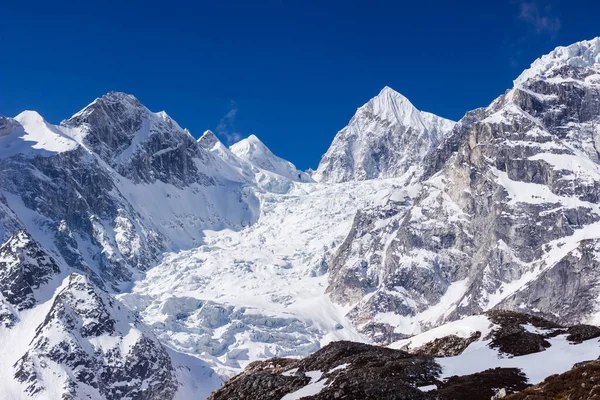
The Asian Development Bank (ADB) has approved a $3 million grant to enhance Tajikistan’s glacier monitoring and natural disaster warning capabilities. The initiative aims to reduce risks linked to accelerated snow and ice melt, particularly in the country’s mountainous regions, and improve public safety.

The grant is financed by the Japan Fund for Prosperous and Sustainable Asia and the Pacific (JFSB), which is supported by the Government of Japan through the ADB.

Ko Sakamoto, ADB’s Permanent Representative in Tajikistan, emphasized the project’s importance for the country. “Glaciers and snow are important for water supply, agriculture, and hydropower, but their rapid melting caused by extreme weather events can trigger devastating floods, avalanches, and other disasters,” he said.

Sakamoto noted that the initiative will provide Tajikistan with modern tools for forecasting and responding to climate-related threats. The project is scheduled to be completed by 2029, with most activities to be implemented in high-risk areas of the Gorno-Badakhshan Autonomous Region.

The Hydrometeorological Agency has been designated as the project’s executive body. Among the key components is the creation of a unified digital data system to improve the accuracy and timeliness of glacier and snow cover monitoring. The system will enhance the collection, storage, and analysis of data critical for disaster risk assessment.

To manage the new infrastructure, technical specialists from the Hydrometeorological Agency will receive training in modern monitoring and data management methods. The project also emphasizes the active inclusion of women in the training process, aligning with ADB’s commitment to inclusive development.

Improving early warning systems is another central element of the initiative. Plans include updating disaster risk management strategies, strengthening coordination between local authorities and communities, and enhancing the clarity and timeliness of public alerts related to glacial and snowmelt hazards.

Tajikistan joined the ADB in 1998. Since then, the partnership has supported a wide range of infrastructure and development projects, including the modernization of major highways, such as the Obigarm-Nurobod, Dushanbe-Bokhtar, Aini-Penjikent, Dushanbe-Tursunzade, and Vose-Khovaling corridors, as well as the restoration of irrigation systems, expansion of water supply networks, and construction of schools and hospitals.

Taliban Dismiss Thousands of Tajik and Uzbek Fighters

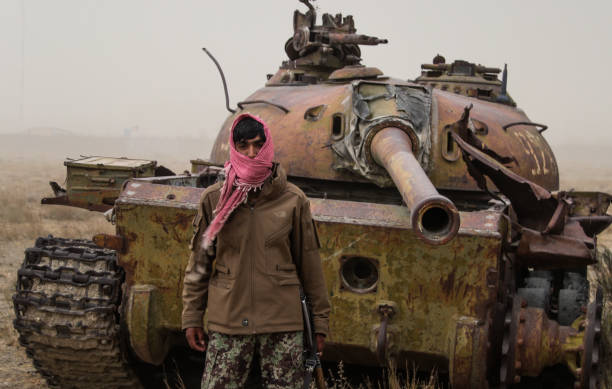
The United Nations Security Council has released a new assessment on Afghanistan, revealing that the Taliban have reduced their security forces by approximately 20%. According to Afghanistan International, which cited the UN document, thousands of ethnic Tajik and Uzbek fighters have been dismissed, particularly in provinces where these groups made up a significant portion of Taliban ranks.

The downsizing order reportedly came from Taliban leadership and was attributed to budgetary constraints. While the UN document does not explicitly state that the dismissals were ethnically motivated, it notes that the concentration of personnel cuts in Tajik and Uzbek-majority provinces, most notably Badakhshan, Kapisa, Parwan, and Takhar, has raised concerns about possible ethnic discrimination.

Taliban officials have previously justified the reduction by claiming their security apparatus had become excessively large. However, the UN warned that the force reduction is occurring amid rising security threats, especially from Islamic State Khorasan Province (ISKP).

According to the report, ISKP has ramped up operations by leveraging modern technologies, including artificial intelligence, to create training materials, some of which reportedly instruct on the assembly of improvised explosive devices. UN sanctions monitors cautioned that this technological advancement, combined with a diminished Taliban security presence, could heighten instability across the country.

Although the Taliban have conducted operations against ISKP since early 2025, the extremist group remains resilient. The UN also highlighted that the Taliban continue to publicly deny ISKP’s presence in Afghanistan while simultaneously accusing neighboring countries of supporting the group. Despite this, the Taliban have sought international counterterrorism assistance to confront ISKP.

The report estimates that more than 20 international and regional terrorist organizations remain active in Afghanistan. These include Al-Qaeda, Tehrik-i-Taliban Pakistan, the Turkistan Islamic Movement, the Islamic Movement of Uzbekistan, and Jamaat Ansarullah. According to the UN, the Taliban have incorporated some former members of these groups into local security units, prompting concerns about ideological alignment and infiltration.

The document further notes that advanced weaponry and military equipment are entering Afghanistan through cross-border smuggling and black market channels. Reports have also emerged of drone attacks targeting military sites in Pakistan. The Taliban are allegedly seeking technical support to expand their drone capabilities, with some countries reporting possible Al-Qaeda involvement in drone production sites in Logar and Kabul.

Tensions also flared along the Tajik-Afghan border in late October. Armed clashes were reported on October 25 between Tajik border guards and Taliban fighters in the Davanga district of Shahr-e Buzurg, located in Badakhshan province. The confrontation reportedly stemmed from a dispute over water diversion from the Amu Darya river. The presence of Chinese-operated gold mining facilities in the area has further complicated the region’s security dynamics.