• KGS/USD = 0.01144 0%
  • KZT/USD = 0.00210 0%
  • TJS/USD = 0.10438 0%
  • UZS/USD = 0.00008 0%
  • TMT/USD = 0.28490 0%
  • KGS/USD = 0.01144 0%
  • KZT/USD = 0.00210 0%
  • TJS/USD = 0.10438 0%
  • UZS/USD = 0.00008 0%
  • TMT/USD = 0.28490 0%
  • KGS/USD = 0.01144 0%
  • KZT/USD = 0.00210 0%
  • TJS/USD = 0.10438 0%
  • UZS/USD = 0.00008 0%
  • TMT/USD = 0.28490 0%
  • KGS/USD = 0.01144 0%
  • KZT/USD = 0.00210 0%
  • TJS/USD = 0.10438 0%
  • UZS/USD = 0.00008 0%
  • TMT/USD = 0.28490 0%
  • KGS/USD = 0.01144 0%
  • KZT/USD = 0.00210 0%
  • TJS/USD = 0.10438 0%
  • UZS/USD = 0.00008 0%
  • TMT/USD = 0.28490 0%
  • KGS/USD = 0.01144 0%
  • KZT/USD = 0.00210 0%
  • TJS/USD = 0.10438 0%
  • UZS/USD = 0.00008 0%
  • TMT/USD = 0.28490 0%
  • KGS/USD = 0.01144 0%
  • KZT/USD = 0.00210 0%
  • TJS/USD = 0.10438 0%
  • UZS/USD = 0.00008 0%
  • TMT/USD = 0.28490 0%
  • KGS/USD = 0.01144 0%
  • KZT/USD = 0.00210 0%
  • TJS/USD = 0.10438 0%
  • UZS/USD = 0.00008 0%
  • TMT/USD = 0.28490 0%

Trump Invites Tokayev to Miami G20 Summit

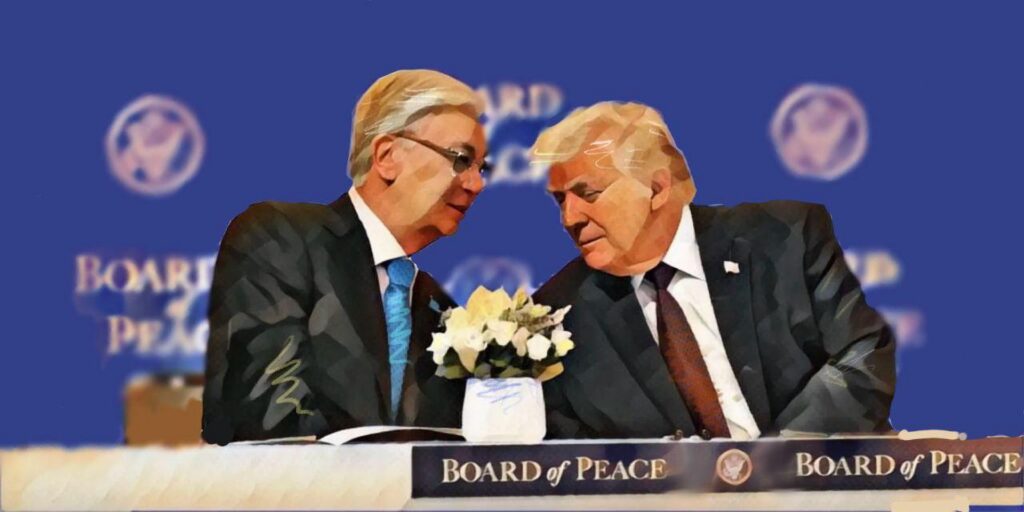
U.S. President Donald Trump has invited Kazakhstan’s President Kassym-Jomart Tokayev to visit Miami for the G20 Summit later this year, according to an official statement released by Tokayev’s press secretary, Aibek Smadiyarov.

The invitation was reportedly conveyed in a personal letter following the two leaders’ recent meeting in Washington in February, which took place during the inaugural session of the Board of Peace – a platform described by participants as combining diplomatic dialogue with business initiatives aimed at addressing global security and development challenges.

According to Smadiyarov, Trump expressed appreciation for Tokayev’s participation in the Washington meeting, and said he would be pleased to welcome him again at the next session of the Board of Peace. Trump also indicated that he hopes Tokayev will attend the G20 Summit scheduled to be held in Miami later this year.

The proposed visit reflects continued communication between the United States and Kazakhstan on multilateral initiatives. Tokayev has previously voiced support for the Board of Peace initiative, commenting that it could mobilize investment and diplomatic cooperation to address instability in parts of the Middle East.

Kazakh officials have framed participation in such formats as consistent with the country’s long-standing multi-vector foreign policy, which seeks to balance the country’s relations with major global powers while promoting regional stability and economic development.

Kazakhstan has been seeking to expand economic ties with Western partners while maintaining its role as a key regional transit hub linking Europe and Asia.

No official confirmation has yet been issued by the White House regarding the timing or format of the G20 Summit in Miami.

Tokayev’s relationship with Trump has so far appeared practical rather than ideological. In 2020, Trump sent Tokayev a letter praising his reform agenda and expressing support for a stronger U.S.-Kazakhstan strategic partnership. Contacts intensified after Trump’s return to office: Tokayev visited Washington in November 2025, later held an extended phone call with Trump in December, and in January 2026 signed the charter of the Board of Peace.

Kazakhstan has presented these relations as part of a broader push to turn political access into economic results. During the Washington visit, Tokayev’s press service said companies from the two countries signed deals worth more than $17 billion, while Tokayev also highlighted sectors such as energy, critical minerals, transport, finance, education, and AI as areas for potential deeper cooperation.

This approach fits Kazakhstan’s long-standing multi-vector foreign policy, a principle Tokayev has described as constructive, balanced, and designed to defend national interests while bringing practical benefits to the country.

Kazakhstan tries to keep productive relations with all major centers of power, rather than tying itself too closely to any one of them. For Kazakhstan, that means preserving room for maneuver with neighbors such as Russia and China while also deepening ties with the United States, Europe, Turkey, the Gulf states, and other partners that can provide investment, technology, and market access.

Kazakhstan places emphasis on transit routes, diplomacy, and middle-power initiatives. The policy is meant to protect sovereignty, reduce overdependence, and keep the country open to several economic and political directions at once.

Neighboring Uzbekistan is not a G20 member, but it has also sought to engage with the group’s agenda through invited formats and related diplomacy. Under India’s G20 presidency in 2023, President Shavkat Mirziyoyev took part in the ‘Voice of Global South’ summit, where he backed India’s chairmanship and called for more attention to trade access, food and energy security, logistics, and investment for developing countries.

He also used that platform to promote a railway through Afghanistan, with access to the Indian Ocean, presenting it as a way to improve connectivity between Central and South Asia. Uzbek officials have likewise tied the country’s climate and development priorities to wider G20 debates. At COP28 in Dubai, Mirziyoyev said issues such as a fair low-carbon transition should remain on the agenda of major forums including the G7 and G20.
Tajikistan, Turkmenistan and Uzbekistan Send Humanitarian Aid to Iran

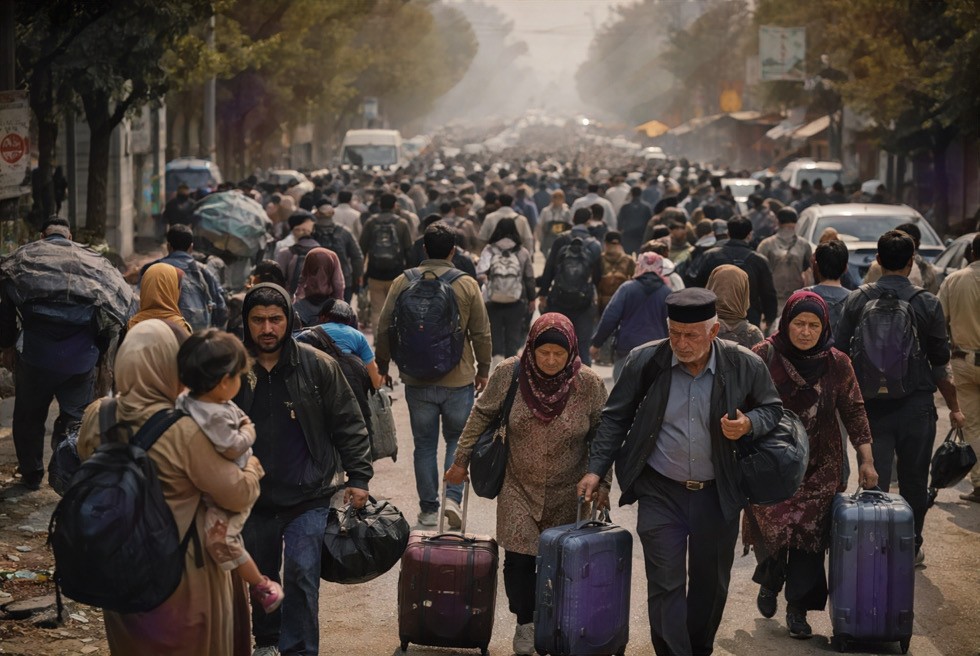
Tajikistan is sending a convoy of 110 trucks carrying humanitarian aid to Iran, which has been targeted by heavy U.S. and Israeli air strikes in a war that started on February 28. The dispatch of aid follows similar deliveries by Turkmenistan, Uzbekistan and Azerbaijan. 

Central Asian countries are aiming for neutrality in the Mideast war, maintaining ties with the Iranian government even as they profess support for Gulf Arab states that have been targeted by Iranian drones and missiles. Iran’s relationships with countries to the east range from the close cultural affinity that it enjoys with Tajikistan to sometimes tense interactions with Azerbaijan, which has a military partnership with Israel.  

The trucks from Tajikistan left for Iran on Wednesday and “will soon arrive in the friendly and brotherly country,” Tajikistan’s government said, without providing details about how the aid will be distributed. The convoy would likely travel through Uzbekistan and Turkmenistan to reach the northeastern Iranian border.

The aid “comprises 3,610 tons of cargo, including 45 tons of medicines, a large volume of sanitary and hygienic products, children’s clothing, various food products, household items, bedding, tents, building materials, and other necessary supplies,” Tajikistan’s Ministry of Foreign Affairs said.  

Tajik President Emomali Rahmon posted a photo on social media that showed a long line of aid trucks on a highway. 

Turkmenistan, which shares a border with Iran, has said it sent humanitarian aid, mainly for distribution to children. It appeared to allude to the war, saying that “supporting and assisting close neighbors in difficult times is a noble tradition of the Turkmen people, rooted in ancient times.”

Uzbekistan has sent trucks carrying flour, rice, sugar, pasta, sunflower oil, canned goods and medical supplies to Iran.  

Azerbaijan, which borders northwest Iran, has also dispatched truckloads of humanitarian aid to Iran, according to Ali Alizada, Azerbaijan’s ambassador to Iran. Azerbaijan previously said it was evacuating staff from its embassy in Tehran as well as its consulate in the Iranian city of Tabriz, after accusing Iran of drone attacks on its territory.

Kazakhstan Celebrates as Paralympic Champion Yerbol Khamitov Returns Home

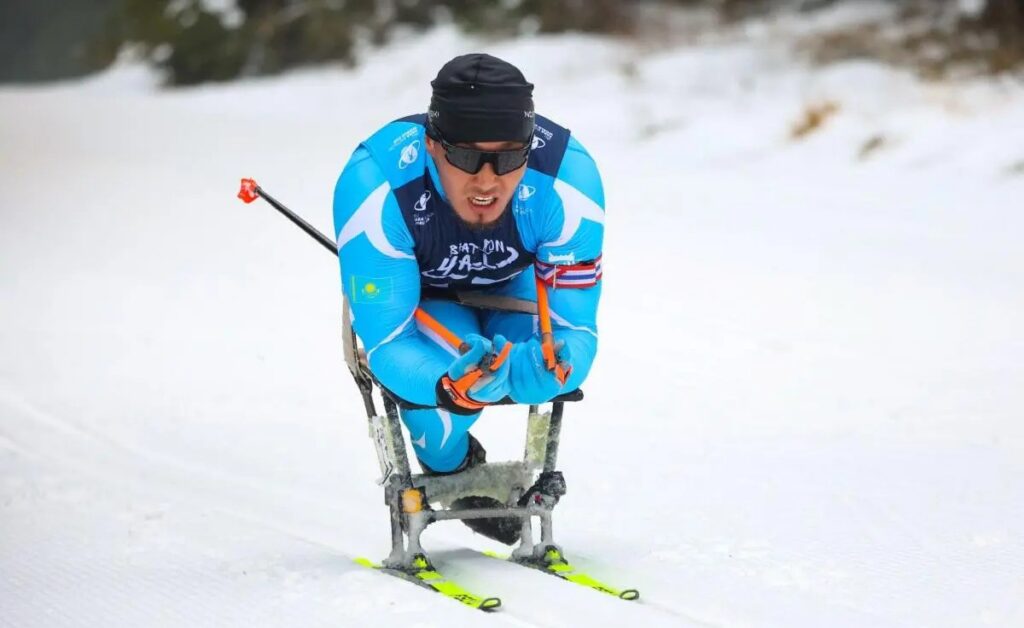
Dozens of fans, some carrying balloons and bouquets, gathered at Astana’s international airport on Tuesday to welcome Paralympic champion Yerbol Khamitov after he won two medals for Kazakhstan at the Winter Games in Italy.

The 28-year-old athlete, who lost part of his leg after being shot in the knee a decade ago, greeted supporters and thanked his coaches and state authorities for their support, which he said contributed to his international success.

Khamitov won the biathlon pursuit race on March 13 and finished third in the cross-country skiing sprint on March 10, becoming the first Kazakhstani athlete to win two medals at a Winter Paralympics. 

“I am glad that I was able to fulfill my promise to raise our national flag on the podium,” he said on social media. 

“I am not stopping here. I have many plans and new goals ahead. I will make every effort to reach new heights.”

Khamitov said he was told in the past that ‘“cross-country skiing is not a Kazakh sport”’ but he wanted to prove to himself and others that “anything is possible.” 

Khamitov, who competed in martial arts before and after his injury, made his Paralympic debut in Beijing in 2022. Last year, he won his first para biathlon world title at the championships in Pokljuka, Slovakia. The International Paralympic Committee had said he was “among the athletes to watch out for” at the Milano Cortina 2026 Winter Games. The events ended on March 15. 

In Kazakhstan, the paralympian will receive the equivalent of hundreds of thousands of dollars and other benefits for his achievements. Khamitov, who said he comes from a modest background and has experienced hardship, encouraged anyone with physical difficulties to get involved in sports.  

“I would like to encourage everyone who is currently in this situation, whether they’ve lost an arm or a leg, are visually impaired, or were born that way, to come and play sports with us,” Khamitov told journalists after returning to Astana.

His success at the Winter Games has been widely seen as an inspiration for athletes with disabilities in Kazakhstan.

Iran Warns of Military Action Over Iran International Broadcasts via Turkmenistan Satellite

Iran has warned of potential military consequences for countries and organizations cooperating with the independent television channel Iran International, raising concerns about infrastructure linked to satellite broadcasting, including resources connected to Turkmenistan.

Iranian officials said that “certain institutions and countries” that continue to support the broadcaster could face serious repercussions.

According to a statement released by Iran International, facilities and infrastructure involved in transmitting its signal “may be included on the list of targets for the Iranian military.”

The channel cited reports in Iranian state media quoting a representative of the Iranian Armed Forces’ Khatam al-Anbia Air Defense Base.

In remarks reported by the semi-official Tasnim news agency, the military representative accused Iran International of seeking to “create tension, spread false information and rumors, and conduct psychological warfare against the Iranian people in pursuit of the goals of the U.S. and Israel.”

The statement also included a warning that continued support for the broadcaster could result in those cooperating with it being placed on a list of potential targets.

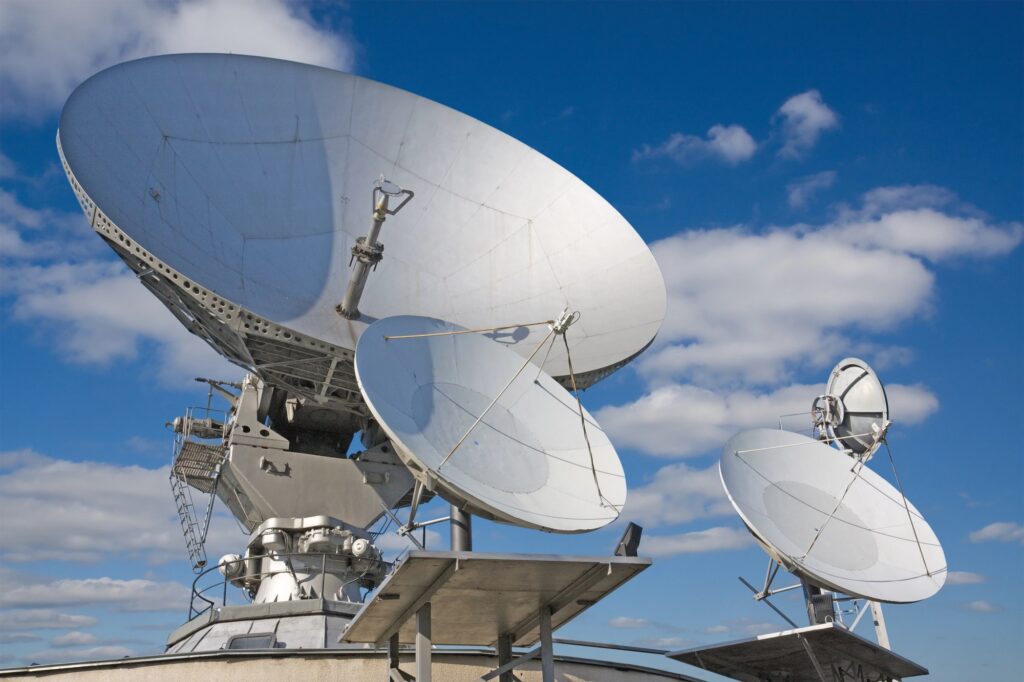
Iran International broadcasts from the United Kingdom using the TürkmenÄlem 52E / MonacoSAT satellite. The same satellite platform carries a range of international media services, including the BBC’s Persian-language programming, Radio Farda, a project of Radio Free Europe/Radio Liberty, as well as numerous other television and radio channels.

According to the broadcaster, direct warnings had previously been sent to Turkmenistan and Monaco, which host infrastructure enabling signal transmission.

Scientists in Kazakhstan Develop Antioxidant Supplement for Disease Prevention

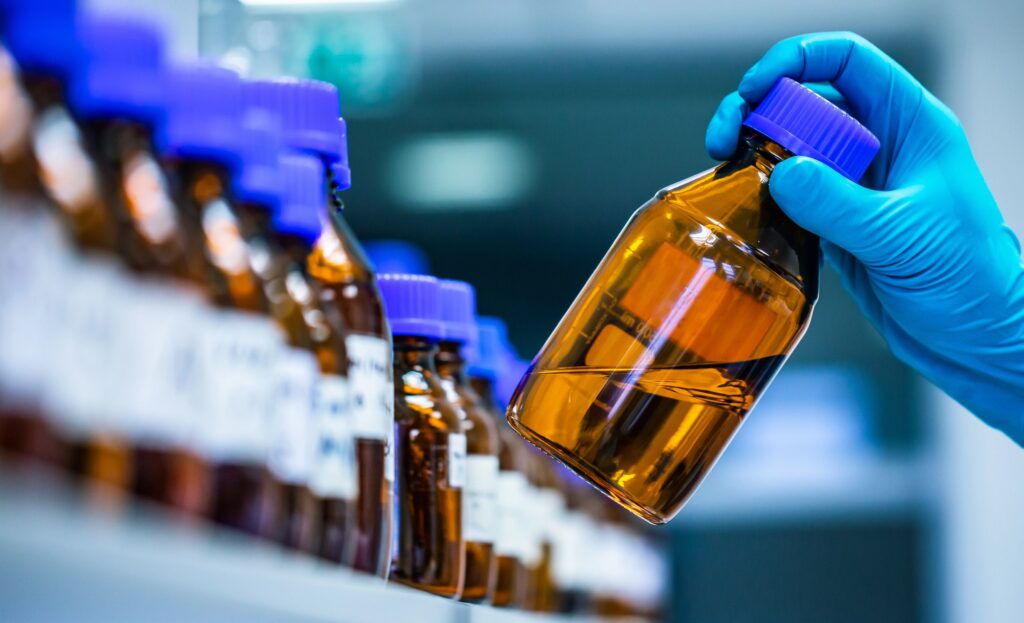
Scientists in Kazakhstan are developing a dietary supplement containing antioxidants that is intended to help reduce the risk of cancer and cardiovascular diseases. The project is being carried out by the Kazakh Research Institute of Processing and Food Industry.

The development is taking place in Almaty and is based on the use of domestically sourced plant raw materials, according to the Ministry of Agriculture. The ministry says the aim is to create an affordable functional food product with high antioxidant activity.

The key component of the supplement is lycopene, a natural carotenoid found in tomatoes, watermelons, and grapefruits. Lycopene is known for its antioxidant properties and its potential role in reducing oxidative stress, which is associated with the development of various chronic diseases.

According to the ministry, insufficient intake of antioxidants may contribute to weakened immune function and an increased risk of chronic conditions. As part of the project, researchers have already developed technologies to produce powders from tomatoes and watermelons while preserving their biological properties. Freeze-drying and infrared drying methods are being used for this purpose.

Official information indicates that the supplement’s formulation includes lycopene, tomato and watermelon powders, pumpkin seed powder, and safflower oil. This combination is expected to improve bioavailability and make the product convenient for regular use.

The Ministry of Agriculture says the development reflects growing demand for functional foods both in Kazakhstan and internationally. The product could eventually be targeted for export markets.

Officials also expect the project to reduce dependence on imported food additives, expand the domestic raw material base for the processing industry, and create new opportunities for the development of the agro-industrial sector.

The Times of Central Asia previously reported on another innovation by Kazakh scientists: a mobile unit designed to process and store agricultural products for extended periods.

Kazakhstan Prepares for Its First-Ever Administrative Amnesty

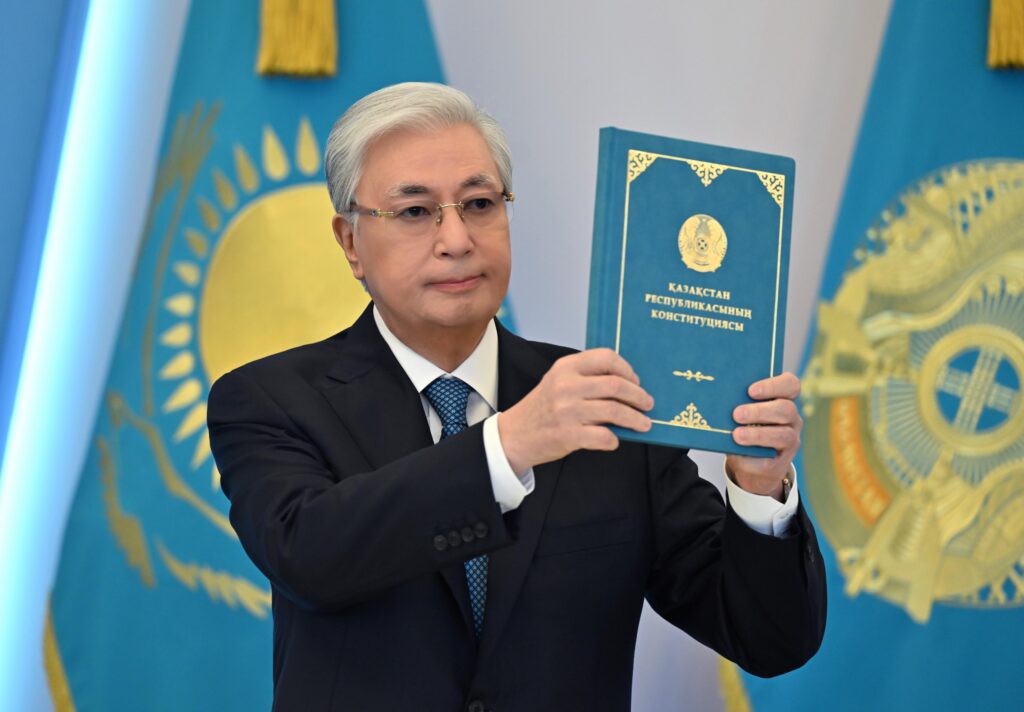
President Kassym-Jomart Tokayev has announced plans to introduce Kazakhstan’s first-ever administrative amnesty. The statement was made during a ceremony marking the adoption of the country’s new Constitution.

In the past, Kazakhstan has periodically granted amnesties to individuals convicted of criminal offenses, often timed to coincide with national anniversaries. The most recent such amnesty was carried out in 2025 to mark the 30th anniversary of the Constitution.

The new initiative is linked to the adoption of the updated Constitution. On March 15, a nationwide referendum was held in which a majority of voters supported the new basic law. The document is scheduled to enter into force on July 1, 2026.

Speaking at the ceremony, Tokayev said that constitutional reform represents a transition to a new stage in the country’s development and requires a reassessment of the relationship between the state and society.

“The People’s Constitution is a strategic mandate of trust and a new social contract aimed at long-term goals and horizons of progress,” the president said.

He instructed parliament to adopt an amnesty law by the end of the current session. The proposed amnesty is expected to cover a range of criminal and administrative offenses that do not pose a threat to public or national security.

The current parliamentary session is due to conclude at the end of June. Under the new Constitution, however, the powers of the existing parliament will cease on July 1, 2026, the same day the new constitutional framework enters into force.

In the near future, five new constitutional laws are expected to be submitted to parliament, including legislation governing the presidency, the Kurultai (the future parliament), the Halyk Kenesi (People’s Council), as well as laws regulating the status of the capital and the country’s administrative-territorial structure.

According to Tokayev, eight existing constitutional laws and more than 60 regulatory acts, including key legal codes, will also require revision. These legislative changes are expected to be synchronized with upcoming parliamentary elections.

Elections to the new unicameral parliament are likely to take place before the opening of the next parliamentary session, which traditionally begins on September 1. As a result, voting could be held within the coming months.

“By that time, preparation of the necessary legal framework must be fully completed. The comprehensive transformation of Kazakhstan’s legal and political system will continue throughout this year and possibly into the next,” the president said.

According to Tokayev, the reforms envisage the creation of new state institutions, as well as structural and personnel changes within existing government bodies.