• KGS/USD = 0.01144 0%
  • KZT/USD = 0.00192 -0%
  • TJS/USD = 0.10849 0%
  • UZS/USD = 0.00008 0%
  • TMT/USD = 0.28571 0%
  • KGS/USD = 0.01144 0%
  • KZT/USD = 0.00192 -0%
  • TJS/USD = 0.10849 0%
  • UZS/USD = 0.00008 0%
  • TMT/USD = 0.28571 0%
  • KGS/USD = 0.01144 0%
  • KZT/USD = 0.00192 -0%
  • TJS/USD = 0.10849 0%
  • UZS/USD = 0.00008 0%
  • TMT/USD = 0.28571 0%
  • KGS/USD = 0.01144 0%
  • KZT/USD = 0.00192 -0%
  • TJS/USD = 0.10849 0%
  • UZS/USD = 0.00008 0%
  • TMT/USD = 0.28571 0%
  • KGS/USD = 0.01144 0%
  • KZT/USD = 0.00192 -0%
  • TJS/USD = 0.10849 0%
  • UZS/USD = 0.00008 0%
  • TMT/USD = 0.28571 0%
  • KGS/USD = 0.01144 0%
  • KZT/USD = 0.00192 -0%
  • TJS/USD = 0.10849 0%
  • UZS/USD = 0.00008 0%
  • TMT/USD = 0.28571 0%
  • KGS/USD = 0.01144 0%
  • KZT/USD = 0.00192 -0%
  • TJS/USD = 0.10849 0%
  • UZS/USD = 0.00008 0%
  • TMT/USD = 0.28571 0%
  • KGS/USD = 0.01144 0%
  • KZT/USD = 0.00192 -0%
  • TJS/USD = 0.10849 0%
  • UZS/USD = 0.00008 0%
  • TMT/USD = 0.28571 0%
12 December 2025

Kazakhstan Confirms Detention of Military Attaché Worker in Poland

Defense officials in Kazakhstan said on Wednesday that Polish security agencies have detained a worker in the Kazakh military attaché´s office, two weeks after the Polish government announced the arrest of a military intelligence officer from a post-Soviet country who is suspected of espionage.

“The International Relations Center of the Ministry of Defense of the Republic of Kazakhstan confirms the fact of the detention of an employee of the apparatus of the Kazakh military attaché by the Polish law enforcement agencies,” the ministry said on Telegram.

The statement, which came after media reports about the arrest circulated in Kazakhstan, said efforts were underway to “resolve this situation” and that measures are also being taken to protect “the rights and legitimate interests” of the detained citizen.

Kazakhstan’s government didn’t comment on why its employee was detained. Without naming sources, some media reports in the Central Asian country have said it is the same person suspected by Polish authorities of spying.

Tomasz Siemoniak, a member of Poland’s Council of Ministers and coordinator of special services, said on X on Aug. 1 that, two days previously, “officers of the Internal Security Agency detained a citizen of one of the Asian countries that emerged after the collapse” of the Soviet Union.

“He is a career military intelligence officer who conducted espionage activities detrimental to the security of the Republic of Poland and allied military structures,” Siemoniak said. “The National Prosecutor’s Office brought charges against him, and on August 1, 2025, the suspect was remanded in custody for three months by a court decision.”

Siemoniak did not specify the alleged threat to military interests. Poland has been one of Europe’s staunchest supporters of Ukraine in its war against Russia, serving as a conduit for military and other supplies to Ukrainian forces across their shared border. Kazakhstan has aimed for a pragmatic or neutral position on the conflict, maintaining close ties with Moscow while also, in a nod to Ukraine, speaking in support of the territorial integrity of sovereign states under the U.N. Charter.

Prime Minister Donald Tusk of Poland also announced the arrest of an alleged spy, saying “anyone who threatens the security of the Polish state will be caught, sooner or later.”

Poland’s Internal Security Agency said the suspect had conducted espionage while “operating under diplomatic cover in a European country.”


Despite Official Optimism, Southern Kyrgyzstan Struggles with Food Shortages

Kyrgyzstan’s Minister of Water Resources, Agriculture, and Processing Industry, Bakyt Torobaev, has reported steady growth in both agricultural output and the processing industry. Speaking at a briefing in Bishkek, Torobaev stated that agricultural production in the first half of 2025 reached $1.3 billion, $160 million more than in the same period last year, representing an annual growth rate of nearly 4%.

The processing sector also showed gains, with output valued at $556 million in the first six months of the year. Torobaev added that the population was “provided with six basic foodstuffs: milk, meat, potatoes, vegetables, sugar, and eggs.”

However, figures from the United Nations World Food Programme (WFP) paint a less optimistic picture. The agency’s research indicates that 8% of Kyrgyzstan’s population faces food shortages, while 53% have access only to the minimum required food supply.

According to a WFP report, most households (74%) rely on negative coping strategies, such as depleting savings, borrowing money, and cutting expenditures on education and healthcare to meet their food and other basic needs. Additionally, 10% of the population reported a decline in income over the past year, with an average reduction of 37%.

The WFP stated that the Jalal-Abad and Osh regions, both in the more densely populated south, account for nearly half of all citizens experiencing food shortages. High poverty levels in these areas, as well as in Batken, reflect the country’s highest rates of economic and food insecurity.

The WFP supports vulnerable households through research, targeted material aid, and community programs aimed at building a sustainable food system. Assistance includes fortified wheat flour, vegetable oil, and cash transfers to low-income families participating in community development or human capital projects. The agency also supplies wheat flour to schools to improve nutrition for students in grades 1-4.

Afghanistan Generates 250 MW of Electricity, Imports 800 MW from Central Asia and Iran

Afghanistan’s state-owned electricity company, Da Afghanistan Breshna Sherkat (DABS), has signed or prepared agreements for domestic power generation projects totaling 1,070 megawatts over the past 11 months, with 70% of the funding coming from foreign investors, TOLOnews reported.

Speaking in an interview, DABS chief Abdulbari Omar said the initiative marks a significant step toward energy self-sufficiency after years of underinvestment in the sector. “In the past 11 months, we have invested 69 billion Afghanis ($1.01 billion), 70% of which came from abroad. This shows we have encouraged foreign investors to enter the Afghan market,” he said.

Afghanistan currently produces about 250 MW of electricity domestically and imports around 800 MW from Turkmenistan, Iran, Uzbekistan, and Tajikistan, at an annual cost of $250-280 million. Omar said the country would need between 6,000 and 7,000 MW to meet domestic demand, rising to 10,000 MW if industrial activity expands.

He acknowledged the challenges of developing power from wind, water, gas, coal, and waste, but stressed that projects are moving forward with domestic funds and private investment, without relying on the World Bank or other international organizations.

Omar also highlighted the problem of unpaid bills, citing 450 million Afghanis ($6.48 million) owed by former political leaders and warlords. “All individuals, from ministers to ordinary citizens, are treated equally under the law,” he said, noting that power has been cut to ministers who failed to pay.

Last year, The Times of Central Asia reported that DABS extended its electricity import agreement with Uzbekistan until the end of 2025. The deal, signed in Uzbekistan by Omar and the National Electricity Company of Uzbekistan, remains vital for meeting Afghanistan’s needs.

According to the Taliban-controlled Ministry of Energy and Water, Afghanistan requires around 1,500 MW of electricity, with roughly 720 MW imported and the rest generated domestically.

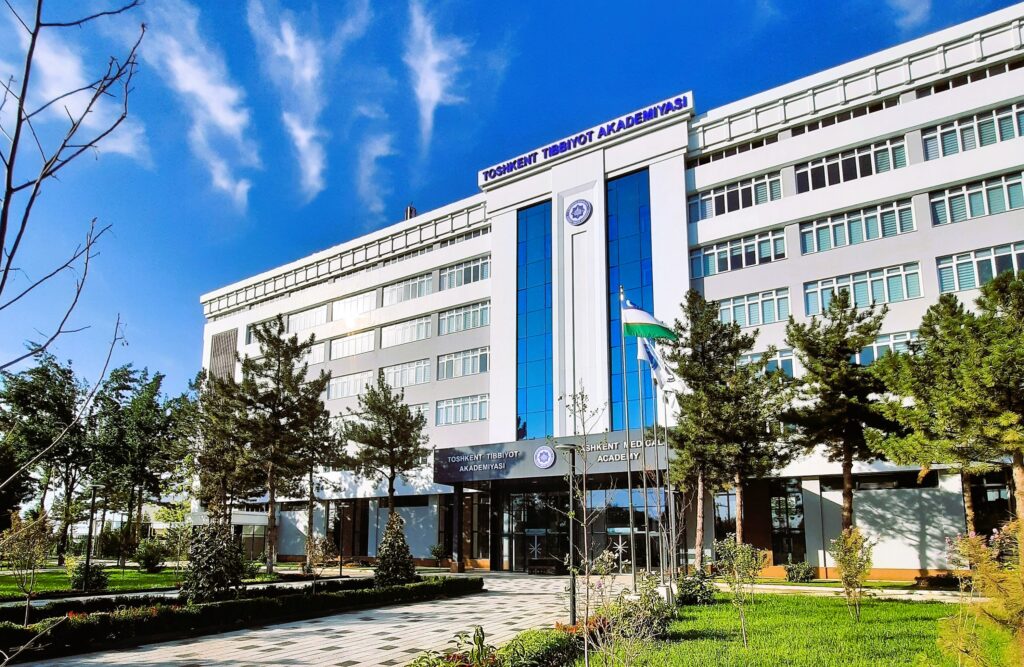
Tashkent Medical University Accused of Forcing Students to Study in Russian City Reportedly Under Drone Attacks

Tashkent State Medical University (TSMU) has rejected social media allegations that its students are being forced to study in Nizhny Novgorod, Russia, a city some reports claim is “under Ukrainian drone attacks.” The university called the reports “baseless and false,” stressing that the students are enrolled in a joint degree program requiring them to complete the final two years at a partner institution abroad.

Videos shared by local media this week showed students opposing the move, citing recent drone strikes in the region that reportedly killed one person and injured several others. They claimed a previous rector had promised to transfer the program to Kazakhstan, but the current rector, Shukhrat Boymuradov, reversed that decision. Students alleged they were given an ultimatum: go to Russia or take academic leave and request to finish their fifth year in Uzbekistan.

TSMU said all the students in question had signed contracts under a joint education program with Privolzhsky Research Medical University (PRMU) in Nizhny Novgorod, as stipulated by Uzbekistan’s Cabinet of Ministers Resolution No. 421 of July 6, 2021. The agreement requires participants to complete their fourth and fifth years at PRMU.

According to the university, PRMU runs 12 joint programs with five Uzbek universities and currently hosts more than 400 Uzbek students. To ensure suitable conditions, TSMU and PRMU agreed on dedicated dormitories, a special dean’s office to help with administrative matters, and re-enrollment opportunities for students previously expelled from PRMU.

The administration dismissed claims that Nizhny Novgorod is under martial law, noting that the city hosts active academic partnerships and that no state of war has been declared there.

On August 11, Boymuradov met with students and parents to discuss the program, living arrangements, and support services. TSMU reported that most students expressed readiness to continue studies at PRMU, while a minority sought to remain in Tashkent, allegedly relying on “deliberately false information.”

The university warned that spreading misinformation intended to mislead the public and damage its reputation could result in legal action under Uzbek law.

Tajikistan Authorities Step Up Crackdown on Illegal Mining and Electricity Theft

Tajikistan’s Prosecutor General Khabibullo Vokhidzoda has reported a rise in illegal cryptocurrency mining operations and electricity theft across the country.

Illegal Cryptocurrency Mining

In the first half of 2025, authorities identified and recovered 32 million somoni ($3.52 million) in damages linked to stolen electricity used to power cryptocurrency mining equipment.

“There are individuals who import mining equipment from abroad and operate cryptocurrency farms illegally,” Vokhidzoda said.

Currently, 4-5 criminal cases are under investigation involving the installation and operation of such devices. Cryptocurrency, he noted, is a digital currency maintained through a decentralized payment system, with mining requiring high-powered computers, stable internet, and substantial electricity consumption.

Although Tajikistan does not have a legal framework regulating cryptocurrency mining, law enforcement regularly shuts down illegal farms. Recently, the Sughd Region Prosecutor’s Office uncovered seven cases in which 135 mining devices were found operating inside residential buildings, causing an estimated 287,939 somoni ($31,673) in damages.

Widespread Electricity Theft

Illegal electricity use remains a major problem. Since January, 3,988 individuals have faced administrative or disciplinary action, while 190 criminal cases have been opened. The total damages recovered so far amount to 38.7 million somoni ($4.26 million).

Electricity debts are also mounting: subscribers accumulated 273 million somoni ($30 million) in unpaid bills in the first half of 2025. Nationwide, total arrears stand at 4.6 billion somoni ($506 million), with 1.6 billion somoni ($176 million) owed by households and the rest by enterprises and organizations.

Tougher Penalties Introduced

This year, Tajikistan increased fines for electricity theft and non-payment. Under the Criminal Code, violations can now result in fines from 27,000 to 90,000 somoni ($2,970-$9,900) or imprisonment for three to ten years.

The Administrative Offenses Code also provides for fines ranging from 1,500 to 22,500 somoni ($165-$2,475) for misuse of electricity and heat.

Kazakhstan Details Use of Russian Loan for First Nuclear Power Plant

Kazakhstan’s Atomic Energy Agency (AEA) has confirmed that Russian preferential export financing for the country’s first nuclear power plant will be directed toward the purchase of long-cycle equipment and major construction works. Key components to be covered include the reactor, steam generators, and main circulation pumps.

The 2.4 GW twin-unit plant will be built near the village of Ulken on the shores of Lake Balkhash in the Almaty region. The loan’s terms and parameters will be set during the drafting of an intergovernmental agreement.

Construction Management

The project has been entrusted to Kazakhstan Atomic Power Plants LLP (KAP), a subsidiary of Samruk-Kazyna. In July, KAP was placed under the trust management of the AEA and will later become state property.

The agency is also studying potential sites for the second and third nuclear power plants, taking into account geological, seismic, infrastructural, and environmental factors, along with electricity demand and public opinion. All studies are being conducted in line with International Atomic Energy Agency (IAEA) standards.

Fuel Production in Kazakhstan

The AEA also highlighted plans to produce nuclear fuel domestically. The Ulba-TVS plant has reached its design capacity of 200 tons of finished fuel in low-enriched uranium terms, equivalent to about 1,600 tons of natural uranium annually, enough to reload six reactors.

A joint venture with China’s CGNPC, the plant currently manufactures 440 fuel assemblies per year for Chinese nuclear power stations, each weighing about half a ton and produced to a French Framatome design. Moving to two-shift production could double output.

While Kazakhstan lacks uranium conversion and enrichment facilities, authorities plan to develop this segment to establish a full nuclear fuel cycle. The AEA and Kazatomprom aim to ensure a steady fuel supply for the plant’s entire operational life.

Project Costs and Local Involvement

Russia’s financing will primarily fund equipment with long manufacturing lead times. The total cost of construction will be set after design completion and expert review.

The AEA noted that costs will depend on site-specific engineering and survey results, local seismic and meteorological conditions, use of international equipment, the degree of domestic production of materials, and the involvement of local contractors and specialists.

Kazakh suppliers will have priority in providing materials and labor, provided they meet certification standards. “It is economically unfeasible to import construction materials and workers from Russia if the necessary resources and specialists are available in Kazakhstan at more competitive prices,” the agency stated.